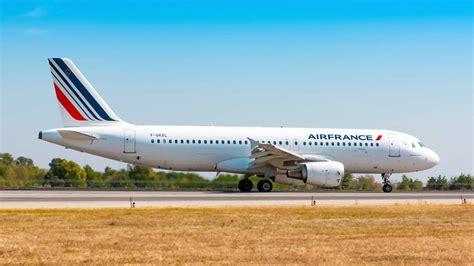
Most travelers associate Air France with long-haul aircraft crossing the Atlantic from Paris to major American gateways. In Miami, that expectation is usually met by the sight of the airline’s Airbus A350-900s and Boeing 777-300ERs parked alongside aircraft from carriers around the world. Yet aviation enthusiasts often notice something far more unusual: an Airbus A320 wearing Air France colors arriving in the United States.
At first glance, it appears to be an anomaly. The Airbus A320 is primarily a short- and medium-haul aircraft, not a jet typically associated with transatlantic operations. Seeing one at Miami International Airport (MIA) can leave even experienced travelers wondering whether it is a positioning flight, a charter operation, or perhaps an operational substitution.
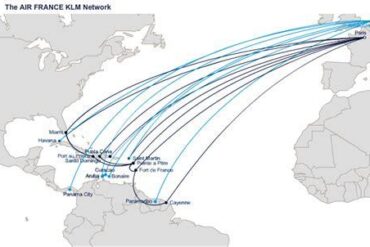
The reality is far more fascinating. The aircraft is operating exactly as planned on one of Air France’s most distinctive routes. Rather than arriving from Paris, the A320 flies from Guadeloupe, forming part of a regional network that connects multiple French territories across the Caribbean and South America while also maintaining a direct link to the United States.
This unusual operation highlights the unique geography of modern France and demonstrates how Air France serves territories located thousands of miles from mainland Europe.
Why An Air France Airbus A320 Appears In Miami
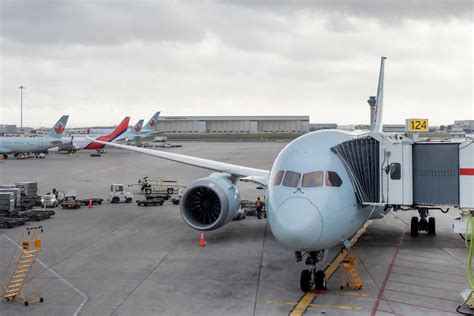
Miami is one of the busiest international gateways in North America. The airport handles extensive traffic to Latin America, the Caribbean, Europe, and beyond. While American Airlines dominates operations, numerous foreign carriers maintain significant international services.
Air France’s primary Miami flights operate from Paris Charles de Gaulle Airport (CDG) using widebody aircraft designed for long-haul missions. However, the A320 service serves an entirely different purpose.
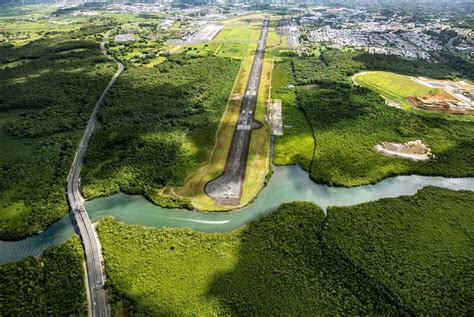
The aircraft originates in Pointe-à-Pitre Le Raizet Airport (PTP) in Guadeloupe, a Caribbean archipelago that is not merely a French territory in name. Guadeloupe is officially an overseas department and region of France. Residents hold French citizenship, use the euro, participate in French elections, and enjoy the same legal status as citizens living in mainland France.
Because Guadeloupe is fully integrated into the French Republic, transportation links between the island and other French regions are essential. Air France therefore maintains a specialized Caribbean network designed to connect these distant parts of France while also supporting regional travel demand.
The result is a route that allows passengers to board an Air France Airbus A320 in Miami and travel through multiple French territories without ever setting foot in mainland Europe.
Guadeloupe: The Caribbean Gateway To France
Guadeloupe serves as the foundation of this remarkable network. Located in the eastern Caribbean, the archipelago functions as one of France’s most important overseas regions.
Air France maintains strong connectivity between Paris and Guadeloupe through daily long-haul services operated by Boeing 777-300ER aircraft. These flights ensure that residents have direct access to mainland France while supporting tourism and business travel.
At the same time, Air France operates a separate regional network based around locally deployed Airbus A320 aircraft. This network fulfills a different mission from the long-haul flights arriving from Europe.
The Miami–Guadeloupe route has become one of the most visible components of this operation. During peak travel periods, Air France operates the service up to five times per week. The route previously included a stop in Haiti, but operational changes and security concerns led the airline to restructure the service into a direct connection between Miami and Pointe-à-Pitre.
For American travelers, this creates an unusual opportunity to fly aboard a European flag carrier on a regional Caribbean route that exists largely because of France’s overseas territorial structure.
The Dedicated Airbus A320 Fleet
Unlike Air France’s extensive mainland European operations, the Caribbean network relies on a small and specialized fleet.
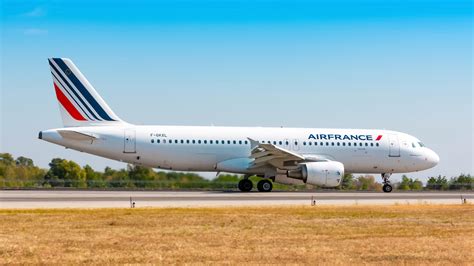
The airline currently bases two Airbus A320 aircraft in the region. These aircraft, registered F-HEPB and F-HEPC, are configured specifically for Caribbean operations.
Passengers flying in business class receive the familiar European-style arrangement commonly found on short-haul routes. Instead of larger seats, the cabin features standard economy seating with the middle seat blocked to provide additional personal space.
Business-class travelers also receive premium ground services that include:
- Lounge access
- Priority boarding
- Additional baggage allowances
- Enhanced airport services
- Complimentary meal offerings on selected flights
Behind the premium cabin are 168 economy-class seats arranged in the traditional 3-3 layout, allowing the aircraft to efficiently accommodate both local travelers and connecting passengers.
The aircraft are perfectly suited for the short sectors that characterize the Caribbean network, where flight times often range from thirty minutes to a few hours.
Connecting Two French Islands: Guadeloupe And Martinique
After departing Guadeloupe, many passengers continue to Martinique, another French overseas department located approximately 120 miles away.
Although separated by water, Guadeloupe and Martinique share similar constitutional status within France. Both islands maintain deep political, economic, and cultural connections to mainland France while preserving their distinct Caribbean identities.
Air France operates up to ten weekly flights between Pointe-à-Pitre (PTP) and Fort-de-France (FDF). The flight is remarkably short, often taking around thirty minutes, yet its importance extends far beyond the modest distance covered.
The route effectively links two separate regions of France located thousands of miles from Paris. For residents, businesses, and government institutions, these services provide essential connectivity that supports everyday life across the French Caribbean.
Despite the brief flight time, the journey offers travelers a unique perspective on how aviation connects geographically distant parts of a single nation.
French Guiana: France’s Strategic Presence In South America
The next stage of the journey takes passengers from Martinique to Cayenne, the capital of French Guiana.
Unlike Guadeloupe and Martinique, French Guiana is located on the northern coast of South America. Nevertheless, it shares the same status as an overseas department of France.
This makes French Guiana one of the most geographically unusual parts of the European Union. Although situated on the South American continent, it remains legally and politically integrated with France.
Air France operates up to ten weekly flights between Martinique and Cayenne Félix Éboué Airport (CAY), creating a seamless connection between French territories separated by vast stretches of ocean.
French Guiana holds exceptional strategic significance. The territory is home to the Guiana Space Centre in Kourou, Europe’s primary space launch facility. For decades, the site has hosted major satellite launches and remains a cornerstone of European space operations.
The presence of this critical infrastructure reinforces French Guiana’s importance within France’s global network and helps explain the need for reliable air connectivity.
Extending Beyond France Into Brazil
For travelers seeking an even more unusual aviation adventure, Cayenne is not the final destination.
Air France extends its Caribbean network beyond French territory and into neighboring Brazil. Using the same Airbus A320 fleet, the airline operates services from Cayenne to two northern Brazilian cities.
The first destination is Belém, served once weekly. The second is Fortaleza, which also receives weekly service.
Although these routes operate less frequently than the core Caribbean sectors, they provide valuable regional connectivity between French Guiana and Brazil. Economic relationships, tourism demand, family connections, and commercial activity all contribute to the viability of these flights.
From an aviation perspective, the routes create a remarkable network stretching from the United States through the French Caribbean and into South America using a single narrowbody aircraft type.
One Of Aviation’s Most Unique Island-Hopping Experiences
The complete journey from Miami to Cayenne through Guadeloupe and Martinique can take more than eight hours including intermediate stops. It is not designed to compete with faster nonstop alternatives. Instead, the route serves a broader purpose rooted in geography, politics, and national connectivity.
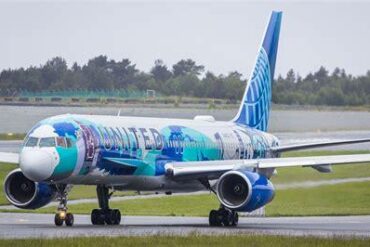
Few airline networks in the world resemble this operation. While United Airlines’ famous Pacific Island Hopper often receives more attention, Air France’s Caribbean network is arguably even more distinctive because it links three separate French departments located across two continents, while simultaneously connecting the United States and Brazil.
For aviation enthusiasts, the experience offers far more than transportation. It provides a rare opportunity to witness how a global airline serves far-flung regions of a country whose territory extends well beyond Europe.
The next time an Air France Airbus A320 appears at Miami International Airport, travelers can be confident that it is not a scheduling error, aircraft substitution, or operational oddity. Instead, it is a visible reminder of France’s global reach and of one of the aviation industry’s most unusual and fascinating regional networks.