Miami once functioned as the unquestioned air bridge between the United States and northern South America, a role built on geography, diaspora ties, and dense airline schedules that made the city a natural hinge between continents. When direct flights to Venezuela vanished, that hinge seized up. Travel did not stop, but it bent outward, looping through Caribbean and Central American hubs that quietly rewired regional aviation economics. The potential return of nonstop service now threatens to snap that circuitry back into its original shape, with consequences that ripple far beyond South Florida.
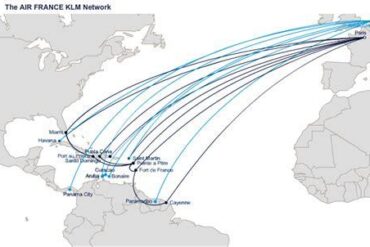
For travelers, the absence of direct flights translated into long, fragmented journeys that replaced a single overnight hop with multi-leg marathons. A Caracas to Miami trip that once took under four hours became an eight- to ten-hour ordeal, often with overnight layovers and unpredictable connections. Airlines and airports in Panama City, Bogotá, and Santo Domingo absorbed this displaced demand, transforming what had been secondary transfer points into essential gateways. Over time, those hubs normalized the inefficiency, pricing it into fares and schedules until the detour felt permanent.
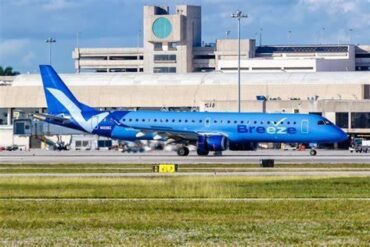
Yet permanence in aviation is usually an illusion. Venezuelan carrier Avior Airlines has now filed a formal application with the US Department of Transportation seeking authority to operate passenger and cargo flights to the United States, including Caracas–Miami, Maracaibo–Miami, and Barcelona–Miami, contingent on FAA Category 1 status. The filing followed the January 2026 reversal of safety-based restrictions that had frozen the market for years. In one administrative stroke, a corridor that once carried hundreds of thousands of passengers annually moved from dormant to plausible.
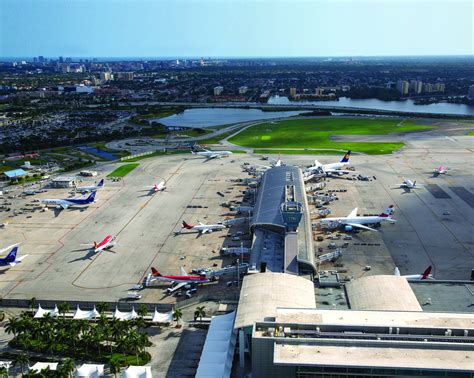
Before the suspension, Miami International Airport sat at the center of this traffic web. Multiple daily flights by US and Venezuelan airlines funneled travelers through MIA, making Venezuela one of the airport’s most significant Latin American markets. American Airlines alone carried more than 600,000 round-trip passengers annually on US–Venezuela routes in the last full year before service halted. Those numbers did not disappear during the ban; they scattered, redistributed across indirect routings that added cost and time while enriching intermediary hubs.
Miami’s Long-Dormant Venezuela Gateway Reawakens
Avior’s proposed network positions Miami as its primary US entry point, a strategic choice rooted in both demand and infrastructure. South Florida hosts one of the largest Venezuelan communities outside the country, and Miami’s connectivity allows seamless onward travel across the United States. The airline’s application also includes Houston, signaling interest in energy-sector traffic and cargo flows that historically linked Venezuela with Texas. Still, Miami remains the symbolic and commercial prize, the place where lost connectivity is most keenly felt.
The return of nonstop flights would immediately compress travel times by up to five hours each way, a change that reshapes passenger behavior almost overnight. Price-sensitive travelers who tolerated circuitous routings suddenly gain leverage, forcing airlines to recalibrate fares. Industry analysts expect downward pressure on ticket prices as competition re-enters a market long insulated by geography and regulation. For Miami, this is less about novelty than restoration, reclaiming a role that had been temporarily outsourced.
Caribbean Hubs and the Fragile Middleman Model
The hubs that flourished during the ban did so by becoming indispensable middlemen. Panama City, in particular, emerged as a dominant transfer point, with some flights carrying a majority of passengers connecting to or from Venezuela. Santo Domingo and Bogotá similarly capitalized on the vacuum, building schedules that assumed indirect travel as the default. These models generated years of steady revenue, but they were always contingent on the absence of a more direct alternative.
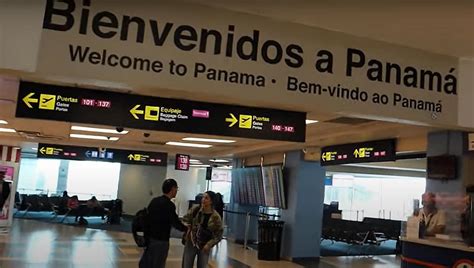
Nonstop flights threaten that assumption. When travelers can bypass intermediate stops, the value proposition of short-haul Caribbean and Central American sectors weakens. Airlines may respond by trimming frequencies, redeploying aircraft, or refocusing on origin-and-destination traffic rather than transit-heavy routes. The shift would not erase these hubs from the map, but it would strip away a layer of traffic that had quietly become structural to their growth.
Cargo, Speed, and Miami’s Logistics Advantage
Passengers tell only half the story. Before flights were suspended, Venezuela–US routes carried significant volumes of perishables, pharmaceuticals, and industrial components, commodities that prize speed and predictability. Indirect routings introduced handling delays and increased the risk of spoilage or disruption. Miami’s cargo facilities, among the largest in the Americas, were built to move this kind of freight efficiently, linking air transport with maritime and road networks across Florida.
The restoration of direct flights would shorten supply chains and reduce costs, a particularly attractive prospect for exporters and importers navigating volatile markets. For cargo operators, Miami’s re-emergence as a nonstop gateway could tilt routing decisions away from Caribbean transshipment points and back toward South Florida’s integrated logistics ecosystem.
A Regional Rebound Sets the Stage
The momentum behind Avior’s filing does not exist in isolation. Venezuela’s international air links have been gradually reknitted, with carriers restarting suspended services and opening new routes across the Americas and beyond. Brazil’s GOL has resumed São Paulo–Caracas flights, the Dominican Republic has restored long-paused connections, and long-haul operators such as Qatar Airways have signaled renewed confidence in the region’s operational environment. This broader rebound strengthens the case that US routes can be sustained rather than merely reopened.
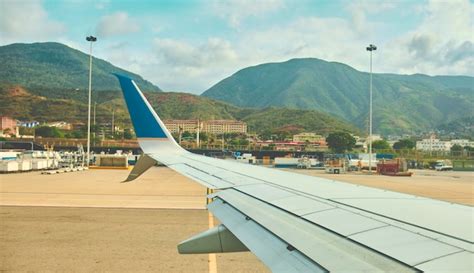
Regulatory alignment and safety oversight remain essential gatekeepers, but the directional trend is clear. If approvals proceed, the US–Venezuela market could recover to, or even exceed, pre-2019 passenger volumes. Miami would once again anchor that flow, leveraging its network scale and cultural ties to absorb demand that had been artificially diverted elsewhere.
A Structural Realignment in Hemispheric Aviation
The implications of restored nonstop service extend beyond individual routes. Aviation networks are ecosystems, and the reactivation of a major corridor forces a recalibration of flows across an entire region. For Miami, the payoff is tangible: higher passenger totals, stronger cargo throughput, and renewed relevance as a hemispheric crossroads. For Caribbean and Central American hubs, the challenge lies in adapting to a landscape where indirect routing is no longer obligatory.
This is not a story of winners and losers so much as one of gravity reasserting itself. Direct flights pull traffic along the shortest path, and when barriers fall, markets tend to snap back to their most efficient configurations. Miami’s lost connection was never erased, only rerouted. Its return would mark a decisive shift, shaking up Caribbean hubs and restoring a gateway that once defined how the Americas moved.