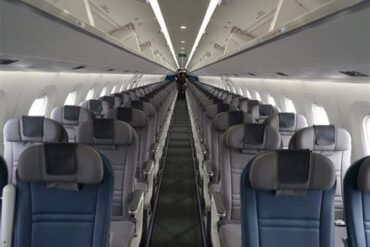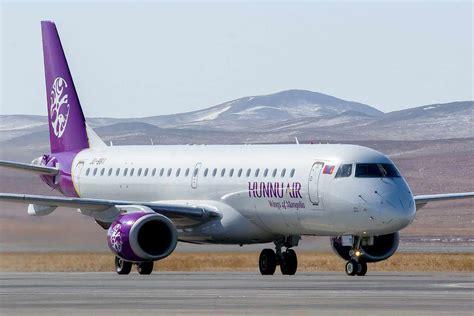
The skies between Mongolia and mainland China are now linked with a powerful new connection, as Hunnu Air inaugurates its first Embraer E195-E2 route, marking a historic milestone in regional aviation. This development is not just a new route; it is a statement of intent, ambition, and growing geopolitical alignment between two nations poised for deeper cooperation. On 11 May 2025, Hunnu Air took a bold step forward by operating the first E195-E2 flight from Ulaanbaatar to Beijing Daxing International Airport, opening a new chapter in air connectivity for Northeast Asia.
A Strategic Leap in Aviation: The E195-E2 in China
This launch marks the first time the Embraer E195-E2 has been deployed on a scheduled route into China, a country with one of the world’s fastest-growing air travel markets. The selection of Beijing Daxing, a modern hub built for high-efficiency operations, reflects the importance of this bilateral air bridge. This route is not a one-off — it is part of a larger strategy by Hunnu Air to transform itself from a domestic operator into a key international player.
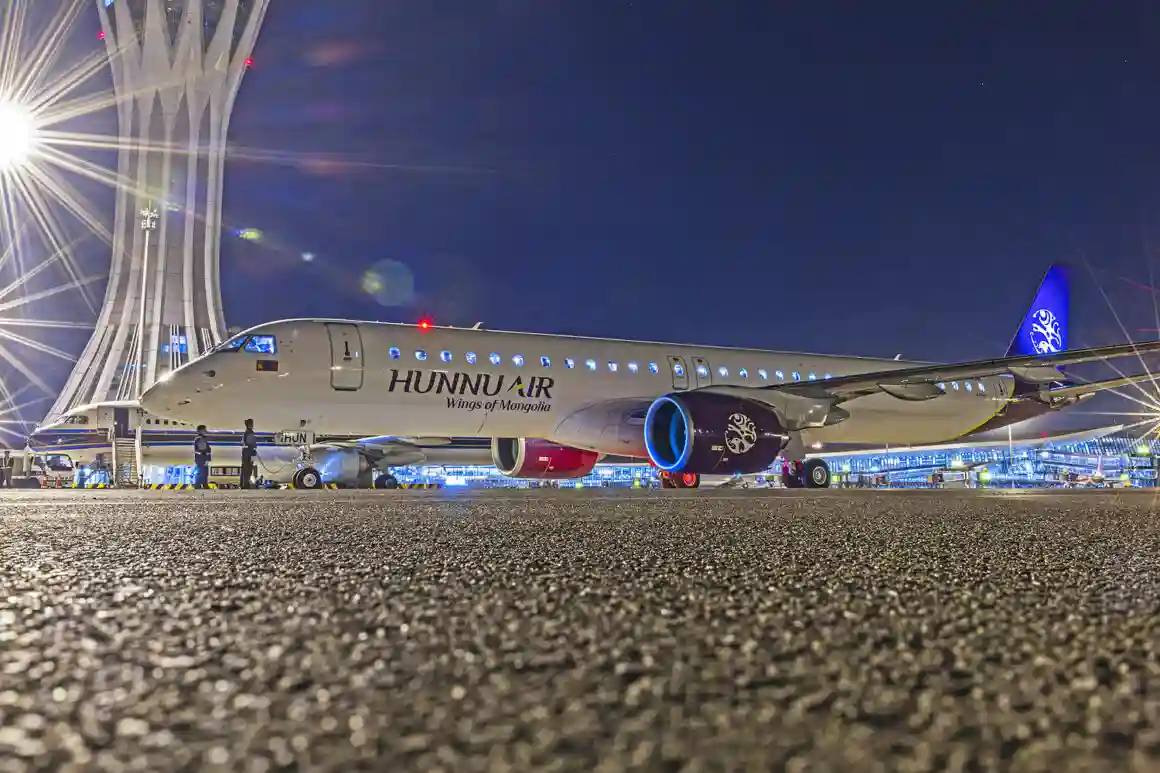
Munkhjargal Purevjal, CEO of Hunnu Air, emphasized the symbolism of the moment: “The launch of this route with our new E195-E2 aircraft reflects Hunnu Air’s determination to expand our international network and symbolizes the deepening friendship and collaboration between Mongolia and China in this new era.”
These words are not merely ceremonial. They indicate a long-term strategy grounded in fleet modernization, regional diplomacy, and economic opportunity. This new air corridor could well become the lifeline for expanded cultural, business, and tourism exchange between the two neighbors.
The Aircraft That Sets a New Standard
The Embraer E195-E2 is a next-generation regional jet that perfectly fits the operational needs of medium-haul routes in Asia. Known for its fuel efficiency, low noise profile, and advanced avionics, the aircraft represents a significant upgrade from the previous-generation E190s that Hunnu Air had been operating since 2019. With the E195-E2, the airline gains a larger cabin, increased range capability, and an overall better passenger experience.

Hunnu Air’s E195-E2 jets are configured with 136 seats in a two-class layout, offering comfort and capacity tailored to the specific market needs of Northeast and Southeast Asia. This aircraft’s range and operating efficiency make it an ideal choice for expanding to high-potential, underserved routes.
Martyn Holmes, Chief Commercial Officer of Embraer Commercial Aviation, underscored the broader implications of the deployment: “The rightsized E2 will enable Hunnu Air to profitably grow, unlocking the huge potential of Mongolia and strengthening a growing Asia network.”
Symbolic and Strategic Timing
The timing of this launch carries significant weight. Not only does it coincide with the delivery of the second E195-E2 to Hunnu Air in April 2025, but it also aligns with broader regional trends of recovery, resilience, and re-engagement following the COVID-19 era. Airlines across Asia are recalibrating their fleet plans and route networks, with a particular focus on high-efficiency aircraft that can deliver profitability in volatile markets.
For Mongolia, a landlocked nation historically reliant on China and Russia for transport access, this expansion opens more than just air corridors — it enables economic corridors. The move to deploy next-generation jets signals a readiness to engage with broader Asia-Pacific economies on more equal footing.
From Ulaanbaatar to the Asia-Pacific: Regional Expansion Plans
The Beijing route is just the beginning. Hunnu Air has made it clear that its ambitions stretch far beyond China. With the E195-E2 now in active service, the carrier plans to extend its network to include destinations such as Haikou, Sanya, and Phu Quoc. Additionally, the airline has set its sights on key regional markets including:
- Japan
- South Korea
- Vietnam
- India
- Uzbekistan
Each of these destinations represents both commercial opportunity and strategic significance. Japan and South Korea are hubs of advanced economies with strong outbound travel demand. Vietnam and India are fast-growing aviation markets, while Uzbekistan provides a vital link into Central Asia.
With the E195-E2’s efficient economics and right-sized capacity, Hunnu Air is in a position to offer profitable regional services that would be uneconomical with larger aircraft. This positions the airline as a niche connector in Asia’s rapidly evolving air travel landscape.
Embraer’s Deepening Footprint in Mongolia
The E195-E2 deployment is the latest milestone in a steadily growing relationship between Embraer and Mongolia. Embraer’s footprint in the country dates back to 2018, when the ERJ 145 entered commercial service in Mongolia. Since then, Embraer has become a key player in the modernization of the Mongolian aviation sector.
Embraer’s success in Mongolia reflects the adaptability of its aircraft to the region’s challenging terrain and sparse population density. Aircraft like the E195-E2 offer the performance needed to operate in high-altitude airports like Ulaanbaatar, while maintaining profitability on routes with moderate passenger volumes.
For Embraer, the Chinese debut of the E2 is also a symbolic breakthrough. China’s aviation sector has traditionally favored domestic manufacturers or larger aircraft models from Airbus and Boeing. The acceptance of a Brazilian regional jet into a scheduled Chinese route is a significant commercial endorsement.
The Wider Implications: Connectivity, Trade, and Diplomacy
Aviation has long been a barometer of bilateral relations, and the Ulaanbaatar-Beijing route is no exception. As China deepens its Belt and Road Initiative and Mongolia seeks to diversify its economic partners, air connectivity becomes a tool of soft diplomacy. Flights like these foster tourism, business investment, and cultural exchange, driving value beyond seat revenue.
For Mongolian travelers, the route offers a fast, direct link to one of Asia’s most important capitals. For Chinese investors, it opens the door to untapped opportunities in Mongolia’s mining, agriculture, and infrastructure sectors.
The route also enhances multilateral aviation alignment, supporting regional airspace integration and compliance with international safety and sustainability standards. As aviation grows greener, aircraft like the E195-E2 — known for its 25% lower fuel burn per seat compared to previous-generation jets — are seen as essential assets.
Conclusion: A Defining Moment for Mongolian Aviation
Hunnu Air’s launch of the E195-E2 flights between Ulaanbaatar and Beijing is more than a new route — it is a pivotal moment in the evolution of Mongolia’s aviation identity. By choosing to invest in modern aircraft, partner with Embraer, and strategically expand toward the Asia-Pacific, Hunnu Air is laying the groundwork for a more connected, economically vibrant, and globally recognized Mongolia.
With two E195-E2s already delivered and a forward-looking route strategy in place, the airline is poised to become not just a national carrier, but a regional connector — bridging cultures, economies, and people, one flight at a time.