The Pacific is filling with airfields that were once written off as relics of another war. In 2026, the most interesting change is not simply the construction of new bases, but the deliberate return of forgotten runways to operational relevance. Across Guam, Palau, Australia, the Philippines, and the Northern
This shift reflects a basic lesson from the modern Pacific: a small number of enormous bases can become dangerous liabilities when an opponent possesses large inventories of long-range missiles. The United States therefore wants more places where aircraft can disperse, refuel, rearm, repair, and continue fighting. Some of these locations do not resemble traditional air bases at all. They may have limited permanent personnel, austere facilities, or runways surrounded by vegetation. Their value comes from the fact that they can suddenly become useful when the main operating bases are threatened.
Northwest Field, Guam: A WWII Airfield Becoming Andersen’s Dispersal Option
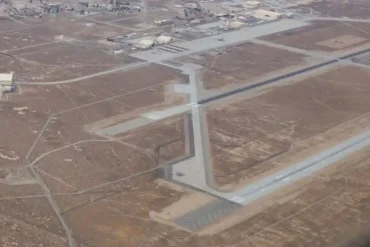
Northwest Field is perhaps the clearest example of a forgotten Pacific airfield being transformed into a modern combat asset. Located on Guam and closely tied to Andersen Air Force Base, the field was once a World War II-era strip that eventually deteriorated into a largely unused piece of military infrastructure. Its new purpose is much more demanding: provide another runway complex where aircraft can operate if Andersen’s primary facilities are damaged, congested, or threatened.
The transformation is substantial. The field has been rebuilt around two runways measuring about 8,000 feet each, creating enough runway capacity for strategic airlift and Marine Corps tactical aircraft. Since 2024, the site has also received dozens of aircraft parking positions and hardened munitions storage facilities. Instead of treating Northwest Field as a historical curiosity, American planners are turning it into an Agile Combat Employment node capable of supporting aircraft operations away from the most obvious target.

Its importance became especially visible during the 2025 Resolute Force Pacific exercise, when Northwest Field served as a staging location. That matters because an airfield can be strategically useful only if crews know how to operate from it under realistic conditions. Training aircraft and support personnel at secondary locations helps establish procedures for moving fuel, weapons, maintenance equipment, communications gear, and people quickly when a crisis begins.
Northwest Field is also part of a much larger defensive transformation on Guam. The island is receiving an expanded integrated air and missile defense network involving multiple interceptor and radar locations. The underlying logic is straightforward: Andersen remains indispensable, but it should not be the only place from which American aircraft can operate. By distributing aircraft and support functions across multiple sites, the United States can make a single missile strike far less decisive.
Peleliu Airstrip, Palau: Sledge Airfield Returns to the Pacific Fight
Few places illustrate the passage of time more dramatically than Peleliu. The small island in Palau became synonymous with some of the most brutal fighting of the Pacific War, and its airfield was embedded in that history. Today, the old strip is being brought back for austere aviation training and potential operational use, giving a location that had been effectively dormant for generations a new strategic purpose.
The historical setting is important because Peleliu was not an ordinary airfield. It was originally constructed by Japanese forces and became a key objective during the American campaign in 1944. The fighting killed roughly 1,500 Americans and more than 11,000 Japanese personnel. The battlefield remained a powerful physical reminder of that conflict long after the military infrastructure stopped serving its original purpose.
In 2024, Marine engineers returned to the airfield with a distinctly modern mission. Crews from the 7th Engineer Support Battalion spent months clearing vegetation, cutting trees, and dealing with unexploded ordnance before the runway could support aircraft. On June 22, 2024, a KC-130J Hercules landed on the rebuilt roughly 6,000-foot strip, demonstrating that the old airfield could again receive a significant military aircraft.

Peleliu’s value is geographic as much as historical. Palau occupies a position inside the broader island-chain system that gives the United States and its allies additional depth west of Guam. A runway there does not need to host aircraft permanently to matter. It can function as a refueling point, emergency recovery location, training site, logistics node, or temporary operating base when larger facilities become unavailable.
The political dimension is equally significant. Palau maintains close defense ties with Washington through its Compact of Free Association and remains one of the few countries in the region that formally recognizes Taiwan. Beijing has rejected suggestions that American infrastructure projects amount to permanent base-building, but the military utility of improved runways is difficult to ignore. In a conflict, geography itself becomes an asset, and every usable runway can complicate an adversary’s targeting plan.
RAAF Base Tindal, Australia: A WWII Standby Field Built for Long-Range Bombers
RAAF Base Tindal represents a different kind of revival. Originally established as Carson’s Airfield in 1942, it began as part of Australia’s World War II network of northern airfields. Decades later, its remote location near Darwin has made it increasingly attractive to the United States and Australia as a strategic operating hub beyond the immediate reach of many Chinese short- and medium-range ballistic missiles.
The American investment is reportedly measured in more than $200 million, with infrastructure designed to support a much larger rotational presence. Planned and completed improvements include a squadron operations facility, maintenance infrastructure, additional jet-fuel storage, an ammunition bunker, and accommodation for visiting personnel. A parking apron designed to support six B-52 bombers is scheduled for completion in late 2026.

That bomber connection is especially important. The B-52 is not a short-range tactical aircraft that needs to be positioned close to the front line. It can launch long-range weapons from a comparatively secure base while contributing to deterrence across a huge geographic area. Tindal therefore offers something Guam cannot provide to the same degree: strategic depth.
Tindal also supports Australia’s growing surveillance architecture. The base has become an operating location for MQ-4C Triton maritime surveillance aircraft, which require specialized hangars and support systems. Those aircraft can provide persistent intelligence, surveillance, and reconnaissance across areas including the South China Sea, Arafura Sea, and Indian Ocean. The combination of bombers, fighters, surveillance aircraft, fuel, ammunition, and allied personnel makes Tindal far more than a refurbished historical runway.
Basa Air Base, Philippines: A Permanent Philippine Base Becomes a US-Compatible Hub
Basa Air Base in Pampanga differs from the other sites because it was never abandoned. The Philippine Air Force has continued operating there, but years of investment are transforming an underfunded partner airfield into a facility capable of supporting far more demanding joint operations.
The centerpiece has been rehabilitation of its roughly 9,186-foot runway, completed in November 2023. Further funding has supported a massive aircraft parking apron with capacity for about 20 aircraft. These improvements are linked to the Enhanced Defense Cooperation Agreement and the broader American effort to strengthen Philippine military infrastructure.

Basa’s location gives it exceptional strategic relevance. The Philippines sits astride approaches to the Luzon Strait, one of the critical maritime passages between Taiwan and the northern Philippines. That means an airfield at Basa can support missions connected to the defense of the northern island chain without requiring every American aircraft to operate from Guam, Japan, or distant Australia.
The base has already demonstrated that role during major exercises. USAF F-22 Raptors have deployed to Basa for Cope Thunder, practicing integrated air-to-air and air-to-ground missions with allied forces. The significance is not simply that an advanced fighter can land there. It demonstrates that the infrastructure, logistics, communications, and operating procedures are being aligned closely enough to support sophisticated American aircraft.
North Field, Tinian: The B-29 Base Rebuilt for a Missile Age
North Field on Tinian may be the most historically famous airfield in this group. Eight decades ago, B-29 Superfortresses departed from Tinian on missions that changed world history, including the atomic bomb missions against Hiroshima and Nagasaki. After World War II, however, the enormous complex gradually disappeared beneath vegetation and neglect.
Now the Pentagon is investing roughly $400 million to bring major portions of the field back into usable condition. Tinian once had four runways of approximately 8,500 feet each, and two are targeted for completion by 2027. Engineers have cleared the overwhelming majority of vegetation from more than 20 million square feet of degraded pavement, turning an immense historical site into a modern austere operating environment.

The scale of the project reveals why Tinian matters. It is not simply about restoring a runway for occasional exercises. The work forms part of a broader effort to resurrect a network of airfields across the Pacific that can support distributed operations. Tinian International Airport is also undergoing a separate major expansion, while fuel infrastructure at the port adds another layer to the island’s military utility.
Why These Forgotten Pacific Airfields Matter in 2026
The common thread linking these five locations is dispersal. Modern American airpower cannot assume that a handful of major bases will remain untouched during a major Pacific conflict. Large runways and sophisticated hangars are valuable, but they are also visible, fixed targets. A distributed network forces an opponent to locate and strike many more facilities while giving American commanders more options for moving aircraft between them.
Yet that is precisely why these old Pacific airfields are returning to relevance. Their greatest advantage is not nostalgia. It is geographic redundancy. A runway built during World War II may have little value as a monument, but if it can be cleared, resurfaced, supplied, defended, and connected to modern command networks, it becomes another decision point in a potential conflict.
The United States is therefore doing something surprisingly old-fashioned with very modern technology: rebuilding a web of airfields. Northwest Field, Peleliu, Tindal, Basa, and Tinian show how that strategy can combine hardened infrastructure, allied access, austere operations, long-range bombers, advanced fighters, surveillance aircraft, and missile defenses.
The Pacific air war of the 1940s depended on capturing and improving island airfields one after another. The strategy emerging in 2026 reverses that historical pattern. Instead of seizing islands to build forward bases, the United States and its allies are reclaiming existing infrastructure and preparing it for a conflict in which survival depends on having somewhere else to land, refuel, rearm, and launch from. These forgotten runways are becoming valuable precisely because an adversary knows they exist but cannot afford to ignore any of them.