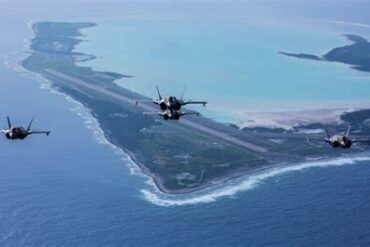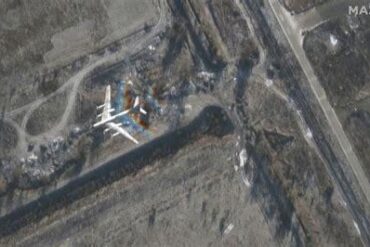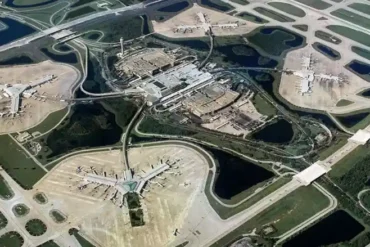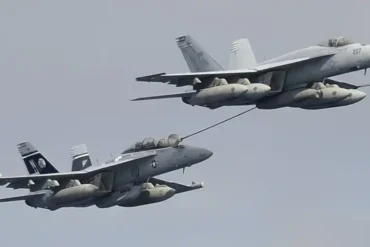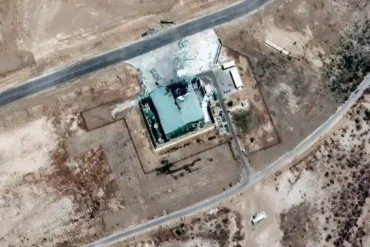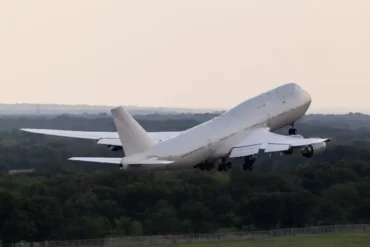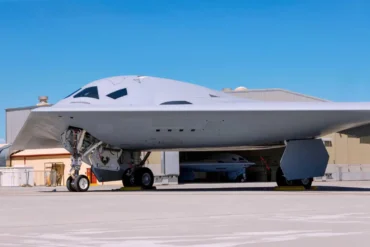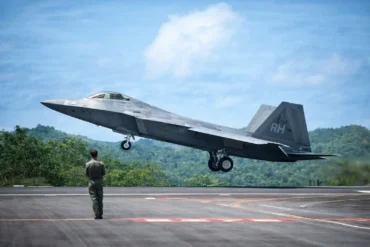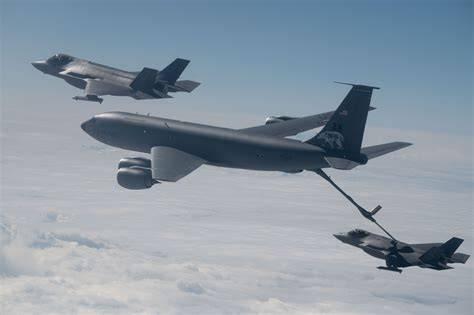
The United States is reshaping the geography of its air power across the Indo-Pacific, and the most important changes are not always happening at the biggest air bases. A growing network of military airfields, civilian airports, expeditionary strips, and allied facilities is being upgraded to support the aircraft that make long-range air operations possible. Among the most important are the Air Force’s KC-135 Stratotanker and KC-46A Pegasus, which can extend the reach of fighters, bombers, transports, and other aircraft across enormous stretches of ocean.
The strategy reflects a basic geographic reality. The Pacific is vast, while many of its islands have limited infrastructure and relatively small populations. An aircraft operating from Japan, Guam, or the Philippines may need to cover hundreds or thousands of miles before reaching its next operating area. That makes aerial refueling more than a supporting function. It is a central part of maintaining persistent airpower across the region.
Washington is therefore investing heavily in facilities that can distribute aircraft rather than concentrating them at a handful of large installations. The approach fits the Pentagon’s broader Agile Combat Employment (ACE) concept, which emphasizes dispersal, mobility, rapid regeneration, and the ability to operate from multiple locations when major bases are threatened or disrupted. Across the Western Pacific, concrete aprons, reinforced runways, fuel facilities, taxiways, and support buildings are becoming strategic assets.
Why Refueling Hubs Matter to the Pacific Air Strategy
The importance of these airfields becomes clearer when considering the distances involved in a potential Pacific conflict. Fighters based in Japan, the Philippines, Guam, or other regional locations cannot simply operate indefinitely over distant maritime areas. Tankers provide the airborne fuel bridge that allows tactical aircraft to remain on station longer, reach distant targets, return safely, or reposition between dispersed bases.
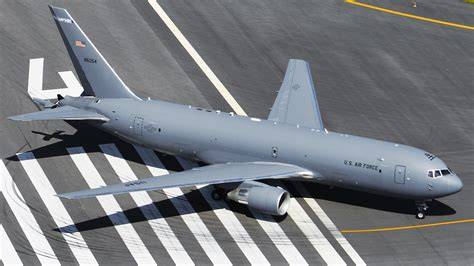
The KC-135 has been a foundation of American aerial refueling for decades, while the newer KC-46A brings greater fuel capacity, modern communications, and additional capabilities to the tanker fleet. Both aircraft, however, require substantial infrastructure. Their size and weight mean that runways must be strong enough to support them, while parking aprons, taxiways, fuel systems, and maintenance facilities must be capable of handling demanding operational cycles.
That is why the Pentagon is spending billions of dollars on Pacific infrastructure. The objective is not simply to create more places where aircraft can land. It is to build a distributed network of usable operating locations that can keep American and allied aircraft moving even if a major base becomes unavailable.
1. Cesar Basa Air Base, Philippines
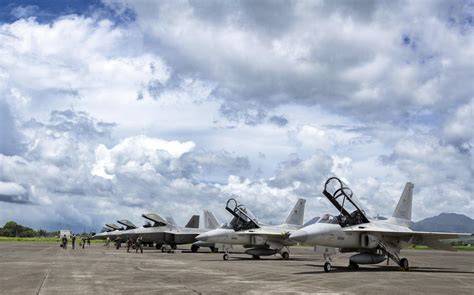
Cesar Basa Air Base in Pampanga is one of the most significant locations in this network because of its position within the first island chain. The Philippines occupies an important geographic position between the South China Sea and the wider Western Pacific, giving airfields on the island nation potential value for both combat and logistical operations.
The Pentagon has allocated approximately $66 million for improvements at Basa. A major part of the investment has gone toward rehabilitating its roughly 8,000-foot runway, strengthening and modernizing the surface so that it can better accommodate heavy aircraft. For tanker operations, that distinction matters. A runway capable of supporting a fully loaded KC-135 or KC-46A gives commanders considerably more flexibility than an aging strip restricted to lighter aircraft.
The improvements also support the broader concept of rapid deployment. Tankers can potentially use the base for large-force staging, hot-pit refueling, emergency recovery, and forward operations while supporting aircraft operating over the South China Sea and surrounding areas. Instead of treating Basa as a permanent substitute for major American bases, the emerging model makes it one node within a larger network.
2. Saipan International Airport, Northern Mariana Islands
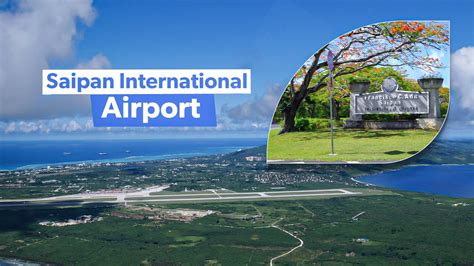
Saipan International Airport offers another important example of how civilian infrastructure can be adapted for military purposes. Located in the Northern Mariana Islands, Saipan sits within a strategically useful area of the Pacific and can provide an alternative operating location for aircraft normally associated with larger bases.
The airport has an approximately 8,700-foot runway, with taxiway and infrastructure improvements designed to support heavier aircraft. The Pentagon has also funded expeditionary airfield equipment, allowing military forces to establish a more capable presence without constructing an entirely new permanent base.
This distinction is important to ACE. A dispersed operating location does not necessarily need the enormous permanent infrastructure associated with a traditional air base. Instead, mobile equipment, cooperative agreements, reinforced pavement, fuel access, and pre-positioned support assets can turn a civilian airport into a useful military staging point.
Saipan can potentially help distribute aircraft from Guam while providing additional capacity for tankers and airlift platforms such as the C-130 Hercules. Nearby Rota International Airport is also receiving attention, although increased military activity has generated environmental and community concerns, particularly regarding noise.
3. Yap International Airport, Micronesia
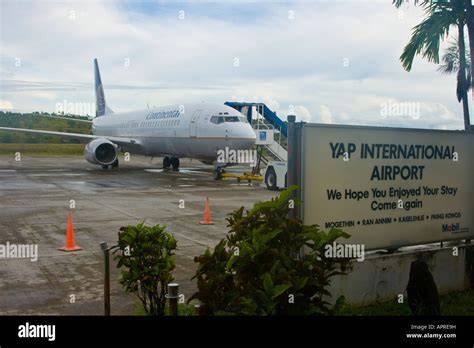
Farther southwest, Yap International Airport in the Federated States of Micronesia represents one of the most ambitious infrastructure projects in the emerging network. Located between Guam and Palau, Yap occupies a geographic position that can help bridge the enormous distances separating major Pacific operating areas.
The project is expected to involve approximately $400 million in improvements across a 447-acre area. Planned infrastructure includes a new aircraft parking apron, parallel taxiway, fuel storage facilities, and support buildings. Together, these upgrades are designed to transform the civilian airport into a more capable dual-use facility.
The significance goes beyond one runway. Fuel storage is particularly important because an airfield becomes much more useful when aircraft can arrive, refuel, reposition, and depart without depending entirely on a distant major base. That creates additional resilience for the entire regional network.
Yap is also part of a broader Pentagon infrastructure effort across the archipelago. By distributing facilities across remote islands, American planners can create more operational options while reducing dependence on a small number of predictable locations.
4. Peleliu Airfield, Palau
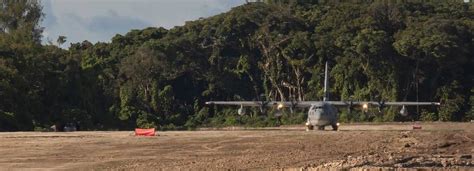
Peleliu Airfield, also known as Sledge Airfield, illustrates a different part of the strategy. Unlike locations being upgraded specifically to accommodate the largest Air Force tankers, Peleliu is being developed as a forward operating and refueling location for smaller expeditionary forces.
The airfield dates back to the Second World War, and decades of jungle growth had reclaimed parts of the old installation. Military engineers, including Navy Seabees and Marine Corps engineering personnel, have been working to clear vegetation and restore the historic airfield environment. Initial validation flights involving C-130 aircraft are an important step toward making the location operationally useful again.
Peleliu is not expected to accommodate KC-135 or KC-46 operations. Its value instead comes from supporting platforms such as the KC-130J Super Hercules, which can provide aerial refueling to aircraft including the F-35B Lightning II and support rotary-wing operations involving the V-22 Osprey.
That makes Peleliu an example of how the Pacific network does not need every airfield to perform the same job. Some bases will support heavy tankers, while others will provide smaller-scale forward arming and refueling points that allow combat units to operate farther from their primary bases.
5. Kadena Air Base, Okinawa, Japan
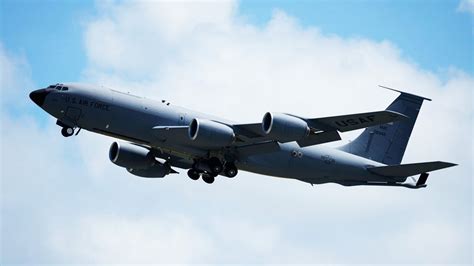
Kadena Air Base remains one of the most important American air installations in the first island chain. Located on Okinawa, it supports a broad network of American and allied operations, making efficient tanker operations especially important.
The Air Force is upgrading infrastructure associated with the 909th Aerial Refueling Squadron, with particular attention given to hot-pit refueling. This process allows aircraft to be refueled while their engines remain running, eliminating the need for a full shutdown and restart between missions.
The target is significant: infrastructure improvements are intended to reduce the tanker turnaround process from approximately two hours to around 45 minutes, representing a potential reduction of roughly 68%. Faster turnaround means more sorties can be generated from the same runway and apron capacity.
In a high-tempo environment, that efficiency can be decisive. Tankers are not merely aircraft that sit waiting for fighters to need fuel. They must themselves be launched, recovered, serviced, refueled, and returned to the fight. Kadena’s improved ground infrastructure therefore directly affects the endurance of American air operations across the region.
6. Tinian Airfield, Northern Mariana Islands
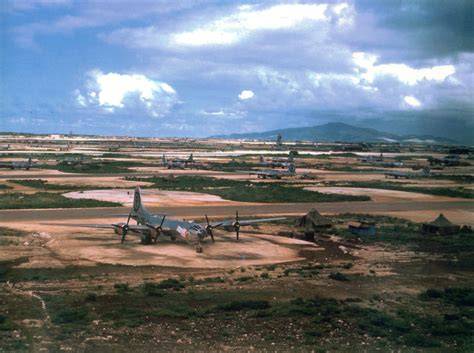
Tinian Airfield is another former wartime installation being reshaped for modern air warfare. The Air Force is pursuing roughly $800 million in improvements, including extensive new concrete aprons and taxiways, along with reinforcement work associated with the existing runway.
The scale is striking. More than one and a half square miles of new concrete are planned or being developed as part of the effort. Once complete, the expanded military footprint will occupy an unusually large share of the island, which has a population of only around 3,500 people.
The infrastructure is intended to support heavy tankers as well as airlift aircraft such as the C-130 Hercules and C-17 Globemaster III. That makes Tinian valuable not just as a refueling location but as a potential logistics and staging hub capable of supporting a wide range of aircraft.
Tinian, Saipan, and Rota are strategically important because they sit along approaches linking the broader Pacific to the South China Sea and Taiwan Strait. Their location gives planners additional options if operations from larger bases become constrained.
7. Andersen Air Force Base, Guam
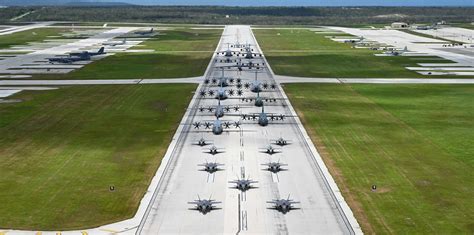
At the center of the second island chain is Andersen Air Force Base on Guam, arguably the most important individual airfield in this network. Guam is a U.S. territory roughly 1,500 to 2,000 miles from mainland Asia, placing it farther from many Chinese missile systems than bases in Japan or the Philippines while still keeping it within reach of major Indo-Pacific operating areas.
Andersen already supports some of America’s most important long-range aircraft, including B-52 Stratofortress, B-1B Lancer, B-2 Spirit, and aerial tanker operations. The Air Force is expanding the installation with approximately 20 acres of additional aircraft parking, alongside new fuel and refueling infrastructure.
The larger construction program is part of a broader military buildup on Guam. The Pentagon has planned billions of dollars in infrastructure investment, reflecting the island’s role as a central hub for bomber deployments, tanker operations, airlift, logistics, and regional command functions.
Guam is also receiving major defensive upgrades. Nearly $2 billion is being directed toward an integrated air and missile defense architecture designed to provide layered protection against increasingly sophisticated threats. For Andersen, that defensive umbrella is inseparable from its offensive value: there is little point in creating a massive air hub if the hub itself cannot survive sustained attack.
The Future of America’s Pacific Refueling Network
Taken together, these seven locations show how American air strategy is evolving from a model centered on a few enormous bases toward a distributed Pacific operating network. Kadena and Andersen remain critical hubs, but Saipan, Tinian, Yap, Peleliu, and Basa can provide additional places to disperse aircraft, stage missions, recover damaged aircraft, and sustain operations.
The concept is especially relevant to aerial tankers. Fighters and bombers may attract the headlines, but tankers often determine how effectively those aircraft can use their range. A distributed tanker network allows aircraft to operate farther from their home bases and gives commanders more options when individual airfields become unavailable.
The strategy also creates a complicated balance between military necessity and civilian life. Many of these locations are dual-use airports or sit close to communities that could experience greater aircraft traffic, construction, and noise. Environmental assessments and local concerns will therefore remain part of the expansion process.
Ultimately, the Pacific air strategy is becoming a contest of distance, resilience, and infrastructure as much as aircraft numbers. The United States can possess advanced fighters and long-range bombers, but those platforms need fuel, runways, parking space, maintenance, and protected operating locations. By upgrading seven strategically positioned airfields across the first and second island chains, Washington is building the physical network needed to keep airpower moving across one of the world’s most demanding theaters.
The result is a Pacific architecture in which a runway on a remote island can matter almost as much as an aircraft parked on it. Every reinforced runway, expanded apron, fuel tank, and faster refueling loop adds another layer of operational resilience. In a region where thousands of miles of ocean separate potential bases and battlefields, that infrastructure may ultimately determine how long American and allied air forces can remain in the fight.