Commercial airports are often viewed as symbols of globalization, tourism, and economic growth. Every day, millions of travelers pass through expansive terminals, board aircraft bound for destinations around the world, and rarely think about what occupied the same land decades earlier. Yet behind many of today’s busiest commercial airports lies a fascinating military history that shaped not only the airport itself but also the surrounding region.
During World War II and the tense decades of the Cold War, governments across the globe invested enormous resources into constructing military airfields capable of supporting bombers, fighters, reconnaissance aircraft, and strategic transport missions. These installations featured exceptionally long runways, reinforced taxiways, hardened shelters, and vast maintenance facilities built to withstand the demanding requirements of military aviation.
When global conflicts subsided and defense priorities shifted, many of these airfields found a second life. Rather than abandoning valuable infrastructure, governments transformed them into civilian airports, creating aviation hubs that continue serving millions of passengers every year. Remarkably, many still retain unmistakable reminders of their military heritage, from unusually long runways and preserved hangars to active military units sharing facilities with commercial airlines.
Instead of erasing history, these airports have woven it into their identity. Some continue operating alongside military squadrons, while others preserve museums, memorials, or original structures that remind visitors of the critical role these airfields once played during wartime. Their evolution demonstrates how military engineering often provided the foundation for some of the world’s most successful aviation gateways.
By exploring these remarkable airports, it becomes clear that modern commercial aviation owes much of its infrastructure to military planning. Each destination tells a unique story of transformation, resilience, and adaptation, where former bases built for war now connect people, cultures, and economies across continents.
Orlando International Airport: Florida’s Busiest Airport Still Honors McCoy Air Force Base
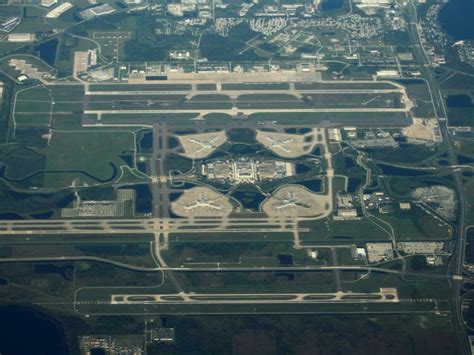
Among America’s busiest airports, Orlando International Airport (MCO) provides one of the clearest examples of a successful military-to-civilian transformation. Welcoming more than 57 million passengers annually, the airport serves as the primary gateway to Central Florida’s world-famous attractions. However, its history stretches far beyond family vacations and international tourism.
Long before Disney vacations became synonymous with Orlando, the property housed Pinecastle Army Air Field, established during World War II. Following the war, the installation evolved into McCoy Air Force Base, named after Colonel Michael N. W. McCoy, who tragically lost his life during a Boeing B-47 Stratojet training mission in 1957.
Throughout the Cold War, McCoy Air Force Base became a vital component of America’s Strategic Air Command (SAC). Nuclear deterrence relied heavily on long-range bombers capable of responding within minutes, and McCoy hosted fleets of Boeing B-52 Stratofortress bombers alongside Boeing KC-135 Stratotanker aerial refueling aircraft. During the Cuban Missile Crisis, the base ranked among the most strategically significant military installations in the United States, prepared to launch missions at a moment’s notice.
When the Air Force officially closed the base in 1975, local authorities recognized the tremendous value of its infrastructure. Rather than constructing an entirely new civilian airport elsewhere, they converted the existing installation into what would become Orlando International Airport.
Evidence of its military origins remains remarkably easy to identify today. The airport’s exceptionally long runways were originally engineered to accommodate heavily loaded strategic bombers rather than commercial airliners. Their generous length now provides operational flexibility for wide-body passenger aircraft while also serving as an excellent diversion airport during severe weather.
Perhaps the most recognizable reminder appears on every boarding pass. Orlando retained the airport code MCO, ensuring that the legacy of McCoy Air Force Base continues to travel with millions of passengers each year. Historical exhibits throughout the terminals further commemorate the base’s service, allowing visitors to appreciate how a cornerstone of America’s nuclear defense evolved into one of the nation’s busiest tourism gateways.
Bangor International Airport: A Former Cold War Base That Never Fully Left Military Service
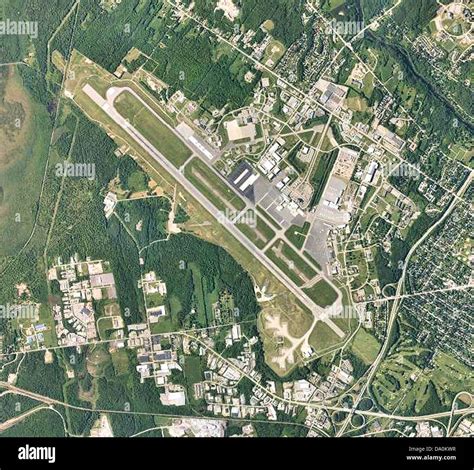
Unlike many airports where military history survives only through plaques or museums, Bangor International Airport (BGR) continues functioning in ways that directly reflect its original purpose.
Located in Maine, the airport occupies the former Dow Air Force Base, an installation established during the early years of the Cold War. At a time when tensions between the United States and the Soviet Union dominated global politics, Dow Air Force Base formed part of America’s strategic defense network, supporting bomber operations capable of reaching Europe and beyond.
Its location proved especially valuable. Positioned in the northeastern United States, Bangor became one of the final departure points before aircraft crossed the Atlantic Ocean. Military planners invested heavily in creating a robust airfield featuring extensive ramp space, durable pavement, and long runways capable of handling the largest aircraft in the Air Force inventory.
Following the base’s closure in 1968, the City of Bangor converted the installation into a civilian airport while wisely preserving much of the military infrastructure. That decision continues paying dividends decades later.
Today, Bangor has earned an international reputation as one of North America’s premier technical diversion airports. Aircraft flying between Europe and North America frequently designate Bangor as an alternate because of its long runway, outstanding emergency capabilities, and ample parking space for wide-body aircraft experiencing mechanical issues or medical emergencies.
Its military legacy also remains very much alive operationally. United States Air Force transport aircraft, refueling tankers, and military charter flights regularly utilize the airport during transatlantic missions. Civilian passengers often witness military aircraft sharing taxiways and parking ramps with scheduled commercial services, creating an aviation environment unlike that found at most commercial airports.
Rather than fading into history, Bangor demonstrates how military infrastructure continues serving both national defense and civilian aviation simultaneously.
Rickenbacker International Airport: From Strategic Bombers to Global Cargo Operations
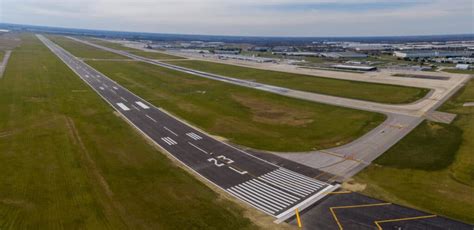
South of Columbus, Ohio, Rickenbacker International Airport (LCK) showcases another impressive example of military infrastructure finding new purpose in the commercial aviation world.
The airport occupies the former Lockbourne Air Force Base, commissioned in 1948 during the early Cold War. Initially supporting Strategic Air Command, Lockbourne hosted long-range bombers tasked with maintaining America’s nuclear deterrent before later transitioning to aerial refueling missions.
Military planners designed the base around efficiency and capacity. Massive aircraft parking aprons, expansive taxiway systems, reinforced pavement, and long runways enabled continuous operations involving some of the Air Force’s largest aircraft.
Following the base’s closure in 1981, these same characteristics made the property perfectly suited for a new mission—international air cargo.
Unlike passenger airports, cargo hubs require extensive aircraft parking, quick access to warehouses, efficient ground transportation, and infrastructure capable of supporting extremely heavy aircraft. Lockbourne’s military design already satisfied nearly every requirement.
Today, Rickenbacker ranks among America’s fastest-growing cargo airports. International freight carriers including Cargolux, Kalitta Air, and numerous logistics companies rely on facilities originally constructed for military operations. Every day, giant freighters transport electronics, pharmaceuticals, automotive components, and e-commerce shipments through infrastructure first intended for Cold War defense.
What makes Rickenbacker especially distinctive is that military aviation never truly disappeared. The airport continues sharing facilities with the Ohio Air National Guard’s 121st Air Refueling Wing, whose KC-135 Stratotankers regularly conduct operations alongside commercial cargo aircraft.
This unique coexistence creates an airport where military history remains visible not simply through preserved buildings but through active flight operations occurring every day. Rather than representing the end of one chapter, Rickenbacker illustrates how military and civilian aviation can successfully operate side by side while serving entirely different missions.
Frankfurt Airport: Military Foundations Behind Europe’s Aviation Giant
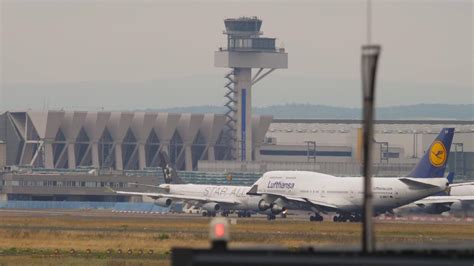
Today, Frankfurt Airport (FRA) ranks among Europe’s busiest international hubs, handling tens of millions of passengers every year while serving as one of the continent’s most important connecting airports. Its sleek terminals, high-speed rail links, and extensive cargo facilities reflect modern aviation excellence, but the airport’s foundations were laid during an era dominated by military priorities.
The site originally developed as the Rhein-Main Airfield, serving both civilian and military aviation before and during the Second World War. As Germany expanded its military capabilities, the airfield became increasingly important for supporting Luftwaffe operations and logistical activities.
Following Germany’s defeat in 1945, the airport entered an entirely new chapter under American control. The United States Air Force transformed it into Rhein-Main Air Base, one of its most strategically valuable installations in Europe. The base became internationally famous during the Berlin Airlift of 1948–1949, when thousands of transport flights departed carrying food, coal, medicine, and other essential supplies to isolated West Berlin.
The immense logistical effort demonstrated how military aviation could sustain an entire city through air transport alone. At the same time, civilian aviation steadily expanded alongside military operations, allowing Frankfurt to evolve into Germany’s principal international gateway.
Although Rhein-Main Air Base officially closed in 2005, portions of its infrastructure have been incorporated into Frankfurt Airport’s continuous expansion. The airport’s scale, layout, and operational flexibility still reflect decades of military planning, proving that wartime engineering helped shape one of the world’s leading commercial aviation hubs.
Keflavík International Airport: A Cold War Fortress That Became Iceland’s Global Gateway
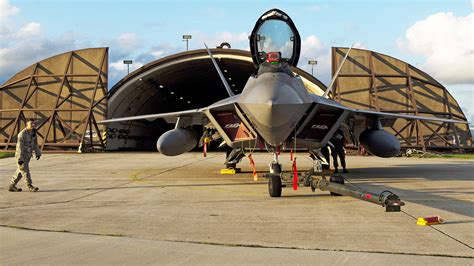
Located on Iceland’s windswept Reykjanes Peninsula, Keflavík International Airport (KEF) occupies one of the most strategically important locations in the North Atlantic. Long before it became the primary gateway for tourists chasing the Northern Lights or connecting between Europe and North America, the airfield existed because of one overriding concern—military strategy.
Construction began in 1942, shortly after the United States entered World War II. American forces built two separate military airfields in Iceland to protect Allied shipping routes crossing the Atlantic and to provide a critical ferry point for military aircraft traveling between North America and Europe. Iceland’s geographic position made it impossible to ignore, as virtually every transatlantic military movement benefited from a stop in the middle of the ocean.
Following the war, military importance only increased. The facilities evolved into Naval Air Station Keflavík, becoming one of NATO’s most valuable Cold War outposts. The installation monitored Soviet naval movements through the famous Greenland-Iceland-United Kingdom (GIUK) Gap, one of the world’s most strategically significant maritime corridors.
For decades, Lockheed P-3 Orion maritime patrol aircraft, fighter jets, surveillance aircraft, and other NATO assets operated from Keflavík, constantly tracking submarine activity beneath the North Atlantic. The base remained active until the withdrawal of permanent American forces in 2006, ending more than six decades of continuous military presence.
Today, the same runways accommodate thousands of civilian flights each year. Airlines such as Icelandair and numerous international carriers use Keflavík as a major connecting hub linking Europe and North America. The airport’s military roots remain remarkably visible throughout the airfield.
Unlike many airports where redevelopment erased older infrastructure, Keflavík still features hardened aircraft shelters, expansive aircraft parking aprons, reinforced taxiways, and large operational zones originally designed for wartime readiness. Even casual aviation enthusiasts can recognize that the airport’s layout reflects military priorities rather than conventional commercial planning.
Its transformation perfectly illustrates how Cold War infrastructure became a cornerstone of Iceland’s modern tourism economy while preserving unmistakable reminders of its strategic past.
Rome Ciampino Airport: Italy’s Historic Military Airfield Still Serves Government Aviation
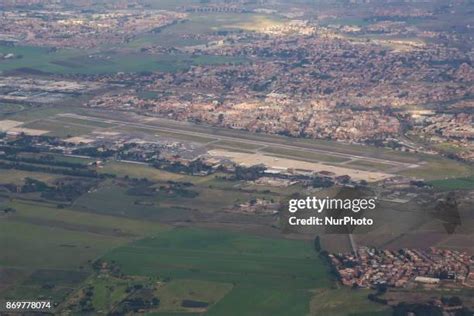
Although Rome Fiumicino Airport now handles most international traffic serving Italy’s capital, Rome Ciampino Airport (CIA) remains one of Europe’s most historically significant aviation sites. Unlike many airports whose military origins began during World War II, Ciampino’s story reaches back even further.
Established in 1916 during World War I, the airfield initially supported Italian military aviation and lighter-than-air operations, including airships and observation balloons. At a time when aviation itself remained in its infancy, Ciampino quickly became an important military installation for the Italian Army.
Throughout the interwar years, the airport gradually expanded while remaining under military administration. Civil aviation slowly emerged alongside military activity, reflecting the rapid evolution of air transportation across Europe.
During World War II, Ciampino again assumed strategic importance. Italian forces initially operated from the base before German forces used the airfield following Italy’s surrender in 1943. Allied bombing campaigns heavily targeted the installation because of its military value, leaving significant damage before liberation.
After reconstruction, civilian aviation expanded rapidly, eventually making Ciampino Rome’s principal airport for scheduled passenger services until the opening of Fiumicino in the early 1960s.
Despite extensive modernization, Ciampino never completely severed its military ties. The airport continues hosting the Italian Air Force’s 31st Wing, responsible for transporting government officials, dignitaries, and senior political leaders. Presidential aircraft, military transports, and government flights routinely operate alongside low-cost carriers such as Ryanair and Wizz Air.
This unusual coexistence creates an atmosphere where passengers may see modern narrow-body airliners taxiing past military transport aircraft within the same operational area. Few European airports demonstrate such a seamless blend of civilian convenience and enduring military heritage.
Moscow Vnukovo International Airport: A Wartime Airfield That Continues Supporting State Aviation
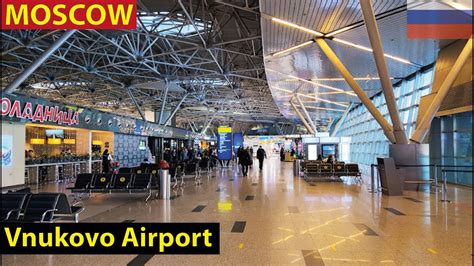
Among Russia’s major airports, Moscow Vnukovo International Airport (VKO) possesses one of the most continuous military histories.
Opened in 1941, just as Nazi Germany launched Operation Barbarossa, Vnukovo immediately became a crucial component of the Soviet Union’s wartime aviation network. Military transport aircraft, logistics missions, and operational flights supporting the defense of Moscow relied heavily on the newly established airfield during some of the conflict’s darkest days.
Its strategic location near the Soviet capital ensured that Vnukovo remained indispensable throughout World War II. As the Red Army gradually pushed German forces westward, the airport continued facilitating troop movements, cargo transport, and essential military operations.
Rather than abandoning the installation after victory, Soviet authorities expanded Vnukovo into one of the USSR’s premier civilian airports while preserving its governmental and military functions. This dual-purpose role has remained remarkably consistent for decades.
Today, Vnukovo serves scheduled commercial airlines flying throughout Russia, Europe, Asia, and the Middle East. At the same time, it remains home to Russia’s Special Flight Squadron, responsible for transporting the country’s president and senior government officials.
Unlike airports that converted entirely to civilian use, Vnukovo still maintains dedicated state aviation facilities operating alongside commercial terminals. Military detachments continue working on airport grounds, preserving an operational link between wartime service and modern government aviation.
Its uninterrupted evolution from military airfield to commercial airport without completely abandoning official aviation responsibilities makes Vnukovo one of the world’s most distinctive examples of adaptive airport development.
Kyiv Zhuliany International Airport: Aviation History Preserved Within Ukraine’s Capital
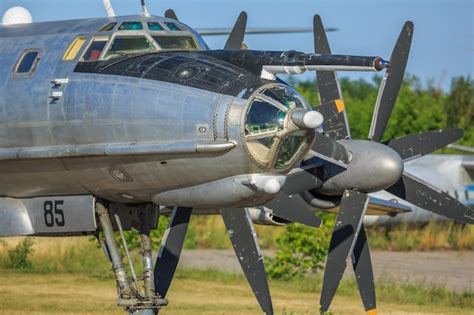
Few airports combine urban convenience and historical significance as effectively as Kyiv International Airport Zhuliany (IEV).
Situated only a few miles from central Kyiv, the airport ranks among Eastern Europe’s oldest continuously operating aviation facilities. Originally established during the 1920s, Zhuliany gradually developed into a mixed military and civilian airfield as Soviet aviation expanded throughout the twentieth century.
Its military importance increased dramatically during World War II. Following Germany’s invasion of the Soviet Union, the airport fell under Luftwaffe control during the occupation of Kyiv before eventually returning to Soviet control as Allied advances pushed westward.
After the war, Zhuliany continued functioning as a combined military and civilian installation. Military transport aircraft, pilot training operations, and scheduled passenger flights all shared the same airfield, reflecting Soviet aviation’s integrated approach to infrastructure.
Although Boryspil International Airport eventually became Ukraine’s primary international gateway, Zhuliany retained an important regional role thanks to its proximity to the city center. Its compact location prevented extensive redevelopment, allowing much of its historical layout to survive.
Perhaps the airport’s greatest tribute to its military heritage is the nearby State Aviation Museum of Ukraine, also known as the Oleg Antonov Aviation Museum. The museum houses one of Eastern Europe’s finest collections of military and civilian aircraft, including MiG fighters, Sukhoi attack aircraft, strategic bombers, transport aircraft, and numerous experimental designs developed during the Soviet era.
For aviation enthusiasts, few airports offer such immediate access to living history. Travelers arriving at Zhuliany can experience modern commercial aviation while standing only minutes away from aircraft that once defined military aviation across the Eastern Bloc.
Gimpo International Airport: A Wartime Airfield That Helped Build South Korea’s Aviation Industry
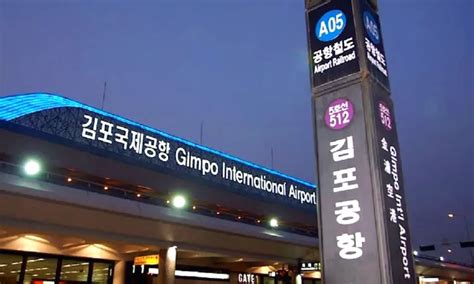
Before Incheon International Airport became South Korea’s primary global gateway in 2001, nearly every international visitor entered the country through Gimpo International Airport (GMP). Today, Gimpo remains one of Asia’s busiest domestic airports, but its origins tell a far more complex story rooted in colonial rule, war, and national reconstruction.
Construction began in 1939, when Korea was under Japanese occupation. The Imperial Japanese Army built the airfield as a military base to support operations throughout East Asia during World War II. Its strategic location near Seoul made it an essential component of Japan’s expanding military network across the Korean Peninsula.
When Japan surrendered in 1945, the United States military assumed control of the airfield before transferring it to the newly established Republic of Korea. That transition proved only the beginning of another conflict. During the Korean War, Gimpo became one of the peninsula’s most fiercely contested airbases.
The airport changed hands multiple times as United Nations forces, North Korean troops, and Chinese forces fought for control around Seoul. Fighter aircraft, military transport planes, reconnaissance missions, and logistical operations all depended on Gimpo’s runways during some of the war’s most decisive campaigns. Every change in ownership reflected the rapidly shifting front lines, highlighting the airport’s enormous strategic importance.
Following the armistice, South Korea faced the monumental challenge of rebuilding its infrastructure. Rather than constructing an entirely new civilian airport, authorities capitalized on Gimpo’s durable military-grade facilities. The long runways, reinforced taxiways, spacious aprons, and maintenance areas provided an ideal foundation for the country’s rapidly expanding commercial aviation industry.
For decades, Gimpo served as South Korea’s principal international airport, welcoming visitors from across Asia, North America, and Europe. As passenger demand eventually exceeded its capacity, Incheon International Airport assumed responsibility for most long-haul international flights. Nevertheless, Gimpo continues to thrive as one of the country’s busiest airports, handling extensive domestic services alongside regional international routes to cities including Tokyo, Osaka, Beijing, Shanghai, and Taipei.
Despite extensive modernization, traces of its military heritage remain unmistakable. The airport’s broad airfield layout differs noticeably from airports designed exclusively for civilian use. Adjacent Republic of Korea Air Force facilities continue supporting military operations, allowing commercial airliners and military aircraft to coexist within the same aviation complex. This enduring relationship between defense and civil aviation makes Gimpo one of Asia’s clearest examples of a successful military-to-commercial transformation.
Don Mueang International Airport: One of the World’s Oldest Airports Still Sharing Its Military Heritage
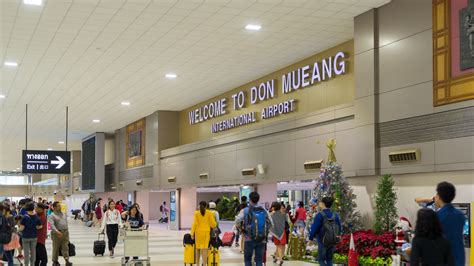
Few airports illustrate the continuity between military and civilian aviation as convincingly as Don Mueang International Airport (DMK) in Bangkok, Thailand.
Opened in 1914, Don Mueang ranks among the world’s oldest continuously operating airports. From its earliest days, the airport functioned as a Royal Thai Air Force base, supporting Thailand’s developing military aviation capabilities long before commercial air travel became commonplace.
Throughout both World Wars, the airport maintained its military significance. During World War II, following Japan’s occupation of Thailand, Japanese military forces also utilized the airfield to support operations throughout Southeast Asia. The airport’s strategic location made it an important regional asset during a conflict that reshaped the entire Asia-Pacific region.
Following the war, Thailand experienced rapid economic growth and expanding international connectivity. Don Mueang naturally evolved into the nation’s principal commercial airport, welcoming airlines from around the world while retaining its military role. For decades, it served as Southeast Asia’s primary aviation gateway, introducing millions of travelers to Thailand’s capital.
The opening of Suvarnabhumi Airport in 2006 initially appeared to signal the end of Don Mueang’s prominence. Instead, the airport reinvented itself with remarkable success. As low-cost airlines transformed regional travel, Don Mueang became one of the world’s busiest airports dedicated to budget carriers.
Today, airlines including Thai AirAsia, Nok Air, Thai Lion Air, and numerous international operators collectively transport tens of millions of passengers through terminals that stand beside active military facilities.
Unlike airports where military history survives only in museum exhibits, Don Mueang’s heritage remains part of everyday operations. Commercial jets regularly taxi past Royal Thai Air Force hangars, military transport aircraft continue flying from adjacent facilities, and uniformed personnel remain a familiar sight throughout portions of the airport complex.
This ongoing coexistence creates an atmosphere unlike almost any other major commercial airport. More than a century after opening, Don Mueang continues fulfilling both military and civilian responsibilities while preserving the identity that has defined it since 1914.
Why Military Airfields Became Ideal Commercial Airports
The transformation of these former military installations into successful commercial airports was far from accidental. Military planners designed airfields to meet requirements that often exceeded the needs of civilian aviation, making them exceptionally attractive for postwar redevelopment.
One of the greatest advantages was runway length. Strategic bombers carrying heavy fuel loads and weapons demanded far longer takeoff distances than commercial airliners of the 1950s and 1960s. As passenger aircraft steadily grew larger—from early jetliners to today’s Airbus A350, Airbus A380, and Boeing 777 families—those generous runways became invaluable assets.
Military bases also featured reinforced pavements engineered to support aircraft weighing hundreds of thousands of pounds. Extensive taxiway systems minimized congestion, while expansive parking aprons provided room for maintenance, refueling, and aircraft storage. These characteristics translated seamlessly into the needs of modern passenger and cargo airports.
Another major advantage was location. Many wartime airfields occupied strategically important geographic positions that later proved equally valuable for commercial aviation. Airports such as Keflavík naturally evolved into transatlantic connecting hubs, while Bangor became an ideal technical stop for flights crossing the North Atlantic. Others, including Frankfurt and Orlando, benefited from existing transportation links that accelerated postwar economic development.
Equally important, converting military facilities proved far more economical than building entirely new airports. Governments inherited billions of dollars’ worth of infrastructure that could be adapted rather than replaced, dramatically reducing construction costs while accelerating the growth of civil aviation.
The Lasting Legacy of Wartime Aviation Infrastructure
Walking through these airports today, it is easy to focus solely on departure boards, baggage claim areas, and bustling terminals. Yet beneath the modern architecture lies infrastructure shaped by some of the twentieth century’s defining conflicts.
In Orlando, every boarding pass bearing the code MCO quietly commemorates McCoy Air Force Base. At Bangor, military transports still share the airfield with commercial aircraft crossing the Atlantic. Rickenbacker continues supporting Air National Guard operations while serving global cargo carriers. Frankfurt’s expansion owes much to facilities that once sustained the Berlin Airlift, while Keflavík still displays the unmistakable footprint of a Cold War NATO stronghold.
Elsewhere, Rome Ciampino, Moscow Vnukovo, Kyiv Zhuliany, Gimpo, and Don Mueang continue blending military and civilian operations in ways that preserve their historical identities rather than erase them.
These airports demonstrate that aviation history is not confined to museums. It remains embedded in runway layouts, preserved hangars, operational practices, memorial displays, and even airport codes that millions of travelers encounter without realizing their significance.
Their continued success highlights an extraordinary transformation. Facilities once built to launch bombers, support wartime logistics, or defend national borders now connect families, facilitate international commerce, promote tourism, and strengthen global economies. Few examples of adaptive infrastructure illustrate the transition from conflict to cooperation more powerfully.
Frequently Asked Questions
Which commercial airport still has one of the strongest military connections today?
Several airports maintain active military operations, but Don Mueang International Airport, Bangor International Airport, Rickenbacker International Airport, Rome Ciampino Airport, and Gimpo International Airport continue hosting military aircraft alongside scheduled commercial flights on a regular basis.
Why do many former military airports have unusually long runways?
Military bombers and transport aircraft required significantly longer runways because of their heavy fuel loads, weapons, and cargo. Those same runways now comfortably accommodate today’s largest passenger and cargo aircraft, making former military airfields highly suitable for commercial aviation.
Why does Orlando International Airport use the airport code MCO instead of ORL?
The MCO airport code honors the former McCoy Air Force Base, which occupied the site before Orlando International Airport was developed. The code was intentionally retained after the Air Force closed the base to preserve its historical legacy.
Which airport on this list is the oldest?
Don Mueang International Airport in Bangkok, opened in 1914, is one of the world’s oldest continuously operating airports and the oldest airport featured in this list.
Are former military airports still important for modern aviation?
Absolutely. Many former military airfields have become major international passenger hubs, global cargo centers, or strategic diversion airports. Their robust infrastructure, long runways, and spacious layouts continue making them indispensable components of the global aviation network.