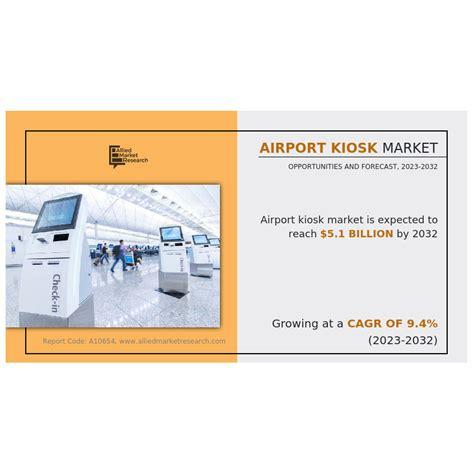
The global airport kiosk market is on the brink of an explosive transformation, with forecasts projecting a staggering market valuation of over USD 4.5 billion by 2032. Propelled by rapid technological innovation, increasing passenger expectations, and the post-pandemic demand for touchless travel solutions, airport kiosks are no longer just optional conveniences — they have become central pillars of the modern air travel experience.
In 2023, the market stood at approximately USD 1.9 billion, but its growth trajectory is steep and persistent. With a compound annual growth rate (CAGR) of 10.02%, the sector is poised to more than double in less than a decade, reshaping airport operations globally. As passenger volumes climb and infrastructure pressure mounts, the strategic value of kiosks as an automation tool is being recognized not just by global hubs but by smaller, rapidly modernizing terminals in emerging economies as well.
The Next Phase of Airport Efficiency: Seamless, Smart, and Scalable
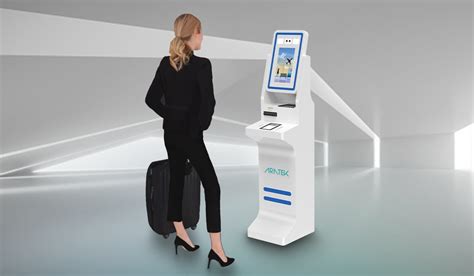
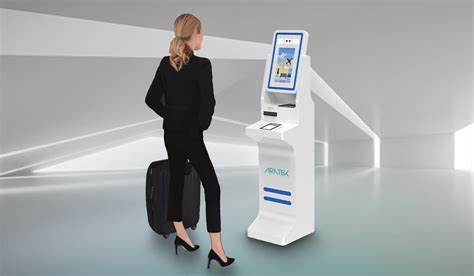
At the heart of this surge lies a singular ambition: streamlined efficiency. Airports around the world are under mounting pressure to enhance passenger throughput while simultaneously reducing wait times and operational overhead. Kiosks, which initially began as rudimentary check-in terminals, have evolved into multi-functional, AI-driven self-service stations capable of handling everything from biometric identification to customized travel updates.
These kiosks now offer a broad range of capabilities, including:
- Self-check-in and automated baggage tagging
- Flight status updates and gate directions
- Immigration document scanning
- Real-time rebooking options in case of flight disruptions
- Loyalty program integration and upgrades
Passengers benefit from significantly shorter lines and enhanced privacy, while airports and airlines benefit from optimized staff allocation and reduced congestion, especially during peak travel periods.
Technological Advancements Redefining Passenger Experience
What makes today’s kiosks so transformative is the breadth and sophistication of the technologies powering them. No longer restricted to static interfaces, modern airport kiosks incorporate:
- Biometric authentication systems, such as facial recognition and fingerprint scanning, for secure and rapid identity verification.
- AI-powered interaction modules capable of resolving common queries, offering language support, and providing travel advisories.
- Touchless interfaces, such as gesture controls or mobile-triggered interactions, offering hygienic alternatives post-COVID-19.
- Cloud-based data sharing, enabling integration with airline and airport databases for real-time updates.
These advancements not only improve operational efficiency but also contribute to personalized travel experiences. Travelers can receive flight-specific notifications, gate changes, boarding alerts, and even local weather updates — all tailored to their itinerary.

A Surge in Demand for Contactless, Autonomous Travel
The COVID-19 pandemic significantly altered public attitudes toward contact-heavy interactions, catalyzing the acceleration of touchless technology adoption. Kiosks are now seen as essential tools for limiting face-to-face contact without compromising service quality.
Travelers increasingly expect autonomy and control over their airport journey. With check-in, bag drops, and security screening times shrinking due to kiosk integration, passengers gain more time and confidence navigating complex airport layouts. These preferences are not limited to tech-savvy millennials; older generations are also adapting quickly, thanks to intuitive designs and multi-language support.
For airport operators, the move to self-service translates into measurable cost savings. Fewer manned counters are needed, staffing schedules become more efficient, and fewer errors occur in manual processing. These efficiency gains are especially critical in emerging markets, where airport expansion is underway but workforce training and capacity may lag behind.
Emerging Economies: Catalysts of Growth
While North America and Europe currently dominate in kiosk deployment, Asia-Pacific and the Middle East are becoming critical growth regions. Airports in countries like India, the UAE, Vietnam, and Indonesia are investing heavily in digital infrastructure as part of national aviation expansion strategies.
In these regions, airport kiosks serve a dual role: meeting rising domestic travel demands and showcasing global-level service standards to attract international travelers. In places like Dubai International or Singapore Changi, the kiosk is not just a utility — it’s a branding tool, conveying modernity, speed, and sophistication.
Governments and airport authorities across these emerging regions are embracing kiosks as cost-effective alternatives to larger infrastructural investments. Instead of building new terminals or expanding staff rosters, they’re opting to implement tech-enabled, scalable solutions — and kiosks top that list.
Airlines Embrace Automation to Enhance Loyalty and Reduce Costs
From the airline perspective, kiosks offer much more than operational ease — they represent a strategic opportunity to elevate customer satisfaction and reduce overheads. Major carriers such as Delta Air Lines, Emirates, and Lufthansa are leading the way in kiosk investment, deploying units that are integrated with loyalty programs, multilingual interfaces, and even personalized upgrade prompts.
Airlines save on personnel costs, minimize check-in bottlenecks, and gain the ability to collect real-time traveler data — from preferred travel times to behavioral patterns within the airport. These data points feed back into the AI systems running the kiosks, enabling dynamic and predictive servicing.
For passengers, this means being recognized by name, greeted in their language of choice, and even nudged toward exclusive offers. Such experiences are designed not just for efficiency but for emotional resonance — transforming a mundane check-in into a memorable customer touchpoint.
Sustainability and Eco-Efficiency: The Next Frontier
Another factor pushing kiosk adoption is the aviation industry’s growing focus on sustainability. Airports are under increasing scrutiny to reduce their environmental footprint, and kiosks — when designed and operated efficiently — help advance this mission.
Energy-efficient components, recyclable materials, and low-power operating systems are now standard in many new kiosks. Additionally, by reducing the need for printed materials and paper boarding passes, kiosks support a paperless travel ecosystem.
Some airports have begun integrating kiosks with green energy sources, such as solar panels or off-grid power systems, to further lessen the carbon impact. As environmental compliance becomes a critical metric in aviation funding and operations, sustainable kiosks will likely become a prerequisite rather than a value-add.
The Road to 2032: Personalization, AI, and Beyond
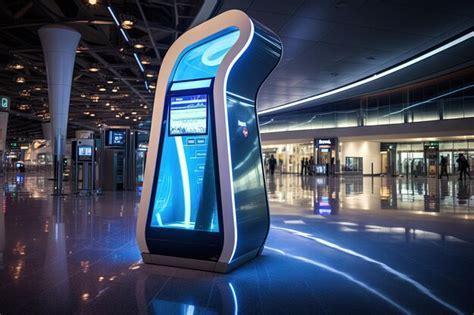
Looking ahead to 2032, the airport kiosk of tomorrow will be markedly different from even today’s most advanced models. Experts predict the rise of hyper-personalized interfaces, where kiosks dynamically adapt their interface based on the traveler’s profile, travel history, and preferences.
AI will power predictive interaction models, helping passengers preempt potential delays, suggest alternate routes within terminals, or flag visa/documentation requirements ahead of time. Integration with digital identity platforms — possibly even blockchain-based — will eliminate the need for physical passports in some jurisdictions.
Furthermore, voice-controlled AI assistants, holographic displays, and real-time translation services will redefine traveler interaction, particularly for international passengers unfamiliar with the local language or airport layout.
The potential of inter-kiosk communication — where devices across the terminal share data to offer cohesive, adaptive guidance — is also in active development. Imagine being redirected at one kiosk due to a gate change and having subsequent kiosks automatically reflect that update in your preferred language.
Conclusion: Kiosks as the New Pillar of Airport Infrastructure
The global airport kiosk market is entering a golden era. As air travel surges, passenger expectations evolve, and technology races forward, kiosks are proving themselves to be indispensable to the future of aviation. No longer confined to the periphery of airport terminals, these intelligent machines are now integral to streamlining operations, enhancing customer experience, and meeting global sustainability goals.
With a projected market value exceeding USD 4.5 billion by 2032, the airport kiosk has transitioned from a helpful novelty to a strategic imperative. Airlines, airport authorities, and governments that embrace this shift will not only improve their bottom lines but also cement their reputations as leaders in aviation innovation.
The next time a traveler bypasses a queue, receives a real-time alert, or drops off their luggage with a smile, it won’t just be a convenient moment — it will be the result of a market revolution built on precision, intelligence, and trust in technology.