Embraer has marked a milestone performance in Q2 2025, reporting a staggering 61 aircraft deliveries between April 1 and June 30—more than double the 30 units it delivered in Q1. This sharp upswing not only reflects strong operational momentum but also signifies the Brazilian manufacturer’s resilience across its commercial, executive, and military aviation divisions. Compared year-over-year, this surge also represents a 30% increase over Q2 2024, indicating broader recovery and strategic traction in key markets.
Embraer’s Q2 2025 Performance: A Closer Look
While Embraer is globally recognized for its regional commercial jets, it is the executive aviation division that has emerged as the standout contributor to Q2’s performance. Of the 61 total aircraft delivered, 38 were business jets, solidifying Embraer’s position as a leader in the private jet segment. Commercial aircraft accounted for 19 units, while military deliveries totaled four.
This distribution reflects Embraer’s versatile manufacturing capability and strategic prioritization of segments with the highest market demand. As aviation recovers globally and demand for private air travel remains elevated post-pandemic, Embraer has effectively positioned itself to benefit across all fronts.
Commercial Deliveries: Strong E175 Demand Amid E2 Challenges
Embraer’s commercial aircraft division recorded 19 deliveries in Q2 2025, broken down as follows:
- 9 Embraer E175s
- 9 Embraer E195-E2s
- 1 Embraer E190-E2 (delivered to Mexicana)
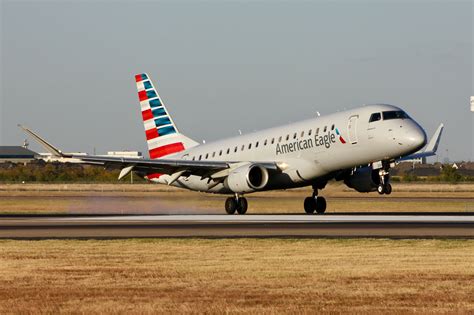
The continued success of the E175, despite being a design nearly two decades old, is notable. It remains the dominant player in the U.S. regional jet market primarily because of scope clause limitations. These clauses, enforced by U.S. pilot unions, restrict the maximum takeoff weight of aircraft that regional affiliates can operate, effectively blocking the heavier E175-E2 from entering service in the U.S.

This regulatory nuance has forced Embraer to pause development of the E175-E2, shifting focus back to the classic E175, which continues to enjoy uncontested demand due to Bombardier’s CRJ series being out of production. The E195-E2, although part of the modernized E2 family, has struggled to reach the popularity of its competitor, the Airbus A220. However, Embraer received a significant boost recently with a 45-aircraft order from SAS, which included 10 optional units—a major endorsement of the type’s long-term potential.
Business Aviation: A Powerhouse Segment
Executive jets accounted for the largest share of Embraer’s deliveries in Q2. The company delivered:
- 4 Phenom 100s (very-light jet category)
- 17 Phenom 300s (light jet category)
- 8 Praetor 500s (midsize jet)
- 9 Praetor 600s (super-midsize jet)
This brings the total executive jet count to 38 aircraft, cementing Embraer as a global leader in private aviation. The Phenom family—particularly the Phenom 300—has consistently ranked as one of the best-selling light jets worldwide, owing to its speed, range, comfort, and operating economics. Certified for single-pilot operations, both Phenom models offer high utility for business travelers and air taxi operators alike.
The Praetor family, a technologically advanced refresh of the Legacy series, targets a more premium segment. With fly-by-wire controls, best-in-class range, and versatile cabin configurations, the Praetor 500 and 600 are Embraer’s flagship entries in the midsize and super-midsize categories. Deliveries in this line reflect steady market traction in North America, Europe, and the Middle East.

Military Aircraft: Low Volume, High Value
While smaller in volume, Embraer’s defense segment continued to demonstrate export capability and platform maturity. The Q2 2025 deliveries included four A-29 Super Tucano aircraft—a robust, single-engine turboprop ideal for light attack and advanced pilot training missions. The Super Tucano has seen global deployment across Africa, Latin America, and Asia, often favored for its cost-effective mission performance in counter-insurgency operations.
Notably, the C-390 Millennium, Embraer’s flagship tactical airlifter, did not see any deliveries in the quarter. Despite this, the platform has built a presence with air forces in Brazil, Portugal, Hungary, and the Netherlands, with more negotiations underway. Its capability to replace the aging Lockheed C-130 Hercules fleet globally continues to give it strategic relevance.
Backlog Dynamics and Market Outlook
At the close of 2024, Embraer’s commercial backlog stood at:
- 164 E175s
- 25 E190-E2s
- 154 E195-E2s
The firm backlog provides multi-year visibility for investors and stakeholders, particularly given the solid production cadence and operational recovery now visible in 2025. While the E2 family faces a competitive uphill battle versus Airbus, Embraer is banking on its fleet commonality, low transition costs, and availability of crew and maintenance infrastructure to keep orders flowing.
The SAS order underscores this strategy: while the E2 might lack the market presence of a clean-sheet aircraft like the A220, it compensates with cost efficiencies and seamless integration into existing fleets. Embraer’s pitch remains clear—a modernized jet that doesn’t require reinventing the wheel.

Strategic Positioning and CEO Vision
Under the leadership of Francisco Gomes Neto, Embraer has undertaken a lean yet aggressive growth strategy, focusing on operational excellence, customer support, and strategic partnerships. Neto’s vision includes broadening Embraer’s footprint beyond Latin America, targeting Asia-Pacific and European markets more aggressively, especially in private and commercial aviation.
Meanwhile, Embraer’s EVE Urban Air Mobility unit—while not part of this quarter’s deliveries—continues to be part of the long-term innovation roadmap. It’s part of Embraer’s push into advanced air mobility (AAM) and sustainability-driven design, which could become a core segment in the next decade.
Conclusion: Embraer Enters Q3 With Momentum
Embraer’s Q2 2025 delivery results present a compelling case for the company’s current strategic direction. The performance represents not just a rebound from early-year softness, but a clear acceleration in aircraft demand across multiple sectors. With a strong backlog, solid execution, and growing global relevance, Embraer enters the second half of 2025 with robust momentum.
The manufacturer’s ability to flex its production muscle across three different aviation domains—commercial, executive, and military—is a testament to its engineering adaptability, customer alignment, and market responsiveness. While challenges remain—especially regarding the scope clause limitations and E2 market competition—Embraer has shown it is more than capable of navigating the turbulence and seizing altitude.