Airbus closed March 2026 with a notable uptick in deliveries, handing over 60 commercial aircraft to customers worldwide. On the surface, this marks a strong recovery from the sluggish start of the year, where the manufacturer managed just 19 deliveries in January and 35 in February. Yet the broader picture tells a more restrained story. Despite the March rebound, Airbus’ first-quarter total reached only 114 aircraft, trailing the 136 deliveries recorded in Q1 2025 and reflecting a 16% year-on-year decline.
This shortfall carries more weight than a simple quarterly fluctuation. Airbus is not comparing against a particularly strong baseline; in fact, Q1 2025 was already considered weak, itself falling short of 142 deliveries in Q1 2024. The continued downward trend signals deeper structural challenges, particularly as the aerospace giant grapples with persistent supply chain disruptions, engine shortages, and mounting industrial friction with key supplier Pratt & Whitney.
March Recovery Highlights Momentum—But Not Enough
March’s delivery figure of 60 aircraft represents Airbus’ strongest monthly performance so far in 2026. However, even this improved output fell short of 71 aircraft delivered in March 2025, reinforcing a pattern seen across every month this year: consistent underperformance versus prior-year benchmarks.
The quarterly breakdown underscores this trend clearly. January saw a steep 24% decline, February followed with a 13% drop, and March mirrored that same 13% contraction. Taken together, these figures illustrate a company struggling to regain production rhythm despite incremental improvements.
Looking beyond year-on-year comparisons, the situation becomes even more striking. Airbus’ Q1 2026 output sits roughly 30% below its pre-pandemic peak in 2019, despite significant investments in expanding production capacity. In fact, this marks one of the weakest first quarters in nearly two decades, comparable only to Q1 2007, when the company delivered 115 aircraft under a vastly different product lineup.
A320 Family Weakness Drives the Decline
The core of Airbus’ delivery slowdown lies within its most critical product segment: the A320 family. This narrowbody lineup—including the A319neo, A320neo, and A321neo—is the backbone of Airbus’ commercial success. Yet in Q1 2026, deliveries in this category dropped sharply from 106 aircraft last year to just 81, representing a 24% decline.
This contraction outweighs modest gains elsewhere. Airbus managed slight increases in A220 and A350 deliveries, but these improvements were insufficient to offset the steep drop in narrowbody output. The A321neo, typically a high-demand model, saw deliveries fall by 10 units, while the A320neo declined by 11 aircraft.
The implications are substantial. Using standard list pricing as a rough indicator, the missing A320-family deliveries translate into a multi-billion-dollar revenue gap, estimated at over $3 billion in nominal value. Even accounting for industry-standard discounts, the financial impact remains significant, highlighting how critical this segment is to Airbus’ overall performance.
Engine Supply Bottlenecks and the Pratt & Whitney Dispute
At the heart of Airbus’ production constraints lies a growing conflict with Pratt & Whitney, the engine manufacturer responsible for powering a large share of the A320neo fleet through its geared turbofan (GTF) engines. Airbus has repeatedly warned that engine deliveries are arriving “very, very late,” forcing adjustments to its production schedules and limiting its ability to complete aircraft on time.
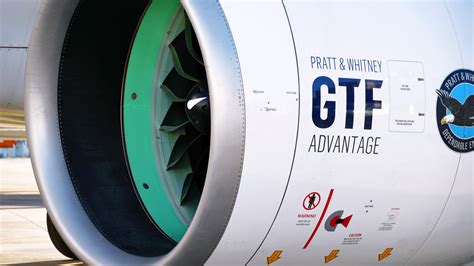
The tension stems from competing demands for a limited supply of engines. On one side, Airbus requires engines to sustain its assembly lines and meet delivery targets. On the other, airlines urgently need replacement and repaired engines due to ongoing issues tied to powdered-metal contamination, which has led to inspections and groundings across hundreds of aircraft worldwide.
This creates a zero-sum scenario where new aircraft production competes directly with in-service fleet maintenance. Airbus has publicly expressed frustration, with CEO Guillaume Faury stating that Pratt & Whitney’s inability to meet agreed delivery volumes is directly impacting Airbus’ 2026 guidance.
The dispute has escalated beyond operational friction into a broader strategic conflict, with reports suggesting potential legal action. For Airbus, the stakes are clear: without a steady flow of engines, even the most efficient production lines cannot deliver finished aircraft.
Airline Customers Reflect Strategic Shifts
Despite production challenges, Airbus continues to deliver aircraft to a diverse range of global carriers. In Q1 2026, Delta Air Lines emerged as the largest recipient, taking delivery of nine aircraft, including A220-300s and A321neos. Delta’s continued investment in the A220 underscores confidence in the type’s efficiency and versatility.
Close behind, Wizz Air received eight A321neos, reinforcing its position as one of Europe’s most aggressive low-cost expansion players. Meanwhile, United Airlines and Frontier Airlines each added seven aircraft, highlighting Airbus’ growing footprint in the competitive U.S. market.
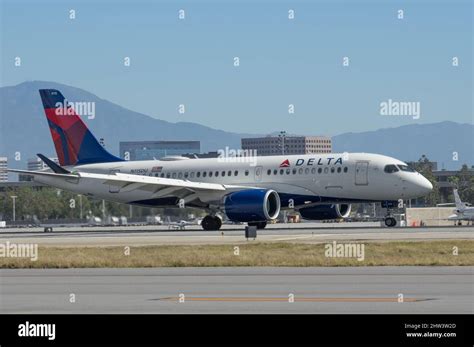
Several deliveries carried strategic significance beyond volume. EgyptAir received its first A350-900, becoming the launch operator for the type in North Africa, a milestone that signals Airbus’ expanding reach in emerging markets. Japan Airlines continued building its long-haul strategy with both A350-900 and A350-1000 variants, while Emirates steadily increased its A350 fleet, averaging more than one delivery per month since late 2024.
These developments highlight a key contrast: while Airbus faces production constraints, demand for its aircraft remains robust and geographically diverse.
A Steep Climb to Meet 2026 Targets
Airbus has set an ambitious target of delivering approximately 870 commercial aircraft in 2026. With only 114 aircraft delivered in the first quarter, the company must now produce 756 additional units over the remaining nine months.
This translates to an average of 84 aircraft per month from April through December—more than double the 38-aircraft monthly average achieved in Q1. Such a ramp-up would require not only improved operational efficiency but, more critically, a resolution to the engine supply bottleneck.
The challenge is not merely logistical; it is systemic. Airbus’ production ecosystem depends on synchronized performance across suppliers, and any disruption—particularly in engines—creates cascading delays. Without meaningful progress in its dispute with Pratt & Whitney, the path to meeting annual targets becomes increasingly narrow.
The Bigger Picture: Growth Ambitions vs. Industrial Reality
Airbus’ current स्थिति reflects a broader tension within the aerospace industry: strong demand colliding with constrained supply chains. Airlines are eager to modernize fleets and expand capacity, yet manufacturers are struggling to keep pace due to component shortages, labor constraints, and technical setbacks.
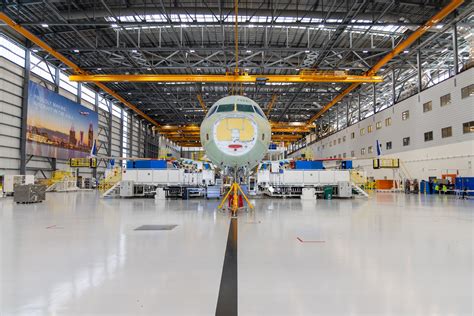
For Airbus, the situation is particularly acute because of its reliance on high-volume narrowbody production. The A320 family is not just a product line—it is the financial engine of the company. Any disruption in this segment reverberates across revenue, profitability, and market positioning.
Still, the outlook is not without optimism. Airbus has demonstrated resilience in navigating past disruptions, and its order backlog remains strong. If engine supply stabilizes and production flows improve, a second-half recovery is still within reach.
For now, however, the numbers tell a clear story: momentum is building, but the gap remains significant. The coming months will determine whether Airbus can convert incremental gains into a sustained recovery—or whether 2026 will be defined by constraints rather than growth.