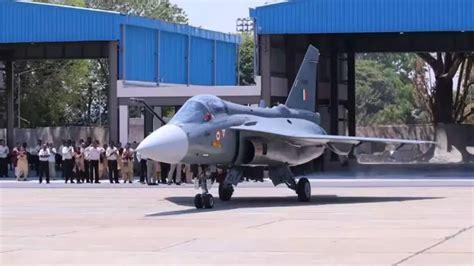
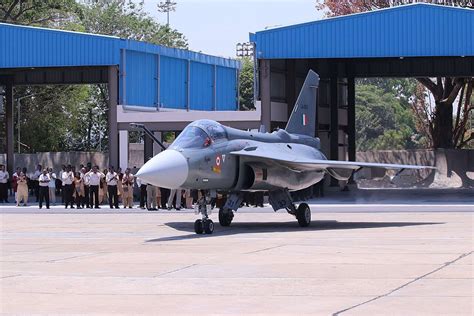
India’s ambitious push to bolster its indigenous defense capabilities is set to mark a significant milestone as Hindustan Aeronautics Limited (HAL) confirmed that six Tejas Mk-1A fighter jets will be delivered to the Indian Air Force (IAF) by March 2026. The development comes after months of industry scrutiny and setbacks that have plagued the Tejas program, often seen as a cornerstone of India’s push for self-reliance in defense manufacturing.
HAL’s Commitment to Tejas Deliveries Despite Previous Delays
The Tejas Mk-1A program, formalized through a landmark contract in 2021, outlines the production and delivery of 83 advanced Tejas Mk-1A aircraft, designed to significantly upgrade the IAF’s fighter fleet. HAL’s Chairman and Managing Director, Dr. Dinesh Kumar Sunil, emphasized that production hurdles have largely been overcome, with the company on track to deliver six operational aircraft by March 2026.
“There is no let-up from our side,” Sunil stated during an interaction with local media. “We are building those aircraft and getting them ready, and we will be in a position to deliver.” His remarks follow a period of criticism directed at HAL, with concerns mounting over production delays that threatened to derail the timelines of this crucial defense project.
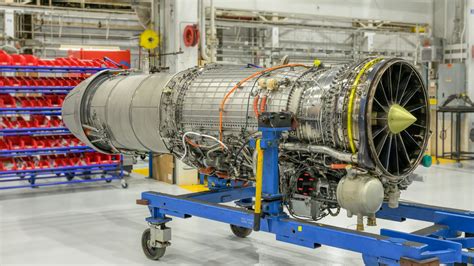
At the heart of the delay was a critical supply chain bottleneck involving GE Aerospace, the American manufacturer responsible for the F404 engines that power the Tejas fleet. Originally slated to deliver these engines in 2023, GE Aerospace faced significant disruptions due to the COVID-19 pandemic and subsequent workforce shortages, leaving HAL with just one engine delivered to date.
Resolving the GE Aerospace Engine Bottleneck
According to HAL’s latest update, the long-standing issues with engine deliveries have been addressed. GE Aerospace has committed to supplying 12 F404 engines by March 2026, a move expected to stabilize the production schedule for the Tejas Mk-1A.
Dr. Sunil acknowledged that production challenges are an inevitable part of large-scale defense programs but expressed confidence that HAL’s proactive measures will restore momentum to the project. “Every company goes through its fair share of criticisms. It does happen,” he noted, underscoring HAL’s resilience in overcoming both technical and logistical challenges.
The successful resolution of engine shortages is not only critical for meeting the immediate target of six aircraft by March 2026 but also for the broader commitment to deliver 16 to 24 Tejas Mk-1A aircraft annually, starting from June 2025.
Strategic Importance of Tejas Mk-1A for India’s Air Defense
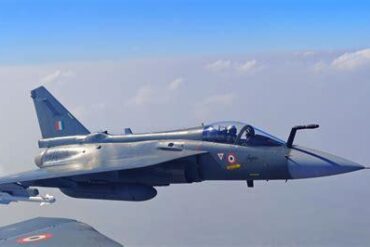
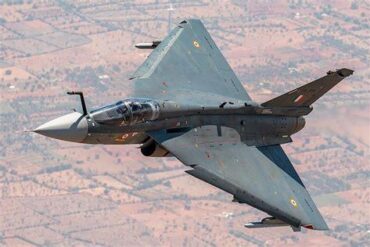
The Tejas Mk-1A represents a significant technological advancement over earlier variants, reinforcing India’s defense posture amid evolving regional threats. Designed as a lightweight, multi-role combat aircraft, the Tejas Mk-1A is a product of over three decades of development under India’s Light Combat Aircraft (LCA) program.
The aircraft features a 13-meter (43-foot) airframe with an 8-meter (26-foot) wingspan, optimized for agility and operational flexibility. Armed with a versatile weapons suite, the Tejas can carry:
- A 23-millimeter twin-barrel cannon for close-range engagements
- Precision-guided munitions and unguided bombs
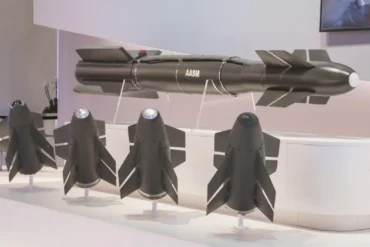
- A wide array of air-to-air and air-to-surface missiles, enhancing multi-domain combat capabilities
Powered by the F404 engine, the Tejas Mk-1A can reach a top speed of Mach 1.8, equivalent to 2,223 kilometers (1,381 miles) per hour, with an operational range of 3,000 kilometers (1,864 miles). Its service ceiling stands at 16,000 meters (52,493 feet), providing high-altitude performance essential for modern air combat scenarios.
Replacing the Aging MiG-21 Fleet
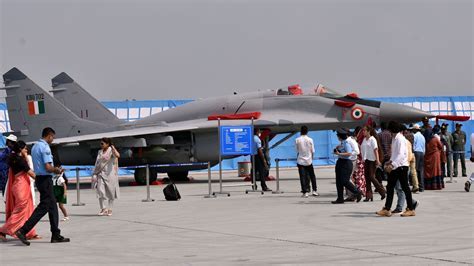
The strategic urgency behind the Tejas program is further amplified by India’s need to phase out its aging MiG-21 Fishbed fleet, a Soviet-era platform that has served the IAF since the 1960s. The MiG-21, despite its historical significance, has increasingly been associated with operational limitations and safety concerns, prompting accelerated efforts to induct modern replacements.
With the induction of the Tejas Mk-1A, the IAF aims to modernize its fleet with homegrown aircraft, reducing dependency on foreign suppliers while enhancing operational readiness. The Tejas Mk-1A, with its advanced avionics, electronic warfare capabilities, and reduced radar cross-section, is positioned as a potent successor to the MiG-21.
Expanding the Tejas Fleet: Future Orders and Production Scale-Up
Beyond the initial order for 83 Tejas Mk-1A aircraft, the Indian government has signaled its intent to significantly expand the fleet. New Delhi is reportedly in advanced discussions with HAL for an additional 97 Tejas Mk-1A units, with deliveries projected to continue through the 2030s.
This expanded procurement underscores India’s commitment to indigenous defense production, aligning with the “Atmanirbhar Bharat” (self-reliant India) initiative championed by Prime Minister Narendra Modi. The scaling up of Tejas production is also expected to generate substantial economic and technological benefits, fostering innovation within India’s aerospace sector.
HAL has already laid the groundwork for higher production rates, with plans to deliver up to 24 aircraft annually, subject to streamlined supply chains and sustained vendor performance. The collaboration with GE Aerospace, including a roadmap for localized engine production under the recently signed agreements, is pivotal to achieving these targets.
The Road Ahead: Challenges and Opportunities
Despite positive developments, the Tejas Mk-1A program continues to face several challenges that could impact long-term execution. These include:
- Dependence on foreign components such as engines and avionics, though efforts toward domestic production are underway
- Integration of advanced weapon systems, including air-to-air missiles with extended ranges
- Ensuring quality control and consistency across production batches
- Meeting aggressive delivery timelines without compromising aircraft performance or safety
Nonetheless, HAL’s progress in resolving critical bottlenecks and maintaining production momentum signals cautious optimism. The successful induction of the Tejas Mk-1A not only enhances the IAF’s combat capabilities but also positions India as an emerging player in the global defense manufacturing landscape.
Conclusion: Tejas Mk-1A as a Symbol of Indigenous Aerospace Progress
The forthcoming delivery of six Tejas Mk-1A aircraft by March 2026 marks a pivotal moment for India’s defense sector, reflecting both the challenges and triumphs of indigenous fighter jet development. With supply chain hurdles being addressed and production scaling up, the Tejas program represents a bold stride toward technological self-reliance.
As HAL works to fulfill the larger order book and transitions to higher annual output, the Tejas Mk-1A stands as a testament to India’s aerospace ambitions, signaling its readiness to field advanced, domestically produced combat aircraft in the defense of its airspace.