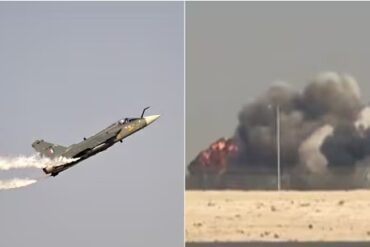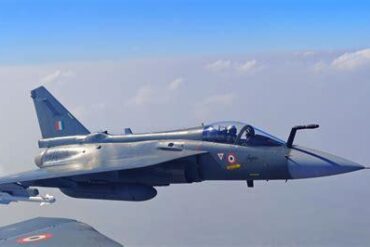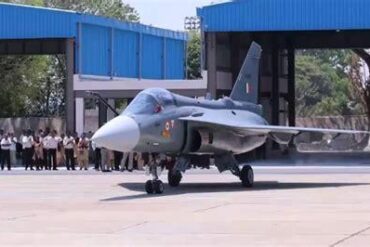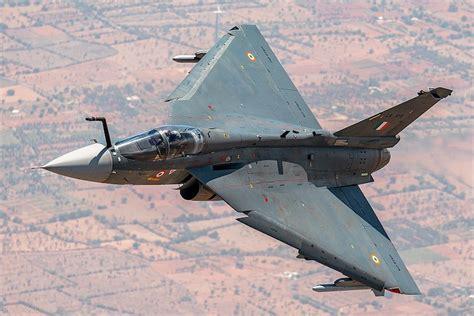
The Indian Air Force (IAF) is preparing to induct a new variant of the HAL Tejas fighter jet, a domestically produced platform significantly enhanced with advanced Israeli technology. The delivery comes at a pivotal moment, following heightened military tensions with Pakistan, and aims to bolster India’s depleted frontline air combat capabilities. The Tejas, whose development has spanned decades, is being fast-tracked into operational deployment to address the critical shortfall in the IAF’s fighter squadrons.
Currently, the IAF maintains only 31 fighter squadrons, far short of the required 42, creating a serious gap in its strategic defense posture. With legacy aircraft like the MiG-21 and Jaguar nearing the end of their service lives, the induction of the upgraded Tejas A1 variant is both symbolic and operationally urgent.

HAL Tejas A1: Indigenous Platform, Global Technology
The Tejas A1 variant marks a transformative step for India’s indigenous aviation program. While the airframe is locally produced by Hindustan Aeronautics Limited (HAL), the heart of its combat capability lies in foreign subsystems, primarily from Israel. The A1 features a state-of-the-art AESA (Active Electronically Scanned Array) radar built by Elta Systems, a subsidiary of Israel Aerospace Industries (IAI). This radar dramatically improves the aircraft’s tracking and targeting performance, allowing pilots to engage multiple threats at greater ranges and with higher precision.
Complementing the radar is an Israeli-built electronic warfare suite, also from Elta, designed to provide protection against radar-guided and infrared-guided threats. The system enables the jet to detect, jam, and deceive incoming missiles, enhancing survivability during hostile engagements.
Israeli Firepower and Avionics Redefine Air Superiority
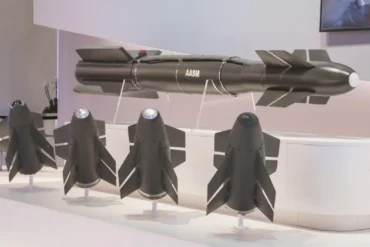
The Tejas A1 is further equipped with the Derby beyond-visual-range air-to-air missile (BVRAAM) developed by Rafael Advanced Defense Systems. This radar-guided missile extends the jet’s strike envelope and allows engagement of enemy aircraft at distances of over 50 kilometers. Pilots will also benefit from Elbit Systems’ helmet-mounted display (HMD), enabling them to cue weapons simply by looking at the target—an advantage long employed by Western air forces.
These systems, though Israeli in origin, are being locally manufactured in India under the “Make in India” defense initiative led by Prime Minister Narendra Modi. The policy mandates that all defense equipment procured for the military should have a significant level of indigenous content, fostering industrial collaboration between Israeli defense firms and Indian private and public sector entities.
HAL Tejas and the Strategic Israel-India Partnership
The technology transfer arrangement represents a strategic alignment between Tel Aviv and New Delhi, as Israel becomes a cornerstone supplier of mission-critical avionics to India’s frontline air fleet. Ironically, these Tejas jets, once fully delivered, will be more reliant on Israeli subsystems than the Israeli Air Force’s own jets, which often operate American radars due to U.S. export restrictions on Israeli radar systems.
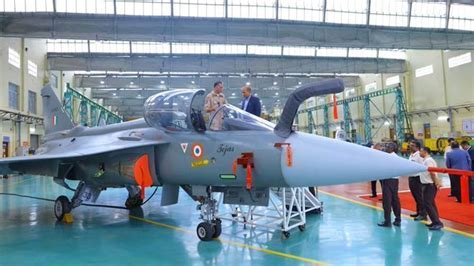
Each Tejas unit in the 83-aircraft order is being outfitted with multi-million-dollar Israeli components, some of which are manufactured through joint ventures in India, ensuring that India does not just import foreign know-how but actively embeds it into its domestic defense industrial base.
Procurement Delays and Strategic Ramifications
The Tejas A1 program has not been without its setbacks. Originally scheduled for delivery over a year ago, the rollout was delayed by logistical and manufacturing issues. Among the most prominent bottlenecks was the General Electric F404 engine, sourced from the United States. The engine is the Tejas’ only non-Israeli major system and represents a key foreign dependency that has repeatedly delayed the aircraft’s timely induction.
At one point, Israeli suppliers were also blamed for minor delays in delivering electronic warfare components, although these allegations were later addressed through renegotiated timelines and technology licensing agreements.
These interruptions have fueled internal debate in New Delhi’s Defense Ministry. On one side is the push for self-reliance through indigenous development, while on the other is the military’s preference for field-proven, imported systems that offer immediate tactical superiority. The Tejas A1 stands at the confluence of these competing philosophies.
Advanced Features and Future Capabilities
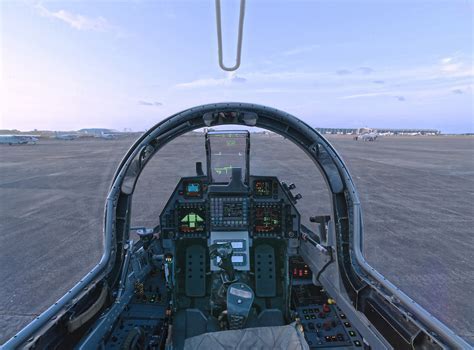
The HAL Tejas A1 brings India closer to Western standards of fighter jet performance, a long-cherished ambition of Indian aerospace planners. Along with Israeli subsystems, the aircraft includes a glass cockpit, quadruple fly-by-wire controls, and composite airframe construction, which collectively reduce weight and increase maneuverability.
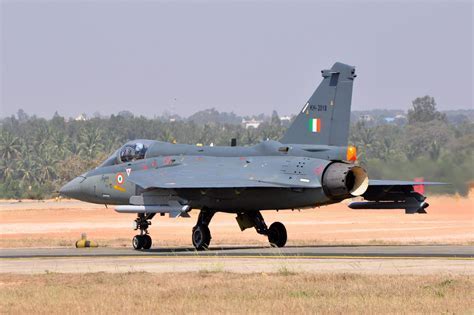
In parallel, HAL is actively developing the next-generation Tejas Mk-2, also known as the Medium Weight Fighter (MWF). This platform will introduce canard foreplanes, extended combat radius, increased payload capacity, and greater interoperability with global defense systems. French, Israeli, and American firms are already competing to provide radar, engine, and electronic warfare solutions for the Mk-2.
The Regional Context: Pakistan Conflict Drives Urgency
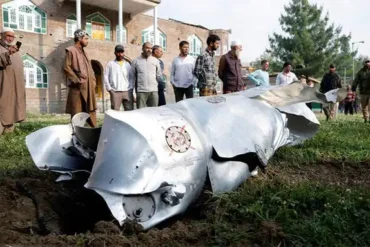
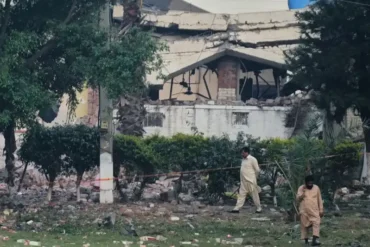
The recent India-Pakistan border conflict, involving a series of escalations across the Line of Control (LoC), has injected new urgency into India’s fighter jet acquisition roadmap. With the Pakistani Air Force fielding JF-17 Thunder jets—co-developed with China—India’s need for a technologically superior and numerically robust air fleet has become paramount.
Unlike the Tejas, the JF-17 is equipped with Chinese radar and avionics that have faced questions over battlefield reliability. India’s decision to field a radar and electronic warfare suite developed by Israel—a nation renowned for its combat-hardened tech—gives the Tejas an edge in electronic combat and target acquisition.
Defense Strategy and Air Dominance in the Indo-Pacific
India’s renewed focus on developing homegrown platforms with strategic foreign support aligns with its broader defense doctrine of achieving air superiority in the Indo-Pacific. The induction of the Tejas A1 is more than just a military milestone; it is a strategic signaling tool. It shows that India is capable of absorbing the best global technology while nurturing an ecosystem of indigenous production.
From Bengaluru’s HAL assembly lines to Haifa’s radar laboratories, the development of the Tejas is a transnational enterprise, blending Indian innovation with Israeli precision. As geopolitical tensions rise across Asia, the need for reliable, networked, and combat-ready fighter jets has never been more pressing.
Conclusion: HAL Tejas as a Case Study in Strategic Autonomy
The delivery of the Tejas A1 marks a defining moment for India’s military aviation history. It encapsulates the success—and inherent challenges—of a hybrid defense model where local production meets foreign excellence. With Israeli systems now deeply embedded in its combat aircraft, India has moved closer to operational parity with Western air forces.
Despite delays and procurement hurdles, the Tejas A1 is set to become a critical element in India’s air power matrix. It reflects a vision of strategic autonomy, technological collaboration, and battlefield readiness—a necessary evolution in the face of persistent regional threats and rising global expectations.