India has entered a decisive phase in its pursuit of advanced munitions self-reliance, approving full-scale domestic production of the Safran AASM Hammer air-to-ground precision weapon. The new Indo-French joint venture—an equal partnership between Bharat Electronics Limited (BEL) and Safran Electronics & Defense—marks a structural shift in India’s defense ecosystem. It transforms the Hammer from a high-value imported asset into an indigenous, strategically assured component of India’s front-line airpower. In a region where response times, survivability, and stand-off capability increasingly shape deterrence, this step signals India’s consolidation of long-term operational freedom.
The joint venture grows out of commitments made during Aero India 2025, where India and France laid the groundwork for an indigenous Hammer production program. With the Ministry of Defence now formalizing the arrangement, the two companies will establish a new privately incorporated entity to produce, adapt, and support the weapon for the Rafale and Tejas fleets. The agreement aims to build a fully localized supply chain, eventually achieving 60 percent indigenization through Indian manufacturing of electronic modules, subassemblies, and mechanical systems. BEL is set to take over final assembly, testing, and quality assurance, anchoring the Hammer into the national industrial base.
At the operational level, the AASM Hammer solves a critical availability challenge. Imported precision stand-off munitions are vulnerable to fluctuations in foreign production queues, export approvals, and geopolitical frictions. By manufacturing the weapon domestically, India guarantees uninterrupted access to a class of precision strike tools that directly influence its posture along both the western and northern borders. The move also embeds know-how in India’s electronics and precision-manufacturing sectors, supporting regional manufacturing clusters and improving resilience in times of crisis.
What the AASM Hammer Brings to India’s Combat Aircraft
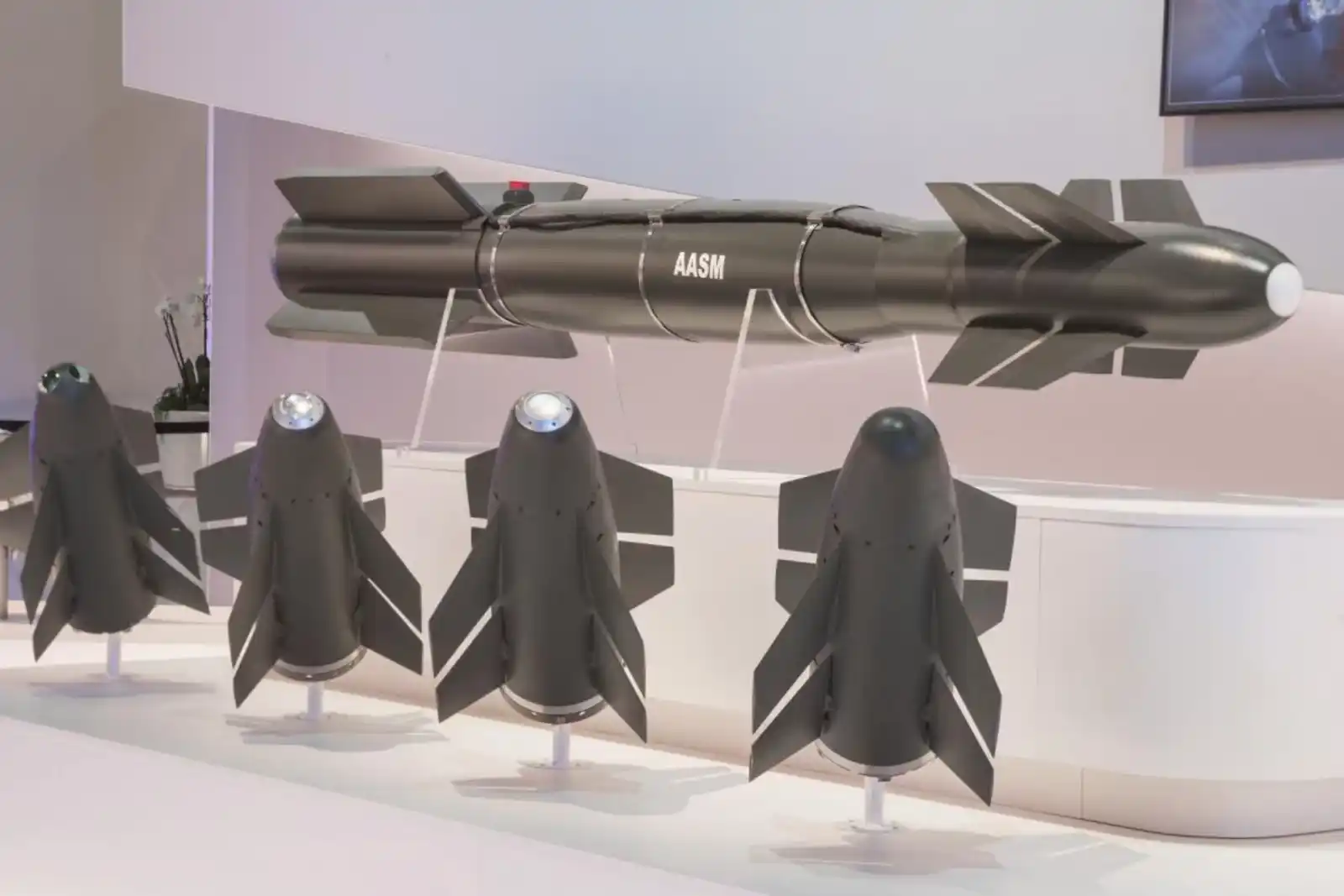
Developed by Safran as a modular “smart-kit” system, the AASM Hammer transforms standard unguided bombs into long-range, precision strike weapons. It does this through two major additions: a front-mounted guidance unit and a rear-mounted rocket-boost section equipped with control fins. This design gives historically conventional bombs the behavior and accuracy of advanced stand-off missiles without the associated cost, weight, or logistics burden.
The weapon is compatible with 125 kg to 1,000 kg bomb bodies, with the 250 kg variant serving as the backbone of existing inventories. In this widely deployed configuration, the munition measures roughly 3.1 meters in length, spreads to a 0.78-meter wingspan after fin deployment, and weighs around 340 kg. These dimensions deliver stable, high-energy flight profiles and sustain accuracy at significant ranges.
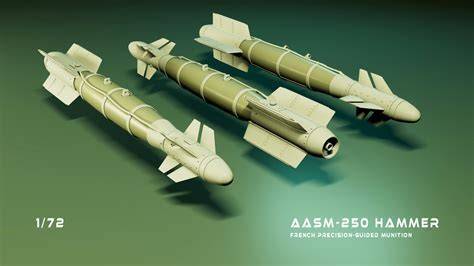
India benefits from the Hammer’s three distinct guidance options. The base model uses inertial navigation plus GPS, ensuring reliable accuracy in poor visibility. A more advanced variant adds imaging infrared, allowing near one-meter precision when the target’s thermal signature is strong. A third version incorporates laser designation, giving pilots and joint terminal attack controllers the ability to prosecute moving targets—an increasingly critical requirement for counter-battery warfare, high-value vehicle strikes, and dynamic targeting missions.
At optimized flight trajectories, the Hammer consistently reaches 70 km or more in range, enabling Indian Rafales and Tejas aircraft to strike hardened or defended targets from safe distances. This stand-off capability is particularly relevant against modern short-range and medium-range air defense systems fielded by both Pakistan and China. Every kilometer added to stand-off distance materially increases aircraft survivability and multiplies the number of sorties an air campaign can sustain.
Why the Hammer Matters for Rafale and Tejas Combat Roles
For the Rafale, the Hammer now anchors the core of India’s precision-strike doctrine. The aircraft already integrates a wide portfolio of weapons, but the Hammer’s versatility allows it to fill critical mission categories: battlefield interdiction, infrastructure degradation, and suppression of time-sensitive targets. Its modularity and proven compatibility with the Rafale’s avionics ensure rapid mission planning with minimal adaptation.
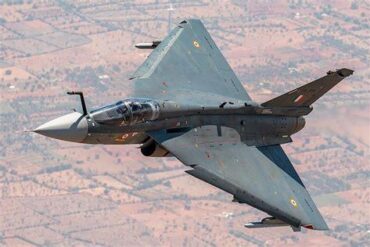
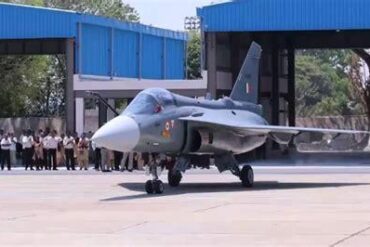
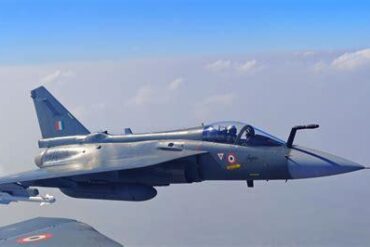
For the Tejas, the impact is even greater. The indigenous fighter has steadily expanded its weapons envelope, yet the Hammer pushes it into a more advanced strike role previously reserved for heavier platforms. With synchronized data links, targeting pods, and mission systems, the Hammer-equipped Tejas can engage hardened targets and high-value nodes far beyond traditional visual-range strike envelopes. This expands India’s order of battle by turning a light fighter into a credible precision-attack asset.
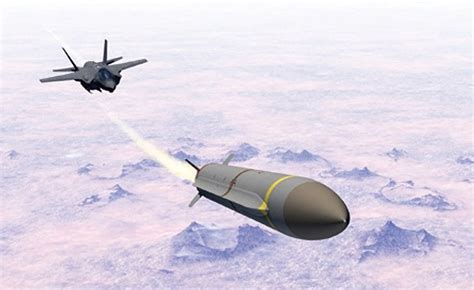
Both aircraft are expected to use the weapon in network-centric modes. The Hammer can rely on target data provided by MALE drones, naval vessels, or ground sensors linked to India’s expanding command-and-control architecture. This networked approach allows Indian pilots to fire from EMCON (Emission Control) postures, preserving tactical stealth by minimizing radar emissions. When combined with Rafale’s Spectra electronic warfare suite or the Tejas Mk1A’s updated avionics, the Hammer becomes a key enabler of survivable, low-signature strike missions.
Indo-French Defense Collaboration Reinforced
The decision to jointly manufacture the Hammer in India reflects a long-running pattern of strategic trust between New Delhi and Paris. Unlike other defense suppliers, France has consistently supported technology transfers, joint manufacturing, and integration of high-end systems such as avionics, sensors, and propulsion technologies. The AASM program deepens this interdependence, embedding French know-how inside India’s industrial environment while giving Safran a long-term foothold in India’s munitions ecosystem.
Critically, the venture reinforces India’s diversification strategy. New Delhi avoids dependence on a single supplier, yet prioritizes stable, technologically trusted partners. France fits neatly into this logic, serving as a reliable source for advanced components while allowing India to gradually localize key technologies.
Implications for China, Pakistan, and the Indo-Pacific Balance
For India’s adversaries, the local production of Hammer munitions signals a steady shift in the regional military balance. China and Pakistan both rely on inventories that could be disrupted by external pressure or logistical delays. India, by contrast, is actively insulating its high-value munitions from geopolitical disruption.
Pakistan must now factor India’s ability to conduct stand-off strikes against airbases, ammunition depots, artillery groupings, and command facilities with minimal exposure. China faces a broader, Indo-Pacific-scale implication: India is building a resilient strike capability that can be replenished during extended crises, minimizing vulnerabilities created by distance or blockades.
The integration of the Hammer into both Rafale and Tejas fleets also complicates adversary planning. India can strike hardened targets from beyond 70 km, generate multi-axis attack patterns, leverage external targeting networks, and execute low-signature attack profiles that stretch enemy air defense systems. When combined with growing inventories of long-range drones, future fighter squadrons, and electronic warfare assets, the Hammer becomes part of a broader Indian strategy aimed at achieving durable operational autonomy.
A New Foundation for India’s Precision-Strike Future
The AASM Hammer joint venture represents far more than a manufacturing project. It is a structural investment in India’s future precision-strike architecture. Domestic production secures the supply chain, scales output during crises, and strengthens national expertise in guidance systems, electronics, and propulsion integration. The result is a more confident, more independent, and more technologically empowered air force.
India is now positioned to build an industrial base capable not only of sustaining its own fleets, but potentially exporting high-end munitions or derivative technologies to partners in Southeast Asia, Africa, and the Middle East. In an Indo-Pacific region marked by rapid militarization and shifting alliances, the Hammer initiative stands as a benchmark for India’s strategic maturity and long-term resilience.