The aerospace industry rarely hinges on a single machine. Yet, in today’s strained manufacturing landscape, one $175 million hydraulic press has become a symbol of everything that is both ambitious and fragile about modern aircraft production. Scheduled to come online in 2029, this massive industrial asset—being developed by Safran—is already casting a long shadow over companies that depend on precision, timing, and relentless output. Few feel that pressure more acutely than Boeing.
At first glance, the delay might seem like a routine industrial timeline. Large-scale manufacturing infrastructure is never built overnight. But in aviation, where every missing component can ground billions of dollars in assets, time is not just money—it is momentum, reputation, and survival.
The deeper issue is not the machine itself, but what it represents: a global bottleneck in aircraft engine production that cannot be solved quickly, cheaply, or incrementally.
A $175 Million Machine Built to Solve a $1 Trillion Problem
Safran’s investment is not just large—it is strategic. The company is constructing a 30,000-metric-ton hydraulic forging press, a piece of equipment designed to produce up to 14,000 high-precision forged components annually. These are not generic parts. They are mission-critical structures that must endure extreme stress, heat, and rotational forces inside next-generation aircraft engines.
Forged components form the backbone of high-bypass turbofan engines, the kind that power aircraft like the Boeing 737 MAX and future widebody platforms. Without them, engines cannot be completed. Without engines, aircraft cannot be delivered.
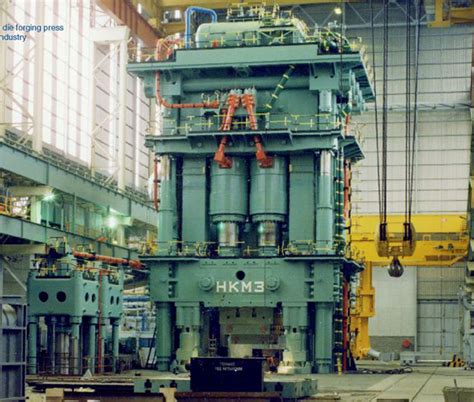
What makes this machine extraordinary is not just its scale, but its irreplaceability. Forging at this level requires immense pressure, precise thermal control, and metallurgical expertise that only a handful of facilities worldwide can achieve. Unlike other supply chain segments, where production can be distributed or outsourced, forging capacity is concentrated, rigid, and slow to expand.
This is why Safran’s new press matters so much—and why its 2029 timeline raises concerns across the industry.
Why Forging Has Become Aviation’s Most Dangerous Bottleneck
Supply chain issues in aviation are often discussed in broad terms, but forging stands apart as one of the most critical and constrained processes. The challenge lies in both physics and economics.
Forging requires shaping metal under extreme force, often exceeding tens of thousands of tons, to produce components that maintain structural integrity under punishing conditions. These parts must be flawless. Even microscopic defects can lead to catastrophic failures.
Unlike assembling electronics or machining smaller parts, forging cannot be easily scaled. You cannot simply “add another shift” or “open a small facility.” Each expansion requires:
- Massive capital investment
- Years of construction and calibration
- Highly specialized labor
- Long certification cycles
This creates a supply chain that grows in large, infrequent leaps, rather than gradual increments.

After the pandemic, demand for aircraft rebounded far faster than expected. Airlines rushed to modernize fleets, driven by fuel efficiency targets and surging passenger traffic. Manufacturers responded by increasing production targets—but forging capacity did not keep pace.
The result is a classic choke point: too many aircraft orders chasing too few critical components.
The LEAP Engine: Where the Pressure Becomes Real
Nowhere is this bottleneck more visible than in the production of the CFM International LEAP engine. This engine powers both the Boeing 737 MAX and the Airbus A320neo family, making it one of the most important propulsion systems in commercial aviation.
The LEAP engine is a marvel of engineering, incorporating advanced materials, tighter tolerances, and complex geometries. But these innovations come at a cost: they demand even more sophisticated forging processes.
When forging capacity tightens, LEAP engine production slows. When engines are delayed, aircraft remain incomplete. And when aircraft sit unfinished, manufacturers like Boeing face a cascade of consequences:
- Delivery delays
- Revenue disruption
- Airline dissatisfaction
- Increased operational costs
This is not theoretical. Several airlines have already experienced fleet disruptions linked to engine availability, highlighting how deeply this issue runs.
2029: A Timeline That Comes Too Late
The most striking aspect of Safran’s investment is not its scale—it is its timeline. A project initiated today that will not reach full operational capacity until 2029 reflects the long recovery cycle of aerospace manufacturing.
By the time the press becomes operational, the industry will have spent nearly a decade navigating constrained supply. Boeing, in particular, must operate within this limitation while attempting to rebuild production stability and market confidence.
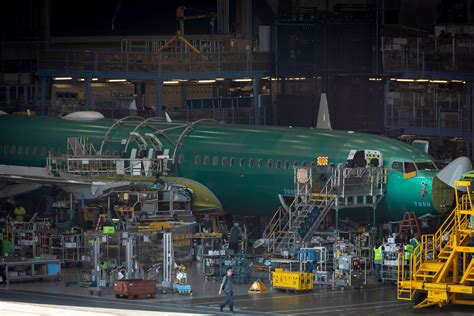
Recent delivery figures show progress. Boeing delivered 143 commercial aircraft in Q1 2026, even surpassing Airbus during that period. But these gains remain fragile. They depend heavily on a steady, uninterrupted flow of engines and components.
Even a minor disruption can ripple through production schedules, causing delays that are difficult to recover. The absence of additional forging capacity until 2029 means that:
- Current backlogs will persist longer
- Production ramp-ups will face ceilings
- Airlines will continue waiting for deliveries
In other words, the benefits of Safran’s investment will arrive—but not in time to solve today’s problems.
Balancing Narrowbody and Widebody Demand
The new hydraulic press is designed to support both narrowbody and widebody engine programs, a decision that reflects the breadth of global aviation demand. However, this dual role introduces a complex balancing act.
Narrowbody aircraft, such as the 737 MAX, dominate short- and medium-haul routes. They are high-volume, high-frequency assets, and demand for them remains strong due to their efficiency and versatility.
Widebody aircraft, on the other hand, serve long-haul markets and require larger, more powerful engines. These engines demand even more substantial forged components, placing additional strain on limited capacity.
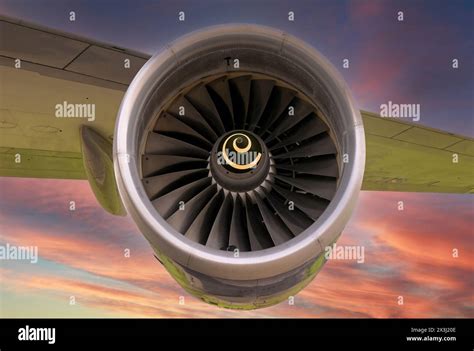
With one machine supporting both segments, decisions must be made about allocation of output. Should capacity prioritize high-volume narrowbody programs, or high-value widebody engines?
For Boeing, this is not just a technical question—it is a strategic dilemma. Each choice carries financial implications, affecting revenue streams, customer relationships, and long-term competitiveness.
Technology, Jobs, and the Future of Precision Manufacturing
Safran’s project is not just about metal and machinery. It represents a broader shift toward digitally integrated, data-driven manufacturing.
The new press will incorporate:
- Real-time sensors monitoring temperature and pressure
- Advanced analytics for material deformation
- Automated quality control systems
- Noise-reduction technologies to manage industrial impact
These features are essential for producing components that meet the tight tolerances required by modern engines.

The human element is equally important. Safran plans to create 130 new jobs starting in 2026, focusing on engineers, technicians, and operators who will prepare and eventually run the facility.
This blend of human expertise and digital precision reflects the future of aerospace manufacturing, where scale alone is not enough—intelligence and adaptability are equally critical.
Industrial Strategy and Supply Chain Sovereignty
Beyond production, Safran’s investment carries geopolitical significance. Expanding forging capacity within Europe strengthens industrial sovereignty, reducing reliance on external suppliers and enhancing resilience against global disruptions.
For governments and industry leaders, this is a strategic priority. A more localized supply chain can:
- Improve reliability
- Reduce transportation risks
- Enhance economic security
However, for Boeing, the benefits are indirect. As a U.S.-based manufacturer relying on a global supplier network, it must navigate the complexities of international coordination, regulatory environments, and logistical constraints.
Even with increased capacity in Europe, the distance between supplier and assembler adds friction, making seamless integration more challenging.
Boeing’s Structural Dependence on Engine Suppliers
Boeing’s business model has always relied on external engine manufacturers. Unlike some industries where vertical integration is possible, aircraft manufacturing depends on a network of highly specialized partners.
Under normal conditions, this system works efficiently. But when bottlenecks emerge, it exposes a fundamental vulnerability: Boeing cannot produce aircraft faster than its suppliers can deliver engines.
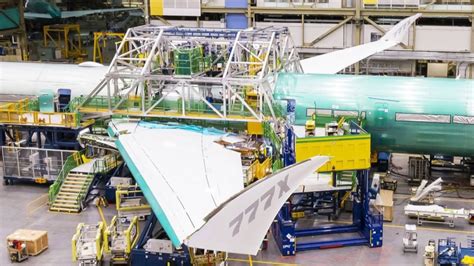
The current shortage of forged components has amplified this dependency. Even as Boeing improves its internal processes and addresses quality concerns, it remains constrained by factors beyond its direct control.
This creates a paradox. Boeing can optimize assembly lines, streamline operations, and increase workforce efficiency—but without sufficient engine supply, those improvements have limited impact on final output.
A Fragile System Under Immense Pressure
The fact that a single machine—costing $175 million and taking years to build—can influence global aircraft production highlights a deeper truth: the aerospace supply chain is both advanced and fragile.
It operates with remarkable precision, yet offers little margin for error. When one link weakens, the effects cascade across continents and industries.
Safran’s hydraulic press is a step toward strengthening that chain. It promises increased capacity, improved efficiency, and greater resilience. But it also underscores how slow and complex such improvements are.
For Boeing, the challenge is immediate. It must navigate the next several years with limited forging capacity, balancing production goals against supply constraints while maintaining customer trust.
The Long Wait to 2029—and What Comes Next
By the time Safran’s press becomes fully operational, the aviation industry may look very different. Demand is expected to remain strong, driven by economic growth, sustainability goals, and evolving travel patterns.
Yet, the path to that future is constrained by today’s realities. The gap between current demand and available capacity will not close overnight. It will require sustained investment, coordination, and patience.
For Boeing, the stakes are particularly high. Its ability to recover from past disruptions, compete with Airbus, and meet airline expectations depends heavily on factors it cannot fully control.
And that is the uncomfortable truth at the heart of this story: in an industry defined by innovation and ambition, progress is sometimes limited not by vision, but by the slow, grinding pace of industrial capacity.
The $175 million machine will eventually arrive. It will produce thousands of critical components and help ease a strained supply chain. But until then, Boeing—and the broader aerospace industry—must operate in a world where one missing piece can hold everything back.