Boeing has entered 2026 with its strongest commercial momentum in more than a decade, signaling a dramatic turnaround for a manufacturer that spent years battling regulatory scrutiny, production failures, and intense competitive pressure from Airbus. With 284 net new aircraft orders secured during the first four months of the year and delivery numbers finally accelerating, the American aerospace giant is positioning itself for a long-awaited return to industrial stability and market leadership.
The company’s rebound has been driven by a combination of tighter manufacturing oversight, improving supply-chain coordination, and renewed airline confidence in Boeing’s product portfolio. After years defined by crisis management following the 737 MAX disasters and subsequent grounding, Boeing is now focused on scaling output carefully while rebuilding trust across the global aviation industry.
Chief Executive Officer Kelly Ortberg has framed the recovery as an “industrial reset,” a phrase increasingly reflected in Boeing’s operational performance. The manufacturer delivered 143 commercial aircraft during the first quarter of 2026, surpassing Airbus quarterly deliveries for the first time since the MAX crisis began. That achievement alone marked a symbolic turning point for the company.
The strongest contribution came from the 737 program, which accounted for 114 deliveries during the quarter. Boeing’s widebody programs also provided critical support, including 15 Dreamliners, eight 777 aircraft, and six 767 freighters.
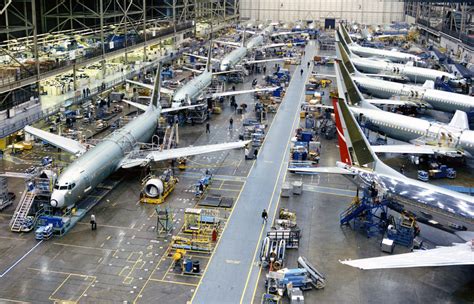
Boeing’s Production Recovery Begins Delivering Results
One of the biggest challenges Boeing faced after the MAX crisis was restoring confidence inside its factories as much as outside them. Regulators, airlines, and investors all questioned whether the company could consistently maintain quality standards while producing aircraft at scale.
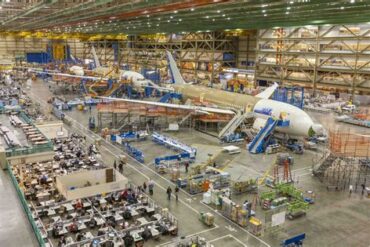
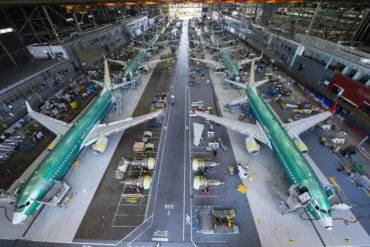
Ortberg’s leadership approach has focused heavily on slowing production temporarily in order to improve manufacturing precision. Boeing consolidated sections of its supply chain, tightened internal inspections, and reduced opportunities for assembly defects to pass through unnoticed.
Those measures appear to be paying off. The Federal Aviation Administration recently approved Boeing to raise 737 MAX production to 42 aircraft per month, an important milestone for a company still operating under strict regulatory oversight.
Boeing now intends to push output further to 47 monthly deliveries later this year, though executives remain cautious about expanding too aggressively. Unlike previous years, the company is emphasizing stability and repeatability rather than chasing volume at all costs.
The improved manufacturing pace has already translated into stronger commercial demand. Boeing recorded 135 net orders in April alone, demonstrating that airlines continue betting heavily on the company’s narrowbody and long-haul platforms despite years of turbulence.
The Battle With Airbus Intensifies In The Narrowbody Market
The competition between Boeing and Airbus remains centered around the single-aisle aircraft market, the most profitable and strategically important sector of commercial aviation.
For decades, Boeing’s 737 family dominated global narrowbody sales. That changed in 2025 when the Airbus A320 family officially surpassed the 737 in cumulative deliveries, ending one of the aerospace industry’s longest-running leadership streaks.
Airbus crossed the milestone after delivering its 12,260th A320-family aircraft to Saudi Arabian carrier Flynas. The achievement represented more than a symbolic victory. It confirmed Airbus’ growing dominance during Boeing’s prolonged recovery phase.
Still, Boeing sees a path back into direct competition through expansion of the MAX family, particularly the delayed MAX 10 and MAX 7 variants.
The MAX 10, designed as the largest and highest-capacity version of the 737 lineup, already carries a backlog exceeding 1,700 orders despite not yet receiving certification. Airlines view the aircraft as Boeing’s most important answer to the Airbus A321neo, which currently dominates the upper end of the narrowbody market.
Meanwhile, the smaller MAX 7 continues attracting strong interest from carriers seeking operational flexibility on shorter routes. Southwest Airlines alone has hundreds of pending orders tied to the aircraft.
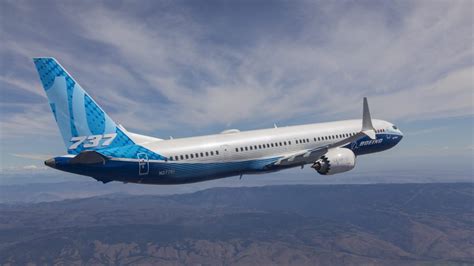
Boeing expects both variants to achieve FAA certification during 2026, a development that could dramatically strengthen the manufacturer’s order pipeline and delivery outlook over the next several years.
The 787 Dreamliner Continues To Anchor Boeing’s Widebody Strength
While the 737 MAX remains Boeing’s most scrutinized aircraft family, the 787 Dreamliner has quietly become one of the company’s most resilient commercial successes.
Despite periodic production pauses and inspections tied to manufacturing defects, airlines have continued purchasing the Dreamliner at a remarkable pace. The aircraft program has now accumulated more than 2,250 lifetime orders, making it the best-selling widebody jetliner program in aviation history.
Demand for fuel-efficient long-haul aircraft surged after the pandemic as airlines rebuilt international networks while seeking lower operating costs. The 787’s composite structure, fuel efficiency, and route flexibility positioned it perfectly for that recovery environment.
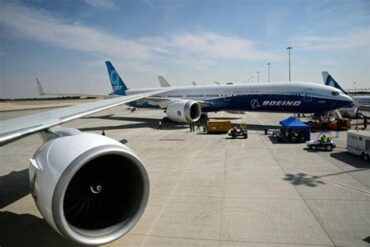
Boeing’s widebody momentum received another boost recently when the company completed the first production-grade flight of the highly anticipated 777-9. The aircraft, expected to enter service with Lufthansa in early 2027, represents Boeing’s next flagship long-haul program.
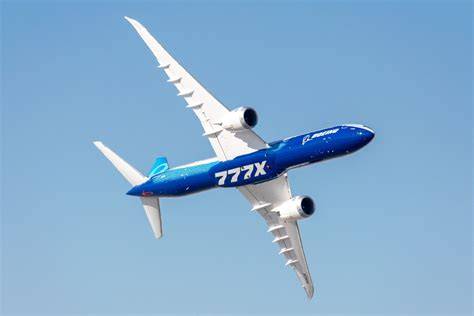
The 777X program remains years behind its original schedule, but airlines continue showing strong interest because of the aircraft’s size, efficiency, and long-range capability.
Regulatory Oversight Remains Central To Boeing’s Future
Even as Boeing regains momentum, the company continues operating under some of the strictest regulatory scrutiny in modern aviation history.
Following the 737 MAX crashes that killed nearly 350 passengers and crew members, the FAA stripped Boeing of key certification authorities previously delegated to the manufacturer. Today, FAA inspectors personally approve every individual 737 MAX and 787 before delivery.
That oversight has fundamentally changed Boeing’s manufacturing culture. While the process slows deliveries and increases compliance costs, it has also helped reassure airlines that safety standards are being rigorously enforced.
The company’s leadership understands that operational discipline now matters as much as commercial success. Boeing’s recovery depends not only on delivering more airplanes, but on proving consistently that its factories can produce them safely and reliably.
After years defined by crisis, delays, and reputational damage, Boeing’s strongest opening to a year since 2014 suggests the aerospace giant may finally be entering a new chapter — one focused less on survival and more on reclaiming its place at the top of global aviation.