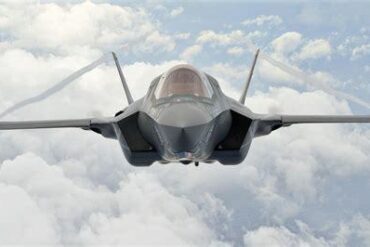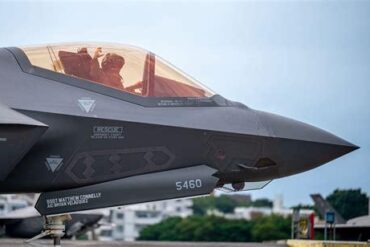
The year 2025 quietly rewrote the modern history of military aviation. While headlines often fixate on new prototypes or speculative sixth-generation concepts, the real story unfolded on factory floors and airbases across the globe. Lockheed Martin delivered 191 F-35 Lightning II fighter jets in a single year, a figure that did not just break the company’s own records but reshaped the global balance of frontline combat aircraft. Out of roughly 500 fighter jets delivered worldwide in 2025, more than a third bore the angular, stealthy silhouette of the F-35.
This surge did not happen because demand suddenly spiked or because Lockheed discovered a miraculous new production trick overnight. Instead, it was the culmination of years of industrial scaling, painful technical bottlenecks, and a decisive resolution to one of the most consequential software-hardware integration challenges in modern defense programs. The result was a delivery wave that pushed the F-35 firmly into a category of its own: not merely a fifth-generation fighter, but the most widely produced advanced combat aircraft on the planet.
The implications extend far beyond raw numbers. With nearly 1,300 F-35s now delivered worldwide, the aircraft has transitioned from a controversial program defined by delays and cost overruns into the backbone of Western airpower. Understanding how Lockheed Martin achieved this record year reveals as much about the future of air combat as it does about the industrial realities of building flying supercomputers at scale.
From Troubled Development to Global Backbone
The F-35 Lightning II has always been an aircraft of contradictions. It promised revolutionary capabilities while suffering from headline-grabbing overruns and schedule slips. For years, critics questioned whether a single airframe could realistically serve the divergent needs of conventional runways, short takeoff vertical landing operations, and aircraft carriers. Yet by 2025, those doubts were increasingly academic.
Lockheed Martin’s record deliveries included all three variants: the F-35A for conventional air forces, the F-35B with its short takeoff and vertical landing capability, and the F-35C, optimized for carrier operations. This was not just a manufacturing feat; it was a validation of a multi-variant design philosophy that had long been seen as risky.
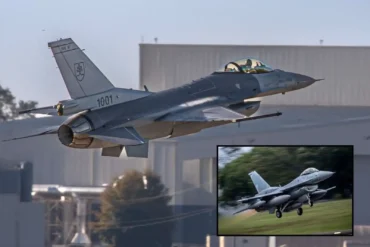
Most of these jets went to the United States military, reinforcing the F-35’s role as the primary high-end fighter for the US Air Force, Navy, and Marine Corps. At the same time, European air forces accelerated their transitions. Norway and the Netherlands completed their shifts entirely, Denmark retired its F-16s in preparation for full F-35 operations, and Italy expanded its program. The F-35 was no longer an exotic addition to force structures; it was becoming the default.
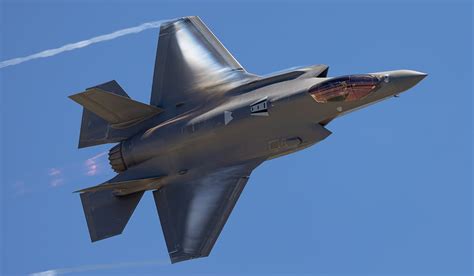
The Numbers Behind the Record
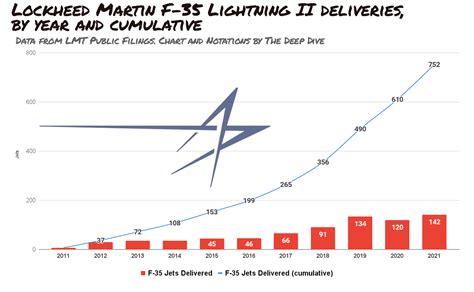
By January 2026, Lockheed Martin confirmed what industry observers had been tracking for months: 191 F-35s delivered in 2025, surpassing the previous annual high of 142 aircraft. This figure included jets assembled not only in Fort Worth, Texas, but also those completed at final assembly and check-out facilities in Italy and Japan, underscoring the program’s genuinely global industrial footprint.
By the end of 2024, over 1,100 F-35s had already been delivered. Those numbers broke down into 797 F-35As, 204 F-35Bs, and 102 F-35Cs. Adding the approximately 200 delivered during 2025 pushed the global fleet to nearly 1,300 aircraft. The United States Air Force alone has now likely received more than 500 F-35As, while European operators collectively field over 200 jets from a planned total of roughly 650.
This scale matters. It means there are now more F-35s in service than all other fifth-generation fighters combined, including the F-22 Raptor, China’s J-20, and Russia’s Su-57. The Lightning II is also the only fifth-generation fighter available on the open international market, with the Su-57 appearing only in limited export form to Algeria.
Clearing the TR-3 Bottleneck
The key to understanding the 2025 surge lies in a problem that had nothing to do with engines, stealth coatings, or supply chain shortages. It was software. Specifically, it was the Technology Refresh 3 (TR-3) upgrade, a fundamental overhaul of the F-35’s computing architecture.
TR-3 was designed to provide the processing power necessary for the upcoming Block 4 upgrades, delivering roughly 25 times more computing capacity than the previous TR-2 systems. However, integrating this new digital backbone proved far more complex than anticipated. As a result, the US government refused to accept deliveries of jets equipped with incomplete TR-3 systems.
By 2024, this impasse had created a backlog of up to 120 completed but undeliverable F-35s sitting at or near Lockheed Martin facilities. Production continued, but deliveries stalled. The aircraft existed in a kind of limbo: physically complete, contractually paid for, but operationally unacceptable.
The breakthrough came when Lockheed resolved the integration issues in 2024, allowing 110 aircraft to be delivered that year, including some that had been stored. In 2025, the majority of the backlog was finally cleared. Of the 191 F-35s delivered, approximately 93 were delayed backlog jets, while the remaining 98 were aircraft originally scheduled for 2025 delivery. The result was a delivery surge without a corresponding spike in production capacity.
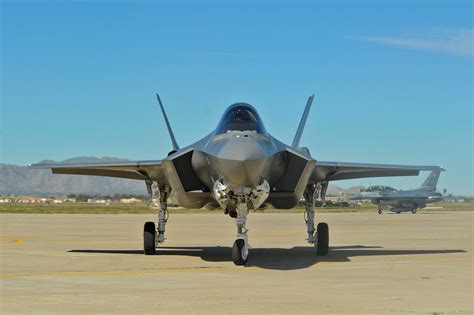
Production Capacity Versus Delivery Peaks
It is crucial to distinguish between production rate and delivery numbers. Lockheed Martin’s stable production capacity sits at 156+ F-35s per year, not 191. The record year was an anomaly driven by backlog clearance rather than a permanent step change.
Going forward, Lockheed has indicated that annual deliveries will likely dip from the 2025 peak, settling back toward the sustainable production rate. This does not signal weakness. On the contrary, a steady output of over 150 fifth-generation fighters annually would still make the F-35 the most produced advanced fighter in the world by a wide margin.
This industrial stability also reassures partner nations. Long-term fleet planning depends less on spectacular peaks and more on predictable delivery schedules, upgrade pathways, and sustainment capacity. In this respect, the post-TR-3 era may be the most strategically important phase of the program so far.
Dominating Global Fighter Deliveries
When placed in a global context, the 2025 F-35 numbers become even more striking. That year, Lockheed Martin delivered more F-35s than all other frontline American, European, Russian, Pakistani, and Indian fighters combined. The Lightning II accounted for more than half of all non-Chinese fighter jet deliveries worldwide.
China remains the only plausible rival in terms of sheer numbers, with estimates suggesting it delivered between 220 and 280 fighters in 2025, including J-10s and J-20s. Even here, uncertainty clouds the data. Independent observers place J-10 production closer to 40 units and J-20 production at around 100, figures that still underscore how rare fifth-generation fighters remain outside the F-35 ecosystem.
Meanwhile, Lockheed delivered around 20 F-16s, Boeing delivered nine F-15EXs and 14 F/A-18 Super Hornets, European manufacturers collectively delivered roughly 41 fighters, and Russia produced fewer than 40 frontline jets. Against this backdrop, the F-35’s dominance is not subtle; it is overwhelming.
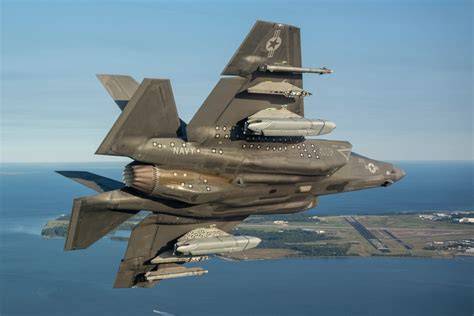
Operational Milestones That Reinforced Demand
The delivery record coincided with a year of significant operational milestones. Finland rolled out its first F-35A as part of a 64-jet purchase. Belgium received its first aircraft on home soil and expanded its order. Norway became the first nation to complete its full program of record, while Denmark and Italy increased their planned buys by 16 and 25 aircraft respectively.
Combat operations further validated the platform. Dutch F-35s became the first of their type to kinetically protect NATO airspace by shooting down hostile drones over Poland. Israeli and US F-35s played central roles in suppressing Iranian air defenses, leveraging stealth, sensor fusion, and electronic warfare capabilities that fourth-generation aircraft cannot match. F-35Cs operated by the US Marine Corps are also believed to have seen their first combat use in late 2024.
These real-world deployments mattered. They demonstrated that the F-35 was not merely an expensive technological experiment but a mature, combat-proven system capable of shaping modern battlefields.
Block 4 and the F-35 as a Flying Supercomputer
The resolution of TR-3 did more than unblock deliveries. It paved the way for Block 4, a sweeping set of enhancements that will redefine what the F-35 can do. These upgrades include new electro-optical targeting systems, improved distributed aperture sensors, enhanced cooling, expanded electronic warfare capabilities, and integration of additional weapons.
The deeper truth is that the F-35 is best understood not as a traditional fighter jet, but as a super-sensing, networked combat node. Its stealth allows it to survive, but its computing power allows it to dominate. The aircraft can fuse data from its own sensors with information from satellites, drones, and other aircraft, creating a real-time, god’s-eye view of the battlespace.
This information can then be shared with older fourth-generation fighters, naval vessels, and ground forces, dramatically increasing their effectiveness. In procurement competitions in Finland and Canada, the F-35 flew alone, while competitors relied on paired support platforms. Leaked evaluation data showed the F-35 scoring near-perfect marks, far ahead of its rivals.
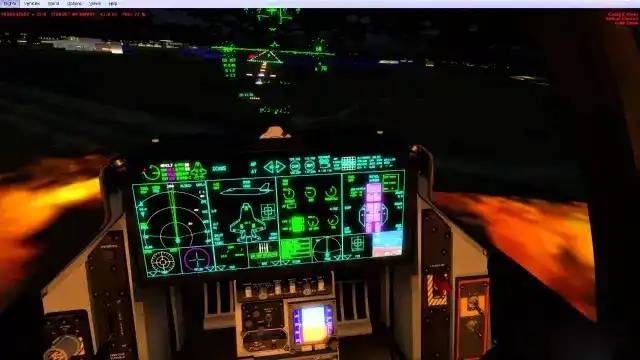
A Fleet on the Verge of Historical Scale
With nearly 1,300 aircraft delivered, the F-35 family is now likely the third most common fighter aircraft family in the world, trailing only the F-16 Fighting Falcon and the Su-27 Flanker family. Given the declining production rates and attrition affecting Flanker variants, the F-35 may soon become the second most common fighter jet globally, an extraordinary status for a fifth-generation design.
This scale has strategic consequences. Training pipelines, maintenance ecosystems, and upgrade paths benefit enormously from large fleets. Each additional operator strengthens the collective knowledge base, reduces sustainment costs over time, and reinforces interoperability across allied air forces.
Why the Record Year Matters
The significance of Lockheed Martin’s record F-35 deliveries lies not in the headline number alone, but in what it represents. It marks the moment when the F-35 definitively crossed the threshold from troubled program to indispensable platform. The clearance of the TR-3 backlog transformed a bottleneck into a springboard, unleashing a delivery surge that showcased the program’s underlying industrial strength.
Future years may not repeat the 191-jet figure, but they do not need to. The Lightning II has already achieved something more enduring: it has become the default answer to the question of how modern airpower is built, fielded, and sustained at scale. In that sense, 2025 was not just a record year. It was a turning point, and the aftershocks will shape global air forces for decades to come.