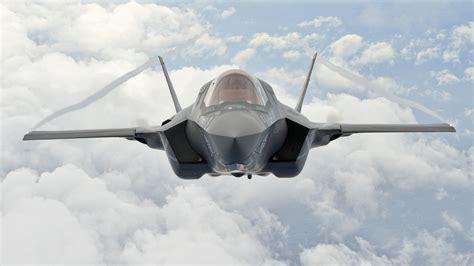
In the world of modern military aviation, few programs attract as much scrutiny, debate, and strategic attention as the F-35 Lightning II. Over the last year, Lockheed Martin quietly achieved something that would have seemed optimistic just a few years ago: a record-breaking surge in F-35 deliveries that reshaped the global balance of fifth-generation airpower. The numbers matter, but the story behind those numbers matters even more, because it reveals how the F-35 program has matured into the backbone of Western air forces.
The past year marked a turning point. Production lines ran faster, acceptance bottlenecks eased, and partner nations finally received aircraft that had been waiting in limbo. What emerged was not just a delivery statistic, but a signal that the F-35 has moved from an embattled development program into a stable, high-volume industrial machine with geopolitical consequences.
Lockheed Martin and the Long Arc of Military Aviation
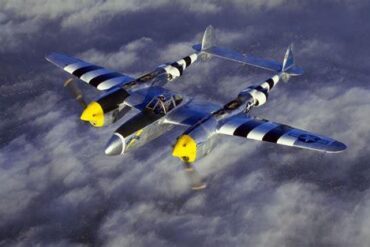
Lockheed Martin did not become the world’s largest defense contractor by accident. Its roots stretch back to the earliest days of powered flight, when Allan and Malcolm Lockheed began experimenting with aircraft designs that pushed beyond the limits of their era. The later creation of the Skunk Works cemented the company’s reputation for building aircraft that redefined what was technically possible, from the P-38 Lightning to stealth pioneers like the F-117 and F-22.
The 1995 merger between Lockheed Corporation and Martin Marietta fused two aerospace powerhouses into a single entity capable of handling programs of immense scale and complexity. That institutional memory matters. Delivering nearly two hundred stealth fighters in a single year is not just a production feat; it is the result of decades of accumulated manufacturing discipline, supply-chain management, and systems integration experience.
The F-35 Lightning II: From Ambition to Global Standard
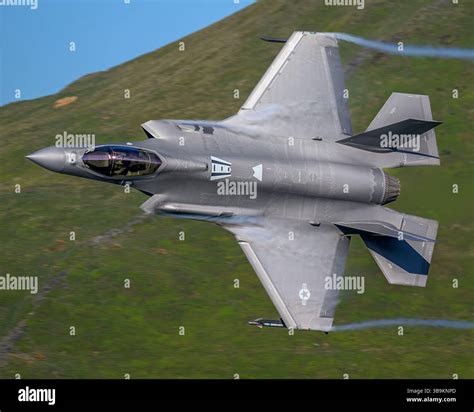
The F-35 Lightning II began as the answer to an audacious question posed in the 1990s: could a single aircraft family replace a wide range of aging fighters across multiple services and allied nations? The Joint Strike Fighter program set out to do exactly that, emphasizing stealth, sensor fusion, and multirole flexibility over traditional single-mission specialization.
Lockheed Martin’s X-35 prototype, which first flew in 2000, demonstrated that the concept was viable. From there, the program expanded into three distinct variants: the F-35A for conventional takeoff and landing, the F-35B with short takeoff and vertical landing capability, and the carrier-capable F-35C. Each variant added complexity, but also broadened the aircraft’s appeal across air forces and navies worldwide.
By the time the F-35 entered widespread operational service, it was no longer just an aircraft. It had become a flying sensor node, designed to gather, fuse, and distribute information across an entire battlespace.
Why Delivery Numbers Matter More Than Ever
In defense aviation, delivery figures are more than accounting metrics. Each aircraft handed over represents a fully trained pilot pipeline, maintenance crews coming online, and an operational squadron inching closer to full combat readiness. For partner nations, deliveries translate directly into deterrence, signaling to rivals that advanced capabilities are no longer theoretical.
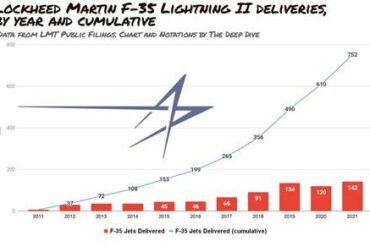
Over the last year, Lockheed Martin delivered 191 F-35s, the highest annual total in the program’s history. This surpassed the previous record of 142 aircraft and pushed the global F-35 fleet to approximately 1,300 jets in active service. These deliveries were split across the three variants, reflecting the diverse operational needs of customers.
What made this surge particularly significant was not just the raw number, but the timing. Many of these aircraft had been completed earlier but were awaiting acceptance due to software certification and upgrade delays. Clearing that backlog unlocked a wave of handovers that reshaped fleet inventories almost overnight.
Breaking Down the 2025 F-35 Delivery Surge
The majority of deliveries over the last year consisted of the F-35A, the conventional takeoff and landing variant used by the US Air Force and most international customers. Its relative simplicity compared to the other variants allows for higher production throughput, making it the backbone of annual delivery totals.
The F-35B, with its short takeoff and vertical landing capability, continued to flow to the US Marine Corps and allied navies such as the United Kingdom and Japan. Each F-35B represents a unique strategic asset, capable of operating from austere bases or amphibious assault ships where conventional fighters cannot.
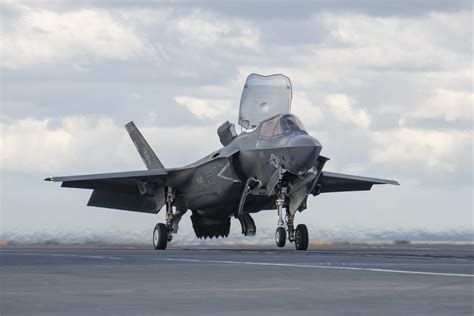
The F-35C, optimized for carrier operations with larger wings and reinforced landing gear, strengthened US Navy carrier air wings. Although produced in smaller numbers, its role is outsized, forming the stealthy tip of future carrier-based strike operations.
The Industrial Engine Behind Record Deliveries
Reaching 191 deliveries in a single year required more than demand. It required Lockheed Martin to refine its manufacturing processes across multiple facilities, including the main assembly line in Fort Worth, Texas, and partner sites in Italy and Japan. Automation improvements, tighter quality control loops, and closer coordination with suppliers all played a role.
Equally important was progress on software integration. Earlier in the decade, aircraft were rolling off the line faster than they could be accepted, creating rows of completed but undelivered jets. Resolving these issues allowed Lockheed Martin to convert stored airframes into delivered aircraft, transforming production output into operational capability.
This industrial momentum matters because it sets expectations for the future. Once a production system proves it can sustain high output, scaling becomes less risky, and customers gain confidence in delivery timelines.
Who Received the F-35s Delivered Last Year
The United States remained the largest recipient, with deliveries split among the Air Force, Marine Corps, and Navy. These aircraft support everything from homeland defense to forward-deployed operations in Europe and the Indo-Pacific. They also anchor training pipelines for allied pilots, reinforcing interoperability.
International partners accounted for a substantial portion of deliveries. Countries such as Italy, Australia, Norway, the Netherlands, Japan, and South Korea continued to build out their fleets, replacing legacy fourth-generation fighters with fifth-generation capabilities. Newer customers, including Germany, Finland, and Switzerland, began moving closer to operational status as deliveries ramped up.
Each delivery strengthens a shared ecosystem. F-35 operators train together, share data, and integrate tactics, creating a multinational force multiplier that extends well beyond individual national inventories.
The Strategic Impact of a 1,300-Aircraft Fleet
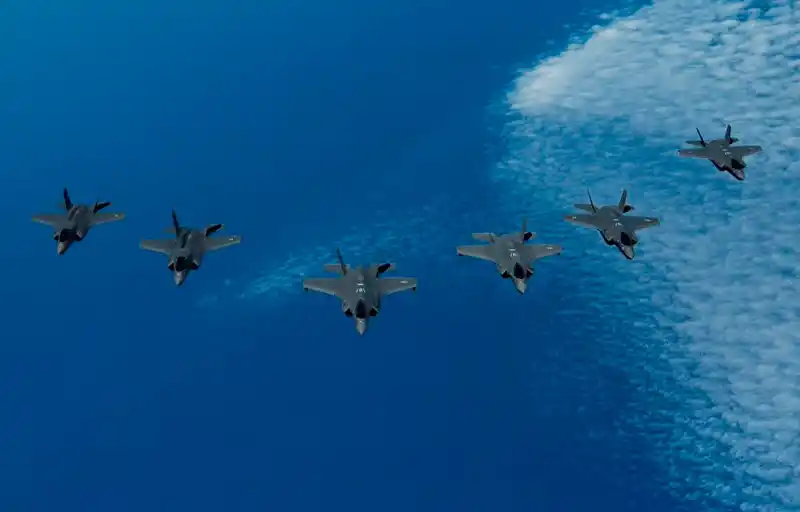
Crossing the threshold of roughly 1,300 active F-35s worldwide marks a strategic inflection point. At this scale, the aircraft is no longer a niche capability; it is a dominant presence in allied air forces. Potential adversaries must assume that any conflict with a major Western power will involve large numbers of stealth aircraft capable of penetrating advanced air defenses.
The F-35’s strength lies not only in stealth, but in information dominance. Its sensors, including AESA radar and distributed aperture systems, allow it to detect threats at long range while remaining difficult to track. When hundreds of such aircraft operate as a network, the battlespace becomes transparent to those inside the system and opaque to those outside it.
Performance and Technology That Justify the Demand
The F-35’s technical specifications help explain why demand remains strong. With a top speed of Mach 1.6, a service ceiling near 50,000 feet, and a combat radius of approximately 670 nautical miles, it balances performance with endurance. Its Pratt & Whitney F135 engine delivers around 43,000 pounds of thrust, making it the most powerful fighter engine in operational service.
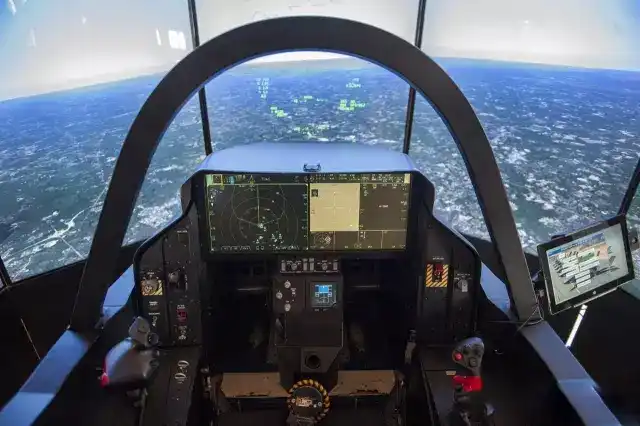
More important than raw performance is how the aircraft fights. Sensor fusion combines radar, infrared, and electronic data into a single coherent picture for the pilot. This reduces workload and shortens decision cycles, a critical advantage in high-intensity combat where seconds matter.
Overcoming Past Challenges to Reach This Milestone
The F-35 program’s history includes well-documented challenges, from cost overruns to software delays. For years, critics questioned whether the program could ever achieve its promised scale and efficiency. The delivery surge of the last year does not erase those issues, but it does demonstrate that they are no longer defining the program.
By clearing delivery backlogs and stabilizing production, Lockheed Martin showed that the F-35 has entered a new phase. The focus is shifting from development drama to sustained output, fleet upgrades, and long-term operational integration.
What These Deliveries Mean for the Future of Airpower
The implications of last year’s deliveries extend far beyond a single calendar year. A growing fleet enables faster modernization cycles, as software and hardware upgrades can be rolled out across a large installed base. Planned enhancements will improve electronic warfare capabilities, expand weapons integration, and refine data-sharing across domains.
The F-35 is also increasingly positioned as a command-and-control node, coordinating with drones, legacy fighters, ground forces, and naval assets. As air combat becomes more networked, the value of each additional aircraft increases, not linearly, but exponentially.
A Record Year That Redefined the Program
Delivering 191 F-35s in a single year was not just a numerical achievement. It marked the moment when the Lightning II program fully transitioned into high-volume, global relevance. The aircraft is now deeply embedded in the defense planning of around 20 nations, shaping doctrines, alliances, and deterrence strategies.
For Lockheed Martin, the milestone reaffirmed its ability to manage one of the most complex defense programs in history. For operators, it meant tangible progress toward fully modernized air fleets. And for observers of global security, it signaled that fifth-generation airpower is no longer the future. It is the present, arriving in record numbers and changing the strategic landscape one delivery at a time.