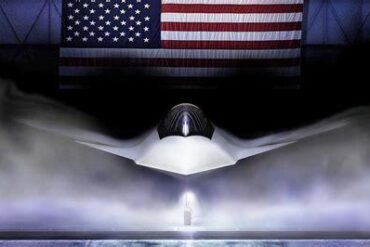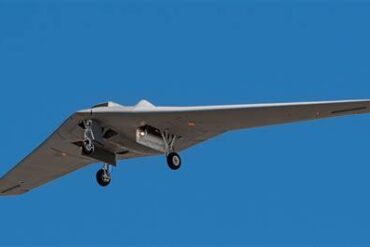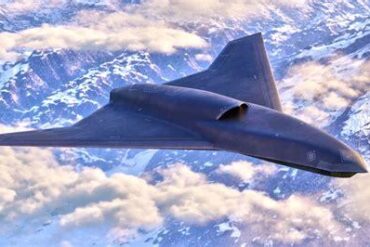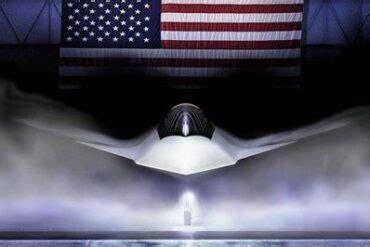
The decision to award Boeing the F-47 sixth-generation stealth fighter program instead of Lockheed Martin was one of the most surprising moments in modern military aviation. For more than two decades, Lockheed had been considered the undisputed leader in American stealth technology, producing legendary aircraft such as the F-22 Raptor and F-35 Lightning II. Many analysts expected Lockheed to continue its dominance when the United States Air Force launched the Next Generation Air Dominance (NGAD) competition.
However, the Air Force selected Boeing in March 2025, creating a major shift in America’s fighter aircraft strategy. The decision was not simply about choosing the aircraft with the most advanced stealth features or the fastest performance. Instead, it reflected a broader calculation involving industrial competition, development speed, technological maturity, and the future direction of aerial warfare.
The F-47 program represents a new era of air combat, where a traditional fighter jet becomes more than a weapons platform. It will serve as a central command aircraft capable of coordinating autonomous drones, advanced sensors, and networked weapons systems. The Air Force was not just selecting a fighter; it was selecting the foundation of a future combat ecosystem.
The real reason Boeing won was a combination of strategic necessity and technological readiness. Lockheed Martin may have had the strongest stealth reputation, but Boeing offered something the Air Force increasingly valued: a lower-risk pathway to deliver a revolutionary aircraft faster.
The NGAD Competition Changed the Rules of Fighter Development
The Next Generation Air Dominance initiative was never designed as a simple replacement for the F-22 Raptor. Instead, the program represented a complete transformation of how the United States conducts air warfare.
The Air Force envisioned a system built around a manned sixth-generation fighter working together with Collaborative Combat Aircraft (CCA), which are autonomous drones capable of carrying weapons, collecting intelligence, jamming enemy systems, and extending the reach of the main aircraft.
The future F-47 would act as a battlefield “quarterback”, directing multiple unmanned aircraft while remaining deeply connected to satellites, ground forces, naval assets, and other aircraft. This approach reflects the reality of future conflicts, especially in the Pacific region, where distances are enormous and air forces must operate against increasingly sophisticated opponents.
When Boeing and Lockheed Martin submitted their NGAD proposals, both companies presented highly advanced designs. Both had decades of experience with stealth technology, classified programs, and military aircraft development. Yet Boeing’s proposal reportedly demonstrated stronger digital development capabilities and a clearer path toward production.
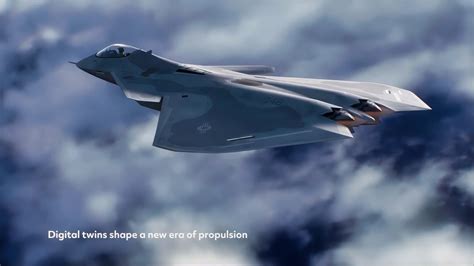
One of Boeing’s biggest advantages was the use of a digital twin, a highly detailed virtual model of the aircraft that allows engineers to test design choices before building physical prototypes. This technology can simulate radar performance, maintenance requirements, manufacturing challenges, and system integration.
For a program as complex as NGAD, reducing uncertainty was critical. The Air Force was not only looking for a revolutionary aircraft but also wanted to avoid the development problems that affected previous programs.
The F-35 program, despite becoming the most advanced fighter fleet in the world, experienced years of delays and rising costs. The Air Force wanted NGAD to avoid repeating those mistakes.
Boeing’s Return to Advanced Fighter Leadership
The F-47 victory was especially significant because Boeing had struggled to maintain its position in the fighter aircraft market. After the merger between Boeing and McDonnell Douglas, the company remained a major defense contractor, but Lockheed Martin became the dominant force in stealth fighters.
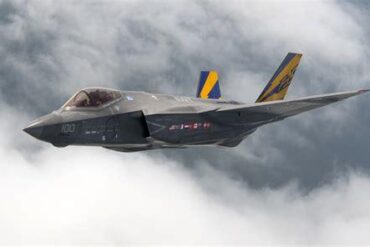
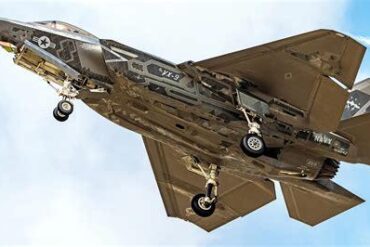
The F-22 Raptor, developed by Lockheed Martin, established a new standard for air superiority. Later, the F-35 Lightning II became the backbone of American and allied fighter fleets worldwide.
Meanwhile, Boeing’s fighter portfolio became centered around upgraded fourth-generation aircraft such as the F-15EX Eagle II and the T-7A Red Hawk trainer. Although Boeing remained a major military supplier, it lacked a flagship stealth fighter program.
The F-47 changed that situation immediately.
For Boeing Defense, the contract represented more than a financial opportunity. It provided a long-term foundation for its fighter manufacturing operations in St. Louis, Missouri. The program could secure thousands of engineering and manufacturing jobs while restoring Boeing’s reputation as a leading combat aircraft developer.
The timing was also important because Boeing’s commercial aviation division faced significant challenges after the 737 MAX crisis and other production difficulties. A major defense success helped strengthen confidence in the company’s broader aerospace capabilities.
The Air Force’s decision therefore benefited both Boeing and the wider American defense industrial base.
The Pentagon Wanted More Competition in Fighter Manufacturing
One of the biggest reasons Boeing won the F-47 contract had little to do with the aircraft itself. It was about maintaining competition.
For years, American fighter production became increasingly concentrated around Lockheed Martin. The company controlled two of the nation’s most important fighter programs: the F-22 and F-35.
Although Lockheed’s success demonstrated exceptional engineering ability, Pentagon officials became concerned about relying too heavily on a single company for advanced fighter development.
Awarding NGAD to Boeing created a healthier balance between America’s two largest military aircraft manufacturers. It ensured that the United States would maintain two independent fighter design capabilities instead of allowing one company to dominate the next generation of combat aircraft.
This strategy also protects national security. If one supplier experiences technical problems, production delays, or supply chain challenges, having another major aircraft manufacturer with advanced fighter experience provides additional resilience.
The F-47 decision was therefore part of a larger effort to preserve the American aerospace industrial base.
Boeing’s Digital Engineering Advantage Over Lockheed Martin
Modern fighter development has changed dramatically. The companies that succeed are not necessarily those that simply build the most advanced aircraft designs. They are the companies that can move from concept to production efficiently.
Boeing’s NGAD proposal benefited from years of research into advanced aircraft technologies, including experimental programs involving stealth materials, artificial intelligence, adaptive engines, and autonomous systems.
The company’s experience with digital engineering allowed engineers to evaluate thousands of design possibilities without producing expensive prototypes for every change.
This approach is particularly valuable for sixth-generation aircraft because many technologies remain highly experimental. The F-47 must integrate advanced sensors, artificial intelligence, new propulsion systems, and unmanned aircraft control capabilities.
A traditional development approach could take decades and billions of dollars. The Air Force wanted a faster, more flexible process.
Boeing’s ability to demonstrate digital maturity likely reduced perceived program risk compared with a more traditional fighter development approach.
The F-47’s Role in Future Air Combat
The F-47 stealth fighter is expected to be significantly different from previous American fighters. While aircraft like the F-22 were designed primarily for air-to-air combat dominance, the F-47 is being developed as a connected combat system.
Its primary mission will involve penetrating heavily defended airspace, collecting information, and coordinating multiple assets.
Future conflicts may not be decided by individual fighter engagements. Instead, victory could depend on which side can process information faster, detect threats earlier, and coordinate more platforms simultaneously.
The F-47 is expected to include advanced stealth technology, improved sensors, artificial intelligence systems, and compatibility with autonomous drones.
Although many performance details remain classified, public reports suggest the aircraft could achieve speeds above Mach 2, feature a combat radius exceeding 1,000 nautical miles, and incorporate next-generation propulsion technology.
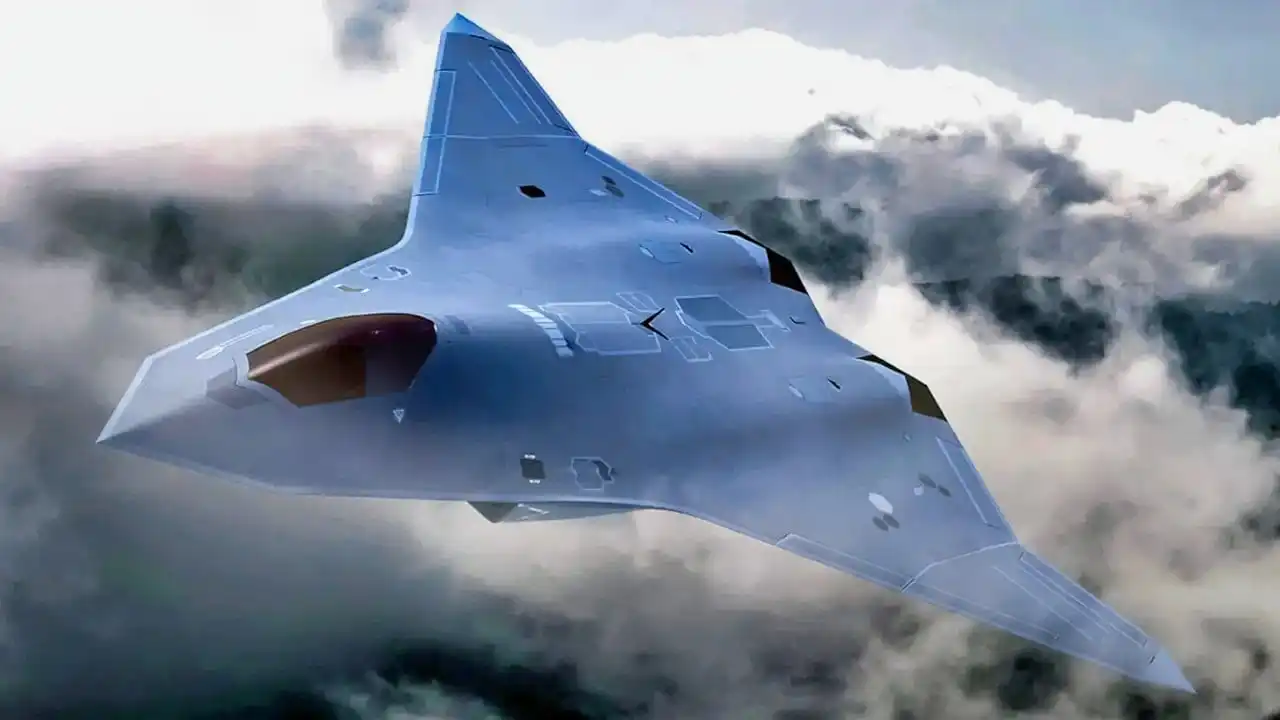
A key element of the aircraft will be its relationship with Collaborative Combat Aircraft. Rather than operating alone, the F-47 will likely control multiple unmanned systems that can perform dangerous missions ahead of the crewed fighter.
These drones could act as scouts, electronic warfare platforms, decoys, or weapons carriers.
This concept allows the Air Force to increase combat power without requiring every capability to be placed inside a single expensive aircraft.
Why Lockheed Martin Lost Despite Its Stealth Expertise
Lockheed Martin’s loss does not mean the company failed technologically. In many ways, Lockheed remains the world leader in operational stealth fighters.
The F-35 continues to expand globally, with dozens of allied countries operating or purchasing the aircraft. The platform has become the center of Western air power cooperation.
However, the F-47 represented a different requirement.
Lockheed’s strength has been refining and expanding fifth-generation technology. Boeing successfully positioned itself as the company capable of delivering the next major technological leap.
After losing NGAD, Lockheed shifted focus toward upgrading the F-35 into a more advanced fifth-generation-plus fighter. The company argued that improved versions of the F-35 could deliver many sixth-generation capabilities at a lower cost.
This strategy makes sense because not every country will need or afford a sixth-generation fighter. While the F-47 may become the ultimate air-superiority platform, the F-35 will likely remain the backbone of allied fighter fleets for decades.
The result could be a two-tier fighter market.
Boeing will lead the highest-end air dominance category, while Lockheed continues to dominate the global multirole fighter market.
The Cost and Timeline Challenges Ahead for Boeing
Winning the contract was only the beginning. Developing a sixth-generation fighter remains one of the most difficult engineering challenges in aerospace history.
The F-47 program is expected to require tens of billions of dollars before reaching full production. The Air Force has already allocated billions for continued development, with the aircraft expected to begin flight testing around 2028 and potentially enter service in the early 2030s.
Boeing must now prove that it can deliver the aircraft on schedule and control costs.
The company will need to modernize manufacturing facilities, manage a complex supplier network, and integrate technologies that have never before been combined into a single operational fighter.
The Air Force will also face the challenge of integrating the F-47 with existing aircraft such as the F-35, future drones, satellites, and command networks.
The success of NGAD will depend not only on the aircraft but on the entire ecosystem surrounding it.
The Strategic Meaning Behind Boeing’s F-47 Victory
The selection of Boeing over Lockheed Martin represents a major turning point in American military aviation.
The decision was not based on one single advantage. Boeing won because it offered the Air Force a combination of technological innovation, faster development, industrial diversification, and lower program risk.
Lockheed Martin remains one of the most important defense companies in the world, and the F-35 will continue playing a central role in global security. However, the F-47 signals that the next chapter of air combat will require new approaches.
The future fighter will not simply be faster, stealthier, or more heavily armed. It will be smarter, more connected, and capable of controlling an entire network of combat systems.
Boeing’s victory shows that the future of air superiority is no longer just about building the best aircraft. It is about building the most adaptable combat network.
The F-47 stealth fighter represents America’s attempt to redefine air dominance for the twenty-first century, and Boeing now has the responsibility of turning that vision into reality.