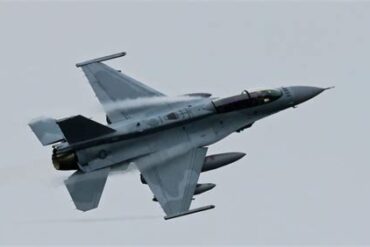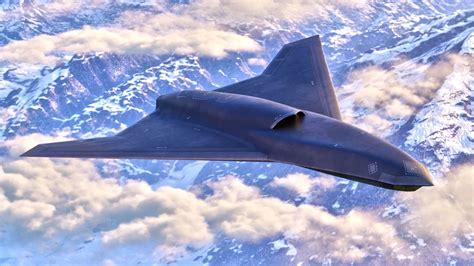
The United States Air Force is quietly redefining what air superiority will look like in the 2030s. For decades, advanced fighter programs revolved around a single aircraft platform that carried the burden of stealth, speed, sensors, survivability, and firepower on its own. That era is ending. The upcoming Boeing F-47 is not merely another stealth fighter replacing the F-22 Raptor. It is the centerpiece of a larger combat ecosystem built around Collaborative Combat Aircraft (CCA), autonomous drones designed to fight alongside crewed jets.
Yet a major capability gap is already emerging inside that vision. The Air Force’s first-generation loyal wingman drones appear optimized for affordability and rapid production rather than matching the extraordinary reach and survivability expected from the F-47. That mismatch could become a serious operational problem in a future Pacific conflict where distance, stealth, and endurance matter more than ever before.
This is precisely why Lockheed Martin’s Vectis stealth drone is attracting attention despite being rejected during the Air Force’s initial CCA competition. While the Air Force selected the Anduril YFQ-44A and General Atomics YFQ-42 for Increment 1, the Vectis concept may ultimately align far more closely with the demands of sixth-generation warfare.
The deeper the F-47 program evolves, the more obvious the need becomes for a higher-end autonomous wingman capable of surviving in the same lethal airspace as America’s next-generation fighter.
The future of air combat may depend on drones that are no longer disposable accessories, but genuine force multipliers.
The Vectis appears designed exactly for that role.
After years of focusing on cheap attritable drones, the Pentagon may soon discover that affordability alone cannot win a war over the Pacific.
The F-47 Is Designed Around Networked Warfare
The F-47 represents a dramatic philosophical shift in fighter design. Unlike legacy aircraft that primarily functioned as self-contained combat systems, the F-47 is expected to operate more like an airborne command node coordinating a family of connected assets.
This approach reflects the realities of modern warfare. Advanced air defense systems, long-range missiles, electronic warfare threats, and massive geographic distances have made traditional fighter operations increasingly difficult. A single aircraft can no longer carry enough sensors, weapons, fuel, and electronic warfare systems to dominate every mission independently.
Instead, the Air Force wants the F-47 to orchestrate a distributed force package.
That means autonomous drones will fly ahead of the fighter, gather intelligence, jam enemy radars, carry additional missiles, act as decoys, and potentially even conduct strike missions independently. The crewed aircraft remains the decision-maker, but much of the physical risk shifts to unmanned systems.
This concept is particularly important in the Indo-Pacific theater, where China’s anti-access and area-denial network creates one of the most heavily defended combat environments ever envisioned.
The challenge is that the F-47 itself is reportedly being designed with an enormous combat radius exceeding 1,000 nautical miles. That alone changes the equation for supporting drones.
Traditional short-range CCAs may simply struggle to keep up operationally.
Why Increment 1 CCAs Were Never Meant To Be The Final Answer
The Air Force’s first wave of CCAs emphasizes speed of development above all else. Officials wanted flying prototypes quickly in order to begin developing tactics, command structures, and operational doctrine for autonomous teaming.
That urgency explains why the service selected relatively affordable and less ambitious designs for Increment 1.
The Anduril YFQ-44A and General Atomics YFQ-42 are serious aircraft, but they were not designed to fully mirror the performance envelope of a sixth-generation stealth fighter. Both appear optimized around cost efficiency, rapid scalability, and moderate survivability rather than extreme range or high-end stealth persistence.
That tradeoff made sense in the short term.
The Air Force needed operational drones that could integrate with the F-22 and F-35 as quickly as possible. Waiting for a perfect solution could have delayed the entire autonomous warfare transition by years.
However, the problem becomes much more apparent when considering the F-47’s mission profile.
A drone optimized for shorter-range tactical operations may not adequately support a stealth fighter expected to operate deep inside contested Pacific airspace for extended durations.
The issue is not merely distance. It is persistence, survivability, fuel capacity, payload flexibility, and autonomous mission endurance.
Those requirements naturally push designs toward larger, more sophisticated, and more expensive aircraft.
That is exactly where the Vectis concept enters the conversation.
Lockheed Martin Built Vectis For The War The Air Force Hasn’t Fully Reached Yet
Lockheed Martin’s response to losing the Increment 1 competition was revealing. Rather than abandoning the concept, the company continued developing the Vectis independently using internal funding.
That decision strongly suggests Lockheed believes the Air Force will eventually require a more capable CCA than the first-generation systems currently entering development.
The Vectis appears tailored for exactly the kind of long-range stealth operations envisioned under the broader Next Generation Air Dominance (NGAD) architecture.
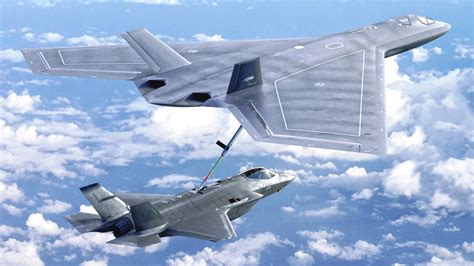
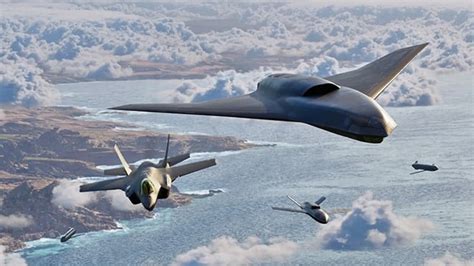
According to Lockheed Martin, the aircraft is designed to operate independently or alongside crewed aircraft like the F-35 and future sixth-generation platforms. The emphasis on endurance, survivability, and stealth immediately separates it from lower-end attritable drones.
The aircraft’s design language also hints at a different operational philosophy.
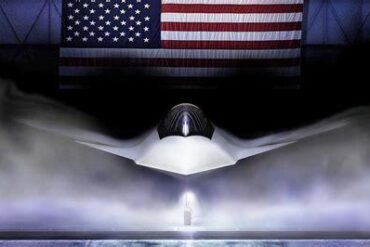
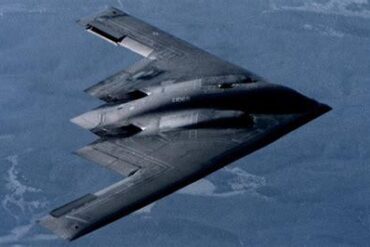
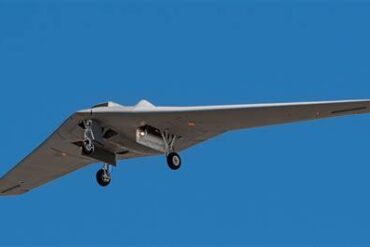
Renderings show a highly blended stealth shape resembling concepts associated with penetrating reconnaissance aircraft or advanced aerial refueling systems. Unlike smaller expendable drones, the Vectis looks built for survivability in heavily defended airspace.
That matters enormously in a conflict against China.
The Pacific theater presents unique operational realities. Bases may be widely dispersed, tankers highly vulnerable, and flight distances extreme. Any drone supporting the F-47 must not only survive advanced air defenses but also remain operational over immense geographic ranges.
Smaller CCAs optimized for affordability may eventually encounter severe endurance limitations under those conditions.
The Vectis seems engineered specifically to avoid that problem.
Range Could Become The Most Important Factor In Future Air Combat
Modern military aviation discussions often focus heavily on stealth or speed, but range may ultimately become the defining factor in the next generation of warfare.
This is particularly true in the Pacific.
China’s military modernization has prioritized long-range missile systems capable of threatening American forward bases and support aircraft. Tankers, airborne early warning platforms, and logistics hubs may all become targets during the opening hours of a conflict.
That forces American aircraft to operate from greater distances.
The F-47’s rumored combat radius exceeding 1,000 nautical miles reflects this strategic reality. The aircraft must penetrate vast distances while retaining enough fuel for combat operations and survivability.
However, a long-range stealth fighter loses much of its effectiveness if its supporting drones cannot accompany it deep into contested airspace.
This creates the F-47’s biggest potential weakness.
Increment 1 CCAs reportedly possess combat radii exceeding 700 nautical miles. While impressive, that still represents a significant gap compared to the likely operational demands facing the F-47.
A drone unable to fully accompany the fighter across the mission profile becomes less useful as a collaborative asset.
Lockheed Martin appears to recognize this issue earlier than many competitors.
The Vectis may represent an attempt to build a drone that scales upward with the strategic ambitions of NGAD rather than remaining confined to near-term affordability requirements.
Affordability Versus Capability Is Becoming The Central Debate
The Air Force now faces a dilemma that has shaped military aviation for decades.
Should it prioritize affordable mass production or maximize capability?
History shows the danger of pushing technology too far without considering cost realities. The F-22 Raptor became arguably the most capable air superiority fighter ever built, yet soaring expenses reduced procurement from 750 planned aircraft to just 187 operational jets.
Similarly, the legendary SR-71 Blackbird proved so expensive and specialized that the older and less glamorous U-2 ultimately remained in service far longer.
These historical lessons weigh heavily on Pentagon planners.
Increment 1 CCAs already reportedly cost around $25 million per aircraft, while Increment 2 systems may rise into the $33–35 million range. That price increase alone creates concern among defense officials who fear autonomous drones becoming too expensive to risk in combat.
Yet the F-47 itself is not intended to be cheap.
The Air Force plans to purchase only around 185 examples, positioning the aircraft as an elite high-end air dominance platform rather than a mass-produced tactical fighter.
That logic changes the affordability equation for its supporting drones.
If the F-47 is already operating as the tip of the spear inside the world’s most dangerous airspace, pairing it with insufficiently capable drones may undermine the entire concept.
A lower-end drone lost early in a mission provides little operational value regardless of its affordability.
In that context, the Vectis begins to look less like an extravagance and more like a necessary complement to the F-47’s mission set.
The Speed Question Reveals A Bigger Tactical Mystery
One of the most fascinating aspects of the CCA debate involves speed.
Reports indicate that the Vectis may cruise at approximately Mach 0.8 to 0.9, placing it firmly within high-subsonic territory. The YFQ-42 and YFQ-44 also appear subsonic.
That raises an obvious question.
How can drones operating below Mach 1 effectively support fighters capable of Mach 2 performance?
At first glance, the mismatch appears problematic. The F-22 and likely the F-47 possess extraordinary speed advantages designed to dominate aerial engagements. A slower drone might seem incapable of keeping pace.
But modern fighter operations rarely involve sustained maximum-speed flight.
Most missions occur at subsonic or low-supersonic cruise speeds due to fuel efficiency concerns and operational realities. Even stealth fighters spend the majority of their flight time managing endurance rather than sprinting continuously.
This changes how CCAs may actually function in combat.
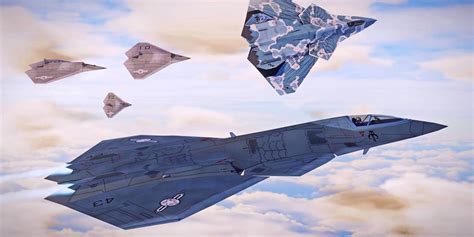
Rather than tightly following the fighter in formation, drones could operate as distributed nodes spread across large areas. Some may move ahead conducting reconnaissance. Others might flank enemy defenses or remain behind carrying additional weapons.
The goal is not necessarily matching fighter speed perfectly.
The goal is maintaining operational relevance across the mission profile.
This again favors drones with greater endurance and survivability rather than simple expendability.
The Vectis concept aligns closely with that philosophy.
China’s Drone Development May Be Influencing American Thinking
Another reason the Vectis concept matters involves global competition.
China has aggressively pursued advanced stealth drone development over the past decade. Several Chinese loyal wingman concepts displayed at defense exhibitions feature larger, stealthier, and longer-range configurations than many Western equivalents.
These designs suggest Beijing views autonomous systems not merely as disposable missile trucks, but as integral components of sophisticated strike ecosystems.
American planners are undoubtedly paying attention.
If China deploys stealth drones capable of accompanying next-generation fighters deep into contested regions, the United States may need equally capable systems to maintain air superiority.
The Vectis appears more aligned with that future threat environment than lower-end CCAs designed primarily around affordability.
That does not mean cheaper drones lack value. Attritable systems still provide important operational flexibility, especially in large numbers.
However, the Air Force may ultimately require a layered autonomous force structure.
Lower-end drones could support F-35s and conventional strike missions, while higher-end platforms like Vectis accompany the F-47 into the most dangerous battlespaces.
Such an approach mirrors broader military procurement trends where specialized high-end assets operate alongside more affordable systems.
Why The Vectis Could Eventually Become Essential
The most important point about the Vectis is not its exact specifications.
Very little confirmed performance data currently exists. Payload capacity, operational range, endurance figures, and sensor capabilities remain largely undisclosed.
What matters is the strategic logic behind the aircraft.
The Vectis represents recognition that sixth-generation warfare may demand drones capable of surviving, enduring, and operating nearly as effectively as the crewed aircraft they support.
That is a very different vision from inexpensive expendable drones designed for limited tactical roles.
As the Air Force refines NGAD doctrine, the limitations of purely low-cost CCAs may become increasingly apparent. Long-range Pacific operations, sophisticated Chinese air defenses, and distributed network-centric warfare all favor autonomous systems with greater persistence and survivability.
The Vectis may fill precisely that gap.
Its development also reflects a broader truth about military innovation. Initial procurement decisions rarely define the final shape of transformational programs. Early versions prioritize speed and experimentation. Later increments mature toward optimized operational capability.
Increment 1 CCAs are helping the Air Force learn how autonomous teaming works.
Increment 2 may determine whether those drones can truly dominate future battlefields.
If the F-47 is intended to become America’s premier air superiority platform for the next several decades, it will require partners capable of matching its extraordinary ambitions.
The Vectis could ultimately become one of the few drones built specifically for that mission.