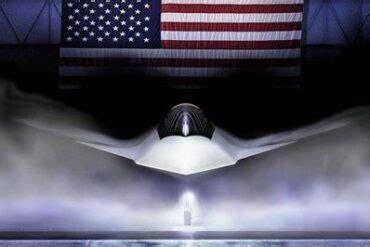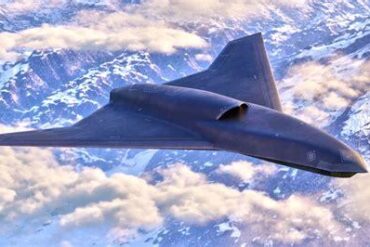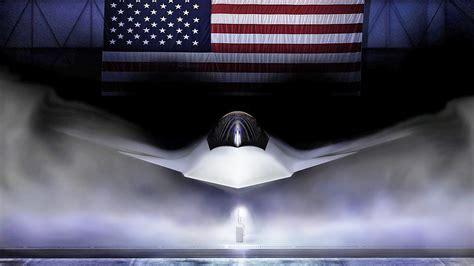
The decision to award Boeing the contract for the F-47 Next Generation Air Dominance (NGAD) fighter marks one of the most consequential turning points in modern military aviation. For decades, Lockheed Martin stood as the unrivaled leader in stealth aircraft, delivering platforms like the F-22 Raptor and F-35 Lightning II that defined American air superiority. Yet in March 2025, the United States Air Force made a bold and calculated move—handing the future of air dominance to Boeing.
This was not a symbolic shift or a routine procurement decision. It was a deeply strategic choice shaped by industrial realities, evolving warfare concepts, and the urgent need to outpace near-peer adversaries. The F-47 is not simply another fighter jet; it represents a new doctrine of warfare, one that blends human pilots with autonomous systems in a tightly integrated combat network.
A Break From Lockheed’s Stealth Monopoly
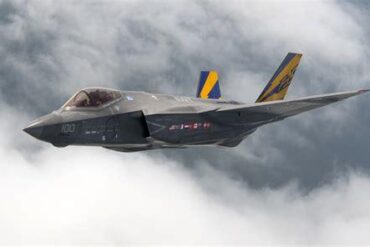
For over a generation, Lockheed Martin’s dominance in stealth technology seemed almost untouchable. The F-22 established unmatched air superiority capabilities, while the F-35 became the backbone of allied air forces across the globe. Choosing Boeing over Lockheed was, therefore, more than surprising—it was disruptive.
The Air Force’s decision reflects a clear recognition that continuity can become vulnerability. Relying too heavily on a single contractor introduces systemic risk, from supply chain bottlenecks to reduced competitive pressure. By selecting Boeing, the Pentagon effectively reset the competitive landscape, ensuring that innovation remains driven by rivalry rather than inertia.
Equally important, Boeing’s win signals that past performance alone no longer guarantees future contracts. The NGAD program demanded not just excellence in stealth, but a fundamentally new approach to aircraft design, integration, and deployment. Boeing delivered precisely that.
NGAD: Not a Fighter, But a Combat Ecosystem
The F-47 exists within a framework that fundamentally redefines what a “fighter jet” is. Under the Next Generation Air Dominance initiative, the aircraft serves as the centerpiece of a broader combat system that includes Collaborative Combat Aircraft (CCA)—autonomous drones designed to operate alongside the crewed platform.
Rather than acting as a lone predator in contested skies, the F-47 will function as a battlefield quarterback, orchestrating multiple uncrewed assets in real time. These drones can carry sensors, electronic warfare packages, or weapons, extending the reach and survivability of the entire formation.
This shift toward crewed-uncrewed teaming was central to Boeing’s victory. Its proposal demonstrated not just compatibility with this doctrine, but maturity in executing it. The Air Force wasn’t looking for incremental improvement; it wanted a platform built from the ground up for networked warfare.

Digital Engineering Gave Boeing the Edge
One of the most decisive advantages in Boeing’s proposal was its emphasis on digital twin technology. Engineers created a full-scale virtual replica of the aircraft, allowing the Air Force to evaluate performance characteristics—such as radar signature, maintenance requirements, and system integration—before a physical prototype even exists.
This approach dramatically reduces development risk. Traditional fighter programs often encounter costly surprises during testing phases, but digital modeling allows engineers to identify and resolve issues early. In a program as ambitious as NGAD, risk reduction translates directly into speed and cost control.
Lockheed’s design, while innovative, reportedly carried greater developmental uncertainty. In a strategic environment where timing is critical, Boeing’s higher level of readiness became a decisive factor.
Industrial Strategy: Rebalancing America’s Defense Base
Beyond technology, the F-47 decision was rooted in a broader industrial strategy. For years, policymakers have warned about the dangers of consolidating too much capability within a single defense contractor. Lockheed’s control over both the F-22 and F-35 programs created precisely that scenario.
Awarding NGAD to Boeing serves as a deliberate effort to diversify the defense industrial base. This ensures resilience in production, fosters competition, and safeguards against disruptions that could arise from overdependence on one supplier.
At the same time, the decision revitalizes Boeing’s defense division, which had faced significant challenges in recent years. From the 737 MAX crisis to delays in programs like the KC-46 Pegasus, the company needed a flagship project to restore credibility and attract top engineering talent.
The F-47 provides that anchor. It stabilizes Boeing’s St. Louis production hub and positions the company as a central player in next-generation combat aviation.
Speed Matters: The Strategic Urgency Behind NGAD
The geopolitical context surrounding the F-47 cannot be overstated. Both China and Russia are actively developing advanced fighter platforms, including China’s J-20B and J-35 and Russia’s Su-57M and Su-75 concepts. These programs aim to challenge U.S. air superiority in contested regions, particularly in the Indo-Pacific.
In this environment, speed is as critical as capability. The Air Force cannot afford a decade-long development cycle plagued by delays. Boeing’s proposal, backed by years of DARPA-supported X-plane research, offered a faster path to operational readiness.
Budget allocations reinforce this urgency. The U.S. Air Force has committed approximately $3.5 billion in Fiscal Year 2026 to advance the F-47, underscoring its status as a top defense priority. Meanwhile, parallel programs have been scaled back to concentrate resources on NGAD.
Engineering the Future: What Makes the F-47 Different
Technically, the F-47 is expected to push beyond the boundaries of fifth-generation fighters in several key areas. Its design emphasizes deep-penetration stealth, extended range, and modular architecture.
Advanced radar-absorbent materials and adaptive engine intakes will reduce detectability, while next-generation sensors will fuse data across multiple domains—air, land, sea, and space. This creates a comprehensive battlefield picture, enabling faster and more informed decision-making.
At the heart of the aircraft lies a variable-cycle engine, developed in collaboration with GE Aerospace and Pratt & Whitney. This propulsion system can dynamically adjust airflow, optimizing for either fuel efficiency or maximum thrust depending on mission requirements.
The result is a fighter capable of operating over vast distances, a necessity for potential conflicts in the Pacific theater. With a projected combat radius exceeding 1,000 nautical miles and speeds surpassing Mach 2, the F-47 is built for endurance as much as performance.
The Cost and Risk Equation That Sealed the Deal
Developing a sixth-generation fighter is an extraordinarily expensive endeavor, with total program costs expected to exceed $20 billion before full-scale production. In this context, the Air Force’s decision hinged on a careful balance of cost, capability, and risk.
Boeing’s use of digital engineering and its existing manufacturing infrastructure provided a more predictable development pathway. Its facilities in St. Louis, already producing the F-15EX and T-7A Red Hawk, offer a stable foundation for scaling production.
Lockheed, by contrast, has pivoted toward enhancing the F-35 into a “fifth-generation-plus” platform. This strategy focuses on delivering a significant portion of NGAD capabilities at a lower cost, particularly for international customers.
While this approach ensures Lockheed remains dominant in the export market, it also highlights the fundamental distinction between the two companies’ strategies: Boeing is building the future, while Lockheed is extending the present.
A Two-Tier Fighter Market Is Emerging
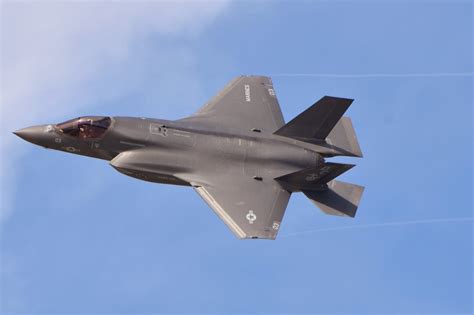
The outcome of the F-47 competition is reshaping the global fighter market into a two-tier system. At the top sits the NGAD platform, a highly advanced and likely limited-production aircraft designed for the most demanding missions. Below it, upgraded fifth-generation fighters like the F-35 will continue to serve as the backbone of allied air forces.
This structure reflects economic reality. Not every nation can afford or justify a sixth-generation fighter, but many still require advanced capabilities. Lockheed’s strategy positions it to dominate this broader market, while Boeing focuses on the cutting edge.
For the United States, this dual approach offers flexibility. It maintains technological superiority at the highest level while supporting alliances through widely available platforms.
Operational Impact: Redefining Air Combat
When the F-47 enters service in the early 2030s, it will fundamentally change how air combat is conducted. Traditional dogfighting will give way to network-centric warfare, where information dominance and coordination determine outcomes.
The F-47’s role as a command node allows it to deploy drones ahead of manned aircraft, reducing risk to pilots while expanding tactical options. These uncrewed systems can perform reconnaissance, electronic warfare, or strike missions, all under the direction of the crewed platform.
This approach not only enhances effectiveness but also introduces a new level of adaptability. Missions can be tailored in real time, with drone configurations adjusted based on evolving threats.
Why Boeing—The Real Answer
The question of why Boeing won ultimately comes down to a convergence of factors rather than a single decisive advantage. The company presented a solution that aligned with the Air Force’s strategic, operational, and industrial priorities.
It offered a design that was not only advanced but also achievable within required timelines. It demonstrated maturity through digital engineering and prior research investments. It supported a broader goal of industrial diversification, reducing reliance on a single contractor.
Perhaps most importantly, Boeing embraced the idea that the future of air combat lies not in standalone aircraft, but in integrated systems of systems. The F-47 is the embodiment of that philosophy—a platform designed to evolve, adapt, and dominate in an increasingly complex battlespace.
Lockheed remains a formidable force, and its influence on global aviation is far from diminished. But in this decisive moment, the Air Force chose a different path—one that prioritizes flexibility, speed, and a rebalanced industrial ecosystem.
And just like that, the center of gravity in American fighter aviation shifted.