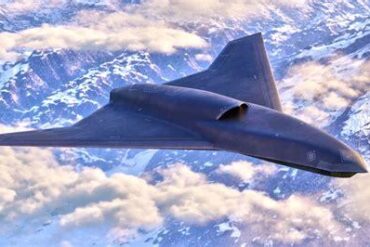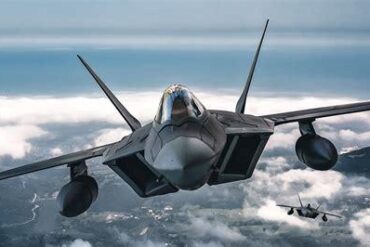
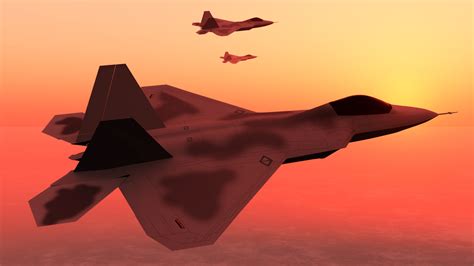
The Boeing F-47 is being promoted as the future centerpiece of American air dominance, a revolutionary sixth-generation fighter designed not merely to replace the F-22 Raptor but to redefine aerial warfare itself. Yet behind the promises of unprecedented stealth, artificial intelligence integration, extreme range, and network-centric combat lies a growing concern among defense analysts and military planners: the aircraft could become the most expensive combat aircraft program ever undertaken on a per-unit basis.
Unlike previous generations of fighters, the F-47 is not being developed as a standalone aircraft. It is the centerpiece of a much larger combat ecosystem, and that distinction alone explains why costs are already climbing toward historic levels. With projections suggesting an acquisition price approaching $300 million per aircraft and overall program expenditures potentially reaching $100 billion or more, the F-47 represents one of the most ambitious—and financially risky—military aviation projects ever conceived.
The question is no longer whether the aircraft will be technologically groundbreaking. The question is whether the United States can afford everything the F-47 is intended to become.
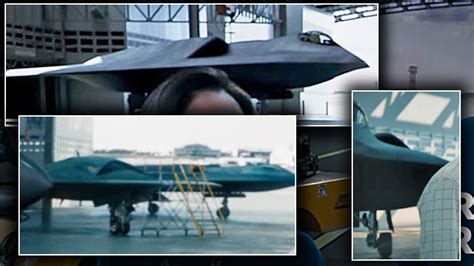
The roots of the F-47 can be traced back to the U.S. Air Force’s Next Generation Air Dominance (NGAD) initiative, a highly classified effort designed to maintain American air superiority against rapidly advancing competitors. After years of secret development and experimental testing, Boeing secured the contract to transform NGAD into an operational combat platform.
Unlike traditional fighter programs, significant portions of the F-47’s development occurred long before the aircraft was publicly acknowledged. Billions of dollars were reportedly invested through classified channels, meaning taxpayers had already funded a substantial amount of research and development before the aircraft even received its designation.
This hidden foundation contributes significantly to the aircraft’s true cost. Public contract figures only reveal part of the financial picture, while additional expenditures are dispersed across classified budgets, advanced technology programs, and supporting systems that remain shielded from public scrutiny.
The result is a fighter whose actual development cost may ultimately exceed current estimates by a considerable margin.
After decades of focusing on stealth and maneuverability, the Air Force now envisions a battlefield where information dominance matters just as much as aerodynamic performance. The F-47 is being designed as a flying command center capable of coordinating a network of manned and unmanned assets across vast distances.
Rather than engaging solely as an elite dogfighter, the aircraft will serve as the brain of an interconnected combat architecture. This role requires extraordinary computing power, advanced sensor fusion capabilities, next-generation communications systems, and artificial intelligence support tools that can process enormous amounts of battlefield data in real time.
Every one of these capabilities introduces additional layers of complexity. More complexity inevitably means more development time, more engineering challenges, and ultimately more money.
The Air Force’s vision extends far beyond acquiring approximately 185 F-47 aircraft. The service simultaneously plans to field roughly 1,000 Collaborative Combat Aircraft, often described as loyal wingman drones. These autonomous or semi-autonomous systems will accompany the F-47 into combat, carrying weapons, gathering intelligence, and performing high-risk missions that would otherwise endanger human pilots.
The challenge is that these drones must be developed alongside the fighter itself.
Creating a network where human pilots, artificial intelligence systems, sensors, satellites, and autonomous aircraft operate seamlessly together is one of the most technically demanding goals ever attempted in military aviation. Any delays in one component can trigger cascading delays across the entire ecosystem.
Consequently, the F-47 program is not simply funding a fighter aircraft. It is funding an entirely new method of warfare.
The Technological Leap Driving Costs Higher
The F-47 is expected to surpass both the F-22 and the F-35 in virtually every major performance category. Such ambitions come at a tremendous financial cost because every breakthrough capability demands years of experimentation, testing, and refinement.
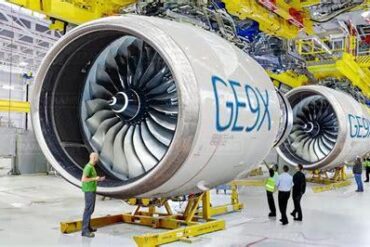
One of the most important technologies is the aircraft’s variable-cycle engine. Unlike conventional fighter engines, adaptive propulsion systems can optimize performance for different mission requirements, balancing fuel efficiency, speed, and thrust depending on operational needs.
This capability is particularly important for Indo-Pacific operations, where aircraft may need to travel thousands of miles while maintaining combat effectiveness.
The engineering challenges involved in creating these engines are enormous. Adaptive propulsion introduces new materials, advanced manufacturing techniques, and sophisticated control systems that must function flawlessly under extreme conditions.
Each innovation increases both development expenditures and production costs.
Designed for the Indo-Pacific Era
Geography plays a major role in explaining why the F-47 is becoming so expensive.
The F-22 was largely designed during an era when shorter-range air superiority missions dominated planning assumptions. Today’s strategic environment is dramatically different. The United States increasingly focuses on the Indo-Pacific region, where vast oceanic distances create unique operational challenges.
To meet these demands, the F-47 reportedly aims for a combat radius exceeding 1,000 nautical miles—nearly double the reach of many existing fighters.
Achieving this level of range without sacrificing stealth, speed, payload, and survivability requires extensive engineering compromises and technological innovation. Larger fuel capacity, more efficient propulsion, advanced thermal management systems, and highly integrated structural designs all contribute to increased costs.
The aircraft is effectively being optimized for one of the most demanding military operating environments on Earth.
Why Small Production Numbers Create Big Financial Problems
One of the most significant factors driving F-47 costs upward is the relatively small number of aircraft planned for procurement.
Economies of scale have long been a cornerstone of military aviation economics. The more aircraft produced, the lower the average cost per unit becomes because fixed development expenses are distributed across a larger fleet.
The F-35 demonstrates this principle clearly. While the overall F-35 program is extraordinarily expensive, its production run spans thousands of aircraft distributed across multiple U.S. military branches and numerous international partners.
This large-scale production helps reduce unit costs despite the aircraft’s complexity.
The F-47 enjoys no such advantage.
Current Air Force plans call for roughly 185 aircraft. Compared to thousands of F-35s, this production run is tiny. Every dollar spent on research, testing, software development, prototyping, and certification must therefore be spread across a far smaller number of airframes.
As a result, each aircraft absorbs a disproportionately large share of the program’s total expenses.
The absence of export customers compounds the problem further.
The Export Barrier
Like the F-22 before it, the F-47 is expected to contain some of the most sensitive military technologies ever developed by the United States.
Congress previously prohibited exports of the F-22 due to concerns regarding stealth technologies and advanced capabilities. Even close allies such as Japan, Australia, and Israel were unable to purchase the aircraft despite expressing strong interest.
The F-47 appears destined for a similar fate.
Because the aircraft will likely remain exclusive to the U.S. Air Force, there is little opportunity to increase production volume through foreign sales. This means the program loses one of the most effective mechanisms for reducing per-unit costs.
Without international buyers contributing to manufacturing demand, the Air Force alone must shoulder the economic burden.
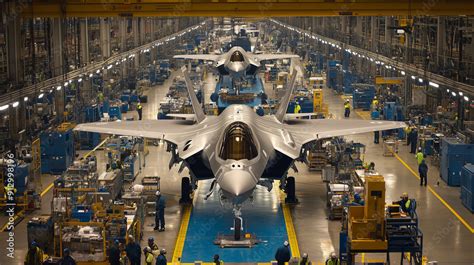
Boeing’s Recent Track Record Raises Additional Concerns
Cost overruns become even more worrying when viewed through the lens of Boeing’s recent defense performance.
The company has faced significant financial challenges across several military programs. Delays, schedule disruptions, labor disputes, and budget overruns have affected major projects, creating concerns about its ability to deliver highly complex defense systems on time and within projected budgets.
The replacement presidential aircraft program, known as the VC-25B, has become one of the most visible examples. Years behind schedule and substantially over budget, the project has reportedly generated major financial losses for Boeing.
While the F-47 benefits from different management structures and technological priorities, investors and policymakers are understandably cautious.
A sixth-generation fighter is far more technologically demanding than most conventional aerospace programs. If difficulties emerge during development, costs could escalate rapidly.
The Hidden Impact of the Black Budget
An unusual aspect of the F-47 program is its deep connection to classified funding mechanisms.
Many advanced defense initiatives begin inside highly secretive research environments managed by organizations such as DARPA and specialized Air Force offices. Funding often flows through classified channels commonly referred to as the “black budget.”
Because portions of these expenditures remain undisclosed, calculating the true cost of the F-47 becomes exceptionally difficult.
Official figures may accurately represent visible contracts while excluding years of prior experimentation, prototype development, infrastructure investments, and classified technology maturation efforts.
Consequently, the publicly reported price of the aircraft may only reveal part of the overall financial commitment.
The Growing Competition for Air Force Funding
The F-47 is not the only expensive modernization program competing for resources.
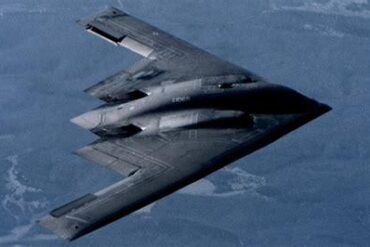
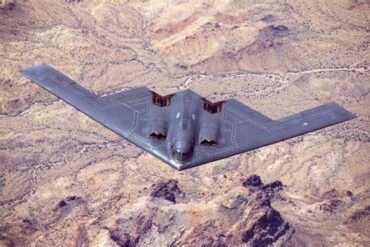
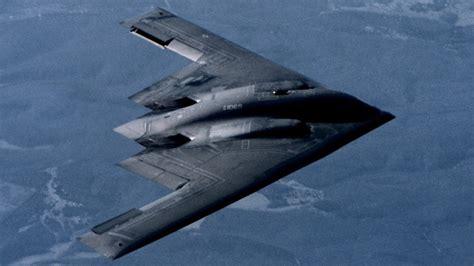
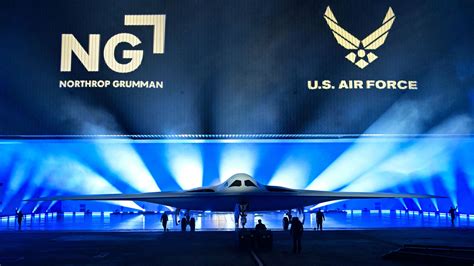
The Air Force is simultaneously investing in the Northrop Grumman B-21 Raider, a next-generation stealth bomber expected to play a central role in future strategic operations. Initial plans called for at least 100 bombers, but growing interest within the service has fueled discussions about expanding procurement toward 200 aircraft.
This creates a difficult budgetary dilemma.
Both programs are essential to future military strategy. Both involve cutting-edge technologies. Both require massive investments in manufacturing infrastructure, supply chains, and long-term sustainment.
Yet defense budgets, while enormous, are not unlimited.
Every additional dollar directed toward the B-21 potentially reduces available funding for the F-47, and vice versa.
The Threat of the Cost Death Spiral
Perhaps the greatest financial danger facing the F-47 is a phenomenon known as the cost death spiral.
This occurs when rising costs force procurement reductions, which then cause unit costs to rise even further.
The mathematics are straightforward but devastating.
Imagine tens of billions of dollars spent on development, testing, software architecture, and certification. These costs remain largely fixed regardless of whether the Air Force purchases 185 aircraft or 100.
If procurement numbers decline, those fixed costs are distributed across fewer units.
The result is a dramatic increase in the apparent cost of each aircraft.
As costs rise, policymakers may seek further reductions to control spending. Those reductions then drive costs even higher. Eventually, the program enters a self-reinforcing cycle that becomes increasingly difficult to escape.
Several historical defense programs have suffered from this phenomenon, and analysts worry that the F-47 could face similar pressures if budget priorities shift.
Supply Chains and Rare Materials Add More Risk
Modern stealth aircraft rely on extraordinarily specialized materials and manufacturing processes.
Advanced composites, radar-absorbing structures, rare earth elements, precision electronics, and sophisticated sensors all depend on complex international supply chains. Many of these supply networks involve small subcontractors that operate with limited production volumes.
When aircraft orders decline, these suppliers can struggle to remain economically viable.
A shrinking industrial base often leads to higher component prices, reduced competition, and longer lead times. This creates additional upward pressure on program costs.
For a platform as technologically ambitious as the F-47, supply chain instability represents a significant long-term concern.
Why the F-47 Could Rewrite Aviation Cost Records
The F-35 remains the most expensive defense acquisition program ever undertaken when measured across its entire lifetime. However, the F-47 may establish a different kind of record.
Its combination of revolutionary technology, limited production numbers, classified development expenditures, extensive unmanned systems integration, adaptive propulsion, and strategic exclusivity creates a financial profile unlike any previous fighter aircraft.
Every major design choice prioritizes capability over affordability.
The aircraft is intended to dominate future battlefields, command autonomous drone formations, operate across immense distances, integrate emerging weapons technologies, and maintain superiority against the world’s most advanced threats.
Those objectives may ultimately produce an extraordinary aircraft.
They may also produce the most expensive fighter ever built.
As development continues through the remainder of the decade, the true cost of achieving next-generation air dominance will become increasingly clear. Whether the F-47 emerges as a transformational success or a cautionary tale in military procurement, it is already redefining the scale of investment required to maintain air superiority in the twenty-first century.