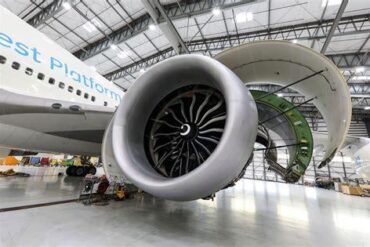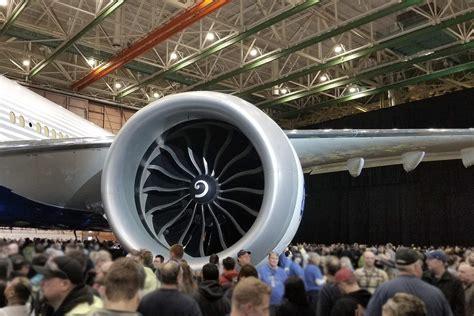
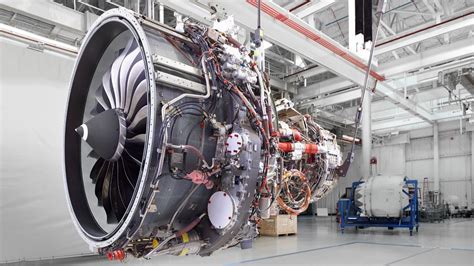
The Boeing 777X represents the pinnacle of modern aviation engineering—a widebody airliner that not only surpasses its predecessors in size, but also in efficiency, performance, and innovation. At the heart of this engineering marvel lies the General Electric GE9X, the largest and most powerful commercial jet engine ever built. With a fan diameter of 134 inches and a thrust capability of 110,000 lbf, the GE9X isn’t just big—it’s essential to the 777X’s performance.
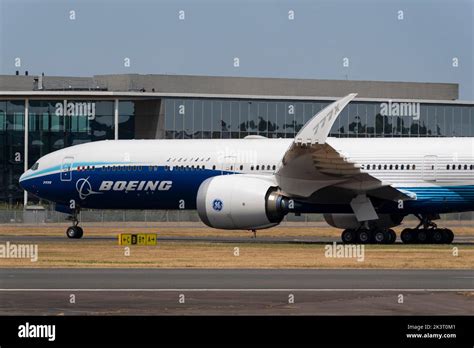
The Boeing 777X, particularly the 777-9 variant, stretches an astounding 251 feet 9 inches (76.73 meters) in length, making it the longest commercial aircraft ever constructed. Its immense size and capacity—able to carry more than 425 passengers—demand a propulsion system that can match its scale without sacrificing fuel efficiency or environmental compliance.
The Dimensions That Redefine Engine Architecture
The GE9X dwarfs all other commercial engines. While it shares lineage with the GE90 that powers the Boeing 777-200 and -300, the GE9X stretches that innovation even further. Its 184-inch nacelle diameter means it’s technically wider than the fuselage of a Boeing 737, which measures only 148 inches. This isn’t just a design flex—it’s a performance imperative.
In earlier iterations, GE considered a smaller fan, but as development progressed, a larger diameter proved critical to achieving the desired bypass ratio and fuel efficiency. The 16 fan blades, made from lightweight carbon fiber composites, reduce weight while allowing for a 10:1 bypass ratio. At peak performance, the engine can move 3,850 lbs (1,746 kg) of air per second, a figure almost unfathomable outside jet propulsion circles.
Why Bigger Is Better—for the 777X
While the 777X is significantly larger than its predecessors, its design is paradoxically more aerodynamic. The wingspan of over 235 feet (including folding tips) and 5,025 square feet of wing surface provides immense lift. Combined with aerodynamic refinements, Boeing managed to reduce drag to the extent that less thrust was needed, despite the aircraft being heavier.
This allowed GE to rate the GE9X lower than the GE90-115B (used on the 777-300ER), which produces up to 115,300 lbf of thrust. The GE9X maxes out at 110,000 lbf, though it achieved a record 134,300 lbf during testing, earning a Guinness World Record. As explained by Ted Ingling, GE9X Program Manager, the 777X’s design doesn’t require excessive thrust—it just needs consistent, high-efficiency output, and that’s what the GE9X delivers.

Quiet Giant: Noise Reduction Through Design
Despite its monstrous scale, the GE9X is a remarkably quiet engine, setting new benchmarks in turbofan noise reduction. This is achieved not with traditional chevrons, but through a novel nozzle design that eliminates the drag penalty typically associated with chevron-equipped engines. Additionally, a honeycomb acoustic lining in the exhaust ducts captures and dissipates sound waves.
GE has described the GE9X as “the quietest engine per pound of thrust ever produced” in its class. This quietness is essential not only for passenger comfort on ultra-long-haul flights, but also for compliance with upcoming ICAO noise regulations, which are becoming increasingly stringent.
Built for the Future: Reliability and Rigorous Testing
Before receiving its FAA type certification in 2020, the GE9X endured an extraordinarily demanding testing program:
- 27,000 cycles and 17,000 hours of testing
- 72 test flights totaling over 430 hours
- Dust-ingestion trials equaling three years of real-world use
GE9X underwent more thorough qualification trials than any other engine in the company’s history. Engineers deliberately subjected it to extreme operating conditions, verifying its ability to perform consistently in sand, salt, heat, and high-altitude scenarios.
The Engineering Behind the Efficiency
What makes the GE9X a game-changer isn’t just its size—it’s how that size is harnessed for efficiency. The large fan and high bypass ratio allow more air to flow around the engine’s core, significantly reducing specific fuel consumption (SFC). Compared to the GE90, the GE9X offers about 10% better fuel economy, which translates to substantial savings over time for airlines operating long-haul, high-capacity routes.
This boost in efficiency is further supported by the engine’s advanced materials, such as ceramic matrix composites (CMCs) used in hot section components. These materials allow the engine to run hotter and more efficiently without compromising durability.
A Logistics Feat: From Factory to Airframe
GE Aerospace has begun full-rate production of the GE9X, with engines rolling off the Durham, North Carolina assembly line. After rigorous testing in Ohio, they are sent to Boeing’s Everett facility in Washington State for integration into the 777X airframe.
GE Aerospace is also investing over $1 billion in expanding its global maintenance, repair, and overhaul (MRO) capabilities for the GE9X. This network will be crucial in supporting what is expected to be a massive global fleet, with each aircraft requiring two of these monumental engines.
Demand Takes Off: Orders and Commitments
As of 2025, the Boeing 777X program has secured over 540 confirmed orders, including 439 for the 777-9 and 43 for the 777-8. A further 59 freighter variants (777-8F) have also been committed. This adds up to nearly 1,100 GE9X engines on order, underscoring GE Aerospace’s crucial role in this historic program.
The largest buyers include:
- Emirates
- Qatar Airways
- Lufthansa (launch customer)
- Etihad Airways
These customers are betting on the 777X to revolutionize long-haul air travel, combining high-capacity operations with next-generation economics.
Conclusion: Powering the Future of Long-Haul Aviation
The GE9X engine isn’t just a propulsion unit; it’s a strategic enabler of Boeing’s most ambitious widebody aircraft yet. By balancing size, efficiency, noise suppression, and reliability, it allows the 777X to meet the demands of next-generation air travel—more passengers, farther distances, and lower emissions per seat.
Its massive fan blades, towering nacelle, and state-of-the-art internals showcase aviation engineering at its most extreme and most refined. As the 777X prepares to enter service in 2026, it’s clear that the engine beneath its wings is not just large for large’s sake—it’s large because the future demands it.