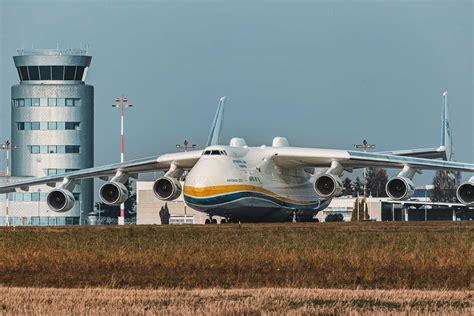
The Antonov An-225 Mriya was not merely an aircraft—it was an engineering spectacle that redefined the limits of human ambition. Built during the twilight years of the Soviet Union, this colossal machine became a symbol of unmatched capability, carrying loads that no other aircraft on Earth could even contemplate. From its first flight in 1988 to its tragic destruction decades later, the Mriya carved out a legacy that continues to fascinate aviation enthusiasts and industry experts alike.
What made the An-225 extraordinary wasn’t just its size, although its dimensions alone were enough to leave seasoned engineers in disbelief. It was the seamless integration of brute strength, aerodynamic precision, and mission-specific design that elevated it into a class of its own. Designed initially for space ambitions, it later evolved into a global cargo champion, performing missions that felt closer to science fiction than logistics.
By the time it entered commercial service, the Mriya had already become a legend in motion—a flying giant capable of transporting entire power plants, locomotives, and oversized industrial equipment across continents in a single journey. Each mission it completed added another layer to its mythos, reinforcing its reputation as the most powerful cargo aircraft ever created.
A Colossal Aircraft That Redefined Scale
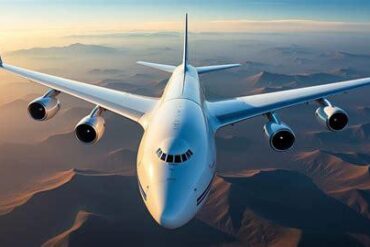
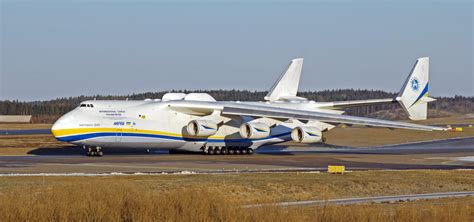
To grasp the magnitude of the Antonov An-225, one must first understand how it compares to other large aircraft. Even the Airbus A380, the world’s largest passenger jet, falls short when placed beside the Mriya. Its wingspan stretched an astonishing 88.4 meters (290 feet), exceeding that of any commercial aircraft ever built.
The aircraft’s sheer size translated directly into unmatched capability. Its cargo hold, measuring over 43 meters in length, was large enough to accommodate massive industrial equipment that would otherwise require disassembly for transport. The Mriya eliminated such constraints, allowing entire systems to be moved intact, saving both time and cost in high-stakes logistics operations.
Its maximum takeoff weight of 600 metric tons remains one of the most impressive figures in aviation history. This immense lifting capacity enabled it to carry payloads exceeding 250 metric tons, a feat that no other operational aircraft has surpassed. Whether transporting generators the size of small buildings or critical infrastructure components, the Mriya operated in a league where limits were constantly pushed—and often shattered.
Six Engines Powering an Unmatched Giant
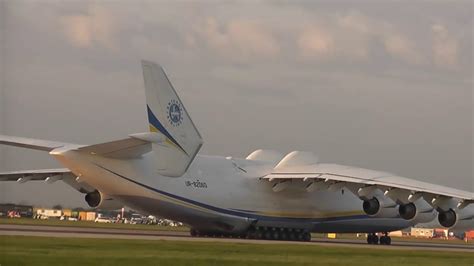
The An-225’s extraordinary lifting ability was made possible by its six turbofan engines, each generating over 51,000 pounds of thrust. This configuration was not just about power—it was about necessity. Lifting a machine of such immense mass required more than conventional engineering solutions.
Derived from the Antonov An-124 Ruslan, the Mriya’s design built upon an already successful platform but expanded it dramatically. Engineers added two additional engines and redesigned the wing structure to handle increased stress and weight distribution. The result was a perfectly balanced system capable of maintaining stability even under extreme payload conditions.
What truly set the aircraft apart was its resilience. Even in the unlikely event of an engine failure, the aircraft could continue operating safely. This redundancy was critical for long-haul cargo missions, often conducted across remote regions where emergency landings were not always feasible.
The engineering philosophy behind the Mriya was clear: build something that could not only perform extraordinary tasks but do so reliably under the most demanding circumstances. That philosophy translated into an aircraft that became synonymous with strength and dependability.
Born for Space: The Buran Shuttle Mission
The origins of the Antonov An-225 Mriya are deeply intertwined with the Soviet Union’s ambitious Buran space shuttle program. Unlike conventional cargo aircraft, the Mriya was specifically designed to transport the Buran orbiter mounted on its back—a task that required unique structural adaptations.
A specialized mounting system was installed atop the fuselage, allowing the shuttle to be securely carried during flight. This configuration dramatically altered the aircraft’s aerodynamics, prompting engineers to incorporate a distinctive twin-tail vertical stabilizer design. This ensured stability by minimizing turbulence caused by the external payload.
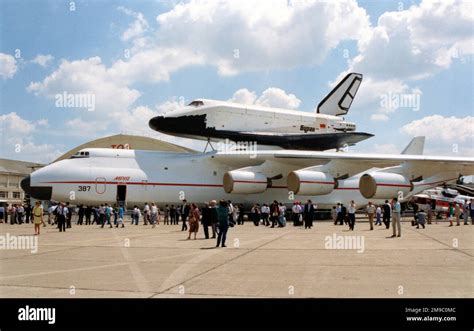
The Buran program itself was groundbreaking. Capable of fully automated flight and landing, it represented a significant technological achievement. However, its operational lifespan was short-lived. The collapse of the Soviet Union brought the program to an abrupt end, leaving the Mriya without its original purpose.
Rather than fading into obscurity, the aircraft found a second life. It was repurposed for commercial cargo operations, where its unique capabilities proved invaluable. This transition from space support to global logistics highlighted the adaptability of its design and ensured its continued relevance in a rapidly evolving aviation landscape.
A Landing Gear System Built Like No Other
Handling an aircraft of such immense proportions required an equally impressive support system, and the Mriya delivered with its 32-wheel landing gear configuration. This intricate system was engineered to distribute weight evenly, allowing the aircraft to operate on a variety of surfaces, including less-than-ideal runways.
The main landing gear featured 28 wheels, many of which were steerable. This enabled the aircraft to maneuver on runways as narrow as 60 meters, a remarkable capability given its size. Watching the Mriya execute tight turns on the ground was almost surreal, as if physics itself had briefly agreed to cooperate.
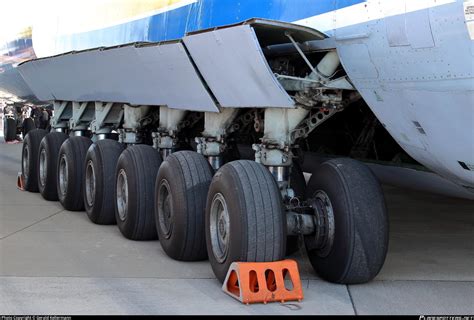
Another standout feature was its kneeling nose gear, which allowed the front of the aircraft to lower hydraulically. This created a natural ramp, simplifying the loading and unloading of oversized cargo. Combined with its cavernous interior, this system made the Mriya exceptionally efficient for heavy logistics operations.
Despite its complexity, the landing gear system proved to be highly reliable. Even minor technical issues, such as sensor malfunctions, rarely impacted overall performance. This robustness reflected the aircraft’s military-grade design philosophy, where durability and redundancy were paramount.
A Record-Breaking Legacy That Still Stands
Over its operational lifetime, the Antonov An-225 Mriya accumulated more than 240 world records, cementing its place in aviation history. Among its most notable achievements was transporting a 253-ton payload, a record that remains unmatched.
It also completed the heaviest commercial flight ever recorded, carrying a 189-ton turbine across continents. These milestones were not just numerical achievements—they represented the practical application of engineering excellence in real-world scenarios.
Each mission pushed boundaries further, proving that the aircraft was not just a theoretical marvel but a functional powerhouse. From delivering humanitarian aid to transporting critical infrastructure, the Mriya played a vital role in global logistics, often stepping in where no other aircraft could.
The Tragic Loss and the Promise of Revival
In February 2022, the world witnessed the devastating destruction of the Antonov An-225 Mriya at Hostomel Airport near Kyiv. The aircraft, undergoing maintenance at the time, was caught in the early stages of the conflict and suffered catastrophic damage. Images of its shattered fuselage and collapsed wings quickly spread, sending shockwaves through the aviation community.
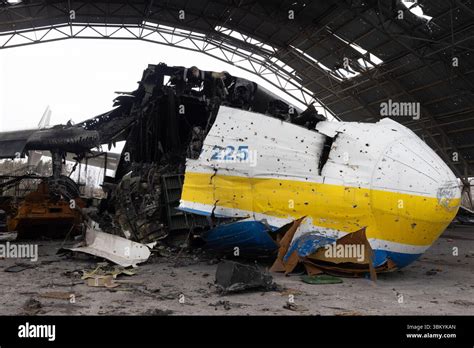
The loss was more than technical—it was deeply symbolic. The Mriya, meaning “dream” in Ukrainian, had become a global icon of innovation and possibility. Its destruction felt like the loss of a shared aspiration, something larger than machinery.
Yet, the story does not end there. Efforts are underway to complete the second, unfinished An-225 airframe, incorporating salvaged components and newly manufactured parts. While the project is complex and estimated to cost over €500 million, it represents a commitment to preserving the legacy of this extraordinary aircraft.
The idea of the Mriya taking to the skies once more carries profound significance. It is not just about rebuilding an airplane—it is about restoring a symbol of human ingenuity and resilience. And if history has shown anything, it is that the spirit behind the Mriya was never grounded to begin with.