The Lockheed SR-71 Blackbird occupies a unique place in aviation history. More than three decades after its retirement, it remains the fastest air-breathing manned aircraft ever placed into operational service, a distinction that has survived generations of technological advancement. While many aircraft are remembered for their speed, altitude, or military significance, the Blackbird is remembered for something even more remarkable: the fact that the people who flew and maintained it often admitted that they did not completely understand how every aspect of its propulsion system functioned in practice.
That statement may sound exaggerated until one examines the extraordinary engineering behind the aircraft. Unlike conventional jets that rely primarily on their engines for thrust, the SR-71 blurred the boundaries between aircraft and engine. At its maximum cruising speed of over Mach 3.2, the aircraft’s propulsion system became a complex interaction of shockwaves, air pressure, fuel chemistry, aerodynamics, and thermal management. The result was a machine that seemed to operate according to an entirely different set of physical rules.
Developed during the Cold War by Lockheed Skunk Works under the leadership of legendary engineer Clarence “Kelly” Johnson, the SR-71 was designed to fly higher and faster than any interceptor or missile system of its era could effectively engage. What emerged was not simply a spy plane but one of the most sophisticated engineering achievements ever created.
By the time it entered service, the Blackbird had become a technological masterpiece whose innovations stretched far beyond aviation. Many of the solutions developed for the aircraft required entirely new approaches to metallurgy, fuel design, propulsion engineering, and aerospace manufacturing.
The Mission That Demanded The Impossible
The origins of the SR-71 can be traced directly to Cold War tensions. During the late 1950s, the United States increasingly relied upon the Lockheed U-2 for strategic reconnaissance missions over hostile territory. Although the U-2 could fly exceptionally high, advances in Soviet missile technology soon made it vulnerable.
Kelly Johnson recognized that altitude alone would no longer guarantee survival. The next generation of reconnaissance aircraft would need to depend on something far more difficult to counter: speed.
The concept appeared simple on paper. Build an aircraft capable of flying so fast that enemy defenses could neither intercept nor effectively target it. In reality, this requirement pushed engineering into territory that few had ever explored.
At speeds exceeding three times the speed of sound, air itself becomes a dangerous obstacle. Temperatures rise dramatically as atmospheric friction generates immense heat. Structural materials expand. Engines face airflow conditions unlike anything encountered in ordinary flight. Every component experiences stresses that approach the limits of existing technology.
Creating such an aircraft required abandoning many traditional design assumptions and inventing solutions that had never been attempted before.
Why The SR-71 Was More Than Just A Fast Airplane
Many people assume that the Blackbird’s speed came primarily from powerful engines. In reality, the aircraft’s performance resulted from an integrated system in which the airframe itself contributed significantly to propulsion.
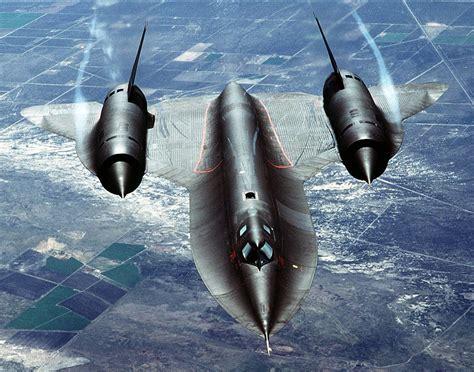
At Mach 3.2, incoming air struck the aircraft with tremendous kinetic energy. Instead of simply feeding air into the engines, the SR-71’s massive inlet spikes manipulated airflow with extraordinary precision.
These movable spikes generated and controlled shockwaves before the air reached the engine core. By slowing and compressing incoming air, they transformed the aircraft’s forward motion into usable thrust.
Remarkably, studies of the propulsion system revealed that at top speed the engine itself generated only a relatively small portion of total thrust. Most of the aircraft’s forward force originated from aerodynamic pressure recovery inside the inlet system.
In practical terms, the Blackbird was not merely powered by engines. It was powered by the atmosphere itself.
This unconventional approach remains one of the primary reasons aerospace engineers continue debating exactly how the aircraft should be classified.
The J58 Engine That Defied Conventional Classification
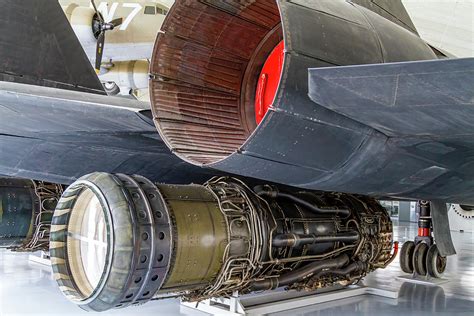
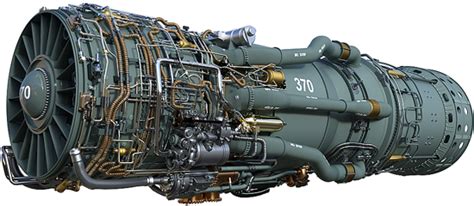
At the heart of the SR-71 sat one of the most unusual jet engines ever produced: the Pratt & Whitney J58.
Most turbojet engines operate according to a straightforward process. Air enters the compressor, fuel is added and burned, and exhaust gases generate thrust. Afterburners can provide temporary bursts of additional power, but they are typically used sparingly because of enormous fuel consumption.
The J58 completely ignored these conventions.
Engineers officially described it as a Recovered Bleed-Air Turbojet, a designation that barely captures its complexity.
Surrounding the engine core were six large bypass tubes. As speed increased, significant portions of incoming compressed air bypassed the main combustion chamber and traveled through these channels directly toward the afterburner section.
This air remained rich in oxygen because it had not participated in the primary combustion process. When it reached the afterburner, fresh fuel mixed with the oxygen-rich airflow and generated substantial additional thrust.
At sufficiently high speeds, the propulsion system began behaving less like a traditional turbojet and more like a ramjet, an engine type that relies heavily on forward motion to compress incoming air.
The result was a propulsion system existing somewhere between two categories. It was neither a conventional turbojet nor a pure ramjet. Instead, it occupied a unique engineering gray zone that remains fascinating to aerospace experts today.
The Aircraft That Flew With Its Afterburners Permanently Lit
One of the most astonishing characteristics of the J58 involved its relationship with afterburners.
In virtually every military aircraft, afterburners are considered temporary performance enhancers. Pilots engage them briefly during combat maneuvers, takeoff, or emergency situations before shutting them down to conserve fuel.
The SR-71 operated under entirely different rules.
Once the aircraft accelerated into its high-speed cruise regime, pilots maintained continuous afterburner operation throughout the mission.
This practice would have been considered absurd in most other aircraft. Yet the Blackbird’s unique propulsion architecture depended upon it.
As speed increased, more airflow bypassed the engine core and entered the afterburner through the recovered bleed-air system. The afterburner became an essential element of the propulsion cycle rather than a temporary power boost.
Even more remarkably, fuel efficiency improved as speed increased.
Most aircraft consume fuel at dramatically higher rates when flying faster. The Blackbird exhibited the opposite tendency. At Mach 3.2, it achieved better fuel efficiency per mile traveled than at lower supersonic speeds because the ramjet-like characteristics of the propulsion system became increasingly dominant.
Such behavior seemed almost counterintuitive, reinforcing the aircraft’s reputation as an engineering anomaly.
Why Pilots And Mechanics Referred To It As Black Magic
Many aircraft can be understood through mechanical principles. Components move, systems interact, and engineers diagnose problems using established procedures.
The SR-71 introduced another dimension entirely.
Its operation depended heavily on the management of invisible shockwaves moving through the engine inlets. These shockwaves had to remain precisely positioned for the propulsion system to function correctly.
A slight error in spike positioning could cause an event known as an inlet unstart.
When this occurred, the carefully controlled shockwave suddenly escaped the inlet. Airflow collapsed, thrust disappeared on one side of the aircraft, and the crew experienced a violent yawing motion.
At Mach 3, such disruptions could be dramatic and potentially dangerous.
Because these phenomena involved fluid dynamics, compressible airflow, and shockwave behavior rather than visible mechanical failures, many technicians found them difficult to conceptualize.
Some veterans of the program famously described aspects of the propulsion system as black magic, not because it lacked scientific explanation but because its behavior often felt mysterious even to highly experienced personnel.
The Titanium Airframe That Changed Aerospace Engineering
The Blackbird’s extraordinary speed created another enormous challenge: heat.
At Mach 3+, surface temperatures routinely exceeded levels that would weaken or destroy conventional aluminum airframes. Engineers needed a material capable of surviving prolonged exposure to extreme thermal conditions.
Their solution was titanium.
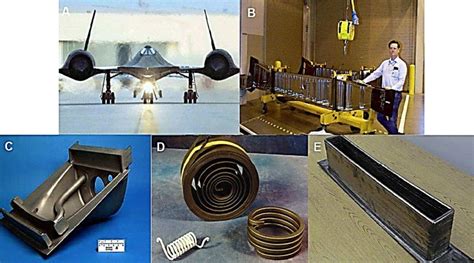
Approximately 85 percent of the SR-71’s structure consisted of titanium alloys. This choice seems obvious today, but during the early 1960s titanium manufacturing remained exceptionally difficult.
Lockheed and its suppliers essentially pioneered large-scale aerospace titanium production while building the aircraft.
The thermal expansion caused by high-speed flight introduced unusual design requirements. Components expanded significantly as temperatures increased. Engineers intentionally designed gaps into various sections of the aircraft because they knew those gaps would close during flight.
One consequence was particularly surprising.
When sitting on the ground, the Blackbird leaked fuel.
The fuel tanks were not fully sealed until thermal expansion occurred at operating temperatures. Observers unfamiliar with the aircraft often assumed it was malfunctioning, when in reality it was behaving exactly as intended.
JP-7 Fuel And The Green Flame Of Triethylborane
The Blackbird’s fuel system was every bit as unusual as its engines.
Traditional jet fuels ignite relatively easily. That characteristic becomes dangerous when operating an aircraft whose skin can reach temperatures hundreds of degrees above ambient conditions.
To address this issue, engineers developed JP-7, a specialized fuel possessing extraordinary thermal stability.
JP-7 was so resistant to ignition that ground crews could famously demonstrate its safety by dropping lit matches directly into containers of fuel without causing combustion.
The fuel served multiple purposes beyond propulsion. It acted as a heat sink, absorbing thermal energy from aircraft systems before entering the engines.
Yet this stability created another challenge.
How could such a reluctant fuel be ignited reliably?
The answer involved triethylborane (TEB), a pyrophoric chemical that ignites instantly upon contact with air.
Each engine carried a limited supply of TEB. When injected into the combustion system, it produced a distinctive bright green flash that signaled ignition.
The green flames associated with Blackbird engine starts became one of the aircraft’s most recognizable visual signatures.
Kelly Johnson And The Skunk Works Culture Behind The Blackbird
The SR-71 was not simply a product of advanced technology. It was also the result of a unique management philosophy.
Kelly Johnson’s Skunk Works organization operated according to a strict set of principles emphasizing simplicity, speed, accountability, and minimal bureaucracy.
Johnson demanded small teams, direct communication, and rapid decision-making. He frequently bypassed organizational hierarchies to speak directly with engineers responsible for solving technical problems.
This approach proved especially important during collaboration with Pratt & Whitney.
As development progressed, both companies encountered serious obstacles. Weight targets were missed. Engine temperatures exceeded expectations. Performance goals appeared increasingly difficult to achieve.
Rather than allowing problems to become trapped within layers of management, Johnson fostered close integration between airframe and engine teams.
The resulting collaboration produced innovations that neither organization could have achieved independently.
The Recovered Bleed-Air system emerged directly from this cooperative engineering environment, ultimately enabling the performance that made the Blackbird legendary.
The Extraordinary Complexity Of Refueling A Blackbird
Flying at Mach 3 required enormous quantities of fuel, making aerial refueling essential.
However, refueling the SR-71 introduced challenges unlike those faced by ordinary military aircraft.
The Air Force created a specialized fleet of KC-135Q Stratotankers capable of carrying JP-7 fuel and supporting the Blackbird’s unique requirements.
Because residual oxygen inside fuel tanks could become hazardous during high-temperature flight, sophisticated procedures were necessary during refueling operations.
Liquid nitrogen played a critical role in maintaining safety by displacing oxygen within the fuel system.
Even the rendezvous process was complicated.
The KC-135’s maximum speed was near the lower limit of the SR-71’s comfortable flight envelope. During refueling, the tanker often descended slightly to help both aircraft maintain suitable aerodynamic conditions.
This unusual arrangement highlighted just how extreme the Blackbird’s performance truly was. Even routine operations required customized solutions.
World Records That Still Inspire Awe
The SR-71’s engineering achievements translated directly into record-setting performance.
In 1976, the aircraft established an official world speed record of 2,193 miles per hour (3,529 kilometers per hour). During the same period, it achieved an altitude record of 85,068 feet (25,929 meters).
The aircraft also set records for closed-circuit speed and long-distance endurance flights.
Perhaps most impressive was its transatlantic performance. In 1974, the Blackbird crossed the Atlantic Ocean in only 1 hour and 54 minutes, a record that still stands today.
Its final flight in 1990 provided one last demonstration of its unmatched capabilities.
Flying from California to Washington, D.C., the SR-71 established multiple speed records during a single journey. The trip from Los Angeles to Washington required just 64 minutes and 20 seconds, averaging more than 2,144 miles per hour.
Even decades later, these numbers remain astonishing.
The Enduring Mystery Of The World’s Fastest Air-Breathing Aircraft
The Lockheed SR-71 Blackbird represents far more than a reconnaissance platform from the Cold War. It embodies an era when aerospace engineers routinely pushed beyond established boundaries and solved problems that many considered impossible.
Its propulsion system remains one of the most fascinating ever developed. The aircraft combined turbojet principles, ramjet characteristics, aerodynamic compression, advanced fuel chemistry, and shockwave management into a single integrated machine. The result was a vehicle whose operation sometimes seemed mysterious even to the highly trained professionals responsible for flying it.
Few aircraft have inspired as much admiration from engineers, pilots, and aviation enthusiasts. Fewer still have maintained their records for decades after retirement.
The Blackbird’s greatest achievement may not have been its speed alone. It was the creation of an aircraft so advanced that it blurred the distinction between engine and airframe, challenged conventional understanding of propulsion, and demonstrated what becomes possible when engineering ambition refuses to accept existing limits.
More than half a century after its first flight, the SR-71 remains the ultimate symbol of technological audacity—a machine that raced across the edge of space at speeds few aircraft have ever approached and whose deepest secrets continue to fascinate those who study it today.