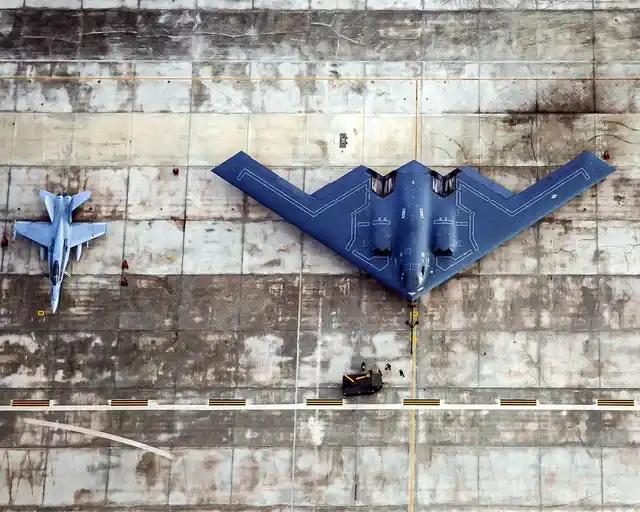
The casual observer might assume that modern military aircraft follow relatively consistent size profiles, especially when comparing different aircraft types. However, the size difference between the F/A-18 Hornet and the B-2 Spirit Stealth Bomber is nothing short of extraordinary, reflecting the profound contrast in their design philosophies, operational roles, and technological advancements.
Despite both being icons of American aerospace engineering, these two aircraft serve fundamentally different purposes: one as a nimble, carrier-based fighter, the other as a long-range, stealth strategic bomber capable of penetrating the most fortified airspaces on the planet.
The F/A-18 Hornet: Compact Power for Carrier Warfare
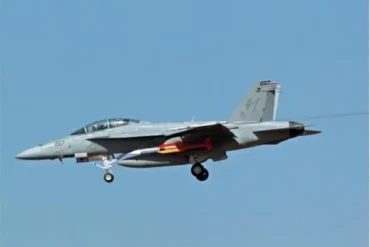
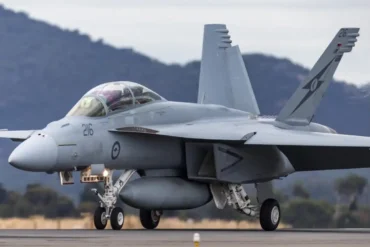
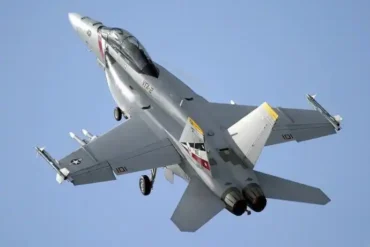
The McDonnell Douglas F/A-18 Hornet, introduced in the late 1970s, exemplifies versatility and agility. Designed primarily for use by the U.S. Navy and Marine Corps, it was engineered to operate from aircraft carriers, which inherently imposes significant size and weight restrictions.
At 56 feet 1 inch in length (17.1 meters) and with a wingspan of 40 feet 4 inches (12.3 meters), the F/A-18 Hornet is optimized for multi-role missions including air superiority, ground attack, and fleet defense. Its height stands at 15 feet 5 inches (4.7 meters), making it low-profile enough for carrier deck operations while still housing sophisticated avionics and weaponry.
Crucially, the F/A-18’s design emphasizes folding wings, allowing multiple aircraft to be stored efficiently aboard naval vessels. Its footprint, while sizable by general aviation standards, is considered modest within the realm of military aviation. Nonetheless, the Hornet carries a payload capacity that exceeds that of some World War II four-engine bombers, a testament to the leaps in aerospace efficiency over the decades.
The B-2 Spirit: An Engineering Marvel of Stealth and Scale
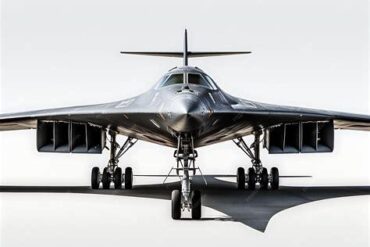
In stark contrast stands the Northrop Grumman B-2 Spirit, arguably one of the most enigmatic aircraft ever created. Designed during the Cold War under a veil of secrecy, the B-2 entered service in the 1990s as a stealth strategic bomber, optimized to evade detection and deliver nuclear or conventional ordnance deep into hostile territory.
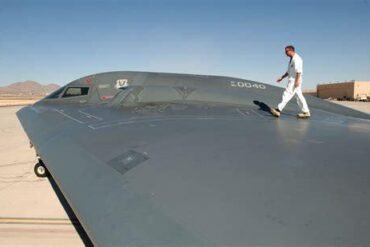
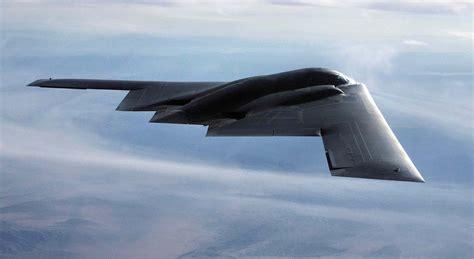
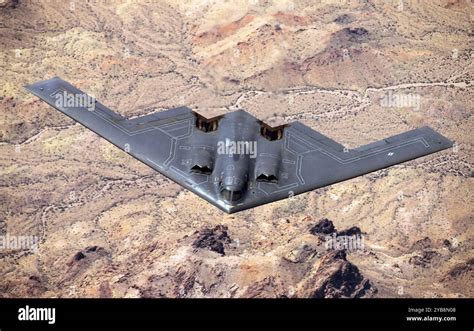
The sheer size of the B-2 defies expectations, particularly given its sleek, flying-wing profile. Measuring 69 feet in length (21 meters), the B-2 is already significantly longer than the F/A-18, yet it’s the wingspan that truly staggers the imagination.
The B-2 Spirit boasts a colossal wingspan of 172 feet (52.4 meters)—more than four times wider than the F/A-18. This vast expanse of wing area, totaling 5,140 square feet (478 square meters), not only enhances aerodynamic efficiency for long-range missions but also provides internal space for fuel and weapon bays crucial for its stealth role.
Its height reaches 17 feet (5.18 meters), a slight increase over the F/A-18, but given the aircraft’s mission and the stealth requirements, the low-slung design prioritizes radar evasion over vertical bulk.
The Numbers: Breaking Down the Size Disparity
The dimensional comparison between the two aircraft reveals how mission dictates design:
| Specification | F/A-18 Hornet | B-2 Spirit | Difference |
|---|---|---|---|
| Length | 56 ft 1 in (17.1 m) | 69 ft (21.0 m) | +12 ft 11 in (3.9 m) |
| Wingspan | 40 ft 4 in (12.3 m) | 172 ft (52.4 m) | +131 ft 8 in (40.1 m) |
| Height | 15 ft 5 in (4.7 m) | 17 ft (5.18 m) | +1 ft 7 in (0.48 m) |
| Wing Area | 410 sq ft (38 m²) | 5,140 sq ft (478 m²) | +4,730 sq ft (440 m²) |
While the length difference of nearly 13 feet may seem notable, it’s the wingspan and wing area that truly set the B-2 apart. The Spirit’s wingspan extends over 326% wider than the F/A-18’s, creating the necessary lift and internal space for long-duration missions without compromising stealth.
Mission Profiles Define Dimensions
Understanding these size differences requires appreciating the divergent operational demands placed on these aircraft.
The F/A-18 Hornet, intended for carrier-based operations, must be compact, maneuverable, and capable of enduring the rigors of catapult launches and arrested landings. Its dimensions reflect these constraints, with minimal surface area to maximize deck space and aerodynamic control at high speeds.
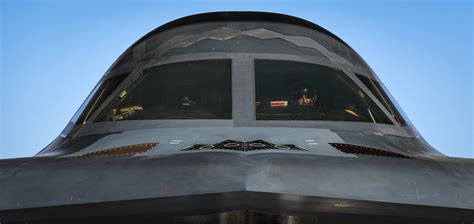
Conversely, the B-2 Spirit’s flying-wing design eliminates vertical stabilizers and traditional fuselage structures to minimize radar cross-section. Its expansive wings enable transcontinental range and heavy payloads, essential for deep-strike missions where aerial refueling or forward basing may not be feasible.
Despite its size, the B-2 maintains extraordinary stealth characteristics, leveraging advanced materials and shaping to remain nearly invisible to radar—a feat that underscores how size alone doesn’t equate to detectability.
A Perspective Shift: Size in the Aviation World
Online discussions, notably within defense communities like r/navy, often highlight the misconceptions civilians have regarding aircraft size. Without a visual reference, it’s easy to assume fighters like the F/A-18 are akin to sports cars in scale, yet parked beside a house, the Hornet’s footprint often exceeds that of a typical family home.
Similarly, the B-2 Spirit’s dimensions become even more impressive when considering comparisons to historical bombers. Its 172-foot wingspan is just 10 feet narrower than the B-52 Stratofortress, yet it carries fewer crew members and relies entirely on stealth and precision to fulfill its mission.
Interestingly, the payload capacity of the B-2 exceeds the entire weight of the F/A-18, illustrating how design philosophy prioritizes endurance, firepower, and survivability over sheer speed or agility.
The B-2’s Size: A Product of 1980s Ingenuity
Perhaps most astonishing is that the B-2’s enormous structure, optimized for stealth and payload, was conceived and built in the 1980s, a time when computer modeling and materials science were still maturing. Developing an aircraft of such size with precision stealth capabilities remains a remarkable testament to American aerospace innovation.
Incorporating cutting-edge composites, radar-absorbent coatings, and advanced flight control systems, the B-2 Spirit continues to serve as a linchpin in U.S. strategic deterrence more than three decades after its first flight.
Conclusion: Size Reflects Purpose
The “wild” size difference between the F/A-18 Hornet and the B-2 Spirit, as highlighted in online discussions and visual comparisons, is not merely a matter of scale for its own sake. Instead, it is the physical manifestation of differing missions, engineering challenges, and operational environments.
The compact, agile Hornet exemplifies multi-role versatility, essential for naval aviation dominance. The towering, wing-spanning B-2 embodies the pinnacle of stealth and strategic reach, designed to project power globally while evading detection.
In aviation, size is never arbitrary—it reflects the relentless balancing act between mission requirements, physics, and technological capabilities. The F/A-18 and B-2 Spirit stand as stark yet complementary examples of how form follows function in the complex theater of modern air power.