Fighter jets are masterpieces of aerospace engineering, designed for maximum performance under extreme conditions. Every curve, joint, and structural element serves a purpose. Among these design features, a strange gap between the engine and fuselage stands out on certain aircraft. This seemingly peculiar choice, seen on jets like the McDonnell Douglas F-4 Phantom II, McDonnell Douglas F-15 Eagle, and McDonnell Douglas F/A-18 Hornet, is no accident. It’s a result of aerodynamic, operational, and survivability requirements that have shaped decades of fighter jet development.
At first glance, the separation between the engine nacelles and the aircraft’s central fuselage might seem like wasted space. In reality, it solves a critical challenge in high-speed airflow management—and it brings along secondary benefits in lift generation, payload capacity, and battle survivability.
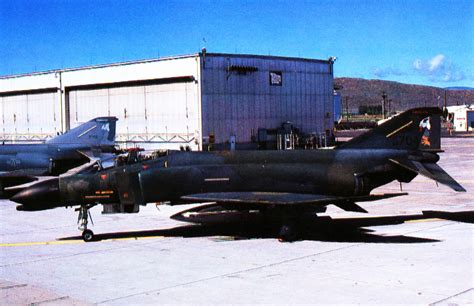
Managing the Boundary Layer: The Primary Reason for the Gap
When a fighter jet moves through the air, the boundary layer—a thin region of slow-moving, turbulent air—forms along the fuselage. While this effect is negligible at subsonic speeds, at transonic and supersonic velocities it becomes a serious hazard for jet engines. Ingesting boundary layer air can cause:
- Compressor stalls
- Reduced thrust
- Unstable combustion
The splitter plate, positioned between the fuselage and the air intake, allows this disturbed air to pass away from the engine inlets, ensuring only clean, free-stream airflow reaches the compressors. The physical gap between the nacelles and fuselage is a byproduct of this design.
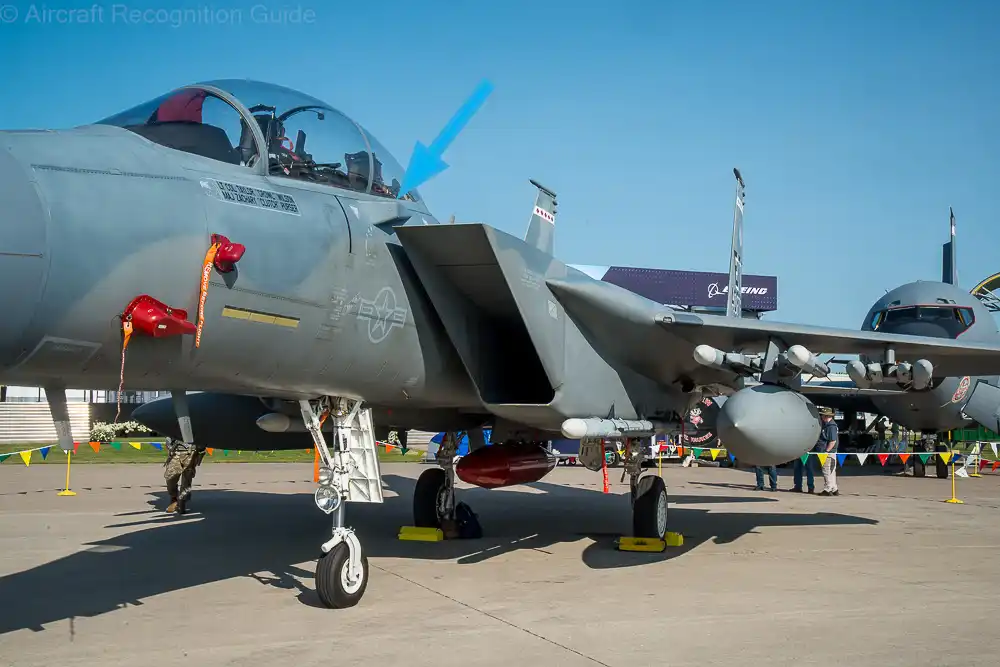
The boundary layer control system ensures that at Mach 1.5+ speeds, where turbulence and shockwaves interact, the engines maintain optimal performance without risking flameouts.
Examples of Aircraft Using Splitter Plate Gaps
| Aircraft Model | Country of Origin | First Flight | Notable Feature Related to Gap |
|---|---|---|---|
| F-4 Phantom II | USA | 1958 | Large side intakes with splitter plates |
| F-15 Eagle | USA | 1972 | Wide engine spacing for lift and survivability |
| F/A-18 Hornet | USA | 1978 | Moderate gap aiding in maneuverability |
| Su-27 Flanker | USSR/Russia | 1977 | Large flat surface for extra lift |
| F-14 Tomcat | USA | 1970 | Phoenix missile mount between engines |
Secondary Aerodynamic Benefits: More Than Just Airflow Control
The gap between the engine and fuselage isn’t just for airflow separation—it also contributes to lift generation. Certain aircraft, such as the Grumman F-14 Tomcat and the Sukhoi Su-27 Flanker, have a broad central fuselage section between the engines that acts as a lifting surface. This design can generate several thousand pounds of additional lift during high-speed flight, reducing the workload on the wings.
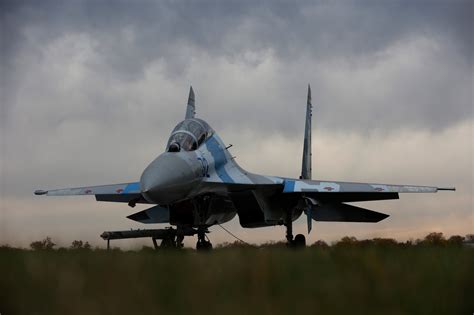
This increased lift is particularly useful in carrier-based operations, where takeoff and landing runs are short and maximum lift efficiency is critical.
Space Utilization: Housing Missiles, Fuel, and Equipment
The gap between the engines also serves a practical storage purpose. Designers have used this space to mount:
- Long-range air-to-air missiles (e.g., the F-14’s AIM-54 Phoenix)
- Additional fuel tanks
- Advanced avionics and electronic warfare suites
- Landing gear bays
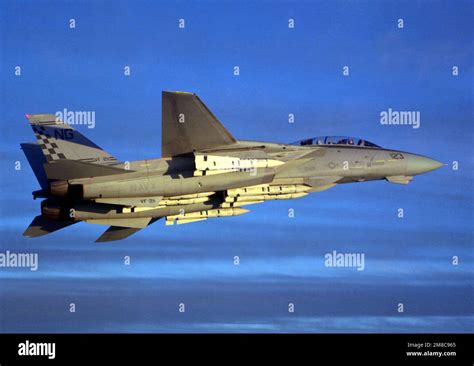
In some designs, this spacing also facilitates heavier landing gear structures—a necessity for high-impact landings on aircraft carriers.
Survivability: Engine Separation as a Defensive Measure
In combat, survivability is everything. Twin-engine fighters benefit from engine spacing because a single hit is less likely to disable both engines. If one powerplant fails, the other can keep the aircraft flying.
The F-14 Tomcat’s reinforced engine housings were engineered to contain catastrophic turbine damage, preventing debris from penetrating the fuselage and causing total loss of the aircraft.
Evolution Toward Stealth: Reducing the Gap
While the splitter plate design worked well in the 1950s–1980s, advances in radar detection created new challenges. The physical gap increased radar cross-section, making aircraft easier to detect.
This led to innovations like the Diverterless Supersonic Intake (DSI), first fielded on the F-35 Lightning II. Instead of using a physical gap, the DSI employs a curved bump ahead of the intake to deflect boundary layer air, feeding clean air to the engine while keeping surfaces flush for stealth.
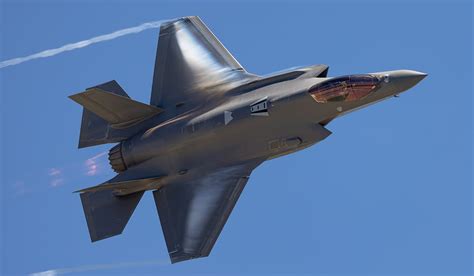
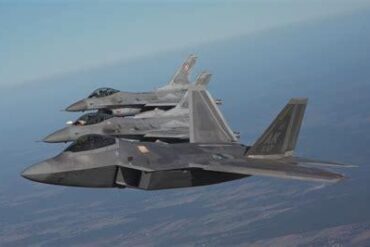
Other stealth fighters, such as the F-22 Raptor and Sukhoi Su-57, use internal duct shaping and bleed air channels to handle boundary layer flow without compromising radar signature.
Why Not Use Gaps on All Aircraft?
Not all fighters need visible engine-fuselage gaps. Modern single-engine jets like the F-16 Fighting Falcon have centrally mounted intakes that bypass much of the boundary layer issue. For twin-engine designs, mission profile, stealth requirements, and structural efficiency determine whether a visible gap is worth the trade-offs.
FAQ
Why do some fighter jets have no gap between the engine and fuselage?
Modern stealth fighters often eliminate visible gaps to reduce radar cross-section. They achieve airflow management through internal duct shaping and DSI technology instead.
Does the gap improve maneuverability?
Indirectly, yes. By maintaining optimal engine performance at all speeds, the gap ensures consistent thrust, which in turn supports aggressive maneuvering without risk of compressor stalls.
Which fighter jet had the most notable gap design?
The F-14 Tomcat had one of the widest gaps, using the space for missile mounting, lift generation, and engine survivability enhancements.