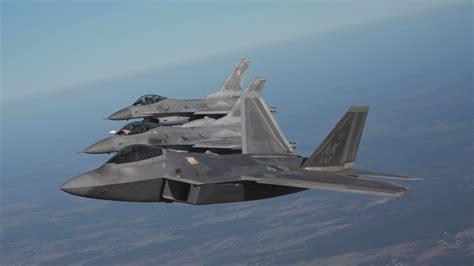
Europe’s airpower strategy is entering a quiet but consequential transition—one defined less by bold modernization and more by delays, stretched lifespans, and uncomfortable capability gaps. Across several NATO member states, aging fighter fleets are being retired or extended well beyond their intended service lives, often without a clear or immediate replacement ready to take over. The result is not a dramatic collapse of airpower, but something arguably more dangerous: a gradual erosion of readiness masked by stopgap measures.
At the heart of this shift lies a simple but disruptive reality. The much-anticipated Future Combat Air System (FCAS)—Europe’s sixth-generation fighter initiative—is now unlikely to enter service until the mid-2040s. That leaves at least a decade where NATO’s European members must bridge a widening gap between fourth-generation legacy aircraft and fifth-generation stealth platforms. This transitional period is proving far messier than planners initially anticipated.
What makes the situation more complex is NATO’s deeply integrated operational structure. European air forces do not operate in isolation; they function alongside American assets like the F-35 Lightning II, sharing missions, infrastructure, and tactical doctrines. Any weakness in one nation’s fleet inevitably ripples across the alliance, raising difficult questions about burden-sharing, interoperability, and long-term deterrence.
Spain’s Strategic Gamble: Extending Hornets Into the 2040s
Spain offers one of the clearest—and boldest—examples of this evolving dilemma. Rather than purchasing the F-35, Madrid has doubled down on European defense autonomy, prioritizing the Eurofighter Typhoon and future FCAS development. Politically, the move signals independence. Operationally, it introduces significant risk.
Spain’s fleet of approximately 60 F/A-18 Hornets is now expected to remain in service until 2035 or even 2040. That’s far beyond the aircraft’s original design life, and keeping them operational will demand increasingly complex upgrades. Aging avionics, structural fatigue, and dwindling spare parts are not minor inconveniences—they are cost multipliers that compound over time.
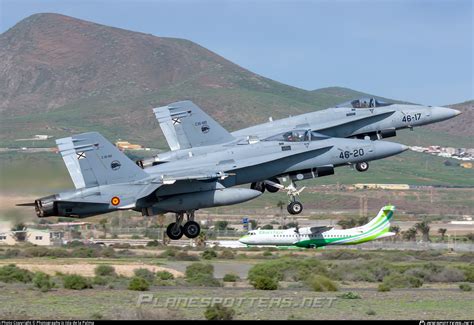
The situation becomes more acute at sea. Spain’s AV-8B Harrier II, operating from the amphibious assault ship Juan Carlos I, is scheduled to retire around 2030. Unlike Italy, which transitioned to the F-35B STOVL variant, Spain has no confirmed replacement. That decision risks eliminating its carrier-based fixed-wing capability entirely, a rare and strategically valuable asset within NATO.
The implications are stark. Without stealth aircraft or a naval aviation successor, Spain could find itself relying on upgraded fourth-generation fighters in an era increasingly defined by low-observable technology. It’s a calculated bet that European programs will deliver on time—history suggests that’s far from guaranteed.
Belgium’s Timing Problem: When Modernization Slips
Belgium’s challenge is less about strategic choice and more about industrial bottlenecks. The country committed to replacing its F-16 fleet with the F-35A, aligning with a broader NATO trend toward fifth-generation capabilities. On paper, the transition looked seamless. In reality, it has been anything but.
F-35 deliveries have lagged, forcing Belgium to retain its aging F-16s longer than planned, likely until 2029. This delay has real-world consequences. Brussels had pledged to transfer 30 F-16s to Ukraine, but those commitments have stalled because the aircraft are still needed at home.
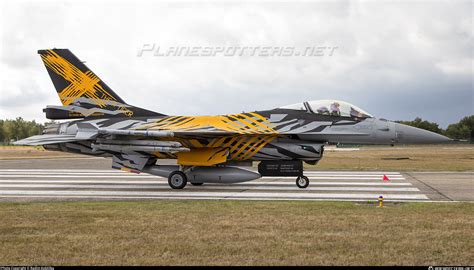
Compounding the issue is the mismatch between pilot readiness and aircraft availability. Belgian pilots have already completed F-35 training abroad, yet the jets themselves are not fully operational domestically. This creates a peculiar limbo: a force trained for the future but anchored to the past.
Meanwhile, Belgium remains responsible for Benelux air policing duties, rotating with the Netherlands. Performing these missions with a shrinking and aging fleet places additional strain on maintenance cycles and operational planning. It’s a vivid illustration of how even well-funded modernization programs can stumble when timelines slip.
Denmark’s Transition: A Success Story With Hidden Strains
Denmark is often cited as proof that a smooth transition to fifth-generation aircraft is possible. In January 2026, it officially retired its last F-16, completing a long-planned shift to the F-35. On the surface, this looks like a clean success.
But the reality beneath that success tells a more nuanced story. Denmark spent years operating in a hybrid state, balancing aging F-16s with a gradually expanding fleet of F-35s. During this period, operational readiness depended on aircraft at both ends of the technological spectrum—some nearing retirement, others not yet fully integrated.
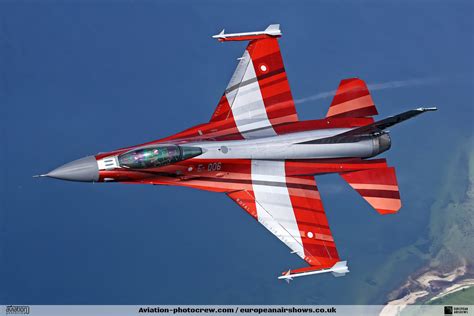
Even with careful planning, there were moments when capability gaps were unavoidable. Training pipelines, infrastructure upgrades, and logistical adjustments all took time, and none could be rushed without consequences. Denmark ultimately closed the gap, but its experience serves as a warning: if timelines slip or procurement is delayed, the transition becomes far more fragile.
For countries that have not yet committed fully—or are still waiting on deliveries—the Danish model may be difficult to replicate.
Greece and Portugal: Between Hesitation and Necessity
Further south, the situation becomes even more layered. Greece and Portugal are navigating transitions shaped by budget constraints, geopolitical pressures, and strategic ambiguity.
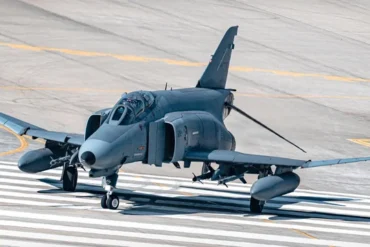
Greece has taken concrete steps by ordering 20 F-35s, with deliveries expected between 2028 and 2029. Until then, it relies on a mix of upgraded F-16s, newly acquired Dassault Rafales, and the aging F-4 Phantom II—a platform whose origins trace back to the Cold War.
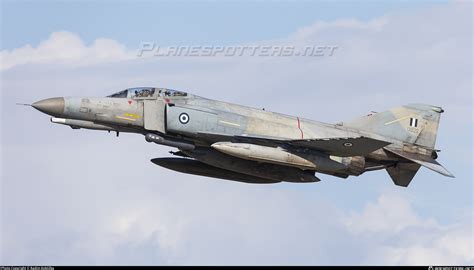
The continued use of the Phantom is not mere nostalgia. It reflects a hard truth: when replacements are delayed or insufficient, even decades-old aircraft retain operational value. Retiring them too early would create gaps that newer platforms cannot yet fill.
Portugal faces a quieter but equally significant dilemma. Its F-16 fleet remains operational, but decisions about replacement—whether to join the F-35 program or pursue European alternatives—have yet to fully crystallize. This hesitation risks pushing modernization further into the future, increasing reliance on aging systems.
Both countries illustrate a broader pattern: modernization is not just about acquiring new aircraft, but about timing those acquisitions precisely. Miss that window, and the entire force structure begins to strain.
Eastern Europe: Frontline Pressure With Limited Options
In Eastern Europe, the stakes are even higher. Countries closer to NATO’s eastern flank face immediate security pressures, yet often lack the financial and industrial capacity to modernize quickly.
Many of these nations still operate Soviet-era aircraft or early-generation Western fighters. While some have committed to acquiring the F-35 or other modern platforms, deliveries remain years away. In the meantime, they must rely on incremental upgrades and NATO support to maintain credible deterrence.
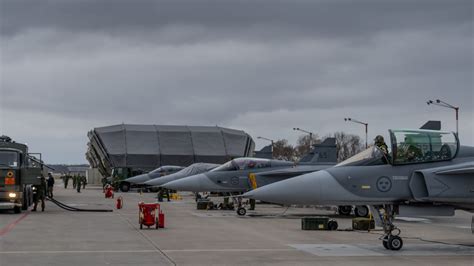
This creates a two-speed alliance: one tier transitioning to fifth-generation capabilities, another struggling to maintain baseline readiness. The imbalance complicates joint operations and increases reliance on larger NATO members to fill capability gaps.
The FCAS Delay: A Strategic Bottleneck
All of these national stories converge on a single structural issue: the delayed arrival of FCAS. Originally envisioned as Europe’s answer to next-generation air combat, the program now faces technical, political, and industrial challenges that have pushed its timeline into the 2040s.
That delay is more than an inconvenience. It effectively extends the lifespan of current fleets while postponing the introduction of transformative capabilities like advanced stealth, AI-assisted combat systems, and network-centric warfare integration.
In the absence of FCAS, countries must choose between two imperfect options: invest heavily in interim solutions like the F-35, or stretch existing platforms far beyond their intended limits. Neither path is cheap, and neither guarantees a seamless transition.
A Decade of Risk: What This Means for NATO
The emerging picture is not one of collapse, but of gradual strain. NATO’s European members are not abandoning airpower—they are adapting to constraints. Yet adaptation comes with trade-offs.
Extended service lives mean higher maintenance costs and lower availability rates. Delayed procurements create temporary capability gaps. Diverging strategies—some nations choosing the F-35, others waiting for FCAS—risk fragmenting interoperability.
Most importantly, the alliance faces a decade where its airpower advantage could be less decisive than in the past. In an environment where adversaries are rapidly advancing their own capabilities, even a temporary dip in readiness carries strategic consequences.
There’s a certain irony in all of this. Europe is investing in the future of air combat, but the path to that future is forcing it to rely more heavily on the past. Whether that balancing act holds will define NATO’s airpower posture well into the 2030s—and perhaps beyond.