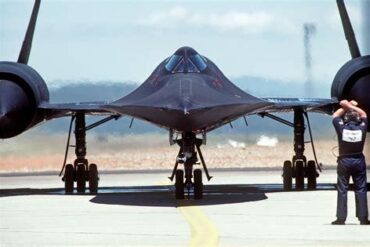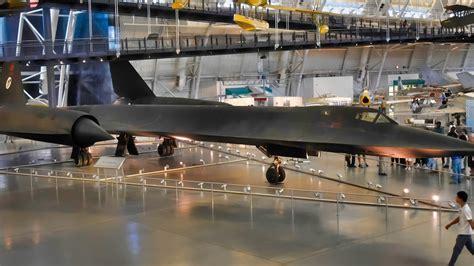
The Lockheed SR-71 Blackbird remains one of the most legendary aircraft ever built. Capable of cruising above 80,000 feet at speeds exceeding Mach 3, it represented the pinnacle of Cold War aerospace engineering and became synonymous with intelligence gathering beyond enemy reach. Even decades after its retirement, the Blackbird continues to spark debate among military historians, aviation enthusiasts, and defense analysts alike.
Many people argue that retiring the SR-71 was one of the greatest mistakes the U.S. Air Force ever made. Others insist the aircraft had simply reached the end of its practical life. The truth lies somewhere between these two positions. The Blackbird was not retired because it suddenly became ineffective. Instead, it fell victim to a combination of changing geopolitics, evolving technology, spiraling operating costs, and the emergence of entirely new intelligence platforms.
Understanding why the Air Force retired the SR-71 requires looking beyond the aircraft itself. It means examining the strategic environment that created it, the technological revolution that eventually replaced many of its missions, and the difficult budget decisions that reshaped American defense policy after the Cold War.
The SR-71 Was Created to Solve America’s Biggest Intelligence Problem
During the early years of the Cold War, the United States knew remarkably little about military developments deep inside the Soviet Union. Before reconnaissance satellites became reliable, collecting strategic intelligence depended largely upon aircraft capable of penetrating hostile territory.
Initially, that responsibility belonged to the Lockheed U-2 Dragon Lady. Flying above 70,000 feet, the U-2 was believed to operate safely beyond the reach of Soviet interceptors. The aircraft proved enormously valuable, particularly during the Cuban Missile Crisis, when its photographs revealed Soviet nuclear missile sites under construction in Cuba.
That advantage disappeared quickly.
The rapid development of Soviet surface-to-air missile (SAM) technology dramatically reduced the U-2’s survivability. The shootdown of Francis Gary Powers in 1960 proved that altitude alone no longer guaranteed safety. American planners recognized that future reconnaissance aircraft would need something far more sophisticated.
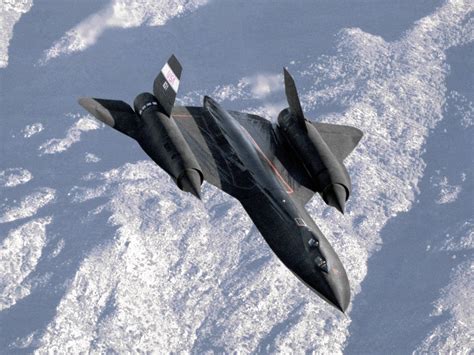
The answer became the A-12 Oxcart, followed by the more capable SR-71 Blackbird.
Instead of relying solely on altitude, the Blackbird combined several revolutionary characteristics into a single aircraft:
- Cruising speeds exceeding Mach 3
- Operational altitude above 80,000 feet
- Reduced radar signature
- Long-range strategic reconnaissance capability
- Advanced sensors capable of collecting imagery and electronic intelligence
Rather than avoiding detection entirely, the SR-71 often relied on something even more effective—it simply outran threats.
Engineering Excellence Came With Extraordinary Costs
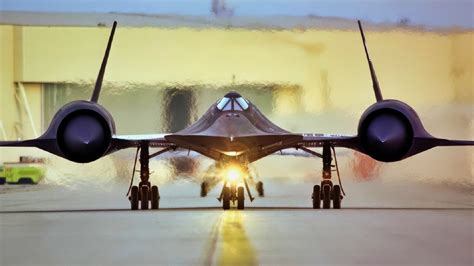
The Blackbird pushed engineering beyond anything previously attempted in aviation.
Flying continuously above Mach 3 generated temperatures exceeding 500°F (260°C) across much of the aircraft. Conventional aluminum construction would have failed under such conditions, forcing Lockheed’s legendary Skunk Works engineers to build approximately 85 percent of the aircraft from titanium.
Titanium solved one problem while creating many others.
During the 1960s, obtaining sufficient titanium was itself an intelligence operation, with the United States secretly purchasing large quantities through intermediaries from countries that ultimately sourced the metal from the Soviet Union—the very nation the aircraft was designed to spy upon.
Every aspect of the SR-71 demanded specialized support.
Its engines required extensive maintenance.
Its unique JP-7 fuel existed almost exclusively for Blackbird operations.
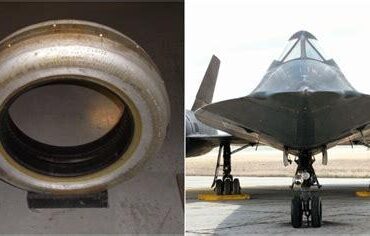
Its specialized tires deteriorated rapidly under extreme temperatures.
Its maintenance crews required highly specialized training unavailable anywhere else.
A single mission could consume approximately 12,000 gallons of fuel in just ninety minutes, making every flight extraordinarily expensive. Unlike conventional military aircraft, the SR-71 required dedicated infrastructure, unique maintenance equipment, and a logistics network supporting a fleet of only a few dozen aircraft.
These operating realities mattered.
Military procurement decisions rarely revolve around capability alone. Sustainability, readiness rates, maintenance hours, and long-term operating expenses often determine whether even remarkable platforms survive budget reviews.
The End of the Cold War Changed Defense Priorities
The geopolitical environment that justified the SR-71’s enormous expense began changing during the late 1980s.
Relations between the United States and the Soviet Union gradually improved, while the Soviet economy weakened dramatically. By the time the USSR formally collapsed in 1991, the strategic landscape had fundamentally shifted.
For nearly four decades, American defense spending had been driven largely by competition with a single superpower.
Once that rivalry disappeared, enormous pressure emerged to reduce military expenditures.
Numerous ambitious defense programs experienced similar fates.
The B-2 Spirit procurement dropped dramatically from original plans.
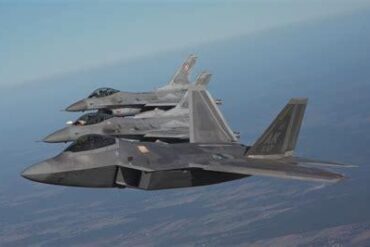
The F-22 Raptor fleet was reduced far below projected numbers.
Programs like the A-12 Avenger II disappeared entirely.
Defense contractors themselves underwent major consolidation as Pentagon officials acknowledged that post-Cold War budgets could no longer support previous spending levels.
The SR-71 entered this environment carrying one enormous disadvantage—it remained one of the most expensive aircraft in the Air Force inventory.
Unlike strategic bombers or frontline fighters, the Blackbird performed only one specialized mission. As alternative reconnaissance technologies matured, maintaining such an expensive dedicated platform became increasingly difficult to justify.
Satellites Quietly Replaced Many Blackbird Missions
Perhaps the most important reason behind the SR-71’s retirement had nothing to do with the aircraft’s performance.
It had everything to do with what replaced it.
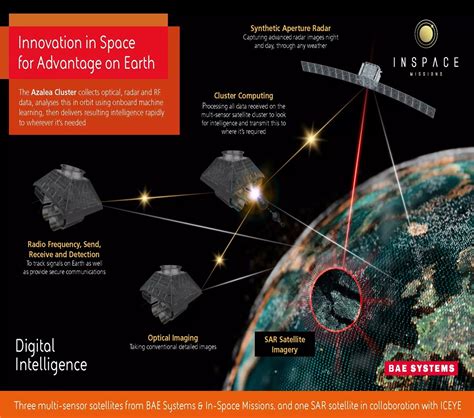
Reconnaissance satellites matured dramatically throughout the 1970s and 1980s. Unlike aircraft, satellites could monitor virtually any location without violating sovereign airspace or risking international incidents.
They also offered several advantages over manned reconnaissance flights.
Satellites operated continuously.
They required no onboard crews.
They avoided diplomatic crises caused by shootdowns.
Their operating costs spread across years of service rather than expensive individual sorties.
Meanwhile, intelligence gathering itself evolved.
Electronic surveillance expanded rapidly.
Signals intelligence systems became increasingly capable.
Unmanned aerial vehicles began assuming reconnaissance missions that once required pilots.
The SR-71 also suffered from technological stagnation.
Its sensors remained rooted in Cold War-era film photography and analog recording systems. After completing missions, the aircraft had to return to base before intelligence analysts could retrieve and process the collected data.
Modern military operations increasingly demanded real-time intelligence.
Commanders no longer wanted reconnaissance several hours after events occurred—they wanted information immediately.
Because the Air Force invested relatively little in modernizing the Blackbird’s sensor suite, the aircraft gradually became less compatible with evolving battlefield requirements.
Speed Alone Was Becoming Less Decisive
The SR-71 built its legendary reputation on an extraordinary combination of altitude and speed.
Numerous missile launches reportedly failed to intercept the aircraft, and no operational Blackbird was ever shot down during its service career.
That record remains astonishing.
However, military technology never stands still.
By the 1990s, newer interceptor aircraft like the MiG-31 Foxhound possessed greater speed and improved radar capabilities than previous Soviet fighters.
Integrated air defense systems also evolved dramatically.
Instead of isolated radar stations controlling individual missile batteries, modern networks linked multiple sensors together, improving target detection, tracking, and engagement.
At the same time, American military doctrine shifted toward an entirely different philosophy.
Rather than relying upon overwhelming speed to survive hostile airspace, future aircraft increasingly emphasized stealth.
Programs like the F-117 Nighthawk and B-2 Spirit demonstrated that avoiding detection altogether often proved more effective than outrunning missiles after launch.
Even today, experts continue debating how survivable an SR-71 would be against modern systems such as the S-400, S-500, or China’s HQ-9 and HQ-19.
Its altitude and speed would still make interception exceptionally difficult.
But its once-overwhelming performance advantage would almost certainly be smaller than during the height of the Cold War.
Bureaucracy Also Played a Role
Major defense decisions rarely depend upon technology alone.
The SR-71 also encountered bureaucratic challenges that receive far less public attention.
Operating a tiny fleet created logistical inefficiencies.
Specialized spare parts became increasingly scarce.
Maintenance costs continued rising as the aircraft aged.
Different intelligence organizations competed for funding while advocating alternative reconnaissance platforms.
These internal institutional pressures often influence procurement decisions just as much as engineering performance.
An aircraft can remain operationally successful while simultaneously becoming financially and organizationally difficult to sustain.
The Blackbird eventually found itself trapped in precisely that situation.
Was Retiring the SR-71 Actually a Mistake?
This question remains surprisingly difficult to answer.
From a purely emotional perspective, retiring the Blackbird feels unfortunate. Few aircraft have ever combined such breathtaking performance with such remarkable engineering elegance.
Its record speaks for itself.
No operational losses to enemy action.
Unmatched sustained speed.
Extraordinary reconnaissance capability.
Global prestige.
Yet military planners evaluate systems differently than aviation enthusiasts.
If newer platforms can perform equivalent missions more economically, commanders rarely continue funding legacy aircraft regardless of their legendary status.
One important complication remains.
Many reconnaissance capabilities developed after the SR-71 remain highly classified today.
Public discussion naturally focuses upon what disappeared rather than what quietly replaced it.
Widely discussed programs like the rumored RQ-180 illustrate this problem perfectly. Although many analysts believe advanced stealth reconnaissance aircraft exist, their true capabilities remain largely unknown.
Without access to classified intelligence programs, no outsider can conclusively determine whether the Blackbird’s retirement created a genuine capability gap.
Could the Blackbird Have Been Modernized Instead?
Some analysts argue that retiring the aircraft entirely represented a missed opportunity.
The Air Force successfully modernized the U-2 multiple times, extending its operational life well beyond original expectations.
A similar approach theoretically could have produced a next-generation SR-71.
Possible upgrades might have included:
- Digital electro-optical sensors
- Secure real-time data transmission
- Modern electronic intelligence systems
- Improved radar technologies
- More efficient engines
- Updated avionics
- Enhanced low-observable treatments
However, such modernization would have required enormous investment.
Given shrinking post-Cold War budgets and expanding satellite capabilities, decision-makers apparently concluded that building an updated Blackbird offered insufficient return compared to investing in entirely new reconnaissance technologies.
The SR-72 Suggests the Original Concept Never Truly Died
Although the SR-71 disappeared from operational service, the underlying philosophy behind the aircraft continues influencing modern aerospace development.
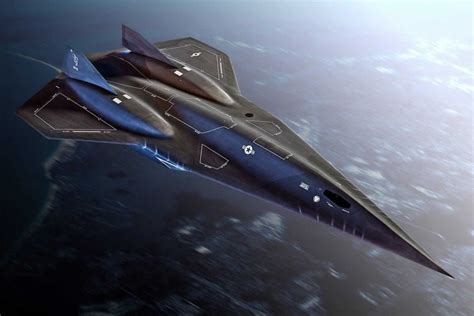
Lockheed Martin has publicly discussed the conceptual SR-72, an unmanned hypersonic reconnaissance and strike aircraft expected to exceed Mach 6 while operating at altitudes approaching 100,000 feet.
Although much remains speculative, the concept demonstrates that extremely high-speed reconnaissance still holds military value.
The difference is that future aircraft would almost certainly incorporate technologies unimaginable during the 1960s:
- Autonomous operation
- Artificial intelligence-assisted mission management
- Scramjet propulsion
- Networked intelligence systems
- Real-time communications
- Advanced stealth integration
Rather than replacing satellites, future hypersonic reconnaissance aircraft would likely complement an integrated intelligence network spanning space, air, cyber, and electronic domains.
The Legacy of the SR-71 Blackbird
The SR-71 occupies a unique position in aviation history because it represents both extraordinary success and inevitable obsolescence.
It solved one of America’s most urgent Cold War intelligence problems with unmatched effectiveness. It demonstrated engineering capabilities decades ahead of its time and established performance records that remain astonishing even today.
Yet no aircraft exists in isolation.
Strategic requirements evolve.
Technology advances.
Budgets shrink.
Entire geopolitical eras come to an end.
The Blackbird ultimately became a victim not of failure, but of progress. Faster intelligence collection shifted toward satellites, stealth platforms, unmanned systems, and classified technologies that could accomplish similar missions with lower risk and greater efficiency.
Whether retiring the SR-71 was a mistake ultimately depends upon information the public still does not possess. If classified successors fully replaced its capabilities, the decision was likely justified. If they did not, then one of history’s greatest reconnaissance aircraft may indeed have left service before its unique strengths were truly obsolete.
What remains beyond debate is the aircraft’s enduring legacy. More than half a century after its first flight, the SR-71 Blackbird continues to symbolize the extraordinary heights that aerospace engineering can achieve when technological ambition, strategic necessity, and national determination converge into a single remarkable machine.