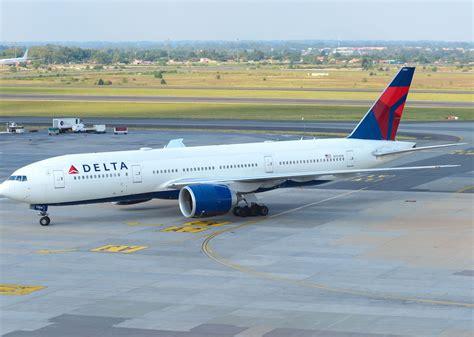
Delta Air Lines once treated the Boeing 777 as the crown jewel of its long-haul network. The aircraft opened doors to distant markets, gave the airline true ultra-long-range capability, and became a favorite among passengers who associated the “Triple Seven” with comfort, reliability, and globe-spanning travel. Yet when Delta retired the entire fleet in 2020, the airline moved with unusual speed and certainty. There was no prolonged transition, no attempt to preserve a handful of aircraft for niche routes, and no signs of hesitation from management.
For aviation enthusiasts, the move felt emotional. For Delta executives, it was simply business.
The retirement of the Boeing 777 marked one of the most aggressive fleet simplification strategies among major US airlines during the pandemic era. While competitors continued operating older widebodies, Delta used the collapse in international demand as an opportunity to reshape its long-haul future around newer Airbus aircraft. The decision was not based on dislike for the Boeing 777. In fact, Delta openly praised the aircraft’s performance and reliability. The issue was economics, efficiency, and long-term strategy.
The result was a dramatic transformation of Delta’s international operation. Instead of relying on aging ultra-long-haul jets with high operating costs, the airline shifted toward a more streamlined fleet centered on the Airbus A350 and Airbus A330neo families. Those aircraft delivered lower fuel burn, modern passenger amenities, and significantly better financial performance.
Delta did not retire the Boeing 777 because it failed. The airline retired it because aviation had changed.
After the pandemic, airlines could no longer justify sentimentality in fleet planning. Every aircraft needed to prove its value not just operationally, but financially. Delta examined the numbers and concluded that the future belonged elsewhere.
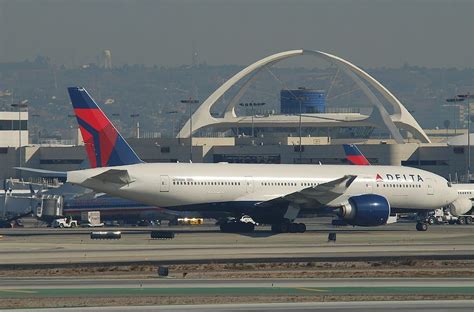
Delta’s Boeing 777 Era Changed The Airline’s Global Identity
When Delta introduced the Boeing 777 in 1999, the airline was entering a completely different phase of its history. The aircraft represented ambition. Delta wanted to compete aggressively in international markets, particularly across the Pacific and on ultra-long-haul routes that smaller widebodies simply could not operate efficiently.
The Boeing 777-200ER became a cornerstone of that expansion. With a range exceeding 7,000 nautical miles and seating for nearly 300 passengers, the aircraft allowed Delta to connect major US hubs with destinations deep into Asia, Europe, Africa, and Oceania. It gave the airline flexibility that earlier widebodies lacked.
Later, the Boeing 777-200LR pushed those capabilities even further. The LR variant was among the longest-range commercial aircraft ever built and enabled flights that once seemed almost impossible. Delta used the aircraft on demanding missions such as Atlanta to Johannesburg and Los Angeles to Sydney, routes that required exceptional endurance and payload performance.
Inside the cabin, the 777 also helped elevate Delta’s premium image. The aircraft offered spacious seating, a quieter ride compared to earlier widebodies, and enough capacity to support both premium travelers and cargo demand simultaneously. For many frequent flyers, the Boeing 777 became synonymous with Delta’s international ambitions.
Pilots admired the aircraft’s power and handling characteristics. Maintenance teams respected its reliability. Passengers appreciated its spacious feel on long-haul journeys. Few aircraft developed such a balanced reputation across every part of the airline.
Yet even successful aircraft eventually face economic realities.
The Boeing 777 family was designed during a different era of aviation, one where fuel efficiency mattered less than raw capability. By the late 2010s, however, airlines were under growing pressure to reduce operating costs and emissions while maintaining profitability in an increasingly competitive market.
That shift changed everything.
Why The Pandemic Accelerated Delta’s Fleet Revolution
The COVID-19 pandemic did not create Delta’s concerns about the Boeing 777. It merely accelerated a decision that had already become increasingly logical.
When international travel collapsed in 2020, airlines around the world suddenly found themselves operating far more aircraft than they needed. Delta faced a critical choice: preserve older jets in the hope demand would return quickly, or use the crisis to modernize aggressively.
Delta chose modernization.
The airline immediately recognized that the Boeing 777 was vulnerable. Despite its legendary reputation, the aircraft carried substantial operational disadvantages compared to newer-generation widebodies. Fuel consumption was significantly higher, maintenance requirements were more intensive, and operating economics no longer aligned with Delta’s long-term strategy.
At the same time, Delta already possessed modern Airbus alternatives capable of replacing most 777 missions.
The Airbus A350-900 had entered Delta service in 2017 and quickly demonstrated impressive efficiency gains. Compared to the Boeing 777-200LR, the A350 offered similar long-range capability while consuming dramatically less fuel. Reports indicated fuel burn reductions exceeding 20% on comparable routes, a staggering advantage in an industry where even small efficiency improvements can save millions annually.
The Airbus A330neo further strengthened Delta’s position. While not designed for the extreme range missions handled by the 777-200LR, the A330-900neo proved highly effective on transatlantic and medium-to-long-haul routes. It delivered excellent economics while maintaining strong passenger comfort levels.
This combination allowed Delta to eliminate the Boeing 777 without creating major operational gaps.
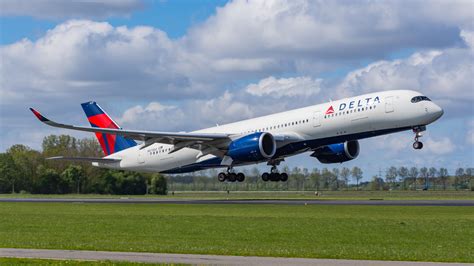
Instead of maintaining a small subfleet of aging aircraft with unique maintenance needs and crew requirements, Delta consolidated around Airbus widebodies that shared greater commonality. That simplification reduced training complexity, spare parts inventories, scheduling complications, and maintenance costs simultaneously.
The pandemic gave Delta the perfect moment to execute the transition decisively.
Had global demand remained strong in 2020, the airline may have phased out the 777 more gradually. But with international travel nearly frozen, Delta could retire the fleet immediately without severely disrupting route networks.
The timing was brutal for aviation enthusiasts but ideal from a corporate strategy perspective.
The Airbus A350 Became Everything Delta Needed
The Airbus A350 effectively solved nearly every issue Delta faced with the Boeing 777.
First, there was efficiency. The A350 was built using advanced composite materials, lighter structures, and next-generation engines that dramatically reduced fuel consumption. Lower fuel burn translated directly into reduced operating costs, improved profitability, and lower emissions.
Second, the aircraft aligned with Delta’s broader environmental goals. Airlines increasingly face pressure from regulators, investors, and travelers to reduce carbon emissions. Operating newer aircraft is one of the fastest ways to achieve measurable sustainability improvements. Replacing older Boeing 777s with A350s allowed Delta to modernize its environmental profile almost instantly.
Third, the A350 enhanced the passenger experience.
Delta invested heavily in premium cabins across its Airbus fleet, particularly through the introduction of Delta One Suites. The modern cabin design, improved humidity levels, larger windows, quieter interior environment, and upgraded in-flight entertainment systems all helped position Delta as a premium global carrier.
Passengers may not analyze fuel burn statistics, but they notice cabin comfort immediately.
The A350 also provided operational flexibility. With seating for more than 300 passengers and exceptional cargo capability, the aircraft could handle many of the same long-haul missions previously assigned to the 777 while generating stronger economic performance.
Delta executives understood that airlines survive on margins, not nostalgia.
The Boeing 777 remained beloved, but affection alone could not justify higher costs when newer aircraft delivered equal or superior results across multiple categories.
Why Delta Preferred Airbus Over Keeping The Boeing 777
Delta’s transition away from the Boeing 777 also reflected a broader strategic relationship with Airbus.
Over the last two decades, Delta steadily expanded its Airbus fleet across narrowbody and widebody categories. Aircraft like the A220, A321, A330, and A350 became central to the airline’s modernization efforts. Standardizing around Airbus products simplified pilot training pipelines, maintenance procedures, cockpit familiarity, and operational planning.
Maintaining only 18 Boeing 777s inside a growing Airbus-dominated widebody fleet made increasingly little sense.
Every aircraft type creates logistical complexity. Airlines must stock specialized parts, train mechanics, certify pilots, and maintain dedicated procedures. Small subfleets are particularly expensive because those costs are spread across relatively few aircraft.
The Boeing 777 became exactly that for Delta: an isolated fleet segment that no longer aligned with the airline’s future direction.
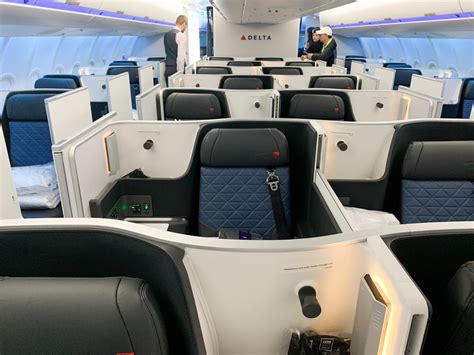
The Airbus A330neo added even more value to Delta’s strategy. The aircraft offered strong range performance while consuming less fuel than older-generation widebodies. For many international routes, the A330neo delivered nearly ideal capacity without the excessive operational expense associated with larger aircraft.
This mattered enormously after the pandemic.
Global travel demand recovered unevenly, and airlines needed flexibility more than sheer size. Operating slightly smaller, more efficient aircraft often produced better financial outcomes than flying larger jets with partially empty cabins.
The A330neo fit that environment perfectly.
Meanwhile, the A350 covered Delta’s longest and most demanding routes. Together, the two Airbus families effectively replaced the Boeing 777 while improving profitability across the network.
From a fleet-planning perspective, the transition was remarkably clean.
The Emotional Goodbye Still Resonated Across Aviation
Even though Delta’s decision made financial sense, the emotional reaction across the aviation community was impossible to ignore.
The Boeing 777 holds a special place in commercial aviation history. Since entering service in the 1990s, the aircraft earned a reputation for reliability, performance, and passenger comfort. Many pilots considered it one of Boeing’s finest achievements. Travelers associated it with long-haul adventures and flagship international routes.
Delta’s final Boeing 777 flight in October 2020 therefore carried symbolic weight far beyond a normal retirement.
The aircraft operated from New York JFK to Los Angeles before receiving a ceremonial water cannon salute at LAX. Delta assigned senior pilots and crew members to the farewell journey, reflecting the respect the airline still held for the aircraft despite its retirement.
Online aviation communities reacted with a mix of sadness and understanding.
Some fans argued Delta should have retired older Boeing 767s or aging Boeing 757s instead. Others believed the Boeing 777 still possessed unmatched long-haul character and capability. Yet many industry observers acknowledged the financial logic behind the move.
That balance between emotion and economics defines modern aviation.
Airlines frequently retire beloved aircraft not because they dislike them, but because newer technology changes the financial equation. The Boeing 747 disappeared from many fleets for similar reasons despite its iconic status. Sentiment rarely overcomes operational reality for long.
Delta’s farewell to the Boeing 777 demonstrated that perfectly.
The airline honored the aircraft’s legacy while simultaneously embracing a future built around efficiency and modernization.
Delta’s Long-Haul Future Looks Stronger Without The 777
In hindsight, Delta’s decision appears increasingly strategic rather than controversial.
The airline emerged from the pandemic with a younger, more efficient, and more streamlined long-haul fleet. Operating costs improved. Fuel efficiency increased. Passenger experience advanced significantly. Fleet complexity declined.
Most importantly, Delta positioned itself for long-term stability in an industry that remains intensely competitive and economically fragile.
The Airbus A350 and A330neo families now form the backbone of Delta’s international strategy. Those aircraft provide the range, efficiency, comfort, and flexibility required for modern global travel while avoiding many of the cost disadvantages associated with older-generation widebodies.
The Boeing 777 undoubtedly helped Delta build its global reputation. It enabled routes that transformed the airline into a major international player and served passengers reliably for more than two decades.
But aviation evolves quickly.
Aircraft that once represented cutting-edge innovation eventually become financially difficult to justify against newer alternatives. Delta recognized that reality earlier and more decisively than many competitors.
The airline did not retire the Boeing 777 out of regret or dissatisfaction. It retired the aircraft because the next generation of long-haul travel demanded something leaner, smarter, and more efficient.
For Delta, walking away from the Triple Seven was not a painful sacrifice.
It was a calculated step toward the future.