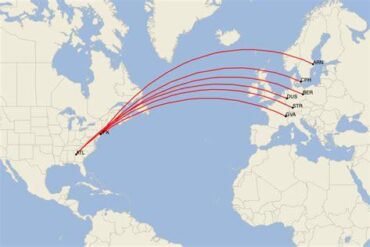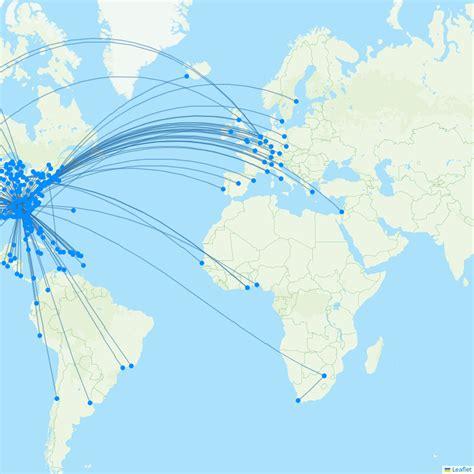
Delta Air Lines is recalibrating its transatlantic operations for the upcoming winter season, marking significant reductions across 11 international routes. The changes—affecting flights primarily from New York JFK and Atlanta Hartsfield-Jackson—represent a strategic reshuffle as the carrier aligns capacity with shifting demand patterns and economic signals. This move, while not wholly unexpected in the post-pandemic recovery era, highlights the volatility airlines still navigate despite positive year-over-year revenue growth.
Delta’s decision, driven by analytics and market forecasting, points to a tightening grip on winter flying, particularly to European destinations. Although transatlantic revenue rose 5% year-over-year according to Delta’s Q1 2025 earnings call, these cuts indicate a more cautious posture as the carrier reassesses long-haul profitability in slower travel months.
Delta’s Strategy Behind Transatlantic Cuts
Winter typically brings reduced travel demand, especially for international leisure routes. For Delta, managing yield and maximizing profitability during these months requires nuanced adjustments to flight schedules. This year, that translates into trimming frequencies rather than suspending routes entirely. The frequency reductions are based on real-time demand signals, aircraft availability, and geopolitical or economic undercurrents that could impact consumer behavior.
The most affected departure points are Atlanta and New York JFK, two of Delta’s most critical international gateways. Atlanta—renowned for being the world’s busiest airport—acts as a major connector for passengers from across the southeastern United States, while JFK serves as Delta’s primary transatlantic launchpad.

Reductions by Route and Frequency
The scope of these reductions varies, with some routes seeing minor tweaks and others suffering deeper cuts. Based on data from Cirium, the adjustments are as follows:
- Atlanta to Paris: reduced by 4 flights per week, one of the heaviest cuts.
- New York JFK to Milan: cut by 3 weekly flights.
- Atlanta to Frankfurt and New York JFK to Venice: each down 1–3 flights weekly.
- Other affected routes include Atlanta to Rome, Barcelona, Madrid, Lagos, and Munich as well as Boston to Dublin and Detroit to Frankfurt.
While most cuts begin in November, some extend further into the winter season, and possibly beyond. The sustained reductions to key business markets like Paris, Milan, and Frankfurt may hint at a deeper reevaluation of demand patterns, especially among premium travelers.
Hubs Most Affected: JFK and ATL
Delta’s home turf in Atlanta and its strategic outpost at New York JFK are bearing the brunt of the adjustments. These reductions don’t suggest a loss of importance for either hub but rather a recalibration aimed at reducing underperforming frequencies and optimizing aircraft usage.
JFK: The Transatlantic Gateway
New York JFK is a linchpin in Delta’s European operations, offering nonstop service to major cities across Western and Southern Europe. Yet the cuts to Milan and Venice reflect changing leisure demand as well as strong competition from both U.S. and European carriers. With Milan being a mix of business and high-end leisure traffic, and Venice skewing heavily towards seasonal tourism, the reductions align with anticipated low-season softening.
Atlanta: The Global Connector
Atlanta’s expansive connectivity has long made it a favorite for domestic and international passengers. Still, its long-haul flights to Barcelona, Paris, Rome, Frankfurt, Lagos, Madrid, and Munich have each seen pullbacks. Paris, a SkyTeam partner hub for Delta, was the hardest hit, possibly due to route overlap with Air France or an overestimated winter demand curve.

European Destinations Most Impacted
From the European side, Paris and Frankfurt emerge as the cities with the steepest reductions. Paris’s significance as a global business and leisure destination makes its four-flight reduction from Atlanta particularly notable. Similarly, Frankfurt, one of Europe’s busiest business travel hubs, faces cuts from both Detroit and Atlanta.
Italy and Spain also see hits, albeit lighter. Delta’s reduced service to Milan, Venice, Rome, Madrid, and Barcelona represents a rollback of its southern Europe footprint—routes that typically rely heavily on seasonal leisure travelers. These moves underscore how the airline is trimming where volatility is highest.
Fleet Utilization and Aircraft Types
Delta’s long-haul fleet strategy plays a major role in these changes. The carrier uses a mix of Airbus A330 variants, A350-900s, and Boeing 767-400ERs on transatlantic routes. Many of the routes being scaled back are served by the aging but versatile 767-400ER, particularly on:
- JFK–Venice
- JFK–Milan
- ATL–Madrid
- ATL–Barcelona
- ATL–Munich
The newer and more fuel-efficient A330-900neo and A350-900 tend to be deployed on routes with stronger year-round demand or strategic alliance importance. The Atlanta–Lagos route, for example, is serviced by the A350, reflecting its importance despite the reduction.

Revenue vs. Rationalization: The Business Case
While a 5% increase in transatlantic revenue suggests solid demand, it doesn’t necessarily equate to profitability on every route. Airline yields can be uneven, and some markets, especially those heavily discounted during the winter season, may not generate enough revenue to justify daily service. Delta’s move signals a shift toward margin-driven route planning rather than a pure volume approach.
These decisions are likely influenced by:
- Jet fuel prices that remain elevated, squeezing profit margins.
- Softening corporate travel demand amid economic caution in the U.S. and Europe.
- Increased competition from European carriers ramping up U.S. service in the same markets.
- Aircraft delivery delays and maintenance cycles, requiring temporary reassignments.
Seasonal Realignment or Long-Term Shift?
It remains to be seen whether these reductions are a seasonal recalibration or a long-term structural change to Delta’s international network. Historically, airlines adjust schedules to reflect demand dips in Q1 and Q4. However, the repeated reductions to major hubs like Paris and Frankfurt could suggest longer-term reconsideration.
Delta’s current posture appears conservative but calculated. By trimming weaker-performing flights, it gains operational flexibility, potential cost savings, and the ability to redeploy aircraft to more profitable markets or higher-demand domestic routes.
What Passengers Should Expect
Travelers flying on affected routes this winter might experience:
- Fewer nonstop options, potentially leading to more layovers or longer travel times.
- Increased competition for award redemptions or lower-fare seats, especially around holidays.
- Greater reliance on codeshare connections, particularly with SkyTeam partners like Air France, KLM, and Alitalia (ITA Airways).
Delta’s messaging suggests that these changes are based on analytics rather than panic. The airline continues to express optimism in transatlantic markets overall, and passengers can expect a return to fuller schedules as spring and summer demand picks up.

Final Thoughts: A Smart Winter Reset
Delta’s winter pullback across 11 key transatlantic routes is not a retreat, but a data-driven realignment. By fine-tuning frequencies without fully cutting cities from its map, the airline preserves its network strength while guarding against overcapacity. It’s a prudent move that balances opportunity with caution—ensuring Delta stays profitable, flexible, and competitive even in the slowest flying months of the year.
As consumer habits evolve and global uncertainty persists, expect more airlines to follow suit with similar micro-adjustments. For Delta, these moves reinforce its commitment to sustainable growth, route rationalization, and operational agility.