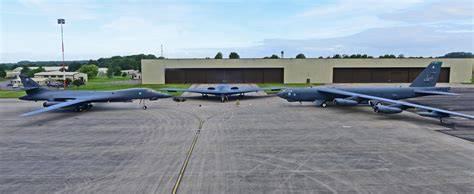
The sight of a B-1B Lancer, B-2 Spirit, and B-52H Stratofortress launching together is one of the most powerful visual statements the United States Air Force can make. Three very different bombers accelerating from the same runway suggest that American long-range strike forces can appear almost anywhere, combine their strengths, and deliver enormous combat power on demand. Yet the rarity of such formations reveals an important reality hidden behind the dramatic imagery: putting all three bombers at one base is extraordinarily complicated.
The USAF has the aircraft, crews, weapons, tankers, and global infrastructure to conduct integrated bomber operations. What it does not have is a reason to routinely concentrate three fundamentally different bomber fleets at the same location. In an actual crisis, dispersal can be more useful than concentration, while separate deployments allow commanders to exploit the unique strengths of each aircraft without creating an enormous logistical burden.
The challenge becomes especially obvious when we look beyond the aircraft themselves. The B-1B, B-2, and B-52 may all belong to America’s long-range bomber force, but their maintenance organizations, spare parts, weapons integration, security requirements, training, mission systems, and deployment procedures are remarkably different. In practical terms, operating all three from one installation can resemble running three specialized air forces from the same airfield.
One of the clearest demonstrations of this complexity occurred at Andersen Air Force Base in Guam on August 17, 2016. B-52Hs from Minot Air Force Base, B-1Bs from Ellsworth Air Force Base, and B-2s from Whiteman Air Force Base came together for an integrated bomber operation in the Indo-Pacific. The aircraft launched in sequence, conducted coordinated activity, and then dispersed toward separate operational areas.
The mission was an impressive demonstration of American reach, but it was also an unusually demanding logistical undertaking. Months of preparation, specialized personnel, maintenance support, weapons expertise, intelligence coordination, security arrangements, and mission planning were required to make the operation possible. The event demonstrated that the USAF could integrate its three bomber families—but it also showed why doing so routinely makes little operational sense.
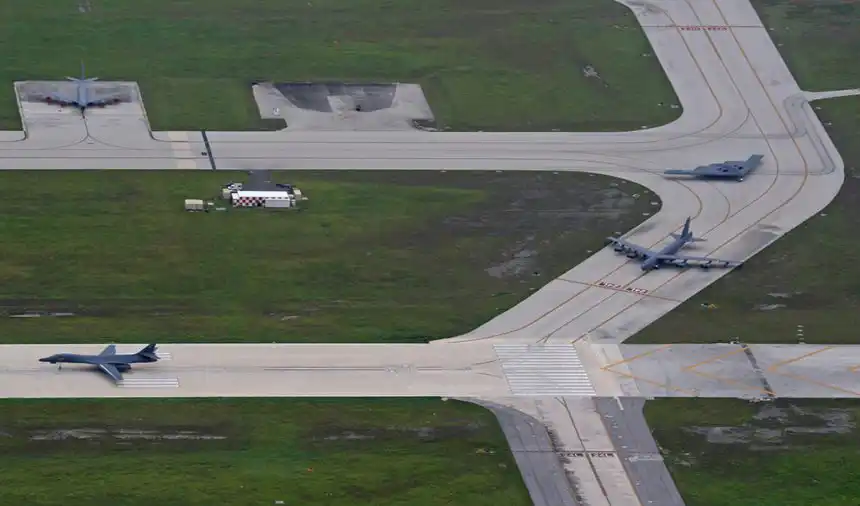
The 2016 Guam Tri-Bomber Mission Was Exceptionally Rare
The 2016 Guam operation stands out because it brought together aircraft from three separate bomber communities that normally operate from different home stations. The B-52H came from Minot Air Force Base, North Dakota, the B-1B came from Ellsworth Air Force Base, South Dakota, and the B-2 came from Whiteman Air Force Base, Missouri. Those aircraft had to travel thousands of miles before they could even participate in the same regional operation.
The deployment occurred during the era of the Continuous Bomber Presence mission in Guam. For years, Andersen served as a forward operating location for rotating American bombers, allowing the USAF to maintain a persistent long-range strike presence in the western Pacific. The mission provided an important strategic signal to allies and potential adversaries while giving bomber crews experience operating from a distant location.
The three-bomber operation therefore had significance beyond its appearance. It demonstrated that America’s bomber force could combine three distinct capabilities in a single theater. The B-1B provided enormous conventional payload capacity and speed. The B-2 represented penetrating stealth capability. The B-52 offered extraordinary endurance and long-range standoff weapons.
That combination was strategically useful because it forced an adversary to consider several different attack profiles at once. A force designed to counter a conventional high-payload bomber might face a stealth aircraft approaching from another direction. A defensive network prepared for penetrating aircraft would still have to account for long-range cruise missiles launched by B-52s from outside the most heavily defended areas.
The important point, however, is that the USAF did not need to keep these aircraft together to obtain those effects. In many situations, dispersion actually increases their value.
The B-1B, B-2, and B-52 Have Very Different Jobs
Although the three aircraft are frequently described collectively as strategic bombers, their operational identities are quite different.
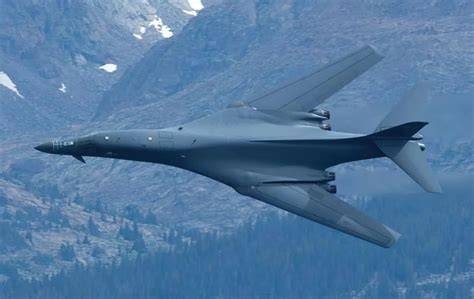
The B-1B Lancer was designed around speed, payload, and long-range conventional strike. Its variable-sweep wings allow it to operate efficiently across different portions of the flight envelope, while four afterburning engines give the aircraft a maximum speed of approximately Mach 1.2. The bomber can carry as much as 75,000 pounds of weapons, making it the USAF’s largest conventional bomber by payload.
That combination makes the B-1B particularly valuable when commanders need substantial conventional firepower delivered rapidly across long distances. It has been extensively employed in conventional combat operations and can carry a broad collection of precision-guided weapons.
The B-2 Spirit solves a fundamentally different problem. Instead of relying primarily on speed or payload, the B-2 is built around low observability. Its flying-wing configuration, radar-absorbing materials, carefully controlled signatures, and sophisticated mission systems allow it to penetrate highly defended airspace more effectively than conventional bombers.
That capability comes with a price. Maintaining a stealth bomber is substantially more complicated than maintaining a conventional aircraft. The B-2’s low-observable surfaces require specialized inspection and repair, and its operational support infrastructure is more demanding. Security surrounding sensitive systems and procedures adds another layer of complexity.
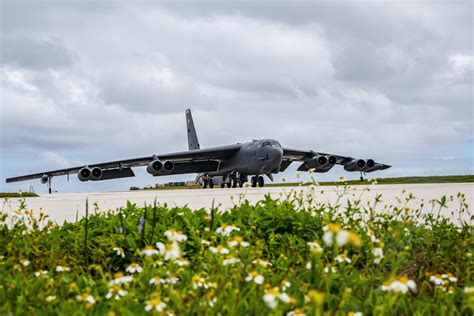
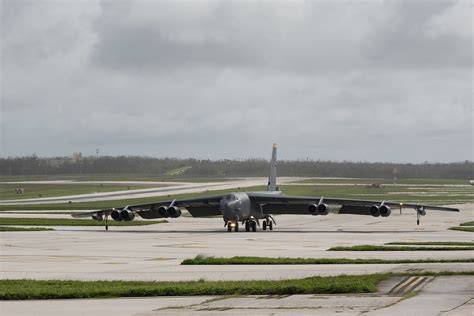
The B-52H Stratofortress represents an entirely different philosophy. First entering service in the 1950s, the aircraft has survived multiple generations of military technology because its basic design remains exceptionally useful. The B-52 combines enormous endurance with a substantial weapons capacity and the ability to launch long-range standoff weapons.
Its age is simultaneously one of its greatest advantages and one of its most unusual logistical challenges. The USAF must support an aircraft whose design dates from the early Cold War while continuing to integrate modern communications, sensors, weapons, and defensive systems.
Why One Base Cannot Easily Support Three Bomber Fleets
The biggest misconception about a tri-bomber deployment is that the aircraft can simply arrive at a large military airfield, park next to one another, and begin flying missions.
A bomber deployment does not work that way.
Every aircraft requires a supporting ecosystem. Maintenance personnel need specialized tools. Weapons crews require aircraft-specific qualifications. Spare parts must be available. Ground equipment has to be transported or already positioned at the destination. Secure communications and mission-planning facilities must support the crews. Fuel systems must handle the expected sortie rate. Security forces must protect the aircraft and sensitive equipment.
When one bomber type becomes three, those requirements multiply.
The B-1B requires personnel familiar with its variable-sweep wing system, propulsion, avionics, flight-control architecture, and weapons systems. The B-2 requires specialists trained in low-observable maintenance and a controlled environment for protecting its unique surfaces and systems. The B-52 requires its own maintenance expertise and an extensive inventory of parts for an aircraft that has been continuously modernized throughout an exceptionally long service life.
These specialists cannot simply substitute for one another.
A B-52 technician does not become qualified to service a B-2 merely because both aircraft are stationed on the same ramp. Likewise, the equipment needed to maintain a B-1B cannot necessarily be used to support a B-52. The result is a dramatic increase in personnel, equipment, transportation requirements, spare-parts inventories, and planning complexity.
This is why the phrase “three bombers at one base” understates the real requirement. The USAF is effectively transporting multiple miniature support ecosystems to the same location.
The B-2 Creates An Especially Difficult Deployment Problem
Among the three aircraft, the B-2 presents some of the most demanding deployment requirements because its combat effectiveness depends heavily on maintaining its low-observable characteristics.
A conventional bomber can tolerate a certain amount of exposure to ordinary operating conditions without affecting its fundamental aerodynamic or signature characteristics. A stealth aircraft cannot be treated quite so casually. Its specialized surfaces and materials require careful inspection, maintenance, and environmental control.
This means that a B-2 deployment can require specialized shelters, technicians, equipment, and procedures that are unnecessary for the B-52 or B-1B.
The challenge is not simply maintenance after a flight. A deployed B-2 force must be able to sustain the aircraft throughout the operation while preserving the conditions necessary for its mission. That requires additional infrastructure and highly trained personnel.
Consequently, an overseas base that can comfortably support B-52 or B-1B operations may not automatically be suitable for a sustained B-2 deployment.
This is one reason Andersen Air Force Base has been so important. Guam has accumulated decades of experience supporting American bomber operations, and its infrastructure and personnel have evolved around the demands of long-range aviation.
Andersen Air Force Base Is Unusually Well Suited
Andersen’s geographic location is one reason it repeatedly appears in discussions about American bomber deployments in the Indo-Pacific. Guam sits far enough west to provide a valuable forward position for operations across East Asia while remaining an important American military hub in the Pacific.
Its usefulness, however, extends well beyond geography.
A bomber base needs a runway capable of handling heavy aircraft, large parking areas, fuel capacity, weapons infrastructure, maintenance facilities, secure communications, transportation links, and sufficient personnel to support sustained operations. When several bomber types arrive simultaneously, the demands increase dramatically.
Andersen has extensive experience supporting rotating bomber detachments. That institutional knowledge matters. Personnel who routinely handle bomber deployments understand the arrival procedures, maintenance requirements, weapons operations, security considerations, and mission-planning demands involved in long-range strike missions.
That experience cannot simply be recreated by sending additional equipment to another airfield.
Why Dispersing Bombers Can Be More Effective
There is another reason the USAF rarely launches all three aircraft from one base: concentration creates vulnerability.
Putting valuable bombers, support aircraft, fuel, weapons, maintenance equipment, and personnel together creates an attractive target. Even if the airfield itself has substantial defenses, a concentrated bomber force presents an adversary with a much clearer picture of where American strike assets are located.
Dispersal complicates that problem.
If B-1Bs operate from one location, B-52s from another, and B-2s from another, an adversary has to monitor several airfields and account for different potential launch points. The USAF can also move bomber task forces between locations, making it harder to predict where aircraft will appear.
This concept has become increasingly important in the modern Bomber Task Force model. Instead of maintaining a predictable permanent bomber presence at one overseas location, the USAF can deploy aircraft for shorter periods to a wider range of bases.
The objective is not simply to place bombers closer to a potential conflict. It is to create uncertainty.
A potential adversary should have difficulty determining which bomber force will deploy, from where it will operate, how long it will remain, and what weapons it may employ. Dispersed operations can therefore produce strategic effects without requiring all three bomber fleets to occupy the same runway.
Bomber Task Forces Favor Flexibility Over Spectacle
The transition from Continuous Bomber Presence to the modern Bomber Task Force concept reflects this broader philosophy.
A permanent deployment offers predictability. It demonstrates presence, but it also gives an adversary a relatively stable picture of American force locations.
Bomber Task Forces are more dynamic. Aircraft can rotate through different bases and regions, allowing crews to gain experience operating from unfamiliar locations while complicating an opponent’s planning.
That makes routine tri-bomber operations unnecessary.
The USAF can demonstrate the ability to integrate B-1Bs, B-2s, and B-52s when the strategic circumstances justify it, while normally keeping their deployments separate. This approach preserves the option for integration without imposing the enormous cost of constantly maintaining a three-bomber support structure at one forward base.
In other words, the rarity of tri-bomber launches is not evidence of weakness. It is largely a consequence of how the Air Force chooses to use its resources.
Three Bombers Create Three Different Logistical Chains
The logistical problem becomes even clearer when we consider what happens after the aircraft land.
Fuel consumption must be planned around different aircraft characteristics. Maintenance crews need different tools and replacement parts. Weapons teams must support different loading procedures and aircraft interfaces. Mission planners need to understand different capabilities and limitations.
Even ground operations become more complicated.
A base must provide parking positions, towing equipment, electrical support, maintenance areas, spare-parts storage, security arrangements, and personnel access procedures suitable for each aircraft. Sensitive systems associated with the B-2 introduce additional security considerations that are not identical to those of the B-52 or B-1B.
Transportation also becomes significant. Specialized equipment does not magically appear at a forward operating base. It must arrive by air or sea, be assembled, maintained, and eventually moved again.
This is why a short bomber deployment can involve a surprisingly large number of personnel behind the scenes. The aircraft may be the most visible component, but the real operation depends on a much larger network.
The B-52’s Age Makes Its Logistics Unique
The B-52 deserves particular attention because its continued service illustrates the complexity of sustaining a very old aircraft in a modern military environment.
The B-52H first entered service during the Eisenhower era, yet the aircraft continues to receive major upgrades. Modern communications, navigation systems, sensors, electronic warfare capabilities, and weapons allow the Stratofortress to remain relevant despite its age.
However, modernization does not turn an old airframe into a new one.
The USAF still has to maintain the physical aircraft, its engines, structural components, hydraulic systems, electrical systems, and other equipment. Supporting such a fleet requires a specialized supply chain and personnel who understand an aircraft whose design philosophy originated decades before modern digital aviation.
The B-52’s endurance and payload make that effort worthwhile. But when its requirements are combined with those of the B-1B and B-2, the logistics become substantially more complicated.
The Three-Bomber Force Is Stronger Because It Is Different
It might seem logical to conclude that the USAF should simply replace its three bomber fleets with one aircraft type. In practice, the advantages of maintaining different platforms are significant.
The B-1B offers a huge conventional payload and high speed. The B-2 provides stealth penetration against sophisticated air defenses. The B-52 offers extraordinary endurance and long-range standoff capability.
These aircraft can therefore approach the same strategic problem from fundamentally different directions.
A heavily defended target might favor the B-2. A large conventional strike package could benefit from the B-1B’s enormous payload capacity. A mission requiring long-range standoff weapons could make the B-52 particularly valuable.
Commanders do not necessarily need all three aircraft to attack from the same base. They need the ability to combine their effects.
That distinction explains much of the USAF’s operating philosophy.
The aircraft can be separated geographically while remaining integrated operationally. A bomber force distributed across several locations may actually provide greater survivability and flexibility than one concentrated formation.
Why The B-21 Raider Could Change The Equation
The arrival of the Northrop Grumman B-21 Raider is expected to reshape the American bomber fleet over time.
The B-21 is being developed as a penetrating stealth bomber capable of performing missions currently associated with the B-2 while incorporating newer technologies and a stronger emphasis on maintainability and sustainable operations.
One of its most important contributions may be its ability to operate across a broader network of locations.
The B-2 demonstrated what stealth could accomplish, but its maintenance requirements and limited fleet size make it difficult to deploy in large numbers. The B-21 is intended to provide a more scalable penetrating strike capability.
That does not mean the B-1B or B-52 will immediately disappear. The B-52 is expected to remain an important long-range standoff platform, while the B-1B continues to provide conventional strike capability during the transition.
Instead, the USAF is moving toward a bomber force in which the B-21 becomes the centerpiece of the penetrating mission while the remaining aircraft provide complementary capabilities.
The Future May Make Tri-Bomber Launches Even Less Common
Ironically, the more sophisticated the bomber force becomes, the less important it may be to place every aircraft type at the same base.
Future operations are likely to emphasize distributed basing, survivability, rapid deployment, and flexible command arrangements. Instead of concentrating combat aircraft at a small number of massive installations, the USAF increasingly wants the ability to operate from a wider network of locations.
That philosophy is particularly important in the Indo-Pacific, where enormous distances create both opportunities and vulnerabilities. A bomber does not necessarily need to be permanently based close to a potential conflict. Long-range aircraft can deploy temporarily, operate with tanker support, and return to different locations.
The result is a force that can be geographically dispersed while remaining operationally connected.
A spectacular three-bomber formation still has value. It can reassure allies, demonstrate integration, and communicate American military capability. But it is a strategic demonstration rather than the normal template for combat employment.
The Real Reason Three Bombers Rarely Share One Runway
The USAF almost never launches the B-1B, B-2, and B-52 together from one base because doing so solves a problem that rarely exists in real operations.
The three bombers do not need to be physically colocated to work together. They have different strengths, different support requirements, and different ideal operating environments. Keeping them separated can reduce logistical complexity while increasing survivability and making American intentions harder to predict.
The 2016 Guam operation proved that the USAF could overcome those obstacles when a powerful demonstration of integrated bomber capability was strategically valuable. But the same mission also revealed why such events require extraordinary preparation.
Behind every dramatic photograph of three American bombers departing together is a much larger story involving maintenance crews, weapons specialists, engineers, security personnel, logisticians, intelligence teams, planners, fuel, spare parts, transportation, and infrastructure.
That is ultimately why tri-bomber operations remain unusual.
The B-1B, B-2, and B-52 are not three versions of the same aircraft. They are three highly specialized tools built for different eras and different operational problems. The USAF’s challenge is not simply getting them airborne. It is deciding where each bomber is most useful, how it can be sustained, and how its unique capabilities can contribute to a larger force without creating unnecessary logistical vulnerability.
The most impressive American bomber operation, therefore, may not be the one in which all three aircraft share a runway. It may be the one in which they operate thousands of miles apart, remain difficult to track, and still combine their effects as part of a single strategic campaign.
That is the deeper lesson behind the rare sight of a B-1B, B-2, and B-52 launching together: American airpower does not need to be concentrated to be integrated. In an increasingly contested world, the ability to disperse, adapt, and coordinate across enormous distances may be considerably more valuable than putting every bomber on the same ramp.