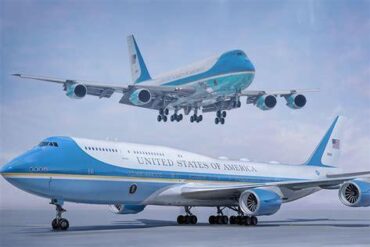
The aircraft known globally as Air Force One represents far more than a presidential transport. Operated by the United States Air Force (USAF), the aircraft currently fulfilling this role is the VC-25A, a heavily modified Boeing 747-200B equipped with some of the most advanced aviation and communications technologies ever installed on a government aircraft. Among its most remarkable capabilities is aerial refueling, a feature that theoretically allows the plane to remain airborne almost indefinitely.
Yet despite this extraordinary capability, Air Force One rarely — if ever — uses mid-air refueling during presidential missions. The system exists for extreme scenarios, but under normal circumstances it remains unused. Understanding why requires examining the aircraft’s strategic design philosophy, the inherent risks of aerial refueling, and the broader military ecosystem designed to protect the President of the United States.
By exploring the engineering, operational doctrine, and strategic considerations surrounding Air Force One, a fascinating paradox emerges: one of its most critical capabilities is also one of its least utilized.
Air Force One: The World’s Most Advanced Boeing 747
The VC-25A, designated as Air Force One whenever the President is on board, is widely considered the most advanced Boeing 747 ever built. Although it shares a basic airframe with the commercial 747-200, nearly every system inside the aircraft has been redesigned for military and executive operations.
Unlike commercial aircraft optimized for passenger comfort and efficiency, the VC-25A is engineered to function as a survivable airborne command center capable of operating during global crises.
Inside the aircraft, several features distinguish it from its civilian counterpart:
- Hardened electronics designed to survive nuclear electromagnetic pulses (EMP)
- Advanced encrypted communications connecting the President to global military command structures
- Defensive countermeasure systems
- Secure conference rooms and briefing centers
- Medical facilities capable of performing emergency surgery
Perhaps most critically, the aircraft was built with the ability to receive fuel in mid-air from USAF tanker aircraft, theoretically giving it unlimited range.
This capability allows Air Force One to remain airborne during catastrophic events where landing might expose the President to danger.
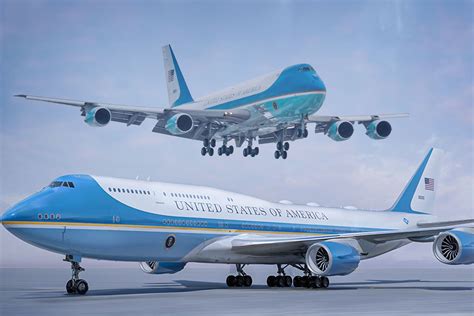
Despite its technological sophistication, however, the aircraft already possesses extraordinary endurance without refueling. With a range of approximately 7,800 nautical miles, the VC-25A can fly nonstop between nearly any two major global destinations.
For routine presidential travel, that range is more than sufficient. The aerial refueling system therefore exists not for convenience—but for worst-case survival scenarios.
The Strategic Philosophy Behind Airborne Refueling
The ability for Air Force One to refuel mid-air was conceived during the Cold War, when military planners faced the possibility of nuclear conflict with the Soviet Union. In such an environment, ground infrastructure—including airbases and command centers—could be destroyed or contaminated.
To preserve continuity of government, the United States designed airborne command platforms capable of surviving and coordinating national defense.
Two aircraft play central roles in this strategy:
- VC-25A Air Force One – the President’s secure airborne office
- E-4B Nightwatch – the National Airborne Operations Center, often called the “Flying Pentagon”
Together, these aircraft ensure that the Commander-in-Chief retains command authority even if ground-based infrastructure is destroyed.
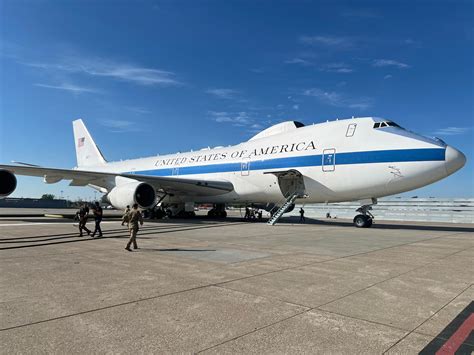
Although both aircraft originate from Boeing 747 airframes, their missions differ significantly.
Air Force One primarily serves as a VIP transport and presidential command hub. It provides communications capability and safety for the President but carries a relatively small operational staff.
The E-4B Nightwatch, by contrast, is designed to run a global war. It carries up to 112 military personnel, including commanders, advisors, and specialized communications operators capable of coordinating nuclear retaliation and national emergency responses.
In a catastrophic conflict scenario, the President might initially depart aboard the VC-25A before transferring to the E-4B, which possesses more extensive command facilities.
For both aircraft, aerial refueling is the key to survival.
With tanker support, these planes could remain airborne for days or even an entire week, limited only by crew fatigue and onboard supplies such as food, lubricants, and spare parts.
Why Mid-Air Refueling Is Rarely Used
Despite its importance for extreme emergencies, Air Force One almost never performs aerial refueling during real presidential flights. The reasons are rooted in safety, cost, and operational practicality.
1. Aerial Refueling Is Inherently Dangerous
Aerial refueling is one of the most challenging maneuvers in aviation.
Two aircraft—often weighing hundreds of tons—must fly just a few feet apart at high speed, maintaining extremely precise alignment while fuel transfers between them.
For a large aircraft like the Boeing 747, the maneuver becomes even more complex due to its massive wingspan and wake turbulence.
Even experienced crews consider aerial refueling a high-risk operation, particularly when involving:
- Strong atmospheric turbulence
- Night operations
- Adverse weather conditions
When the President of the United States is on board, minimizing risk becomes the overriding priority.
Simply put, there is no operational reason to accept additional risk when the aircraft can land safely for fuel.
2. Passenger Comfort and Stability
Refueling maneuvers involve aggressive flight adjustments to maintain alignment with the tanker aircraft.
The receiving aircraft must fly within a narrow envelope behind the tanker while making constant pitch and throttle corrections. This often creates noticeable turbulence and abrupt movement.
Even experienced aircrew sometimes report nausea during refueling operations. For presidential travel, which often includes advisors, journalists, and support staff, such discomfort is undesirable.
More importantly, sudden turbulence could disrupt sensitive onboard communications or security procedures.
3. Ground Refueling Is Much Cheaper
Aerial refueling is extraordinarily expensive compared to refueling on the ground.
Each refueling mission requires:
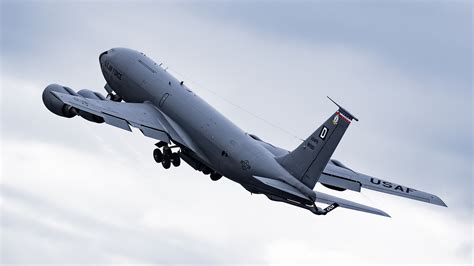
- A tanker aircraft such as a KC-135 Stratotanker or KC-46 Pegasus
- A specialized flight crew
- Additional fuel burned to reach the rendezvous point
- Operational coordination and airspace control
Estimates suggest that delivering a gallon of fuel via tanker aircraft can cost up to 17 times more than ground refueling.
In peacetime presidential travel—where secure military bases are readily available—mid-air refueling offers no financial or operational advantage.
4. Security Procedures for Presidential Fuel
Security surrounding Air Force One extends to even the fuel it carries.
Every gallon of aviation fuel loaded onto the aircraft must be:
- Pre-tested for contaminants
- Guarded by Secret Service personnel
- Handled through controlled logistics chains
Attempting to replicate this level of security during a mid-air transfer introduces additional complexity.
For routine operations, refueling at a secure military base remains the safer and more controlled option.
How Air Force One Refuels in Flight
Although rarely used operationally, the aerial refueling system installed on the VC-25A is a highly sophisticated engineering achievement.
Unlike fighter jets that typically use a probe-and-drogue system, the U.S. Air Force relies on the Flying Boom method for large aircraft.
Air Force One uses a specialized system known as the Universal Aerial Refueling Receptacle Slipway Installation (UARRSI).
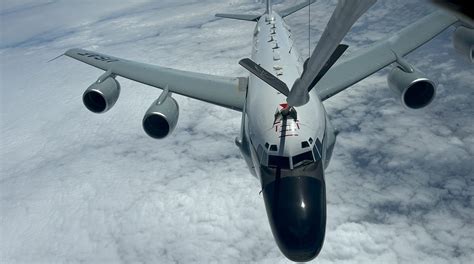
The refueling port sits on the upper fuselage near the nose, just forward of the cockpit. During normal flight, the port is hidden beneath flush-mounted doors that maintain aerodynamic efficiency.
When refueling begins:
- The slipway doors slide open.
- A tanker aircraft positions behind and above Air Force One.
- The tanker’s rigid refueling boom extends toward the receptacle.
- A boom operator guides the nozzle into the slipway funnel.
- Hydraulic locking mechanisms secure the connection.
Once connected, fuel can flow at rates exceeding 6,000 pounds per minute.
The VC-25A’s internal plumbing system distributes fuel to multiple tanks throughout the wings and fuselage. These lines are heavily shielded and reinforced, protecting them from both structural stress and nuclear electromagnetic pulses.
The refueling process itself is a three-way coordination between:
- The receiving aircraft pilot
- The tanker aircraft pilot
- The boom operator
Communication occurs through both radio and a secure intercom link integrated into the refueling boom, allowing communication even under radio silence conditions.
Aerial Refueling and Nuclear Survivability
The ability to refuel mid-air is not merely a convenience—it is a cornerstone of nuclear-era survivability doctrine.
In a nuclear war scenario, several critical challenges emerge:
- Airfields may be destroyed or contaminated
- Communication infrastructure may collapse
- Ground command centers may be targeted
Aircraft like the VC-25A and E-4B Nightwatch allow the U.S. government to remain operational under these extreme circumstances.
With tanker aircraft providing continuous fuel, these command platforms could theoretically remain airborne for more than 150 hours.
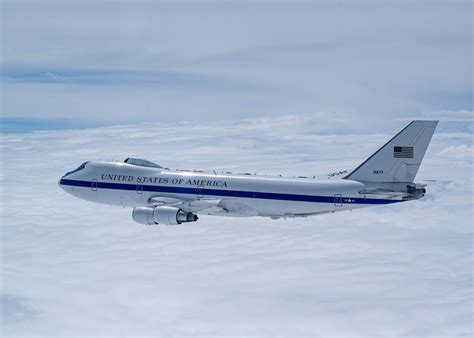
The E-4B Nightwatch possesses additional capabilities that support global command operations.
One of its most distinctive features is a five-mile-long trailing wire antenna used to communicate with submerged nuclear submarines. These submarines form a critical component of the United States’ nuclear deterrent.
To maintain stable communication signals, the aircraft must fly specific high-altitude patterns for extended periods, something only possible with regular aerial refueling.
For this reason, at least one E-4B remains on alert 24 hours a day.
The Military Network Protecting Air Force One
In a crisis scenario, Air Force One would not operate alone.
A vast support network across the U.S. military ensures its safety and operational effectiveness.
Several layers of protection would immediately activate:
Fighter Escort
Aircraft such as the F-22 Raptor or F-15 Eagle would establish a defensive perimeter around the presidential aircraft.
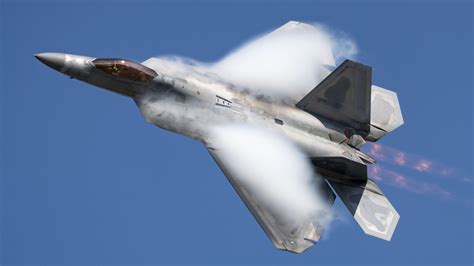
These fighters create a sanitized airspace bubble, intercepting potential threats long before they approach the command aircraft.
Radar and Airspace Monitoring
The North American Aerospace Defense Command (NORAD) continuously monitors North American airspace. During crises, radar networks track airborne threats and coordinate defensive responses.
Tanker Aircraft Networks
Multiple aerial refueling tankers would launch from dispersed bases across the country to ensure continuous fuel availability.
These aircraft might include:
- KC-135 Stratotanker
- KC-46 Pegasus
Their mission would be to maintain scheduled rendezvous points with command aircraft.
Decoys and Electronic Warfare
Other aircraft may replicate the flight patterns or electronic signatures of Air Force One to confuse enemy tracking systems.
This layered defense system ensures that the presidential command structure remains operational even under extreme threat.
Why the Next Air Force One Will Not Have Aerial Refueling
Interestingly, the upcoming VC-25B, based on the Boeing 747-8, will not include aerial refueling capability.
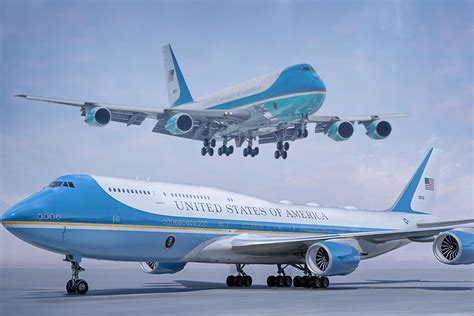
This controversial decision emerged during the restructuring of the Air Force One replacement program.
Adding a refueling port to the aircraft’s nose requires:
- Structural reinforcement
- Extensive plumbing systems
- Weight balance modifications
- Complex testing and certification
Removing the feature significantly reduced development costs and engineering complexity.
However, some military leaders—including former Joint Chiefs of Staff Chairman Joseph Dunford—have warned that eliminating aerial refueling reduces strategic flexibility during extreme crises.
Current contingency plans assume that in a nuclear emergency, the President would transition to the E-4B Nightwatch, which still retains full aerial refueling capability.
A Capability Reserved for the Worst Day Imaginable
The aerial refueling system aboard Air Force One represents a fascinating aspect of Cold War military planning.
It was never intended for convenience or routine travel. Instead, it exists for the most extreme scenario imaginable — a global crisis in which the President must remain airborne while directing national defense.
Under ordinary circumstances, the aircraft’s massive range, combined with secure military airbases around the world, makes aerial refueling unnecessary.
But the capability remains a powerful reminder of the aircraft’s ultimate purpose: ensuring the continuity of the United States government under any circumstances.
In aviation terms, Air Force One is not simply a transport aircraft. It is a flying command center, a symbol of national resilience, and a critical component of nuclear-era survival strategy.
And while the refueling port near its cockpit may rarely open, its presence ensures that—should the unimaginable occur—the President of the United States can remain safely in the air while guiding the nation through its most dangerous hour.
Frequently Asked Questions
Can Air Force One refuel in mid-air?
Yes. The VC-25A Air Force One is equipped with a flying boom aerial refueling system, allowing it to receive fuel from tanker aircraft like the KC-135 or KC-46.
Has Air Force One ever refueled with the President onboard?
There are no confirmed cases of a VC-25A performing aerial refueling with the President aboard. The only known instance involving a President occurred when Jimmy Carter flew aboard an E-4B Nightwatch during a refueling demonstration in 1980.
Why doesn’t Air Force One use aerial refueling regularly?
Mid-air refueling introduces additional risk, cost, and complexity. Since the aircraft already has intercontinental range and can land at secure bases, aerial refueling is unnecessary for normal operations.
Will the new Air Force One have aerial refueling capability?
No. The upcoming VC-25B, based on the Boeing 747-8, will not include aerial refueling capability, a decision made to reduce program cost and complexity.
Which aircraft acts as the “doomsday plane”?
The E-4B Nightwatch serves as the United States’ National Airborne Operations Center, capable of coordinating military operations and nuclear command during global emergencies.