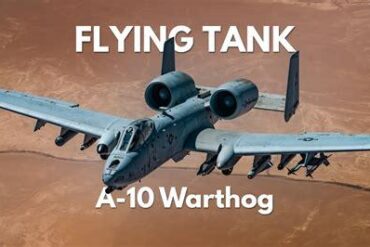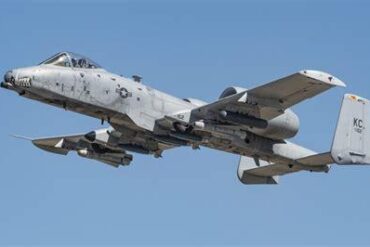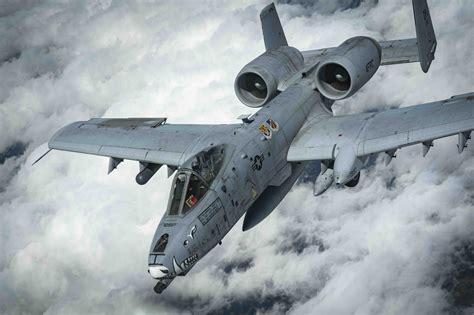
The decision by the United States Air Force to slash the A-10 Thunderbolt II fleet while simultaneously extending part of its service life reveals a deeper truth about modern warfare: even in the age of stealth fighters, artificial intelligence, and network-centric combat, there are still missions no aircraft performs quite like the A-10 Warthog. For years, the iconic close air support platform appeared destined for retirement as the Pentagon shifted toward fifth-generation air dominance with the F-35 Lightning II. Yet the realities of recent combat operations, especially during the 2026 Iran crisis and Operation Epic Fury, have forced military planners to reconsider whether America can truly afford to lose the Warthog entirely.
The Air Force’s revised plan dramatically scales back the fleet but stops short of eliminating it. Instead of fully retiring the aircraft by the late 2020s, the USAF now intends to keep approximately 54 A-10s operational through 2030. On paper, this appears to be a compromise between modernization and practicality. In reality, it reflects growing recognition that the battlefield still rewards ruggedness, affordability, persistence, and sheer survivability in ways advanced stealth aircraft cannot always replicate.
The A-10 has always occupied a strange place in American military aviation. It was never elegant. It was never fast. It was never designed to dominate enemy fighters or penetrate sophisticated air defenses. Instead, the aircraft was engineered around a brutally simple concept: protect troops on the ground and destroy armored targets at low altitude while surviving horrific damage. That mission profile made the aircraft beloved among soldiers and Marines, even as many Air Force leaders viewed it as an aging relic consuming resources better spent elsewhere.
For decades, the Warthog survived repeated retirement attempts because no replacement consistently matched its performance in the close air support mission. The aircraft’s enormous GAU-8/A Avenger cannon became legendary during the Gulf War, where Iraqi armored formations were devastated by low-flying A-10s. Its titanium-armored cockpit, redundant systems, and ability to continue flying after absorbing catastrophic battle damage transformed the aircraft into one of the most respected combat platforms ever built.
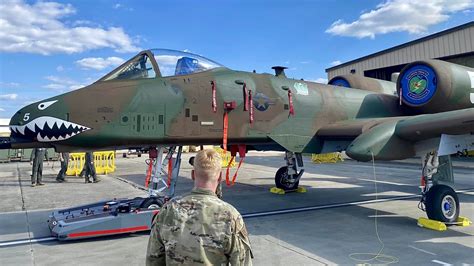
The irony is that the aircraft’s newest role may ultimately be what keeps it alive a little longer. The modern battlefield is increasingly dominated not only by advanced missiles and stealth aircraft but also by cheap unmanned drones. Iran-backed militias and regional proxy forces have flooded conflict zones with low-cost one-way attack drones capable of threatening bases, ships, convoys, and critical infrastructure. Defeating these threats has exposed a dangerous imbalance in military economics.
Using million-dollar missiles to destroy drones costing only a few thousand dollars creates a devastating cost-exchange problem. During Operation Epic Fury, the United States and its allies reportedly burned through enormous quantities of advanced interceptors and precision-guided weapons in just weeks. Patriot interceptors, THAAD missiles, AIM-120 AMRAAMs, and other high-end munitions were consumed at alarming rates. Replacement timelines for some of these systems stretch years due to limited production capacity and strained defense supply chains.
That crisis suddenly made the A-10 relevant again.
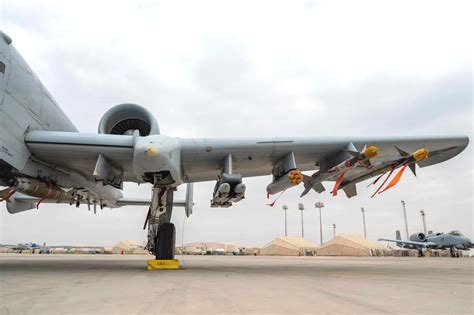
Unlike stealth fighters optimized for high-end warfare, the Warthog can loiter for hours over contested regions while carrying large quantities of inexpensive weapons. The integration of APKWS II laser-guided rockets transformed the aircraft into an unexpectedly efficient anti-drone platform. Originally designed as a low-cost precision strike upgrade for Hydra 70 rockets, APKWS kits convert unguided rockets into accurate guided munitions at a fraction of the cost of traditional air-to-air missiles.
This changed the economics of air defense almost overnight. Instead of firing a $1 million AIM-120 missile at a relatively primitive drone, an A-10 can launch an APKWS-guided rocket costing roughly between $25,000 and $40,000. The savings become enormous when drone swarms appear in large numbers.
Equally important is payload density. Traditional air-to-air missiles consume an entire hardpoint for a single weapon. APKWS-equipped rocket pods can carry seven guided rockets in roughly the same space. This effectively turns the A-10 into a flying anti-drone magazine capable of engaging numerous low-speed aerial threats without exhausting expensive strategic missile inventories.
The A-10’s Unexpected Success During Operation Epic Fury
Operation Epic Fury fundamentally reshaped how military planners viewed the Warthog. The aircraft reportedly conducted a broad spectrum of missions across the Middle East, including drone interception, maritime strike operations, combat search and rescue support, and protection of American facilities in Iraq and the Gulf region.
Its success highlighted something advanced stealth platforms often struggle with: operational efficiency in messy, permissive, and chaotic environments.
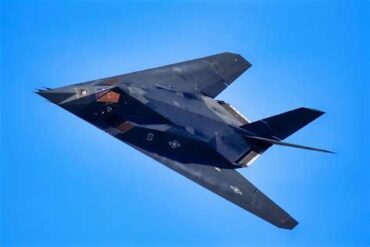
The F-35 is unquestionably one of the most technologically sophisticated combat aircraft ever built. Its sensors, networking capabilities, stealth profile, and electronic warfare systems represent the future of air combat. However, those advantages come with substantial costs and vulnerabilities. Flying stealth fighters for routine drone interception missions places unnecessary wear on highly specialized aircraft while consuming costly flight hours and maintenance resources.
The Warthog, by contrast, thrives in austere conditions. It can operate from rough forward bases, absorb battle damage, and remain overhead for extended periods. More importantly, commanders are often more willing to expose an A-10 to dangerous low-altitude operations than a stealth aircraft whose coatings and sensitive electronics require extraordinary maintenance.
The Air Force’s evolving strategy increasingly depends on a “high-low” force structure. In this model, stealth platforms like the F-35 penetrate contested airspace, identify threats, and share targeting data across a digital network. Meanwhile, less expensive aircraft carrying larger payloads execute strikes more efficiently. The A-10 unexpectedly fits part of that ecosystem, particularly in regional conflicts where enemy air defenses are limited but drone threats are widespread.
This does not mean the Warthog suddenly became future-proof. Far from it. Against a modern peer adversary equipped with sophisticated integrated air defense systems, the A-10 would face severe survivability challenges. Slow speed, predictable attack profiles, and limited electronic warfare capabilities make the aircraft vulnerable in heavily defended airspace. That reality is precisely why the Air Force still intends to phase out most of the fleet.
Yet modern conflicts rarely unfold exactly as defense planners predict. Counterinsurgency operations, maritime security missions, proxy warfare, drone defense, and rapid-response close air support remain constant demands. In these environments, the Warthog continues to provide capabilities difficult to replace economically.
Why Troops Still Trust The Warthog More Than Almost Any Aircraft
Few military aircraft inspire the emotional loyalty that surrounds the A-10. Ground troops have long viewed the Warthog as a guardian angel capable of arriving low and close when friendly forces are under fire. Part of that reputation comes from the aircraft’s unmistakable sound and visible aggression. Another part comes from decades of combat performance.
The A-10 was designed around pilot survival. Its famous titanium “bathtub” protects aviators from ground fire and fragmentation. Critical systems are duplicated and separated to maximize survivability. Manual flight control backups allow pilots to continue flying even after catastrophic hydraulic failures.
These features are not theoretical engineering achievements. They have repeatedly saved lives in combat.
One of the most famous incidents occurred during Operation Iraqi Freedom in 2003 when Captain Kim Campbell’s A-10 suffered catastrophic damage from a surface-to-air missile over Baghdad. The explosion shredded major portions of the aircraft’s tail and destroyed all hydraulic flight controls. Under normal circumstances, the aircraft should have been lost.
Instead, Campbell activated manual reversion mode, relying on mechanical cable systems to control the aircraft. She flew the badly damaged jet nearly 100 miles back to base and landed safely despite losing brakes, steering, and primary flight systems. The aircraft returned with hundreds of holes scattered across its fuselage.
Stories like these became central to the Warthog’s mythology.
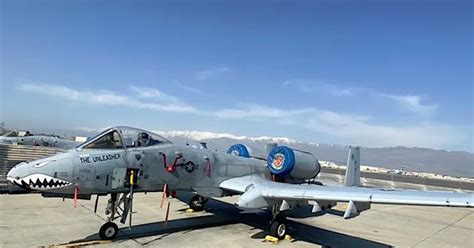
Another A-10 survived after losing massive portions of its wing during the Gulf War. Others have returned with shredded stabilizers, destroyed engines, or severe structural damage that would likely down more delicate aircraft. This extraordinary resilience reinforced the aircraft’s image as a flying tank capable of enduring punishment that would cripple most jets.
That reputation matters psychologically as much as tactically. Soldiers pinned down in combat often trust aircraft willing to fly low, stay overhead, and repeatedly engage enemy positions at close range. The A-10 built its legacy precisely through that kind of battlefield intimacy.
The F-35 Era Is Still Coming
Despite the Warthog’s renewed relevance, the broader trajectory of American airpower remains unchanged. The future belongs to networked stealth systems, autonomous drones, advanced sensors, and highly integrated battlefield management.
The F-35 is central to that transformation. Unlike older aircraft, fifth-generation fighters function as airborne intelligence nodes capable of sharing targeting information across air, land, sea, and space domains in real time. Modern warfare increasingly revolves around information dominance as much as kinetic firepower.
An F-35 can identify enemy radar systems, relay targeting coordinates to naval vessels, guide long-range cruise missiles, coordinate with drones, and provide battlefield awareness across an entire theater of operations. Those capabilities extend far beyond traditional close air support.
The Air Force envisions future conflicts where stealth aircraft and autonomous systems hunt targets deep inside hostile territory while connected networks instantly distribute information to strike platforms. Loyal wingman drones, AI-assisted targeting systems, and collaborative combat aircraft are all expected to redefine how close air support operates in the coming decades.
Within that environment, the A-10 increasingly looks like a survivor from another age.
Still, warfare has a habit of preserving useful tools long after experts predict their extinction. Tanks survived predictions of obsolescence. Attack helicopters endured repeated claims that drones would replace them entirely. Even artillery, one of humanity’s oldest battlefield systems, remains central in modern combat despite precision-guided weapons.
The A-10 occupies a similar space. It may no longer represent the future of American airpower, but it continues to solve practical battlefield problems efficiently and affordably.
Why The Air Force Cannot Fully Let Go Of The A-10 Yet
The decision to retain a reduced number of Warthogs until 2030 ultimately reflects strategic uncertainty. Military planners understand that future conflicts may not always justify deploying expensive stealth assets against every threat. Cheap drones, irregular warfare, maritime harassment operations, and regional proxy conflicts demand scalable responses.
The A-10 provides exactly that kind of scalable capability.
Its ability to carry large quantities of inexpensive guided rockets, absorb battle damage, operate close to the front line, and remain airborne for extended periods gives commanders options that stealth aircraft cannot always provide economically. At the same time, the Air Force recognizes that retaining the entire aging fleet would divert funding from next-generation systems considered essential for high-end conflict against peer adversaries.
The result is a compromise shaped by operational reality rather than nostalgia.
The Warthog is no longer untouchable, but neither is it obsolete.
For now, the aircraft survives because it continues to perform missions nobody expected it to master decades after its introduction. In an era increasingly obsessed with stealth, hypersonics, and artificial intelligence, the A-10’s continued relevance serves as a reminder that effectiveness in war is not always defined by sophistication alone. Sometimes endurance, simplicity, survivability, and affordability matter just as much.
And few aircraft embody those qualities better than the battered, brutal, unmistakable A-10 Warthog.