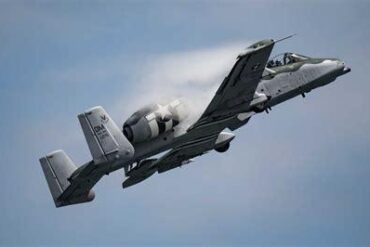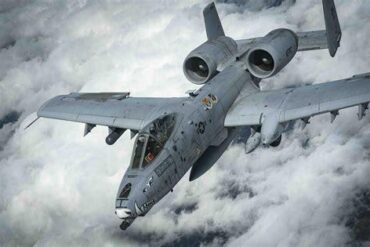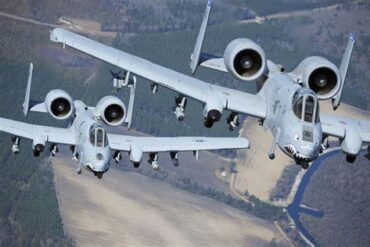
The retirement of the Fairchild Republic A-10 Thunderbolt II has been predicted so many times that it has become a running joke inside military aviation circles. Every few years, another proposal emerges to finally send the rugged close-air-support aircraft into retirement, usually in favor of sleek fifth-generation fighters loaded with stealth technology, advanced sensors, and billion-dollar development programs. Yet the A-10 keeps surviving. More remarkably, it keeps proving why it still matters.
The latest extension of the Warthog’s operational life through 2029 and 2030 is not based on nostalgia or congressional sentimentality. It is the direct result of battlefield performance. During the recent conflict environment surrounding Iran and Operation Epic Fury, the A-10 once again demonstrated something modern air forces repeatedly rediscover the hard way: sophisticated technology alone does not win every fight.
In an age increasingly defined by cheap drones, asymmetric warfare, missile shortages, and prolonged low-altitude combat operations, the A-10 suddenly looks less like an aging relic and more like the aircraft the United States accidentally needs again.
The irony is impossible to ignore. While the Pentagon invested heavily in stealth fighters designed to dominate advanced peer adversaries, the real operational burden in modern conflicts increasingly involves destroying swarms of inexpensive drones, protecting naval assets from fast attack boats, and providing persistent close air support over chaotic battlefields. Those are precisely the environments where the A-10 excels.
The aircraft’s resurgence reveals a deeper truth about modern warfare. Cost efficiency, durability, loiter time, survivability, and ease of maintenance still matter enormously. In some mission profiles, they matter more than stealth.
By retaining the Warthog, the US Air Force is acknowledging that high-tech replacements have not fully solved the dirty, dangerous realities of close combat.
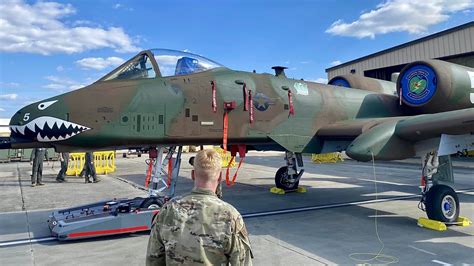
The A-10’s Unexpected Return To Relevance
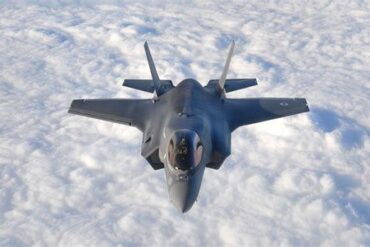
For years, military planners argued that the Lockheed Martin F-35 Lightning II would eventually absorb many of the A-10’s responsibilities. On paper, that assumption looked logical. The F-35 possesses advanced sensors, stealth characteristics, data fusion capabilities, and precision strike systems unmatched by older aircraft.
Reality, however, proved more complicated.
The wars of the 2020s have not exclusively featured advanced enemy fighter aircraft and integrated air-defense systems. Instead, conflicts increasingly involve low-cost drone swarms, dispersed insurgent forces, maritime harassment operations, and prolonged engagements against irregular threats. These operational environments favor aircraft capable of remaining over the battlefield for extended periods while delivering inexpensive and sustainable firepower.
The A-10 was practically designed for that exact mission decades ago.
Its slower speed, often mocked by critics, has become one of its greatest strengths in counter-drone warfare. Unlike fast-moving fighter jets optimized for supersonic engagements, the Warthog can effectively identify, track, and engage slow-moving propeller-driven drones at low altitude.
The aircraft’s ability to fly low and slow gives pilots better visual awareness and longer engagement windows against targets like Iranian Shahed drones. This dramatically improves interception efficiency while reducing reliance on expensive long-range missiles.
The economics alone are staggering.
An AIM-120 AMRAAM missile can cost well over $1 million per shot. By contrast, the APKWS II laser-guided rocket system mounted on the A-10 costs between $25,000 and $40,000 per engagement. In practical terms, the Warthog transforms drone interception from a financially disastrous exercise into a sustainable operational strategy.
That shift has become critically important as missile inventories face severe strain.
The Missile Crisis Changing Air Combat Doctrine
One of the biggest strategic lessons emerging from recent Middle Eastern operations involves ammunition consumption. Modern precision warfare burns through advanced munitions at terrifying speed.
During Operation Epic Fury, allied forces reportedly consumed enormous quantities of interceptors and precision missiles in only a few weeks. Patriot missiles, THAAD interceptors, and advanced strike weapons disappeared from inventories far faster than defense manufacturers could replace them.
Production timelines for many modern missile systems stretch between three and eight years. That creates a dangerous vulnerability for the United States and its allies. Every expensive interceptor fired at a low-cost drone weakens long-term readiness for potential large-scale conflicts elsewhere.
The A-10 helps solve this problem by changing the cost equation entirely.
Instead of assigning billion-dollar stealth fighters to destroy disposable drones, the Air Force can deploy a rugged aircraft carrying large quantities of cheaper guided rockets and cannon ammunition. This preserves premium missiles for high-end threats such as enemy fighters or advanced cruise missiles.
The Warthog’s famous GAU-8/A Avenger 30mm rotary cannon remains especially valuable in this role. The weapon was originally designed to destroy Soviet tanks, but against drones or light maritime targets, it becomes devastatingly efficient.
A short burst costing only thousands of dollars can eliminate incoming threats that would otherwise require vastly more expensive interceptors.
That operational efficiency explains why lawmakers resisted aggressive retirement plans for the aircraft.
Why The F-35 Still Cannot Replace The Warthog
The F-35 is an extraordinary aircraft in many respects, but it was never truly optimized for sustained low-altitude battlefield persistence.
The aircraft performs exceptionally well in contested airspace where stealth and sensor fusion provide overwhelming tactical advantages. Yet many of the missions dominating current regional conflicts involve entirely different priorities.
Close air support requires patience, endurance, survivability, and rapid response times. Pilots must often remain over hostile territory for hours while coordinating with ground forces in unpredictable combat environments.
The A-10 was engineered specifically for this brutal reality.
The Warthog burns roughly half the fuel per hour of an F-35 during low-altitude operations. This gives it substantially longer loiter time over the battlefield without aerial refueling. In active combat zones, persistence matters enormously because troops on the ground may require immediate support with little warning.
The F-35 also faces maintenance challenges that become increasingly problematic in austere environments.
Its stealth coating requires careful handling and specialized repair procedures. Even relatively minor surface damage can force lengthy maintenance cycles. The A-10, by comparison, was built to operate from rough forward bases with minimal support infrastructure.
Ground crews can rapidly rearm and refuel the aircraft without sophisticated diagnostic systems. That simplicity dramatically improves sortie generation rates during sustained combat operations.
The contrast becomes even sharper under battlefield damage conditions.
Built Like A Tank For Modern Battlefield Survival
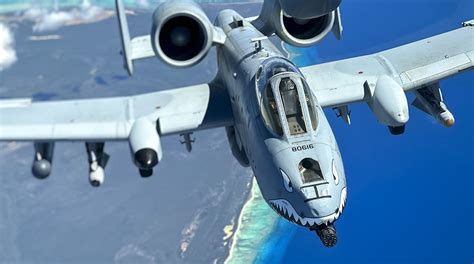
The A-10’s legendary toughness is not exaggerated military mythology. The aircraft was intentionally designed to survive punishment that would destroy most fighters.
At the center of its survivability lies the famous titanium bathtub surrounding the cockpit. This 1,200-pound armored enclosure protects the pilot from heavy machine-gun fire, anti-aircraft artillery, and explosive fragmentation.
Unlike sleek stealth fighters with tightly integrated electronics and composite skins, the A-10 embraces redundancy and ruggedness.
Its twin engines are mounted high and far apart to reduce vulnerability from ground fire. Fuel systems contain self-sealing foam designed to prevent catastrophic explosions. Flight control systems include backups capable of operating even after severe structural damage.
Stories of crippled A-10s returning safely to base are legendary throughout aviation history. Aircraft have landed missing hydraulic systems, sections of wings, major control surfaces, and even engines.
That resilience matters tremendously in modern low-altitude warfare environments dominated by shoulder-fired missiles, anti-aircraft guns, and small-arms fire.
The F-35, despite its sophistication, was never designed to absorb comparable punishment. A stealth aircraft relies heavily on avoiding detection and engagement altogether. Once hit, its dense internal systems become vulnerable to cascading failures.
This difference reflects fundamentally different design philosophies.
The A-10 assumes it will get shot at and prepares accordingly.
Drone Warfare Changed Everything
Military aviation doctrine spent decades focusing heavily on advanced fighters and long-range precision strike capabilities. Then drone warfare exploded across global battlefields.
Ukraine demonstrated how inexpensive unmanned systems could threaten even technologically superior militaries. Iran further showcased how mass-produced drone attacks could overwhelm expensive defensive networks through sheer volume and persistence.
Suddenly, air forces faced a difficult question.
Should million-dollar missiles continue destroying drones that cost a fraction of the price?
The answer increasingly appears to be no.
The A-10’s revival directly reflects this strategic shift. By combining modern software upgrades, APKWS-guided rockets, and improved targeting systems, the Warthog evolved into an unusually effective counter-drone platform.
The integration of the FALCO Counter-UAS Software Suite significantly improved the aircraft’s targeting efficiency. Automated lead-angle calculations and laser-to-infrared targeting handoffs allow pilots to engage multiple aerial threats rapidly.
These upgrades transformed the A-10 from a traditional close-air-support aircraft into something resembling a low-altitude airborne air-defense platform.
Its slower operating speed actually improves engagement success against drone swarms compared to faster fighter aircraft that struggle with target tracking windows.
The Warthog’s adaptability is one reason retirement plans continue collapsing under operational pressure.
The Value Of “Low And Slow” Combat Aviation
Modern military procurement often prioritizes speed, stealth, and digital sophistication. Yet many battlefield realities reward completely different qualities.
Counterinsurgency operations, maritime security missions, and drone interception campaigns all depend heavily on persistence and visibility rather than raw speed.
The A-10’s high-bypass turbofan engines provide remarkable efficiency at lower altitudes. This allows the aircraft to remain directly above frontline areas for three to five hours, delivering continuous support to troops below.
That capability creates enormous psychological and tactical advantages.
Ground forces consistently value aircraft that can stay overhead and respond instantly during emergencies. Fast jets frequently arrive quickly but cannot remain for extended periods due to fuel constraints.
The Warthog behaves differently. It lingers. It watches. It waits.
For soldiers under fire, that persistence can mean survival.
This characteristic also makes the aircraft highly effective during maritime patrol and anti-fast-boat operations in regions like the Strait of Hormuz. Small naval targets moving at moderate speeds are far easier for A-10 pilots to track and engage than for high-speed stealth fighters optimized for entirely different missions.
The aircraft’s operational philosophy suddenly aligns perfectly with many emerging battlefield conditions.
Congress And The Pentagon Finally Agree
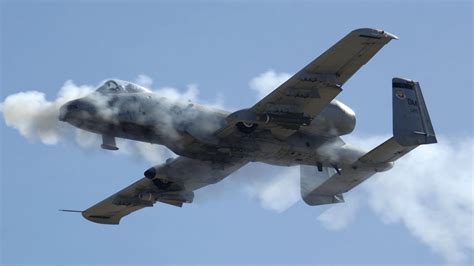
The political struggle surrounding the A-10 has often been intense. For years, the Air Force pushed aggressively toward retirement while lawmakers repeatedly intervened to preserve portions of the fleet.
Now the battlefield itself has changed the conversation.
Combat demand for the aircraft surged following operations involving Iran and regional security missions. As a result, Congress imposed requirements forcing the Air Force to maintain over 100 aircraft in service during the current fiscal cycle.
That decision reflects practical necessity rather than political symbolism.
The Pentagon increasingly recognizes that modern force structures require a mixture of advanced stealth systems and rugged low-cost operational platforms. Relying exclusively on ultra-expensive fifth-generation aircraft creates dangerous inefficiencies during prolonged conflicts.
The A-10 fills a critical capability gap between high-end air superiority fighters and ground-based air-defense systems.
It also offers flexibility that purely technological solutions cannot easily replicate.
The aircraft can conduct close air support, drone interception, maritime strike operations, combat search and rescue escort missions, and battlefield overwatch simultaneously while operating from damaged or improvised airfields.
That versatility becomes especially valuable in environments where missile strikes threaten fixed airbase infrastructure.
The Warthog’s Future Beyond 2030
Despite its latest operational extension, the A-10’s future remains uncertain in the very long term. Airframes continue aging, maintenance demands will inevitably increase, and newer unmanned systems may eventually assume portions of its mission profile.
Yet predictions of the aircraft’s imminent disappearance now look increasingly unrealistic.
The Warthog continues evolving through software upgrades, targeting improvements, enhanced communications systems, and network integration with newer aircraft. Rather than becoming obsolete, it is adapting into a specialized low-cost battlefield control platform supporting broader air operations.
The aircraft’s partnership with fifth-generation fighters may ultimately define its future role.
Stealth aircraft like the F-35 can penetrate contested airspace and identify threats using advanced sensors, while the A-10 handles lower-altitude engagement tasks more economically and sustainably. This cooperative approach combines the strengths of both platforms instead of forcing one aircraft to perform every mission inefficiently.
That hybrid doctrine reflects a more mature understanding of modern warfare.
No single aircraft dominates every operational environment.
The future battlefield requires layered capabilities, cost-effective engagement options, and platforms capable of surviving prolonged conflicts against both advanced and irregular threats.
The A-10 remains one of the few aircraft ever built specifically for ugly wars of attrition fought close to the ground. Ironically, those are exactly the kinds of conflicts dominating much of the modern security landscape.
Why America Still Needs The Flying Tank
The continued survival of the A-10 Warthog says less about nostalgia than about the brutal realities of war.
Modern combat is not always elegant. It is often repetitive, exhausting, attritional, and economically draining. The glamorous image of stealth fighters engaging enemy aircraft beyond visual range represents only one part of military aviation.
Someone still has to fly low over dangerous territory hunting drones, protecting convoys, supporting troops, and absorbing punishment in chaotic environments where simplicity and reliability matter more than technological perfection.
That aircraft remains the A-10.
The Warthog succeeds because it was engineered around battlefield practicality rather than procurement theory. It is rugged, heavily armed, relatively inexpensive to operate, and terrifyingly effective at exactly the kinds of missions modern conflicts increasingly demand.
Its survival through another attempted retirement is not merely a bureaucratic anomaly. It is a recognition that future wars may depend just as much on sustainable combat economics and battlefield endurance as on cutting-edge stealth technology.
For all the excitement surrounding sixth-generation fighters and autonomous combat drones, America’s aging flying tank continues proving an uncomfortable truth to military planners everywhere.
Sometimes the old machine still does the job better than the shiny new one.