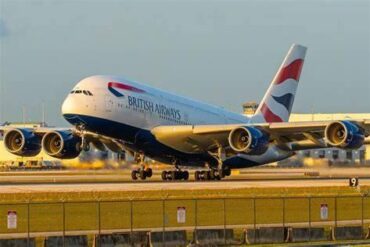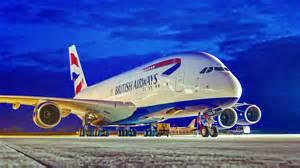
The Airbus A380 remains one of the most remarkable aircraft ever introduced into commercial aviation, and for British Airways, it represents far more than a symbol of aviation ambition. While many airlines have moved toward smaller, more fuel-efficient twin-engine jets, British Airways continues to rely on the world’s largest passenger aircraft as a strategic weapon for its most demanding London Heathrow routes.
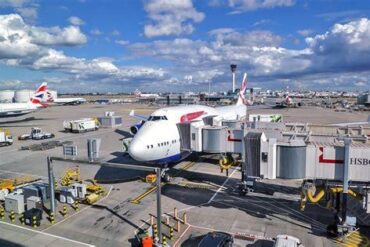
The reason is simple: Heathrow is not a normal airport. As one of the most congested and slot-restricted airports in the world, it leaves airlines with very limited opportunities to increase capacity. British Airways cannot easily add more daily flights to its most popular destinations because additional takeoff and landing slots are extremely difficult to obtain. Instead, the airline must maximize the value of every existing slot, and the A380 provides the ultimate solution.
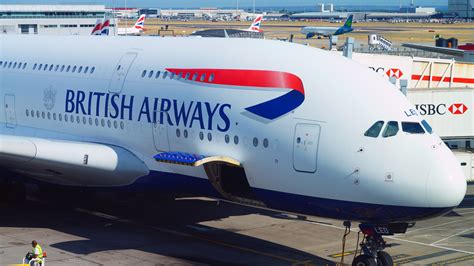
The aircraft’s enormous size allows British Airways to transport hundreds of additional passengers without requiring additional runway movements. With a typical configuration carrying around 469 passengers, the A380 enables the airline to expand capacity on flagship routes such as Los Angeles, Johannesburg, Miami, Singapore, and other major international markets where demand remains consistently strong.
For British Airways, the A380 solves a unique operational challenge: how to move more travelers through an airport that has almost no physical room to grow.
London Heathrow’s Slot Constraints Make the Airbus A380 Essential
London Heathrow operates close to its maximum capacity, making every available flight slot extremely valuable. Unlike airports where airlines can simply increase frequencies during periods of rising demand, Heathrow requires carriers to carefully optimize every departure and arrival.
A single Heathrow slot pair can represent significant commercial value because it gives an airline access to one of the world’s most profitable aviation markets. For British Airways, which operates one of the largest networks from Heathrow, protecting and maximizing these slots is a core business priority.
The Airbus A380 allows British Airways to increase passenger volume without increasing flight frequency. Instead of operating two smaller aircraft during peak periods, the airline can deploy one superjumbo capable of carrying nearly twice as many passengers as some smaller widebody aircraft.
This capacity advantage is especially important on routes where demand is concentrated around business travel, premium leisure customers, and connecting passengers from across the United Kingdom and Europe. Heathrow functions as a global hub, and the A380 acts as a high-capacity bridge connecting hundreds of travelers through a single departure.
The aircraft’s efficiency becomes more attractive when it operates at high load factors. Although the A380 consumes more fuel than modern twin-engine aircraft, its economics improve significantly when most seats are occupied. A nearly full A380 can distribute operating costs across hundreds of passengers, making it a powerful tool on high-demand routes.
The Airbus A380 Provides Unmatched Capacity for British Airways’ Flagship Routes
British Airways does not deploy its A380 fleet randomly. The aircraft is carefully assigned to routes where demand justifies its enormous size and operating costs.
The airline’s long-haul network includes several destinations where the A380 is particularly valuable because passenger numbers remain consistently high throughout the year. Routes connecting Heathrow with major business and tourism markets benefit from the aircraft’s ability to combine capacity, premium seating, and long-range capability.
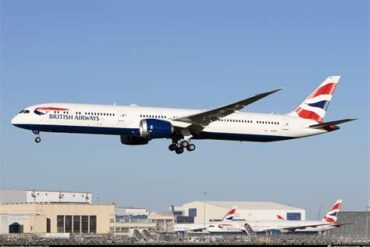
A Boeing 787 Dreamliner or Airbus A350 may offer better fuel efficiency on lower-demand routes, but these aircraft cannot match the passenger volume of the A380. The difference becomes significant when airlines are constrained by airport infrastructure rather than aircraft availability.
For example, replacing an A380 with a smaller aircraft on a high-demand Heathrow route could require additional daily frequencies to maintain capacity. However, Heathrow’s limited slots make that approach nearly impossible.
The superjumbo therefore provides British Airways with a unique advantage: it allows the airline to maintain strong connectivity while operating within the airport’s strict limitations.
Two Decks Create a Unique Passenger Experience
One of the most distinctive features of the British Airways Airbus A380 is its two full-length passenger decks. Unlike traditional widebody aircraft, the A380 provides an environment closer to a flying terminal, with different cabin areas offering noticeably different experiences.
The lower deck is designed for maximum passenger volume. British Airways traditionally places the majority of its economy seats, known as World Traveller, on the main deck. This area provides the classic widebody experience with high-density seating designed to accommodate hundreds of travelers efficiently.
However, the upper deck offers a completely different atmosphere.
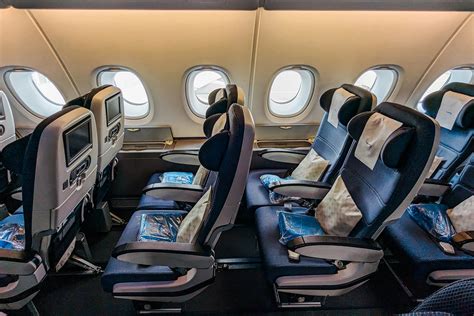
The smaller upper-deck economy cabin is often considered one of the most attractive economy seating areas in the British Airways fleet. The narrower 2-4-2 configuration creates a more spacious feeling compared with the lower deck’s ten-abreast arrangement.
Passengers seated near the windows benefit from additional side storage compartments built into the curved fuselage design. These storage areas provide extra personal space for small items, reducing the feeling of being confined during long-haul flights.
The upper deck also tends to be quieter because it is farther away from the aircraft’s engines and experiences less passenger movement. For travelers flying overnight routes, this quieter environment can make a significant difference during a 10-hour or longer journey.
The upper deck does have limitations. Because it contains fewer lavatories compared with the number of passengers using the cabin, queues can develop during busy periods. The rear section may also experience some galley noise, particularly during meal services.
Despite these compromises, many frequent flyers consider the upper deck of the British Airways A380 one of the best economy experiences available on a commercial aircraft.
Why Smaller Aircraft Cannot Fully Replace the A380 at Heathrow
The aviation industry has increasingly shifted toward efficient twin-engine aircraft such as the Boeing 787 Dreamliner and Airbus A350. These aircraft offer lower fuel consumption, longer range flexibility, and reduced maintenance complexity.
However, efficiency alone does not solve Heathrow’s capacity challenge.
The largest aircraft currently operated by British Airways after the A380, including the Boeing 777-300ER and Airbus A350-1000, still carry significantly fewer passengers. Replacing an A380 with these aircraft would create a substantial capacity gap.
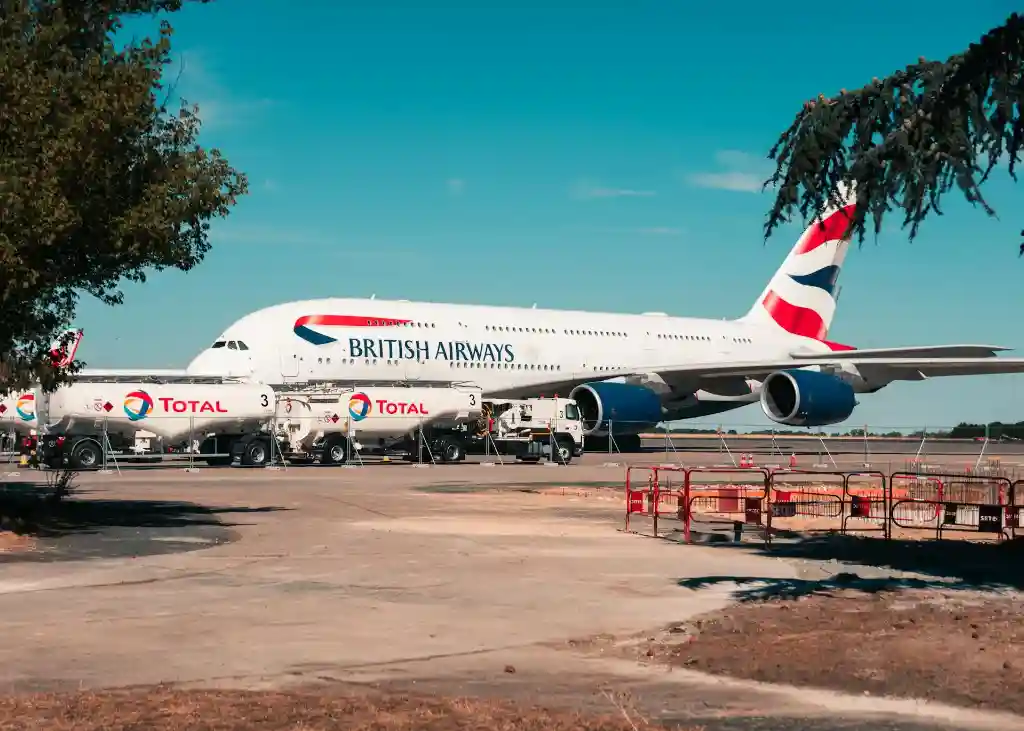
For routes where hundreds of passengers travel every day, this difference matters. British Airways would either lose available seats or need to operate additional flights, something Heathrow’s slot limitations make difficult.
The A380 therefore occupies a unique position in the airline’s fleet. It is not necessarily the most efficient aircraft in isolation, but it is extremely effective in a specific environment where capacity is more valuable than flexibility.
This is why the A380 continues to make sense for British Airways despite the industry-wide move toward smaller aircraft.
The Challenges of Operating the World’s Largest Passenger Aircraft
Although the A380 provides major advantages, operating the aircraft is not without challenges.
The aircraft’s size creates operational complexity. A technical problem affecting an A380 can impact nearly 500 passengers at once, creating significant challenges for airline scheduling teams. Finding replacement aircraft with similar capacity is extremely difficult.
Maintenance is another important consideration. The A380 contains four engines, complex systems, and a massive airframe that requires specialized engineering support. As the fleet ages, maintaining reliability becomes increasingly important.
Fuel consumption remains the aircraft’s biggest disadvantage. Four Rolls-Royce Trent 900 engines require considerably more fuel than modern twin-engine alternatives. This means the A380 must operate on routes where passenger demand is strong enough to justify its higher operating costs.
The aircraft also faces interior aging challenges. Some early A380 cabins feature older entertainment systems, worn components, and designs that no longer match the latest premium aviation products.
However, British Airways recognizes that the aircraft’s strategic value outweighs these disadvantages on key Heathrow routes.
British Airways Is Modernizing the A380 for the Future
Rather than retiring the A380, British Airways is investing in upgrades to ensure the aircraft remains competitive into the next decade.
One of the most important improvements is the introduction of the airline’s Club Suite business class product. This modern cabin design includes direct aisle access for every passenger and privacy doors, bringing the A380 experience closer to newer aircraft such as the Airbus A350.
The retrofit program represents a significant transformation. The goal is to combine the aircraft’s unmatched capacity with a more modern passenger experience.
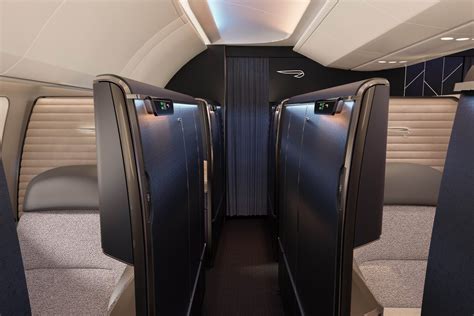
The upgraded aircraft will allow British Airways to offer premium travelers a consistent experience across its long-haul fleet while continuing to benefit from the A380’s enormous capacity advantage.
The aircraft is effectively evolving from an older-generation superjumbo into a modern Heathrow flagship.
The Airbus A380 Remains British Airways’ Heathrow Heavyweight
The future of aviation may belong to efficient twin-engine aircraft, but the Airbus A380 still has a special role at London Heathrow. For British Airways, the aircraft is not simply a nostalgic reminder of aviation’s most ambitious era. It is a practical solution to one of the airline industry’s biggest challenges: moving more passengers through an airport with limited capacity.
The A380 combines enormous passenger volume, premium cabin flexibility, and long-range capability in a way that no other aircraft can fully replicate. While smaller aircraft may outperform it in fuel efficiency, they cannot replace its ability to maximize Heathrow’s valuable slots.
As long as demand remains strong and Heathrow remains heavily constrained, the Airbus A380 will continue serving as one of the most important aircraft in the British Airways fleet.
The superjumbo may no longer represent the future of aviation everywhere, but at London Heathrow, it remains exactly what British Airways needs: a giant aircraft built for a giant challenge.