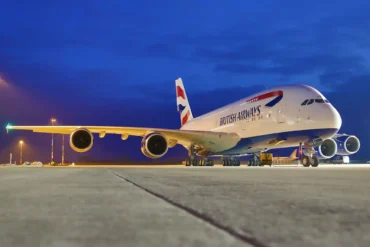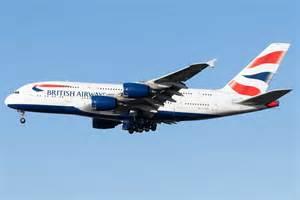
British Airways’ relationship with the Airbus A380 has quietly evolved into one of the most strategically disciplined superjumbo stories in global aviation. While many airlines treated the A380 as an indulgent experiment and later rushed for the exits, British Airways doubled down, reshaping the aircraft into a high-density premium flagship tailored precisely for Heathrow’s constraints and its most lucrative long-haul markets. In 2026, with just 12 A380s in the fleet, every deployment is deliberate, every route chosen for a specific mix of distance, demand, slot scarcity, and premium yield.
The result is a tightly curated network of the airline’s longest nonstop routes, where the A380’s size, range, and cabin economics still make hard commercial sense. These are not nostalgia flights. They are capacity weapons aimed at the world’s most competitive intercontinental corridors, flown from one of the most slot-constrained airports on Earth.
By 2026, British Airways’ A380s are no longer defined by sheer seat count, but by how many of those seats generate high-margin revenue. The aircraft has been reshaped internally, redeployed externally, and repositioned psychologically—from novelty to necessity.
The Strategic Logic Behind British Airways’ A380 Network
All British Airways A380 operations are anchored at London Heathrow, an airport where slots are more valuable than aircraft themselves. In this environment, growth does not come from adding frequencies; it comes from adding capacity per movement. The A380 is unmatched in this role, particularly when configured to emphasize First, Business, and Premium Economy seating.
British Airways operates the A380 exclusively on routes that satisfy three criteria simultaneously: sustained long-haul demand, strong premium traffic, and limited opportunity to add frequencies. These are city pairs where corporate travel, alliance connectivity, and cargo demand converge, allowing the A380 to operate at high load factors year-round.
Unlike airlines that scatter their A380s across leisure-heavy networks, British Airways treats the aircraft as a precision tool, not a blunt instrument. In 2026, its longest A380 routes reveal exactly how that philosophy plays out.
A Rebuilt Cabin for a Longer Future
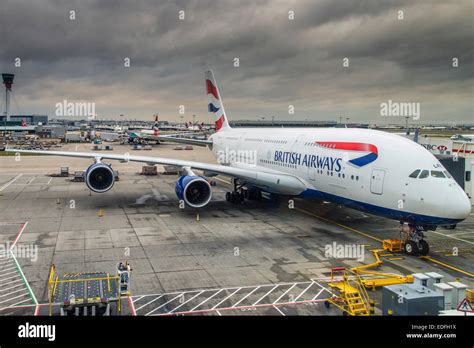
Before examining routes, it is impossible to ignore how fundamentally the A380 onboard experience has changed. British Airways’ A380 fleet, now averaging nearly 12 years of age, is undergoing an extensive retrofit that redefines the aircraft’s commercial profile.
Total seating drops from 469 to 421, but this is not a retreat—it is an upgrade. Nearly half of all seats are now premium, reflecting where British Airways actually makes its money on ultra-long-haul routes.
The most visible transformation is in First Class, long criticized for lagging behind competitors. The new First suites are wider, longer, and genuinely private, featuring sliding doors, full wardrobes, and 4K displays. The sarcastic label of “the best business class in the world” no longer applies; this is a true flagship product designed to justify its price on flights exceeding ten hours.
Business Class follows suit with Club Suites, bringing full privacy doors to the A380 for the first time. Premium Economy expands dramatically, acknowledging its role as the airline’s most consistently profitable long-haul cabin. Economy shrinks, but remains competitive thanks to the A380’s inherent cabin width and quieter ride.
This retrofit explains why British Airways remains committed to the type. The airline is not preserving the A380 as it was—it is reshaping it for the next decade.
Johannesburg: British Airways’ Longest A380 Route
The longest nonstop route in British Airways’ A380 network in 2026 is London Heathrow to Johannesburg, a sector that combines historical weight with modern strategic logic. Covering roughly 5,635 miles, this route is operated twice daily by A380, making it not only the longest but also the largest A380 market in the airline’s system.
Johannesburg is unique for several reasons. Historically, it represents one of the earliest jet routes in commercial aviation, tracing its lineage back to the dawn of the jet age. Commercially, it benefits from a vacuum left by the long-term absence of South African Airways on the London route, allowing British Airways to absorb unmet demand.
Operationally, Johannesburg’s elevation—over 5,500 feet above sea level—creates “hot and high” conditions that degrade aircraft performance. The A380’s four-engine configuration offers more consistent payload capability in these conditions than some twin-engine alternatives, particularly on long-haul sectors departing at high temperatures.
For British Airways, Johannesburg is a textbook A380 route: long, capacity-hungry, premium-heavy, and operationally well-suited to a quadjet. The aircraft’s ability to carry passengers and cargo efficiently on the return leg to London makes it indispensable.
Los Angeles: The Flagship Transatlantic West Coast Route
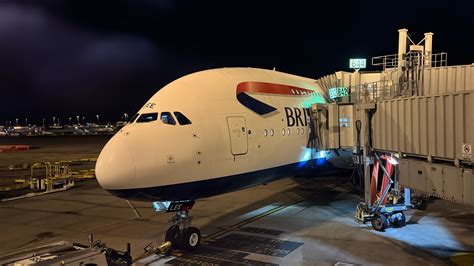
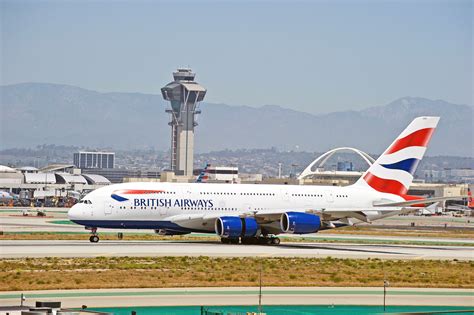
Second only to Johannesburg in distance is the iconic London Heathrow–Los Angeles route, stretching approximately 5,440 miles. This is the route that introduced the A380 to British Airways’ network in 2013, and in 2026 it remains one of the airline’s most prestigious deployments.
Los Angeles is not just a destination; it is a brand stage. The route attracts entertainment executives, corporate travelers, and high-net-worth individuals who value privacy, schedule flexibility, and premium service. British Airways operates three daily flights, with the A380 typically assigned to the highest-demand rotation.
Competition on this corridor is fierce, involving American Airlines, Virgin Atlantic, and United Airlines. Yet the A380 gives British Airways a distinct advantage: the ability to concentrate premium seating into a single, high-capacity departure while maintaining schedule integrity at Heathrow.
From a planning perspective, the A380’s range and capacity align perfectly with West Coast transatlantic operations. The aircraft’s spacious cabins mitigate the fatigue associated with flights crossing eight time zones, while its cargo hold supports high-value freight moving between Europe and Southern California.
San Francisco: Technology, Finance, and Sustained Demand
Slightly shorter than Los Angeles but no less significant is London Heathrow to San Francisco, a route of roughly 5,350 miles that sits at the intersection of technology, finance, and global business travel.
San Francisco’s demand profile is uniquely resilient. Even during industry downturns, traffic tied to Silicon Valley, venture capital, and transpacific connectivity remains strong. British Airways leverages this stability by deploying the A380 alongside the Boeing 777, ensuring capacity matches consistently high demand.
The A380’s presence on this route is especially telling. It signals confidence not just in volume, but in premium conversion rates. Business and First Class cabins on San Francisco flights historically outperform system averages, justifying the superjumbo’s operating costs.
Operationally, the A380 also offers schedule reliability on a route prone to congestion and weather-related delays. Fewer flights carrying more passengers reduces exposure to disruption while maximizing slot efficiency at both ends.
Dallas/Fort Worth: Alliance Power and Network Reach
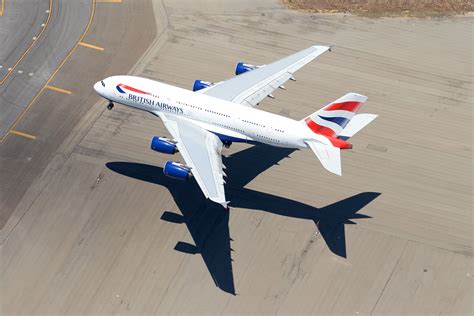
British Airways’ A380 deployment to Dallas/Fort Worth reflects alliance strategy as much as distance. At approximately 4,750 miles, it ranks below West Coast routes in sheer length, but its importance lies in connectivity.
Dallas/Fort Worth is American Airlines’ largest hub, and the transatlantic joint venture between the two carriers turns this route into a critical bridge between Europe and the southern United States. By upgrading the route to A380 service, British Airways concentrates capacity while feeding American’s vast domestic network.
This move also reflects slot optimization. Instead of adding frequencies, British Airways uses aircraft size to meet demand, preserving Heathrow slots for other strategic routes. The A380’s premium-heavy configuration aligns well with corporate traffic flowing between Texas, Europe, and Latin America via Dallas.
Miami: Seasonal Demand and Latin American Connectivity
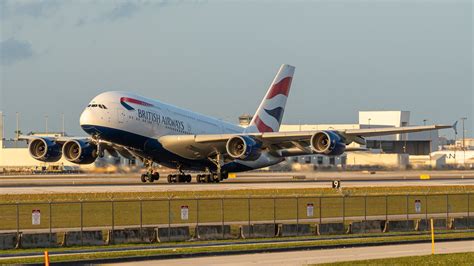
The London Heathrow–Miami route, at around 4,400 miles, earns its place in the A380 network through a combination of seasonal leisure demand and strategic connectivity. Miami serves as British Airways’ primary gateway to Latin America via American Airlines, compensating for the airline’s relatively limited direct South American network.
During peak winter months, demand surges as travelers seek Florida’s climate, while premium traffic remains strong year-round thanks to finance, real estate, and cruise industry ties. The A380 allows British Airways to handle these peaks without increasing frequency, smoothing operational complexity.
Miami’s infrastructure comfortably accommodates the A380, and passenger feedback consistently highlights the aircraft’s quieter cabins on overnight eastbound flights—an underrated advantage on routes where rest quality influences customer loyalty.
Routes Left Behind: Where the A380 No Longer Flies
Equally revealing are the long-haul routes no longer served by British Airways’ A380s. Singapore, once the airline’s longest A380 sector at nearly 6,760 miles, has transitioned to Boeing 777-300ER operations, reflecting changes in demand patterns and competitive dynamics.
Hong Kong, Vancouver, Chicago, and Washington have also seen the superjumbo phased out. In each case, frequency flexibility, aircraft availability, or alliance considerations outweighed the benefits of sheer capacity. These withdrawals underscore that British Airways’ A380 strategy is not sentimental; it is ruthlessly pragmatic.
The Future of British Airways’ A380 Beyond 2026
By 2026, British Airways’ commitment to the A380 is unmistakable. Expensive cabin retrofits, carefully chosen routes, and continued deployment on the airline’s longest nonstop sectors all point to a fleet expected to remain active well into the 2030s.
The A380 may no longer dominate aviation headlines, but at British Airways it performs a quieter, more focused role. It absorbs demand where no other aircraft can do so as efficiently, it extracts premium revenue where competition is fiercest, and it turns Heathrow’s constraints into a strategic advantage.
In an industry obsessed with efficiency metrics and twin-engine orthodoxy, British Airways’ A380 network stands as a reminder that the right aircraft, used in the right place, still matters. The superjumbo’s future may be limited elsewhere, but on British Airways’ longest routes, it continues to earn its keep—one carefully chosen departure at a time.