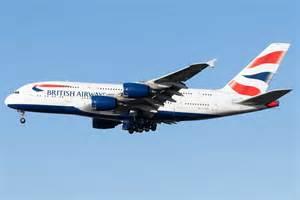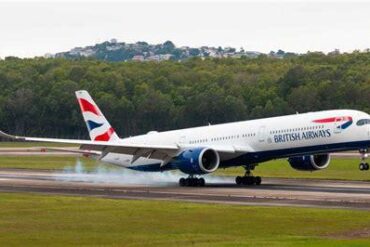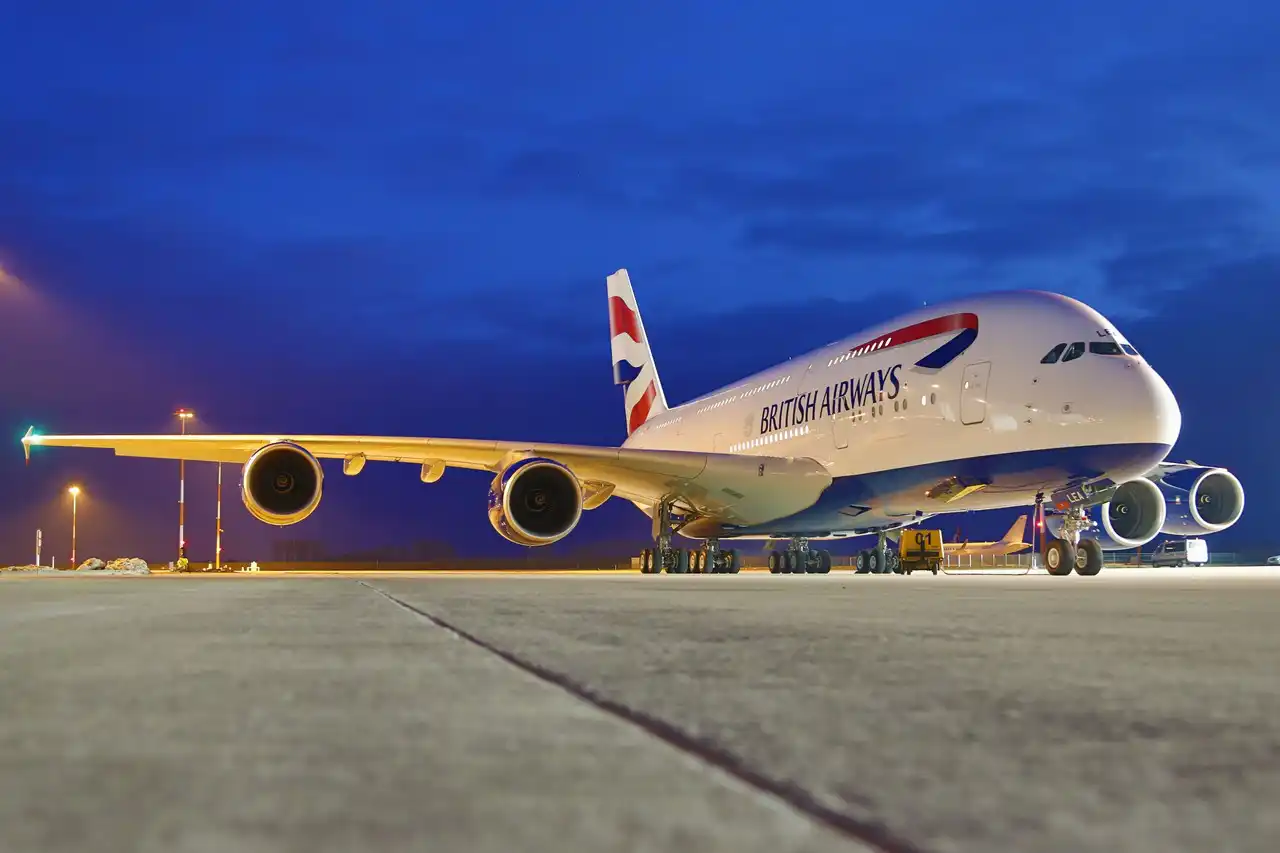
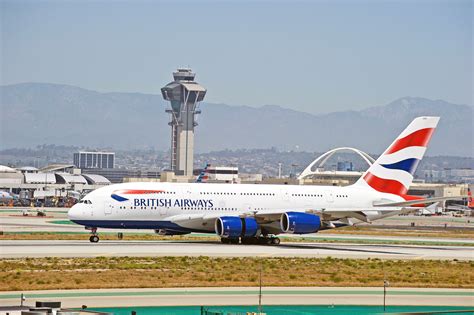
British Airways remains one of the world’s most prominent Airbus A380 operators, using the iconic double-decker aircraft on some of its most important long-haul routes from London Heathrow. Although the airline’s A380 network is slightly smaller than it was a year ago, the aircraft continues to play a crucial role in connecting Heathrow with major business centers, premium leisure destinations, and high-demand international markets.
The carrier currently operates a fleet of 12 Airbus A380s, making it one of only a handful of airlines still committed to regular superjumbo operations. The aircraft are especially valuable on routes where slot constraints at Heathrow limit the ability to add frequencies, allowing British Airways to carry hundreds of passengers on a single departure while maintaining strong premium cabin capacity.
As the airline prepares for a significant cabin refurbishment program that will reduce seating from 469 to 421 seats, the A380 is gradually evolving into an even more premium-focused aircraft. The upcoming configuration will feature additional business-class suites and premium economy seats while reducing economy-class capacity, reflecting changing passenger demand and revenue priorities.
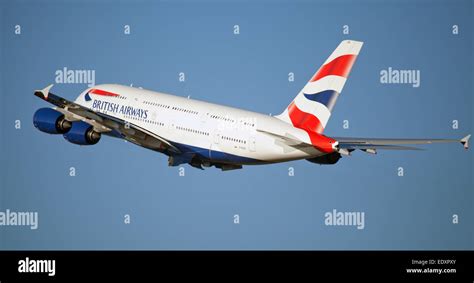
British Airways’ Airbus A380 Fleet Strategy
British Airways received its first Airbus A380 in July 2013, becoming one of the largest European operators of the type. More than a decade later, the aircraft remains an essential part of the airline’s long-haul network despite the aviation industry’s broader shift toward smaller and more fuel-efficient twin-engine aircraft.
Several aircraft are periodically removed from service for heavy maintenance and interior upgrades, affecting fleet availability. Even with temporary reductions, British Airways continues to deploy the A380 on routes where passenger volumes and premium demand justify the aircraft’s enormous capacity.
Between June and December 2026, British Airways plans approximately 1,392 outbound A380 departures from London Heathrow. While this represents an 8% reduction compared with the same period in 2025, the decrease is relatively modest when viewed across the entire network. On average, the airline will still operate roughly six to seven daily A380 departures from Heathrow.
The network has also become more diversified. While Washington Dulles no longer receives regular A380 service, British Airways has restored operations to Dallas/Fort Worth and Singapore, expanding the number of destinations served by the aircraft.
Complete List of British Airways Airbus A380 Routes
British Airways plans to operate the Airbus A380 on eight routes from London Heathrow during the second half of 2026.
- Boston Logan International Airport (BOS) – Daily through October 24
- Dallas/Fort Worth International Airport (DFW) – Daily until October 14
- Dubai International Airport (DXB) – Daily from October 25
- Johannesburg Airport (JNB) – Twice daily until September 5, then daily
- Los Angeles International Airport (LAX) – Daily until October 24
- Miami International Airport (MIA) – Daily until October 14, then twice daily
- Singapore Changi Airport (SIN) – Daily from September 6
- San Francisco International Airport (SFO) – Daily
Together, these destinations form the backbone of British Airways’ high-capacity long-haul operation and represent some of the airline’s most strategically important markets.
Why These Routes Receive the Airbus A380
British Airways deploys the A380 primarily on routes where demand is consistently high throughout the year. These markets typically combine strong business travel, premium leisure traffic, and significant connecting passenger flows through Heathrow.
North America remains the largest regional beneficiary of British Airways’ superjumbo fleet. Boston, Dallas/Fort Worth, Los Angeles, Miami, and San Francisco all receive A380 service at various points during the schedule period. These cities generate substantial premium traffic and provide extensive onward connectivity through airline partners and local networks.
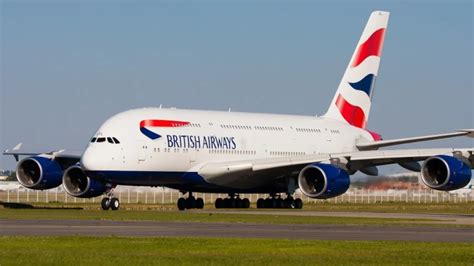
The airline’s Miami service stands out because frequencies increase later in the year, demonstrating strong demand between South Florida and London. Miami serves as a major gateway for both leisure travelers and passengers connecting to Latin America.
On the African continent, Johannesburg continues to justify extensive A380 operations. The route has long been one of British Airways’ strongest markets, combining corporate travel, tourism, and visiting-friends-and-relatives demand. Although service frequency is reduced later in the year, Johannesburg remains one of the carrier’s most important long-haul destinations.
Singapore Returns to the Airbus A380 Network
One of the most notable developments in British Airways’ 2026 schedule is the return of Airbus A380 service to Singapore Changi Airport.
After an absence lasting roughly eighteen months, the superjumbo is scheduled to resume daily flights beginning September 6. The decision reflects renewed demand on the route and changing travel patterns across Asia.
Industry observers have suggested that geopolitical instability in parts of the Middle East may have encouraged some travelers to favor direct European-Asian services rather than itineraries connecting through Gulf hubs. Regardless of the exact cause, Singapore’s reinstatement highlights the route’s continued strategic value within British Airways’ network.
The move also creates additional competition in one of Asia’s most important aviation markets, particularly as other major carriers continue operating or restoring their own Airbus A380 services to Singapore.
Changes at Los Angeles, Johannesburg, and Dubai
Although Los Angeles remains on the Airbus A380 schedule, the route will not retain year-round superjumbo service. Operations conclude on October 24, contributing to a noticeable reduction in A380 activity on the Heathrow–Los Angeles corridor compared with previous periods.
Johannesburg also experiences a significant adjustment. The route begins with twice-daily A380 operations but transitions to a single daily service after early September. This reduction accounts for one of the largest year-over-year declines in British Airways’ superjumbo deployment.
Dubai represents a contrasting story. Daily Airbus A380 service is scheduled to begin on October 25, subject to operational and geopolitical considerations. Given the strength of demand between London and Dubai, the route remains a natural fit for the airline’s largest aircraft.
British Airways Falls to Third Place Among A380 Operators
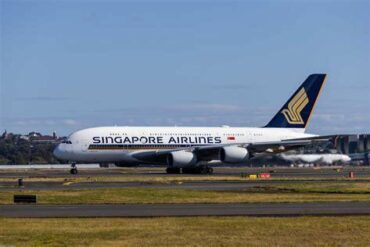
Despite maintaining a sizable Airbus A380 network, British Airways has slipped from second to third place among global operators of the aircraft. The airline’s modest reduction in A380 flying has allowed Singapore Airlines to move ahead in terms of scheduled departures.
During the June-to-December 2026 period, airlines worldwide collectively plan more than 26,000 Airbus A380 departures from their respective hubs. While overall global activity remains relatively stable, British Airways’ smaller schedule has altered the competitive ranking among operators.
Nevertheless, the airline remains one of the most significant users of the Airbus A380 anywhere in the world. With cabin modernization underway and eight major routes continuing to support the aircraft, the superjumbo remains a highly visible and strategically important component of British Airways’ long-haul operation from London Heathrow.