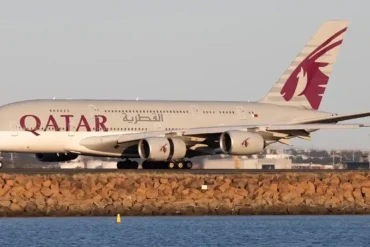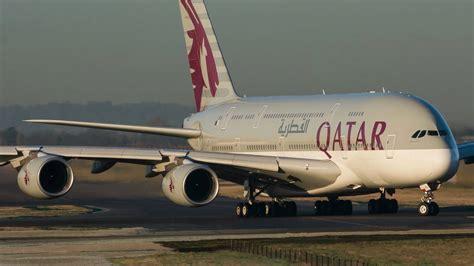
The era of the Airbus A380 at Qatar Airways has entered a noticeably smaller chapter. Once introduced as the airline’s flagship aircraft for high-capacity global routes, the double-decker jet has gradually disappeared from several destinations. Operational adjustments, shifting demand patterns, and evolving fleet strategy have reshaped where the superjumbo now flies.
Although the airline still maintains a fleet of ten A380 aircraft, only a portion of them remain active today. Several have been placed in storage since the global aviation disruptions of 2020, and others remain temporarily grounded due to geopolitical complications affecting global aviation operations. As the carrier continues refining its long-haul network, the iconic aircraft has quietly vanished from five routes that once hosted its massive capacity.
The result is a significantly slimmer operational footprint for one of aviation’s most recognizable aircraft types.
A Late but Ambitious Airbus A380 Operator
When Qatar Airways introduced its first Airbus A380 in September 2014, the program had already been operating globally for seven years. The aircraft registered A7-APA became the airline’s inaugural superjumbo, joining a fleet designed to showcase luxury and high-capacity travel on some of the world’s busiest long-haul corridors.
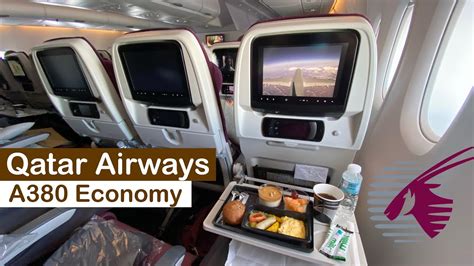
Despite arriving later than other major operators such as Singapore Airlines or Emirates, Qatar’s A380 product was engineered as a premium flagship. The aircraft carries 517 passengers, including an exclusive eight-seat first-class cabin, a spacious business class lounge area, and a large economy section spanning two passenger decks.
Yet the operational philosophy behind the aircraft has evolved over time. Rather than deploying the superjumbo widely across its network, the airline concentrated it on a handful of high-density routes where demand justified the aircraft’s enormous capacity.
That strategy has gradually shifted.
Today, the superjumbo operates on fewer destinations than at almost any point in its operational history with the airline.
Five Routes Where Qatar Airways Has Retired A380 Operations
Analysis of route data from 2014 through planned operations in 2026 reveals that five destinations no longer see Qatar Airways’ Airbus A380.
The aircraft has disappeared from the following routes:
- Doha – Perth
- Doha – Guangzhou
- Doha – Melbourne
- Doha – Frankfurt
- Doha – Atlanta (operated only once)
Each route tells a different story about how demand, strategy, and competition shape airline fleet decisions.
Some routes lost the aircraft due to operational efficiency, while others were short-lived experiments.
Doha to Perth: The A380’s Most Frequent Route Cut
Among the routes removed from A380 service, Perth saw the highest number of flights operated by the aircraft.
The Western Australia destination has been served by Qatar Airways since 2012, initially using the Boeing 777-200LR before transitioning to the 777-300ER. In May 2018, the airline upgraded the route to the Airbus A380, marking one of the longest regular deployments of the aircraft within its network.
Covering roughly 5,031 nautical miles (9,317 kilometers) each way, the Doha–Perth route benefited from the superjumbo’s enormous passenger capacity. On most occasions, the aircraft operated daily flights, offering hundreds of seats connecting Australia to Europe, the Middle East, and Africa via Doha.
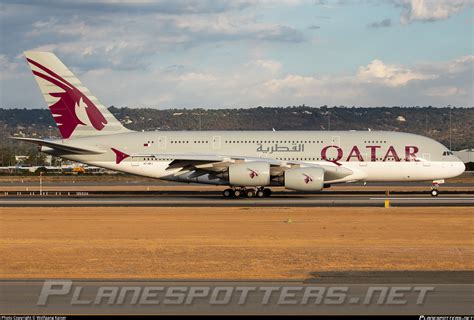
However, the aircraft disappeared from the route in June 2025. The service reverted to the 354-seat Boeing 777-300ER, reducing overall capacity and eliminating first-class seats.
This fleet adjustment was not simply about shrinking supply. Instead, it coincided with the launch of Virgin Australia’s Perth–Doha service, operated using Qatar Airways’ own Boeing 777-300ER aircraft through a partnership agreement.
The strategic outcome was notable: the route now benefits from two daily flights instead of one, increasing total daily seat availability by roughly 37 percent despite the removal of the larger aircraft.
In other words, frequency replaced size.
Guangzhou and Melbourne: A380 Routes That Never Returned
Two Asia-Pacific destinations also lost the superjumbo permanently: Guangzhou and Melbourne.
The Doha–Guangzhou route hosted A380 flights between 2016 and 2020, during a period when demand between China and the Middle East was expanding rapidly. The pandemic disrupted that momentum, and the aircraft never returned once global travel recovered.
Similarly, Melbourne received A380 service from 2017 until 2020, reinforcing the airline’s commitment to the Australian market. Yet operational changes and fleet flexibility have since shifted the route toward smaller long-haul aircraft better suited to fluctuating demand.
These adjustments illustrate a broader trend across global aviation: airlines are increasingly favoring flexible twin-engine aircraft over extremely large jets.
The economics often favor operating more frequent flights using slightly smaller aircraft rather than filling a single massive departure.
Frankfurt: A Brief European Appearance
Among European routes, Frankfurt represents the shortest chapter in Qatar Airways’ A380 history.
The aircraft operated daily flights between March 2019 and March 2020, connecting Doha and Germany’s largest financial hub. The schedule was optimized for connectivity through Hamad International Airport, with morning departures from Doha and evening returns from Frankfurt.
Despite the initial presence, the aircraft vanished from the route when the pandemic disrupted international travel in 2020. Unlike other destinations where the aircraft eventually returned, Frankfurt never regained A380 service.
That absence speaks volumes. It suggests the route performed better with smaller aircraft or that the airline found stronger opportunities elsewhere for deploying the superjumbo.
Frankfurt itself once ranked among the busiest airports globally for A380 operations. In 2019, it was the seventh-largest A380 hub worldwide, hosting flights from several airlines including Emirates, Lufthansa, Singapore Airlines, and Qatar Airways.
By 2026, however, its ranking has fallen significantly, reflecting the broader decline of A380 usage worldwide.
Atlanta: A One-Time Superjumbo Appearance
The most unusual entry on the list is Atlanta.
Unlike the other routes, the aircraft operated only one round-trip flight between Doha and the world’s busiest airport. The special service took place on June 1, 2016, marking the inauguration of Qatar Airways’ new route to the U.S. aviation giant.
Airlines occasionally schedule such flights for symbolic reasons, promotional events, or operational celebrations. The massive double-decker aircraft serves as a powerful marketing tool, capable of generating enormous attention during route launches.
After that inaugural flight, however, the route returned to regular long-haul aircraft rather than continuing with the superjumbo.
The Shrinking Role of the Airbus A380 at Qatar Airways
Today the Airbus A380 occupies a more specialized role within Qatar Airways’ fleet strategy.
Rather than operating widely across continents, the aircraft now focuses primarily on a handful of high-demand destinations where its extreme capacity and premium cabin layout can still be justified. Major European hubs such as London Heathrow and Paris Charles de Gaulle remain among the most important A380 routes for the airline.
The broader industry trend is clear. Airlines increasingly rely on highly efficient twin-engine aircraft such as the Airbus A350 and Boeing 787 families, which provide long-range capability with lower operating costs and greater route flexibility.
For the Airbus A380, once celebrated as the future of global air travel, the network map continues to shrink.
Yet whenever the enormous double-deck jet appears at an airport, it still delivers the same spectacle that made it famous—an unmistakable reminder of aviation’s most ambitious passenger aircraft ever built.