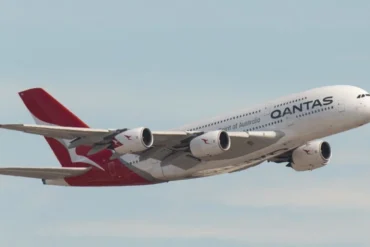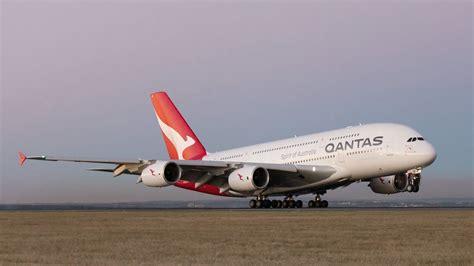
For more than fifteen years, the Airbus A380 symbolized Qantas’ most ambitious long-haul operations. The aircraft—recognizable by its towering double deck and immense passenger capacity—allowed the Australian flag carrier to connect Australia with major global hubs using one of the largest commercial aircraft ever built. When the first Qantas A380 entered service in September 2008, it marked a new era of high-capacity international travel for the airline.
Qantas became the third airline in the world to operate the Airbus A380, following Singapore Airlines and Emirates. The superjumbo quickly became a centerpiece of its long-haul fleet, particularly on high-demand routes linking Australia with the United States, Europe, and Asia. Its first passenger flight took off on October 20, 2008, traveling from Melbourne to Los Angeles, a route that perfectly suited the aircraft’s enormous range and passenger capacity.
Over the years, Qantas built a network of routes tailored to the A380’s capabilities. However, aviation economics evolve quickly. Aircraft efficiency, operational costs, and changing passenger demand gradually reshape airline networks. By 2026, Qantas will have ended Airbus A380 operations on 12 different routes, reflecting both strategic adjustments and broader shifts in global aviation.
The Evolution of Qantas’ Airbus A380 Network
The Qantas A380 fleet currently consists of ten aircraft, though not all remain fully active. One aircraft, VH-OQC, returned to commercial service in December 2025, though its reintroduction experienced early operational setbacks. Meanwhile, two other airframes have been partially dismantled after years in storage.
During its peak operational period, the superjumbo was deployed on flagship long-haul services connecting Australia with key international hubs. Routes to Los Angeles, London Heathrow, Hong Kong, and Singapore frequently relied on the aircraft’s capacity to move large numbers of passengers efficiently.
Airlines originally envisioned the A380 as the backbone of hub-to-hub global travel, where massive aircraft would shuttle passengers between major international airports. Yet the aviation industry shifted toward smaller, fuel-efficient long-range aircraft such as the Boeing 787 Dreamliner and Airbus A350, which can serve long routes with lower operating costs.
This shift has gradually reduced the number of routes suitable for the superjumbo.
Full List of Qantas Routes That Lost A380 Service
According to operational data spanning 2008 through 2025, Qantas has either already removed the A380 or plans to discontinue it from the following routes.
- Melbourne – Los Angeles (2008–2026)
- Sydney – Dubai – London Heathrow (2013–2018)
- Melbourne – Dubai – London Heathrow (2013–2018)
- Sydney – Los Angeles – New York JFK (2011–2020)
- Sydney – Hong Kong (2012–2024)
- Melbourne – Singapore – London Heathrow (2010–2013)
- Melbourne – Singapore (2018–2025)
- Melbourne – Los Angeles – New York JFK (single flight in 2016)
- Melbourne – Tokyo Narita (single flight in 2019)
- Sydney – Auckland (single flight in 2023)
- Sydney – Los Angeles – Orlando (single flight in 2020 charter)
- Sydney – San Francisco (single flight in 2009)
Collectively, these routes accounted for 11,933 departures from Australia using the A380. While some were short-term or charter flights, several were long-standing intercontinental services central to Qantas’ network strategy.
Melbourne’s Historic Role in Qantas A380 Operations
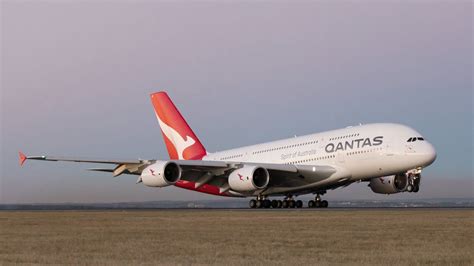
Melbourne holds a special place in the history of the Qantas Airbus A380 program. The airport hosted the airline’s first scheduled A380 passenger flight in 2008 when the aircraft launched service between Melbourne and Los Angeles.
For years, Melbourne maintained a strong presence in the airline’s A380 schedule. At one point in early 2020, the airport saw two daily superjumbo departures, including one to Los Angeles and another to Singapore.
Today the situation looks very different. Qantas now operates only limited A380 flights from Melbourne, mostly the twice-weekly service to Los Angeles. Occasional flights to Singapore have also appeared sporadically, such as during July and September 2023, and again in May and November 2025.
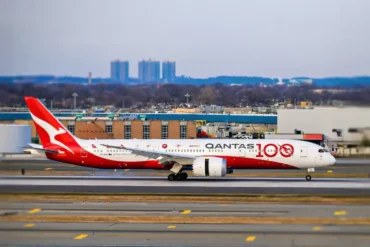
However, this chapter will close in October 2026, when Qantas plans to replace the Melbourne–Los Angeles service entirely with the Boeing 787-9 Dreamliner. The transition reflects the airline’s increasing reliance on smaller, more efficient long-haul aircraft.
The final scheduled A380 departure from Melbourne is expected on October 24, 2026. Flight QF93 will leave Melbourne at 9:45 AM, arriving in Los Angeles at 6:05 AM local time the same day. The return flight, QF94, will depart Los Angeles at 8:55 PM and arrive back in Melbourne two days later due to time differences.
The Dubai Era: Qantas’ Middle East Connection
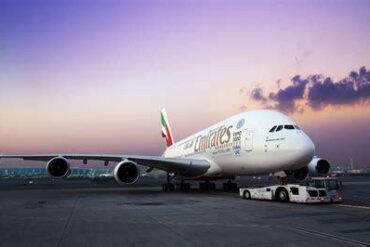
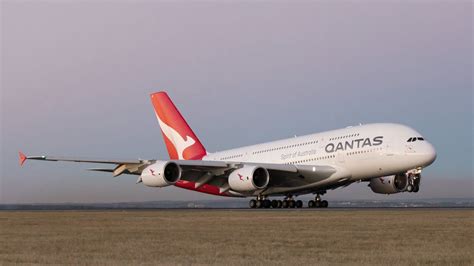
Among the most notable A380 routes Qantas discontinued were its services between Australia and London via Dubai. Between 2013 and 2018, Qantas restructured its European network through a partnership with Emirates, one of the world’s largest A380 operators.
During this period, Qantas flights from Sydney and Melbourne stopped in Dubai before continuing onward to London Heathrow. The strategy allowed the airline to tap into Emirates’ massive global hub while providing Australian passengers with easier access to Europe.
These routes became extremely busy. Nearly 30% of all Qantas A380 departures from Australia occurred on the two Dubai-linked routes:
- Melbourne – Dubai – London Heathrow
- Sydney – Dubai – London Heathrow
At the height of the partnership’s expansion, the two airlines collectively operated up to 14 daily flights between Australia and Dubai using various aircraft types.
On March 10, 2014, the network included departures from multiple Australian cities:
- Adelaide
- Brisbane
- Perth
- Melbourne
- Sydney
Several Emirates flights even continued beyond Australia to New Zealand, many operated by the A380. The partnership demonstrated the enormous scale of long-haul connectivity built around Dubai’s rapidly growing hub.
The Changing Role of the Airbus A380 at Qantas
Despite these route reductions, the Airbus A380 remains an important part of the Qantas fleet. The aircraft still operates flagship services, particularly on high-demand routes where passenger volumes justify its capacity.
However, modern airline economics increasingly favor twin-engine long-range aircraft such as the Boeing 787-9. These jets carry fewer passengers but consume significantly less fuel, allowing airlines to open routes that would be uneconomical with larger aircraft.
In practical terms, the A380 is evolving from a widespread network aircraft into a specialized flagship used only on select routes.
Qantas’ decision to end A380 operations on these 12 routes illustrates the broader transformation occurring across the aviation industry. The superjumbo remains an engineering marvel—capable of carrying hundreds of passengers across oceans—but airlines are now balancing its grandeur with the efficiency of modern aircraft designs.
The result is a quieter but still fascinating chapter in aviation history: the gradual reshaping of the world’s largest passenger aircraft within the evolving strategies of global airlines.