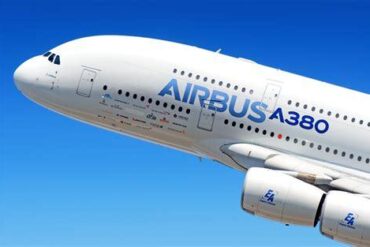
The Airbus A380, once celebrated as the pinnacle of long-haul luxury and capacity, is facing renewed turbulence as global forces reshape aviation economics. In 2026, scheduled flights operated by the double-decker aircraft have fallen sharply by 17% year-on-year, signaling a critical inflection point for the world’s largest passenger jet. What was already a fragile recovery following the pandemic is now being tested by geopolitical instability, rising fuel costs, and shifting airline strategies.
Airlines had cautiously reintroduced the A380 into service after its near-total grounding in the early 2020s. For a brief moment, the aircraft appeared to be enjoying a renaissance, with passenger demand rebounding and capacity constraints favoring larger aircraft. However, the current landscape tells a different story—one where efficiency, flexibility, and cost control are once again taking precedence over sheer scale.
The numbers illustrate the magnitude of the shift. Across April and May, global A380 operations dropped from 15,001 flights in 2025 to just 12,449 in 2026, according to aviation analytics data. This decline reflects not only reduced demand on key long-haul routes but also the operational challenges imposed by geopolitical disruptions, particularly in the Middle East.
Geopolitical Tensions Ground Key A380 Fleets
The most striking development comes from Qatar Airways, which has taken the extraordinary step of temporarily suspending all Airbus A380 operations during April and May 2026. This represents a complete halt compared to 610 scheduled flights during the same period the previous year.
The decision underscores how external pressures—particularly the ongoing Iran-related crisis—are forcing airlines to rethink even their most iconic assets. Longer flight paths to avoid restricted airspace, combined with surging fuel prices, have made operating the four-engine A380 significantly less economical. In this environment, even premium-heavy carriers are prioritizing efficiency over capacity.
Qatar Airways has indicated a planned return of A380 services in June, but uncertainty remains. The airline’s emphasis on passenger safety and operational adaptability highlights a broader industry trend: resilience now outweighs prestige.
Major Operators Scale Back Superjumbo Deployments
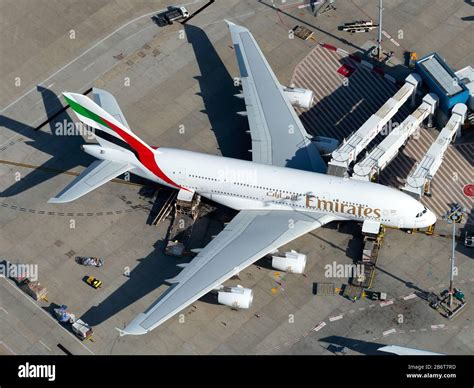
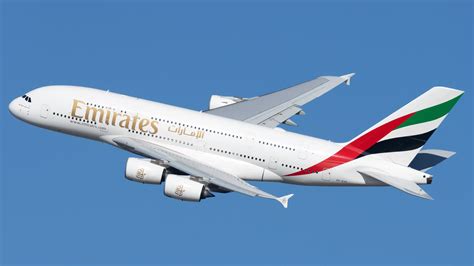
The impact is not isolated. Emirates, the world’s largest A380 operator, has reduced its scheduled flights by 20%, dropping from 9,834 to 7,862 across the same two-month period. Despite its deep reliance on the aircraft, even Emirates is adjusting capacity to align with evolving market realities.
Similarly, Etihad Airways has trimmed its A380 operations by 16%, reflecting a cautious approach amid uncertain demand and operational constraints. These reductions demonstrate that even airlines historically committed to the A380 are no longer immune to external pressures.
In Asia, Korean Air has recorded one of the steepest proportional declines, cutting flights by 22%. With only a handful of A380s in its fleet, the airline’s strategy suggests a gradual pivot toward more versatile, fuel-efficient aircraft.
European Carriers Mirror the Downward Trend
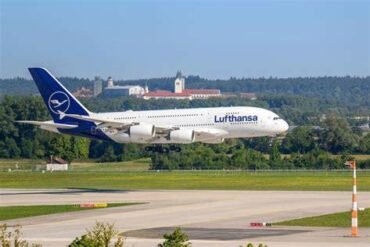
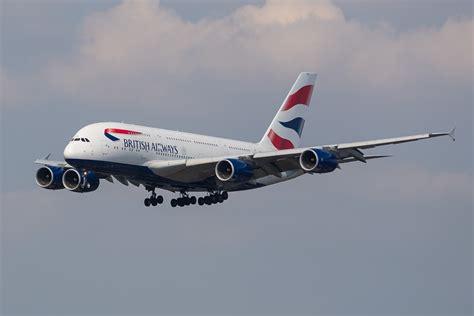
European operators are also scaling back. British Airways has reduced its A380 schedule by 15%, while Lufthansa has implemented a 13% cut. These adjustments reflect a broader recalibration across transatlantic and intercontinental networks, where demand volatility and cost pressures are reshaping route planning.
For these carriers, the A380 remains a valuable asset on high-density routes such as London to Los Angeles or Frankfurt to major Asian hubs. However, its deployment is becoming increasingly selective. Airlines are prioritizing routes where the aircraft’s capacity can be fully utilized, avoiding scenarios where lower load factors would erode profitability.
The European perspective highlights a key reality: the A380 is no longer a default choice for flagship routes. Instead, it is being repositioned as a niche solution for specific market conditions.
A380 Growth Persists in Select Markets
Despite the overall decline, the narrative is not entirely negative. A handful of airlines are expanding their A380 operations, demonstrating that the aircraft still holds strategic value under the right conditions.
Qantas has increased its A380 flights by an impressive 27%, capitalizing on strong demand for long-haul travel between Australia and major global hubs. Likewise, All Nippon Airways has boosted its operations by 26%, reflecting a targeted deployment strategy focused on high-demand leisure routes.
Singapore Airlines has also expanded its A380 usage by over 20%, reinforcing its commitment to premium-heavy routes where the aircraft’s spacious cabins and flagship products deliver a competitive edge. Meanwhile, Asiana Airlines has recorded a more modest 10% increase, indicating steady but cautious growth.

These exceptions reveal an important nuance: the A380 is not obsolete, but its role is evolving. Airlines that can align the aircraft with strong demand, premium offerings, and optimized route networks continue to extract value from it.
The Future of the Airbus A380 in a Changing Industry
The 17% decline in A380 flights is more than a statistical shift—it is a reflection of deeper structural changes within the aviation industry. Rising fuel costs, geopolitical uncertainty, and the growing dominance of twin-engine widebodies are reshaping how airlines think about capacity and efficiency.
Aircraft such as the Boeing 787 and Airbus A350 offer comparable range with significantly lower operating costs, making them more adaptable to fluctuating demand. In contrast, the A380’s size and four-engine configuration limit its flexibility, particularly in an era where route dynamics can change rapidly.
Yet, the A380’s story is far from over. Its unmatched passenger experience, high-capacity potential, and iconic status ensure that it will remain part of the global fleet for years to come. What is changing is how and where it is used.
Rather than dominating long-haul travel, the A380 is transitioning into a specialized role—deployed on routes where its strengths can be fully leveraged. This shift marks not the end of an era, but the beginning of a more focused and strategic chapter for aviation’s most recognizable giant.