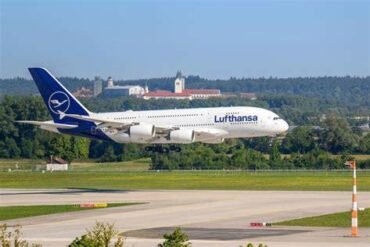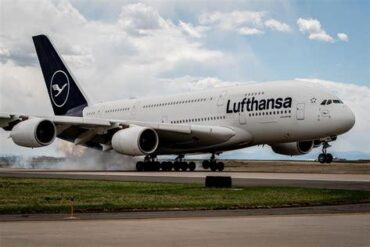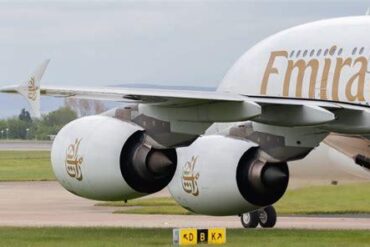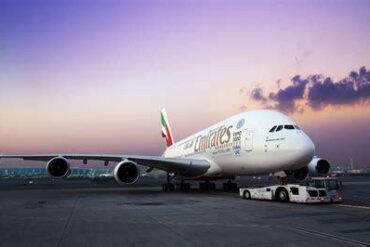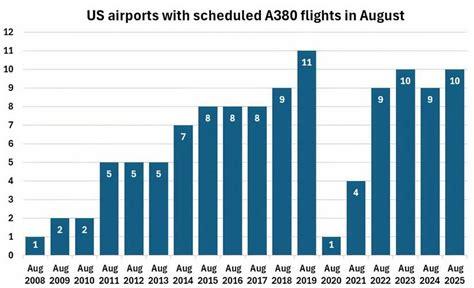
The Airbus A380 may never have conquered the fleets of America’s largest airlines, but the world’s biggest passenger jet continues to command attention across the United States every summer. In the third quarter of 2026, the double-decker aircraft is once again set to become a familiar sight at major international gateways as global carriers deploy the superjumbo on high-demand long-haul routes linking the US with Europe, the Middle East, Asia, and Australia.
According to Cirium fleet and schedule data, US airports will collectively receive 2,134 inbound Airbus A380 departures between July and September 2026. While only ten American airports will host scheduled A380 operations during the period, traffic is heavily concentrated at a handful of major hubs where premium demand and international connectivity remain exceptionally strong.
Los Angeles International Airport and New York’s John F. Kennedy International Airport dominate the market, together accounting for nearly half of all US-bound A380 flights this summer. Their prominence highlights how the aircraft continues to thrive on dense international trunk routes where airlines can maximize both seat capacity and premium cabin revenue.
Los Angeles Leads The US Airbus A380 Market
Los Angeles International Airport will once again claim the title of America’s busiest Airbus A380 gateway. During Q3 2026, LAX is expected to handle 518 A380 flights, making it the single largest superjumbo destination in the country.
The scale of operations at Los Angeles reflects the city’s role as a global aviation crossroads connecting North America with Asia, Oceania, Europe, and the Gulf region. Six airlines are scheduled to deploy the aircraft into LAX this summer.
These carriers include:
- Emirates from Dubai
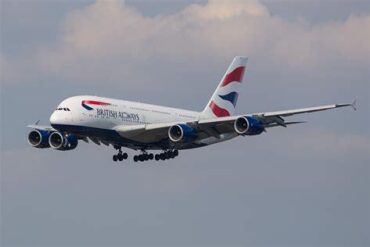
- British Airways from London Heathrow
- Lufthansa from Munich
- Korean Air from Seoul Incheon
- Asiana Airlines from Seoul Incheon
- Qantas from Sydney and Melbourne
The mix of routes demonstrates the A380’s continuing value on long-haul services where slot constraints, strong business-class demand, and tourism traffic create ideal operating conditions for very large aircraft.
Qantas remains one of the standout operators at LAX, particularly on ultra-long-haul services from Australia. Meanwhile, Emirates continues using the aircraft extensively on its flagship Dubai-Los Angeles route, one of the longest regularly scheduled A380 flights in the world.
New York JFK Remains A Premium Heavyweight
John F. Kennedy International Airport ranks second nationwide with 460 Airbus A380 movements expected during the quarter. Although JFK hosts fewer airlines than LAX, the airport maintains extraordinarily high frequencies on several premium-focused routes.
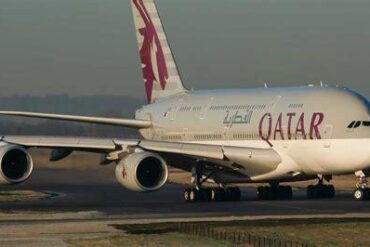
Emirates operates both nonstop Dubai-JFK flights and its unique Milan Malpensa-tagged service using the superjumbo. Korean Air and Asiana also continue deploying the A380 between Seoul and New York, reinforcing the aircraft’s importance on transpacific business corridors.
The concentration of premium travelers at JFK makes the airport particularly suitable for the A380. Airlines operating there rely heavily on first-class and business-class revenue, areas where the aircraft still offers unmatched onboard space and passenger appeal.
San Francisco, Boston, And Washington Sustain Strong Demand
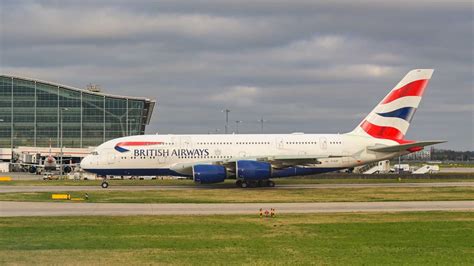
San Francisco International Airport holds third place nationally with 224 Airbus A380 rotations planned this summer. British Airways and Emirates each contribute 92 flights, while Lufthansa accounts for the remaining 40 services from Munich.
San Francisco’s technology-driven corporate travel market remains one of the strongest justifications for continued A380 deployment. The combination of Silicon Valley business traffic and robust tourism flows allows airlines to consistently fill large premium cabins.
Washington Dulles International Airport and Boston Logan International Airport follow closely behind with 184 and 183 flights respectively.
At Washington Dulles, Emirates and Lufthansa each operate 92 A380 services from Dubai and Munich. Boston’s schedule is split almost evenly between British Airways and Lufthansa, with British Airways maintaining daily operations throughout the season.
These airports underline how the Airbus A380 continues to excel in markets where international demand remains concentrated rather than fragmented across multiple domestic hubs.
Honolulu’s Unique Airbus A380 Story
One of the most unusual A380 operations in the United States continues to belong to Honolulu International Airport. ANA will operate 157 flights between Tokyo Narita and Honolulu using its distinctive turtle-themed Airbus A380 fleet.
The aircraft, nicknamed the “Flying Honu,” has become one of the most recognizable special liveries in global aviation. ANA originally acquired the A380 specifically for the Hawaii leisure market, a rare example of an airline tailoring the superjumbo almost entirely around vacation demand rather than business travel.
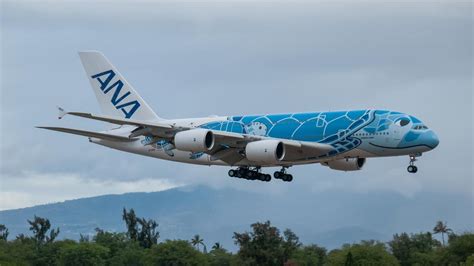
Despite broader industry skepticism surrounding the aircraft, ANA’s Hawaii operation has proven that dense leisure routes can still support very large aircraft when seasonal demand is strong enough.
Dallas, Miami, Houston, And Denver Complete The List
Dallas/Fort Worth International Airport will see 139 A380 flights this summer, divided between British Airways services from London Heathrow and Qantas flights from Sydney.
Further down the rankings, Houston George Bush Intercontinental Airport and Miami International Airport will each receive 92 A380 operations. Emirates serves Houston from Dubai, while British Airways deploys the aircraft daily between London Heathrow and Miami.
Although the frequency totals are identical, the seat capacity differs noticeably because of airline configuration choices. British Airways offers 469 seats per flight on its A380s, producing more than 43,000 one-way seats during the quarter. Emirates, configured with 484 seats, provides over 44,500 seats on the Houston route alone.
Denver International Airport rounds out the top ten, with Lufthansa operating 85 A380 rotations from Munich.
Why The Airbus A380 Still Matters In America
The Airbus A380 may no longer represent the future of commercial aviation, but its role in the US market remains surprisingly resilient. For international airlines serving constrained airports and premium-heavy routes, the aircraft still delivers unmatched passenger volume and onboard comfort.
Its continued presence across ten US airports in summer 2026 reflects a simple reality: while airlines increasingly favor smaller, fuel-efficient twinjets for flexibility, certain global routes still demand the scale, prestige, and capacity that only the A380 can provide.