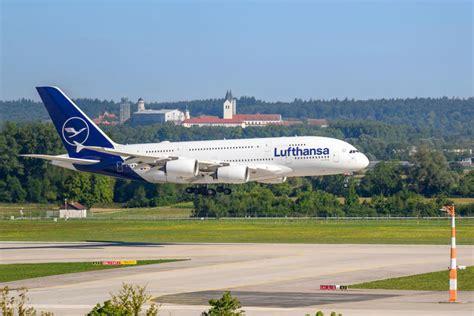
Flying aboard the Airbus A380 remains one of commercial aviation’s rarest pleasures. The aircraft’s sheer scale, quiet cabin, and unusually generous sense of space still set it apart more than fifteen years after its debut. High ceilings soften long-haul fatigue, wider seats reduce shoulder squeeze even in economy, and the aircraft’s engineering dampens turbulence and noise in ways smaller widebodies simply cannot replicate. Yet the experience is elusive. With fewer than 200 A380s active worldwide and only a handful of airlines committed to keeping them flying, each route assignment feels deliberate, almost ceremonial.
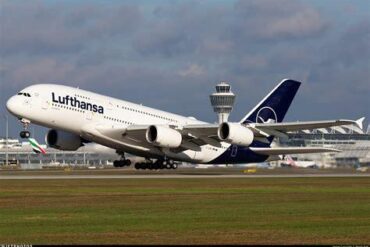
Among those carriers, Lufthansa occupies a unique middle ground. Once one of the A380’s biggest champions, later a reluctant caretaker, and now an operator with a carefully curated deployment strategy, the German flag carrier has transformed the superjumbo into a precision tool. In 2026, Lufthansa’s Airbus A380s will serve only a small, exclusive set of airports, each chosen for a mix of demand density, alliance connectivity, and seasonal economics rather than sheer distance.
A Carefully Right-Sized Airbus A380 Fleet
Lufthansa currently operates eight Airbus A380-800s, all powered by the Rolls-Royce Trent 900 engine. The airline originally received fourteen aircraft between 2010 and 2015, at a time when global hub-to-hub growth favored very large aircraft. The COVID-19 pandemic abruptly rewrote that logic. Six A380s were sold back to Airbus, and the remaining eight were parked alongside the Airbus A340-600, seemingly marking the end of the type’s Lufthansa chapter.
Demand recovered faster than expected. Delays to replacement aircraft, including the Boeing 777X, forced Lufthansa to reconsider. The A380 returned not as a temporary patch, but as a strategic asset now expected to remain in service well into the 2030s. Each aircraft seats 509 passengers in a four-class configuration, making it the highest-capacity jet in the Lufthansa fleet and a powerful lever on slot-constrained, premium-heavy routes.
Munich: The Sole Airbus A380 Home Base
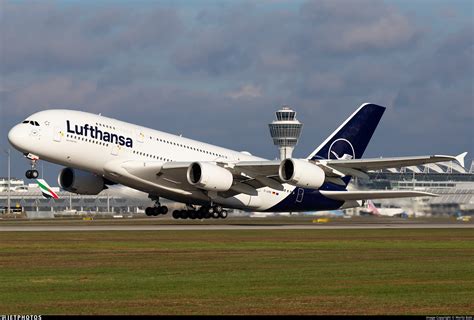
One of the most consequential decisions Lufthansa has made is to consolidate all A380 operations at Munich Airport. Frankfurt, once the heart of Lufthansa’s A380 network, now belongs firmly to the Boeing 747-8, which the airline promotes as its flagship. Munich, by contrast, has become the superjumbo stronghold, allowing Lufthansa to streamline crew training, maintenance, and scheduling while using the A380 as a high-capacity complement to the Airbus A350-900.
This consolidation also clarifies Lufthansa’s thinking. The A380 is no longer about prestige or global reach. It is about upgauging specific routes where demand peaks sharply and consistently enough to justify an aircraft with nearly 8,000 nautical miles of range that is rarely asked to fly anywhere near that limit.
North America: The Core of Lufthansa’s A380 Strategy
In 2026, the United States dominates Lufthansa’s A380 network, reflecting both strong transatlantic demand and the airline’s deep Star Alliance integration with United Airlines. Every North American A380 route operates seasonally, tracking the sharp rise and fall of summer travel between Europe and the US.
Los Angeles: The Flagship A380 Route
The busiest A380 route in Lufthansa’s system will be Munich–Los Angeles. Beginning March 27, the airline will operate the A380 daily, replacing the Airbus A350-900 that covers the route during the winter lull. Over the course of the year, this translates into 291 flights each way, making LAX the most consistent home for Lufthansa’s largest aircraft.
Los Angeles combines high premium demand, strong leisure traffic, and deep alliance feed, all while benefiting from slot constraints that reward maximum capacity per movement. The A380’s economics shine here, even though the route uses only a fraction of the aircraft’s theoretical range.
San Francisco: Seasonal Precision
Munich–San Francisco follows a tightly choreographed pattern. The A380 takes over on March 1, replacing the A350-900, and hands the route back on August 28. Silicon Valley’s corporate travel base, combined with heavy summer tourism, creates a near-perfect seasonal window for the superjumbo. Outside that window, the smaller A350 provides better year-round efficiency.
Washington Dulles: Alliance-Centric Capacity
The A380 arrives in Washington Dulles on March 28 and departs again on October 23. Dulles is a major United Airlines hub, allowing Lufthansa to fill the aircraft with connecting traffic across the eastern United States. The route’s political, diplomatic, and defense-related travel demand aligns neatly with the A380’s unusually large premium cabin.
Boston: An Outlier That Works
Boston Logan stands apart. It is not a United hub, yet Lufthansa will deploy the A380 from March 20 to October 24. The explanation lies in Boston’s concentration of higher education, biotech, and finance travel, combined with limited long-haul slot growth. The A380 becomes a capacity multiplier without adding frequencies.
Denver: A Newcomer That Earned Its Place
Perhaps the most intriguing inclusion is Denver International Airport, served by the A380 from July 1 to September 27. Denver saw its first Lufthansa A380 in 2025, and the route performed strongly enough to justify a repeat in 2026. High-altitude operations, strong United hub feed, and booming summer demand make Denver Lufthansa’s newest and most experimental A380 destination.
Notably absent from the 2026 map is New York JFK, once a cornerstone of Lufthansa’s A380 operations from both Frankfurt and Munich. In a sign of evolving fleet logic, the route now relies on the Airbus A350-900, trading size for flexibility.
Asia: Selective, Strategic, and Surprisingly Limited
Given Asia’s importance to Lufthansa, the A380’s limited Asian presence in 2026 stands out. Instead of Tokyo, Singapore, or Shanghai, the superjumbo will serve just two Asian cities, each chosen for very specific reasons.
Delhi: Alliance Strength Meets Premium Demand
The A380 operates daily between Munich and Delhi until October 24, totaling 285 days of service and making it the second-busiest A380 route in Lufthansa’s network. Delhi combines heavy business travel, a large diaspora market, and a powerful Star Alliance partner in Air India, providing extensive onward connectivity.
Crucially, the route’s distance is moderate by A380 standards, reducing fuel burn penalties while still exploiting the aircraft’s low per-seat costs.
Bangkok: Leisure Demand Without Limits
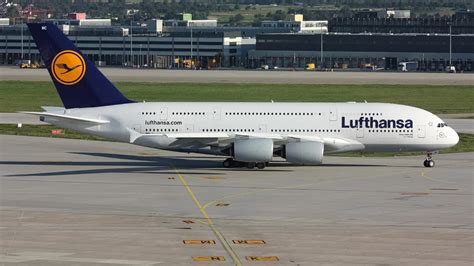
Bangkok represents the opposite side of the demand spectrum. The A380 serves the route until March 27, returns on October 25, and fills primarily with leisure travelers. Bangkok’s virtually bottomless tourism demand and strong economy-class loads suit the A380’s massive lower-deck cabin perfectly, while shorter stage length again keeps operating economics in check.
A Network Defined by What It No Longer Does
To understand Lufthansa’s 2026 A380 strategy, it helps to look backward. The aircraft debuted in Lufthansa colors on Frankfurt–Tokyo Narita in 2010, followed by Beijing and Johannesburg. Over the next decade, the A380 touched nearly every major global hub, from Singapore and Hong Kong to Miami and Houston.
None of those early flagship routes remain today. The shift is stark. Pre-pandemic, Lufthansa leaned heavily on Asia for A380 utilization. In 2026, the emphasis is unmistakably transatlantic, with Asia reduced to two carefully chosen markets.
This evolution reflects changes in fleet composition, demand patterns, and competition. The A350-900 now handles most Asian routes with greater frequency and lower risk, while the A380 is reserved for markets where sheer volume, not flexibility, is the defining constraint.
Inside the Lufthansa Airbus A380 Experience
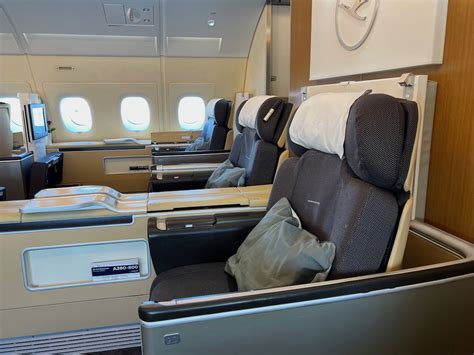
Onboard, Lufthansa’s A380s are configured with 509 seats across four classes. The lower deck houses 52 premium economy seats and 336 economy seats, taking full advantage of the aircraft’s width to deliver a cabin that feels noticeably less cramped than smaller widebodies. The upper deck features eight first class suites, 78 business class seats arranged six-abreast, and an additional 35 economy seats at the rear.
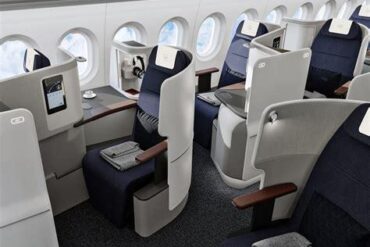
The airline plans to retrofit the fleet with a new business class product based on the Thompson Vantage XL, a staggered layout offering direct aisle access. The upgrade, scheduled for completion by mid-2027, deliberately avoids the full Allegris treatment seen on newer aircraft. Speed and certification simplicity outweigh brand uniformity, underscoring that the A380 is now a pragmatic workhorse rather than a showcase platform.
Why the A380 Still Matters at Lufthansa
Compared with the Boeing 747-8, the A380 offers similar first class capacity, slightly fewer business class seats, and significantly more economy seating. The 747-8 receives Lufthansa’s full branding attention, yet the A380 quietly performs a different role. It absorbs demand spikes that no other aircraft in the fleet can handle without adding frequencies, particularly at airports where slots are scarce and valuable.
In 2026, every airport welcoming Lufthansa’s A380 earns that distinction. These are not symbolic routes. They are markets where the airline has calculated, with precision, that nothing smaller will do.