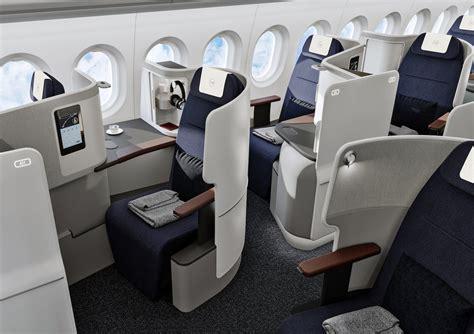
Lufthansa is preparing to redraw the boundaries of short- and medium-haul premium travel in Europe. Quietly but deliberately, the German flag carrier is moving toward introducing true business class seats on selected Airbus A320-family aircraft, breaking away from the long-standing European model of economy seats with a blocked middle. This is not a cosmetic tweak. It is a structural rethink of how premium narrowbody flying should feel, who it should serve, and where it should make money.
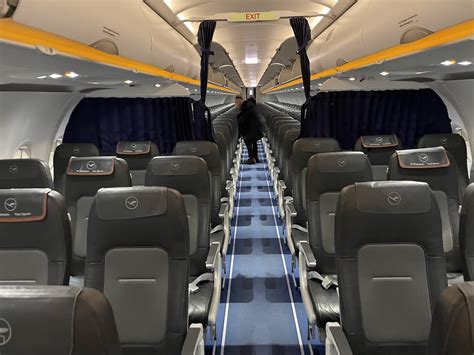
For decades, European business class has been defined by flexibility rather than comfort. Airlines optimized yield management by selling the same seat at different price points, adjusting cabin size flight by flight. Lufthansa mastered this model. Yet the market has shifted. Passenger expectations are increasingly shaped by long-haul standards, Gulf carriers, and premium-focused competitors operating longer thin routes. Lufthansa’s leadership now appears ready to meet that shift head-on.
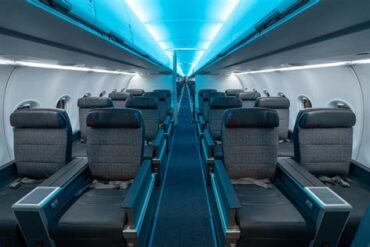
The catalyst comes from comments by Lufthansa Group CEO Carsten Spohr, who revealed that the airline is evaluating the introduction of recliner-style business class seats on some A320s. The concept mirrors a recent experiment at Eurowings, Lufthansa Group’s low-cost subsidiary, where select A320neos now operate with a small cabin of genuine business class recliners.
This signals a pragmatic evolution rather than a revolution. Lufthansa is not abandoning the traditional European model. Instead, it is selectively upgrading it where the economics and competitive pressure justify the investment.
Why Lufthansa Is Rethinking Narrowbody Business Class
The strategic logic behind this move is precise. Lufthansa is facing increasing competition on medium-haul routes that stretch beyond the classic intra-Europe market. Destinations such as Cairo, Amman, Istanbul, and Tel Aviv attract a mix of corporate travelers, diplomats, and high-yield leisure passengers who expect more than an empty middle seat and a cold plate.
On these routes, competitors often deploy widebody aircraft or narrowbodies with enhanced premium cabins. The traditional European business class product looks thin by comparison. Introducing real recliner seats allows Lufthansa to defend yields without deploying larger aircraft or overhauling its entire short-haul fleet.
Crucially, this is about route-specific optimization, not brand-wide uniformity. Lufthansa understands that upgrading every A320 would undermine the flexibility that makes European business class profitable in the first place. Selectivity is the advantage.
Lessons From Eurowings’ Two-Tier Business Class Experiment
Eurowings has already provided Lufthansa with a live testbed. On certain A320neo aircraft, Eurowings operates a two-tier business class cabin. The first section features eight proper recliner seats in a 2-2 configuration, followed by traditional European business class seating, and then economy.
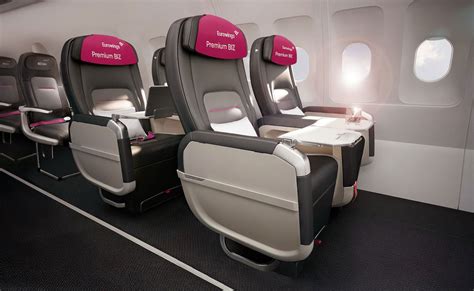
This layout is unusual, but deliberate. It allows the airline to test willingness to pay for comfort without redesigning the entire cabin. According to Lufthansa leadership, the results have been strong enough to justify extending the concept to Lufthansa Classic, the group’s flagship brand.
Spohr has indicated that Lufthansa would likely start with two rows of recliner seats, matching the Eurowings configuration. That limited footprint keeps weight, certification complexity, and retrofit costs under control while offering a visibly superior product where it matters most.
Why This Won’t Transform Short-Haul Europe Flying
It is important to temper expectations. This is not a revolution in intra-Europe business class. Lufthansa has little incentive to upgrade short flights between Frankfurt, Paris, and Milan. On those routes, nearly every major airline offers the same product, and passengers book based on schedule, alliance, and price.
The genius of European business class is its elasticity. Airlines can sell more or fewer rows as demand shifts. Fixed recliner seats reduce that flexibility. Lufthansa knows this, which is why these aircraft will be deployed selectively on longer, premium-heavy sectors where consistency matters more than cabin reconfiguration.
This also explains why the rollout will remain limited. The goal is competitive relevance, not marketing spectacle.
The ITA Airways Contrast and What It Reveals
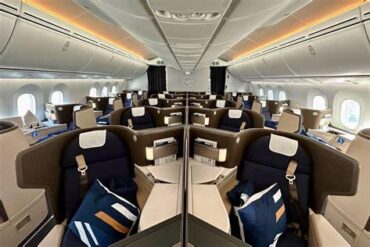
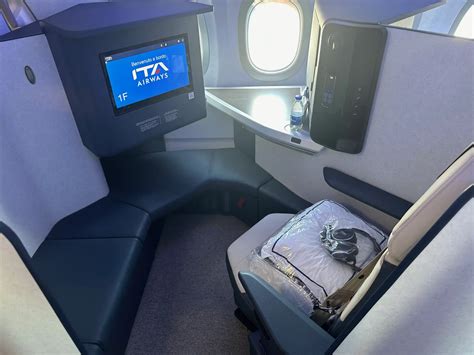
The Lufthansa Group already has access to an even more ambitious narrowbody business class product through ITA Airways. Some ITA A321neos feature full reverse herringbone lie-flat seats, rivaling long-haul business class in comfort.
Yet those routes are reportedly losing money. Spohr has acknowledged that while the seats are impressive, the economics have not worked. This insight is critical. Lufthansa is not chasing luxury for its own sake. It is seeking a measured upgrade that balances passenger comfort with sustainable margins.
Recliner seats represent that middle ground. They offer a tangible improvement without the cost, weight, and space penalties of lie-flat suites.
The Pricing Challenge of a Two-Tier Business Class
The most delicate question remains pricing. If Lufthansa mirrors Eurowings, the recliner seats may be sold as a premium within business class, rather than replacing it outright. That creates complexity. Corporate travelers booking on company policies may find themselves in standard business class while recliners sit empty unless travelers pay out of pocket.
Handled poorly, this could dilute the value proposition. Handled well, it could unlock incremental revenue without alienating core customers. Lufthansa’s strength lies in pricing discipline and network planning, but this will be one of the most closely watched aspects of the rollout.
A Calculated Evolution, Not a Gamble
Lufthansa’s plan to introduce real business class seats on select Airbus A320s reflects a carrier that understands both its heritage and its future. This is not about chasing headlines. It is about aligning product quality with route economics, using data-driven experimentation rather than sweeping change.
If executed carefully, Lufthansa could set a new benchmark for medium-haul premium travel in Europe, one that respects the efficiency of the old model while acknowledging that expectations have moved on. In a market where subtle differences increasingly define airline choice, that balance may prove decisive.