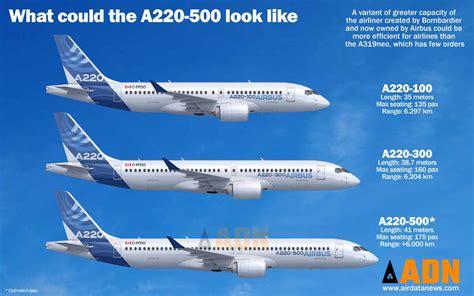
Airbus is quietly preparing one of the most consequential narrowbody moves of the decade. According to industry sources cited by Reuters, the European manufacturer is expected to formally launch development of the Airbus A220-500 later this year, with a potential public unveiling at the Farnborough International Airshow in July. This stretched, roughly 180-seat evolution of the A220 family sits squarely in the heart of today’s single-aisle battlefield, raising an unavoidable question across boardrooms and fleet planning departments: is this aircraft a clever complement to the A320neo, or the first internal rival Airbus has willingly unleashed on its own bestseller?
The answer is not as simple as “either-or.” The A220-500 exists at the intersection of operational efficiency, passenger experience, and production strategy, and that is precisely why it matters.
Why The A220 Platform Still Feels Disruptive
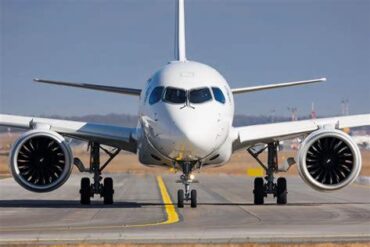
Unlike many aircraft flying today, the A220 was born as a clean-sheet design, engineered in the 21st century rather than adapted from decades-old architecture. That distinction is not marketing fluff; it translates directly into lower structural weight, modern aerodynamics, and systems optimized for digital-era maintenance.
Airlines have noticed. The current A220 variants have earned a reputation for fuel efficiency, lower operating costs, and high dispatch reliability, particularly on short- to medium-haul routes. As a lighter aircraft than the A320 family, the A220 benefits from reduced landing and navigation fees at many airports, while its simplified systems reduce long-term maintenance burden. Stretching this platform to the -500 variant extends those advantages into a capacity bracket traditionally dominated by older narrowbodies.
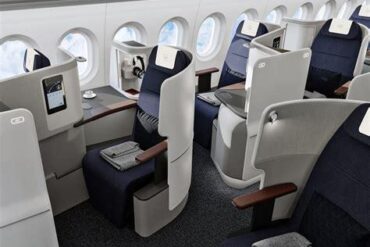
Passenger comfort has also become a quiet differentiator. The A220’s 2-3 seating layout removes a large proportion of middle seats, subtly improving the onboard experience without sacrificing density. Wider seat cushions, the largest windows of any narrowbody, and unusually deep overhead bins contribute to a cabin that feels more generous than its size suggests.
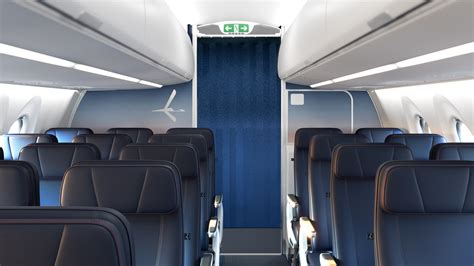
Perhaps most underappreciated is cabin pressurization. The A220 operates at an equivalent cabin altitude of around 6,000 feet, noticeably lower than the long-standard 8,000 feet common on legacy designs. The result is reduced fatigue, better hydration, and less post-flight jet lag—small physiological gains that frequent flyers feel immediately.
Stretching The A220 Without Breaking The Logic
The A220-500 is expected to seat around 180 passengers, placing it directly between high-density A220-300 layouts and lower-capacity A320neo configurations. From a technical perspective, the stretch is well within the design margins of the airframe, and Airbus has already signaled that engineering work is underway to evaluate performance, weights, and economics.
Crucially, Airbus is also rolling incremental improvements into the A220 family. Enhanced avionics, aerodynamic tweaks, and the upcoming Airspace XL overhead bin option all suggest a platform still very much in active development rather than nearing its limits. A stretched variant benefits from these upgrades immediately, allowing Airbus to market the A220-500 not as a compromise aircraft, but as a refined one.
Cannibalization Or Portfolio Optimization
At first glance, the A220-500 appears to threaten the lower end of the A320neo market. In isolation, that concern is valid. However, Airbus is no longer optimizing for single-model dominance; it is optimizing for production flow and profitability.
Demand for the A321neo, particularly in long-range and high-density configurations, is so strong that Airbus faces multi-year delivery backlogs. By shifting smaller, thinner routes to the A220-500, airlines can free A320 and A321 slots for higher-margin missions. This, in turn, allows Airbus to prioritize its most profitable products without leaving customers stuck in extended delivery queues.
From a fleet-planning perspective, the A220-500 offers flexibility. Airlines gain a modern aircraft capable of covering short- and medium-haul routes efficiently while maintaining enough commonality within the Airbus ecosystem to simplify training and operations. In this context, the A220-500 looks less like internal competition and more like portfolio fine-tuning.
A Direct Shot Across Boeing’s Bow
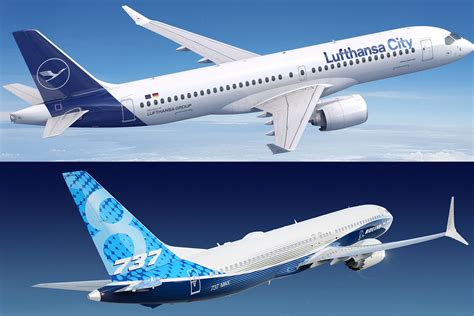
If any manufacturer should be uneasy, it is not Airbus. The Boeing 737 MAX 8 occupies nearly the same capacity space as the proposed A220-500, yet approaches the mission from a very different design philosophy. The MAX 8 is heavier, optimized for longer ranges, and often deployed on short sectors where its capabilities go unused.
A fuel efficiency advantage of even 5–10% on two- to three-hour routes would materially shift operating economics. For airlines running high-frequency regional and continental services, that difference compounds quickly into real savings. This is why the A220-500 is increasingly described as a potential “737 MAX disruptor” rather than merely an internal Airbus experiment.
A Calculated Bet On The Future Of Narrowbodies
The A220-500 is not a reckless gamble. It is a calculated response to evolving airline needs, production realities, and competitive pressure. Rather than threatening the A320neo’s legacy, it may ultimately protect it—by ensuring Airbus controls every meaningful segment of the narrowbody market with aircraft optimized for specific missions.
In an industry where efficiency margins are razor-thin and passenger expectations continue to rise, the smartest moves are often the quiet ones. The A220-500, if launched as expected, may prove to be exactly that: not a disruption born of desperation, but a deliberate reshaping of the narrowbody landscape.