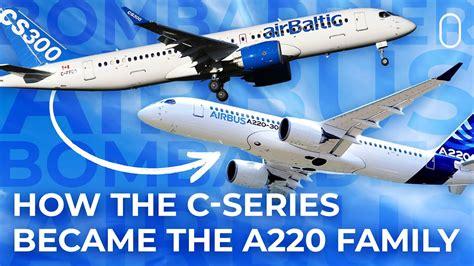
The Airbus A220 has officially crossed a defining milestone in modern commercial aviation. With more than 500 aircraft delivered worldwide, the once-uncertain program that began life as the Bombardier CSeries has evolved into one of the most strategically important aircraft families in the global narrowbody market. Airbus confirmed that eight A220 jets were delivered in March 2026, pushing the cumulative total to 501 aircraft since the type entered service.
For Airbus, the achievement represents far more than a numerical milestone. It reflects the transformation of a struggling regional aircraft project into a competitive global product capable of challenging established market segments. The aircraft now operates across North America, Europe, and Asia, serving both major legacy carriers and emerging airlines looking for a versatile and efficient jet in the 100-150 seat category.
Yet even as the program celebrates success, the A220 faces complex challenges, including engine reliability issues, production bottlenecks, and growing competition from Embraer’s E2 family. These dynamics make the 500-delivery milestone both a celebration of past progress and a reminder that the program’s most decisive chapters are still unfolding.
The Origins Of The Airbus A220: From Bombardier CSeries To Global Success
The aircraft now known as the Airbus A220 began its journey under a different name and a very different corporate strategy. Originally developed by Bombardier Aerospace, the CSeries program was designed as a clean-sheet aircraft family targeting the 100 to 150 seat market, a segment long dominated by stretched regional jets and aging narrowbodies.
Bombardier’s vision was ambitious. Rather than modifying existing designs, the company pursued advanced aerodynamics, lightweight materials, and cutting-edge engine technology to deliver a highly efficient aircraft optimized for smaller markets. The result was a plane featuring composite wings, a spacious five-abreast cabin layout, and Pratt & Whitney’s geared turbofan engines, which promised significant improvements in fuel efficiency and noise reduction.
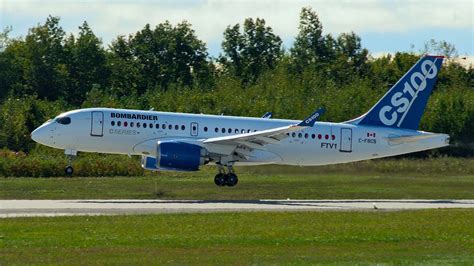
The first CS100 prototype flew in September 2013, marking the debut of an aircraft that would later reshape the lower end of the narrowbody market.
Three years later, the aircraft entered commercial service when SWISS International Air Lines introduced the CS100 in July 2016. Passengers immediately noticed the difference: wider seats, larger windows, and a quieter cabin compared with traditional regional jets.
However, despite strong technical performance, the program struggled financially. Development costs soared into the billions, and Bombardier faced intense competitive pressure from larger manufacturers.
The Trade Dispute That Changed Aviation Strategy
The turning point for the program arrived during one of the most dramatic commercial disputes in aviation history. After Delta Air Lines placed a landmark order for the CSeries, the aircraft suddenly gained a foothold in the lucrative United States market.
That success triggered a fierce response from Boeing, which argued that Bombardier had received unfair government subsidies. The dispute escalated into a trade battle, with the United States government proposing steep tariffs on the Canadian aircraft.
At the time, the tariffs threatened to effectively block the aircraft from entering the American market. For Bombardier, the implications were severe. Without access to the United States—one of the world’s largest aviation markets—the CSeries program risked collapse.
In July 2018, a surprising strategic alliance changed everything.
Airbus acquired a majority stake in the CSeries program, integrating the aircraft into its global product portfolio and rebranding it as the Airbus A220. The partnership allowed Airbus to deploy its sales network, supply chain expertise, and manufacturing infrastructure, stabilizing a program that had once appeared doomed.
The move also proved to be a strategic masterstroke. Airbus gained a modern aircraft in a market segment it previously lacked, while Bombardier avoided financial catastrophe.
How Airbus Expanded The A220 Program
Once Airbus took control of the program, the company moved quickly to expand production and strengthen market confidence. Airbus leveraged its extensive global relationships with airlines and suppliers, giving the A220 immediate credibility as part of a major manufacturer’s portfolio.
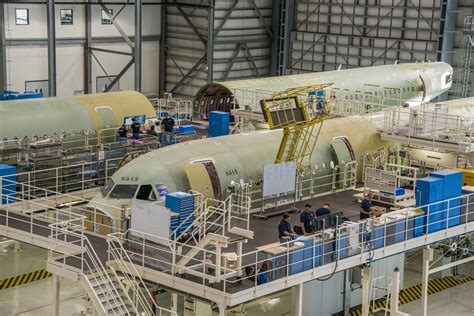
One of the most important developments was the creation of a second A220 assembly line in Mobile, Alabama. This facility allowed Airbus to produce aircraft closer to its North American customers while avoiding potential trade disputes.
Production began at the Alabama site in 2019, and the first US-built A220 was delivered to Delta Air Lines in 2020.
Since then, the program has steadily gained momentum. Airbus has secured hundreds of additional orders from airlines seeking a modern aircraft capable of operating both short-haul and medium-range routes.
Today, the A220 family consists of two variants:
- A220-100, the smaller model optimized for roughly 100–120 passengers
- A220-300, the larger variant typically configured for 130–150 passengers
Together, they provide airlines with an aircraft capable of operating routes that fall between traditional regional jets and larger narrowbody aircraft.
Airlines Driving The A220’s Global Adoption
Although dozens of airlines operate the aircraft, the A220 fleet remains concentrated among a relatively small group of carriers that have embraced the jet as a core part of their network strategies.
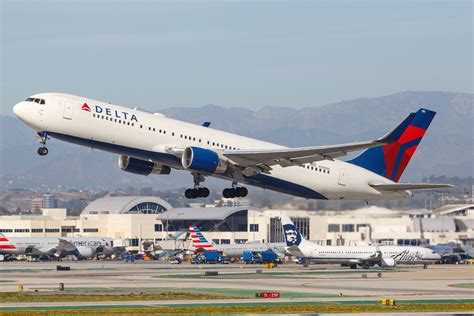
The largest operator of the Airbus A220 today is Delta Air Lines, which currently flies 85 aircraft across both A220 variants. With 62 additional jets on order, Delta is expected to remain the world’s dominant A220 operator for years to come.
Other major operators include JetBlue Airways, Air France, airBaltic, Breeze Airways, Air Canada, ITA Airways, and SWISS. Each airline has integrated the aircraft into its network in slightly different ways, demonstrating the versatility of the design.
North America has become the strongest market for the aircraft, where airlines value the jet’s ability to operate longer routes with smaller passenger demand. The aircraft has proven especially effective on:
- Transcontinental routes with moderate demand
- Connections between secondary cities
- Business-focused regional markets
- Thin long-haul domestic routes
This flexibility allows airlines to maintain high frequency while avoiding the excess capacity of larger aircraft such as the Airbus A320neo or Boeing 737-8.
Meanwhile, Airbus continues to pursue expansion in Europe and Asia. Two significant recent orders underscore that ambition.
LOT Polish Airlines ordered 40 A220 aircraft with 44 additional options, while the Lufthansa Group selected 40 A220-300s for its new City Airlines subsidiary, with 20 additional options. These deals signal growing confidence in the aircraft outside its North American stronghold.
Rising Competition From Embraer’s E2 Family
Despite its growing success, the A220 no longer enjoys uncontested dominance in the 100-150 seat category. The most significant competitor is the Embraer E-Jet E2 family, particularly the E195-E2.
The Brazilian manufacturer has gained momentum by positioning its aircraft as a more precise fit for certain regional and medium-density routes. In several high-profile competitions, airlines have selected the Embraer jet over the A220.
Recent victories for Embraer include campaigns involving Finnair, LATAM Brasil, Avelo Airlines, SAS, and Virgin Australia.
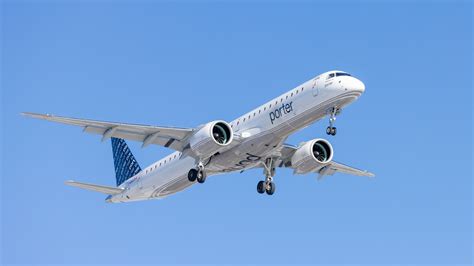
In many of these cases, the decision was not about overall aircraft quality but rather fleet optimization. The E195-E2’s slightly smaller capacity and lower trip cost made it better suited to airlines seeking maximum efficiency on thinner routes.
For Airbus, the challenge lies in positioning the A220 as a small mainline aircraft rather than a large regional jet. The aircraft’s superior passenger comfort and longer range remain strong selling points, but some airlines prefer the right-sized economics of the Embraer design.
Industry analysts note that Embraer outsold the A220 by roughly three to one in 2025, highlighting how competitive the market segment has become.
Engine Problems Continue To Affect Operations
While competition is an external challenge, the A220’s most persistent issue comes from within its propulsion system. The aircraft relies on Pratt & Whitney PW1500G geared turbofan engines, a technology designed to deliver exceptional fuel efficiency and lower noise levels.
However, the engines have experienced durability and maintenance challenges that have affected airlines worldwide.
By late 2025, reports suggested that nearly 20 percent of the global A220 fleet had been temporarily grounded due to engine-related inspections and maintenance requirements. These disruptions have forced airlines to adjust schedules and operational planning.
Some carriers have even exited the program entirely. EgyptAir sold its A220 fleet after prolonged engine downtime limited aircraft availability. Air Austral also decided to phase out the aircraft following similar reliability concerns.
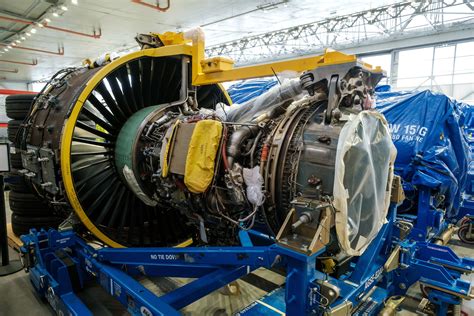
Pratt & Whitney and its parent company RTX have responded by expanding maintenance capacity and improving overhaul processes. One key initiative involves Delta TechOps in Atlanta, which plans to increase geared turbofan maintenance capacity to up to 450 engines annually.
The goal is to accelerate engine repairs and reduce aircraft downtime for airlines operating the type.
Production Challenges And Airbus’ Growth Strategy
Another critical issue for the program has been production ramp-up. When Airbus took control in 2018, the A220 production rate was extremely low, averaging fewer than two aircraft per month.
Over time, manufacturing output gradually increased. By 2025, Airbus delivered 93 A220 aircraft in a single year, bringing the monthly rate to roughly eight aircraft per month.
Although this represents major progress, Airbus still aims to expand production significantly.
The company has outlined an ambitious roadmap that includes:
- 12 aircraft per month by late 2026 or early 2027
- 13 aircraft per month by 2028
Achieving those targets will depend on stabilizing the engine supply chain and ensuring suppliers can meet rising demand.
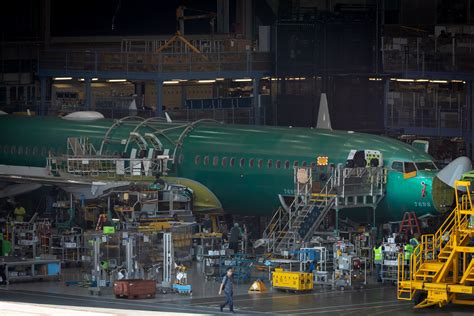
Increasing production is essential not only to satisfy airline orders but also to reduce manufacturing costs, which remain higher than Airbus would like for the program.
The Potential Game-Changer: A Future A220-500
Beyond production improvements, Airbus is already considering the next evolutionary step for the A220 family.
Industry sources indicate that Airbus is exploring the launch of a larger A220-500 variant, which would extend the aircraft family into a slightly higher capacity category.
The proposed aircraft would likely seat between 160 and 180 passengers, positioning it between today’s A220-300 and the Airbus A320neo.
If launched, the aircraft could provide airlines with a seamless fleet progression, enabling them to scale operations without moving directly into larger narrowbody aircraft.
Such a development would also strengthen Airbus’ competitive position against both Embraer and Boeing, filling a niche that many airlines consider strategically valuable.
A Milestone That Signals A Much Bigger Future
The delivery of 500 Airbus A220 aircraft represents far more than a production statistic. It symbolizes the remarkable evolution of a program that once faced financial uncertainty, trade disputes, and intense industry skepticism.
Today, the A220 has become a key strategic asset for Airbus, offering airlines a modern aircraft tailored for routes that require efficiency, comfort, and operational flexibility.
Yet the story is far from complete. The aircraft’s future will be shaped by engine reliability improvements, faster production rates, and the possibility of an expanded aircraft family.
If Airbus successfully addresses these challenges and launches the A220-500, the milestone of 500 deliveries may ultimately be remembered not as the peak of the program—but as the moment when its true growth story began.
FAQs
What is the Airbus A220 originally called?
The Airbus A220 was originally developed as the Bombardier CSeries, a clean-sheet aircraft program designed for the 100–150 seat market before Airbus acquired a majority stake in 2018.
How many Airbus A220 aircraft have been delivered?
As of March 2026, Airbus has delivered more than 500 A220 aircraft, reaching 501 total deliveries after handing over eight aircraft during the month.
What airlines operate the largest Airbus A220 fleets?
The largest operator is Delta Air Lines, followed by airlines such as JetBlue Airways, Air France, airBaltic, Breeze Airways, Air Canada, ITA Airways, and SWISS. Delta alone operates over 85 A220 aircraft with dozens more on order.