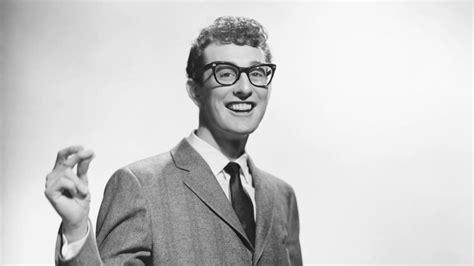
On the bitterly cold night of February 3, 1959, the vibrant pulse of rock and roll was forever silenced by a single, devastating event. A small Beechcraft Bonanza plane, chartered to escape the grueling and freezing conditions of a chaotic Midwestern tour, crashed in an Iowa cornfield, claiming the lives of three of rock and roll’s brightest stars – Buddy Holly, Ritchie Valens, and J.P. “The Big Bopper” Richardson, along with their young pilot, Roger Peterson. This tragic event would later be immortalized as “The Day the Music Died” in Don McLean’s 1971 hit song “American Pie” – a haunting tribute to an era abruptly cut short.
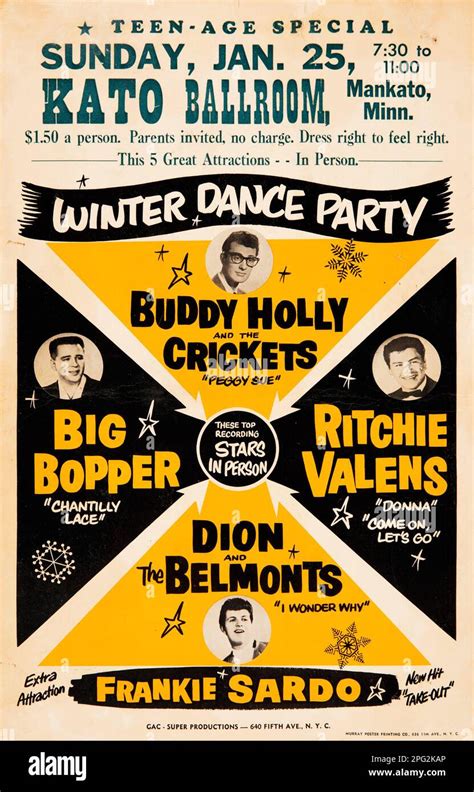
The Rise of Buddy Holly and the Formation of the Winter Dance Party
The path to this fateful flight began with Buddy Holly’s split from The Crickets in November 1958. Seeking a fresh start and financial stability, Holly signed with General Artists Corporation, forming a new backing band that included future country legend Waylon Jennings, Tommy Allsup, and Carl Bunch. As a part of their agreement, they joined the Winter Dance Party, a punishing 24-day tour across the frozen Midwest, featuring rising stars like Valens, Richardson, and Dion and the Belmonts. The tour, however, was plagued with logistical nightmares.
Poor planning meant the musicians were forced to endure marathon drives of 10 to 12 hours on unreliable, unheated school buses that frequently broke down in subzero conditions. The artists faced temperatures as low as –36°F without a dedicated road crew, amplifying the physical toll and increasing their desperation for relief. By February 2, the entourage had arrived in Clear Lake, Iowa, after a grueling 350-mile drive, adding further exhaustion to an already brutal schedule.
Chartering the Final Flight
Frustrated by the relentless cold and deteriorating buses, Holly made a fateful decision – to charter a private flight from Dwyer Flying Service in Mason City, Iowa, for $36 per passenger. The plan was to reach their next stop, Moorhead, Minnesota, quickly, allowing the exhausted musicians a chance to rest. However, the seating arrangements for this final flight would become a matter of tragic chance.
J.P. Richardson, suffering from the flu, swapped his bus seat with Waylon Jennings, while Ritchie Valens secured his spot through a coin toss against Tommy Allsup, a twist of fate that would forever link their destinies. Contrary to popular myth, Dion DiMucci of Dion and the Belmonts reportedly declined his seat despite winning a separate coin toss, citing the steep cost as his primary reason for staying on the bus.
The Fatal Takeoff and Crash
At 12:55 a.m. CST, the Beechcraft Bonanza (N3794N) took off from Mason City Municipal Airport under challenging conditions – light snow, strong winds, and limited visibility. The pilot, 21-year-old Roger Peterson, was inexperienced in flying solely by instruments, a critical skill given the deteriorating weather. Shortly after takeoff, the aircraft began a fatal descent, plummeting into a cornfield at an estimated 170 mph and flipping over upon impact. All four occupants were ejected and died instantly from severe trauma.
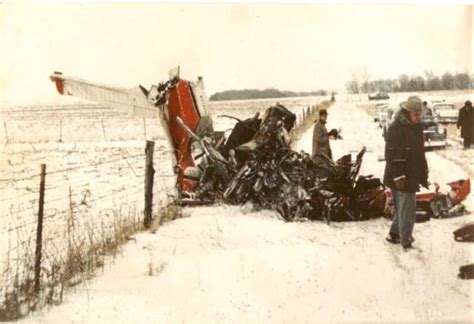
Immediate Aftermath and Personal Tragedy
The devastating news shattered families and fans alike. Holly’s wife, Maria Elena Holly, who had recently discovered she was pregnant, reportedly miscarried shortly after learning of her husband’s death, adding another layer of heartbreak to an already tragic story. Holly’s mother collapsed in shock upon receiving the news, a poignant reminder of the far-reaching personal toll this crash exacted.
Meanwhile, the Winter Dance Party limped forward, with 15-year-old Bobby Vee stepping in to fill the sudden void left by Holly. Jennings and Allsup continued with the tour for two more grueling weeks, joined by Jimmy Clanton, Fabian, and Frankie Avalon, their performances forever shadowed by the tragedy.
Investigation and Final Findings
In the aftermath, the Civil Aeronautics Administration (CAA) launched an investigation that identified multiple contributing factors to the crash. The primary cause was determined to be pilot error, complicated by poor weather and inadequate pre-flight briefings. Critically, Peterson was only certified for visual flight rules (VFR) and lacked training on the plane’s complicated instrumentation, which included a Sperry F3 gyroscope configured opposite to the conventional gyroscopes he had trained on. This critical oversight likely led Peterson to believe he was climbing when, in fact, the plane was descending rapidly.
Further investigations, including a 2007 exhumation of Richardson’s remains, confirmed that all passengers died upon impact, countering long-standing conspiracy theories. In 2015, a petition to reopen the case was dismissed by the NTSB, effectively closing the book on this dark chapter in aviation history.
Legacy and Cultural Impact
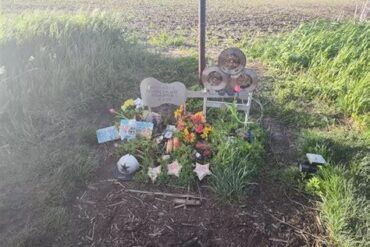
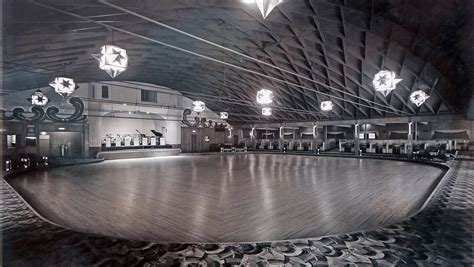
Despite the tragedy, the legacies of Holly, Valens, and Richardson endure. Memorials at Clear Lake’s Surf Ballroom and two stainless-steel monuments near the crash site pay tribute to their memory. Since 1979, annual tribute concerts have drawn thousands to the site, celebrating the lives and music of these pioneers. The crash also inspired a wave of artistic responses, from “The Buddy Holly Story” (1978) and “La Bamba” (1987) to countless songs, including “Three Stars” (1959) and McLean’s “American Pie”, ensuring that the echoes of that fateful night continue to resonate through rock and roll history.
This singular, catastrophic event remains a somber reminder of the fragility of life and the profound impact that music can have on our collective cultural consciousness.