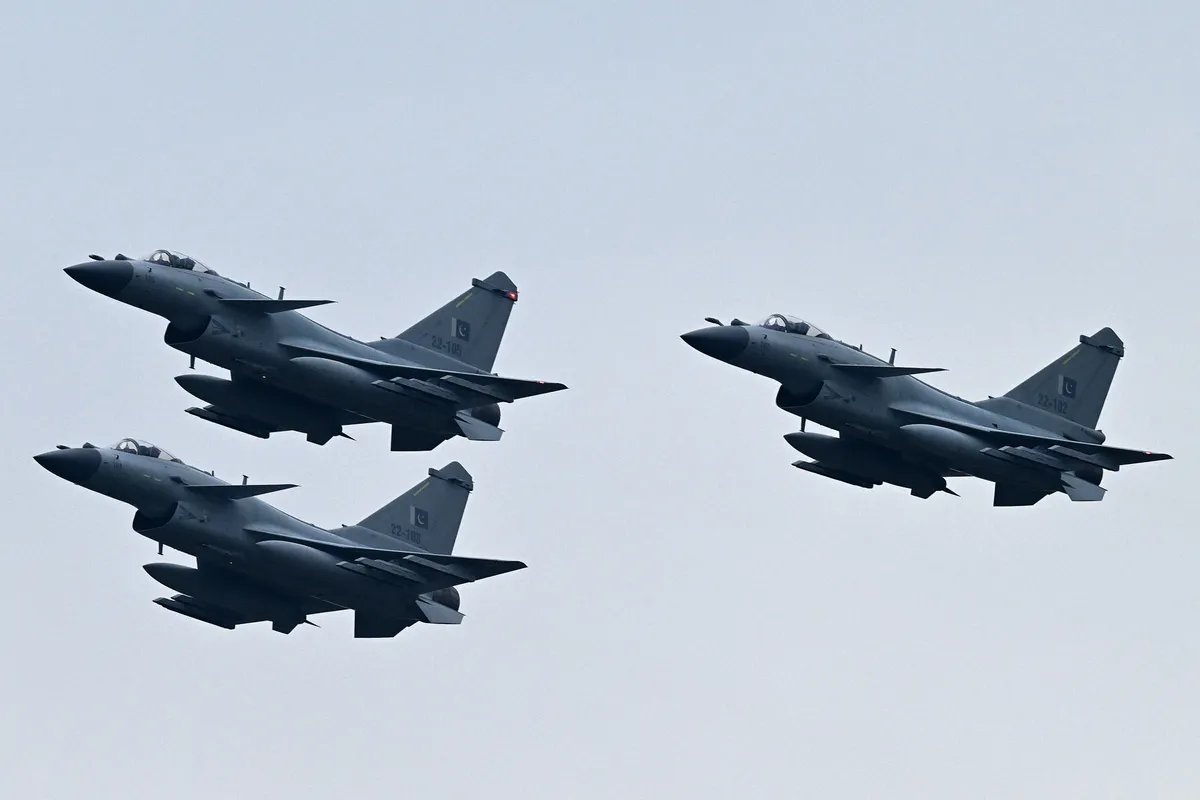
China’s military-industrial complex has long been viewed with skepticism by Western analysts and defense procurement officials. Yet the recent deployment of Chinese J-10C fighter jets by Pakistan, reportedly resulting in the downing of five Indian aircraft—including French-made Rafales—has reignited debate over the true combat effectiveness of Chinese weaponry. While India has not confirmed the reports, the episode has nonetheless catalyzed global reassessments of Beijing’s defense exports, especially among developing nations traditionally reliant on U.S. or Russian arms.
J-10C Performance: Tactical Breakthrough or Isolated Success?
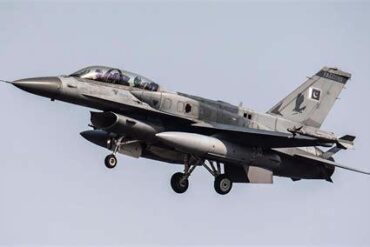
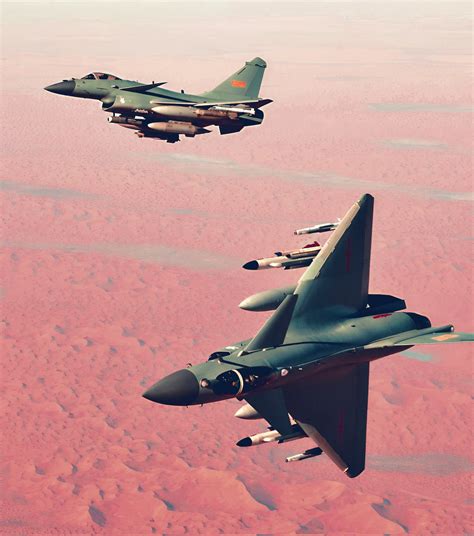
The J-10C, developed by the Aviation Industry Corporation of China (AVIC), represents a modern iteration of China’s evolving fourth-generation multirole combat aircraft. Powered by advanced radar systems and equipped with PL-15 long-range air-to-air missiles, the J-10C appears to have validated its air superiority role in a real combat setting—something Chinese systems have rarely been tested for.
Pakistan’s claim of successfully using the J-10C to down Indian fighters, including the heavily armed and technologically superior Rafales, has sent a ripple across Asia’s security architecture. Even though the full details remain murky, the financial markets responded quickly. The aircraft’s manufacturer, AVIC Chengdu Aircraft Co., saw a staggering 55 billion yuan (approx. $7.6 billion) rise in its market capitalization—an indicator that perception, especially in defense, is sometimes as potent as performance.
Strategic Reactions: Taiwan and U.S. Forces on Alert
No observer has been more alert than Taiwan. Given the island’s proximity to the Chinese mainland and its strategic reliance on U.S. military support, Taiwan’s defense establishment is reassessing the People’s Liberation Army Air Force (PLAAF) capabilities.
Shu Hsiao-Huang of Taiwan’s Institute of National Defense and Security Research observed that these events may indicate that the PLAAF is approaching, or in specific metrics surpassing, the air capabilities of U.S. forces stationed in East Asia. This shift may prompt Washington to expedite the sale of advanced aircraft and missile defense systems to Taipei, a move likely to intensify already escalating tensions in the Taiwan Strait.
The PL-15 Missile: China’s Answer to Western Air Dominance
One of the most striking developments from the Pakistan-India exchange was the confirmed use of PL-15 air-to-air missiles, marking their first known combat deployment. These missiles, capable of exceeding Mach 5 speeds, pose a credible rival to Western missiles like the AIM-120 AMRAAM. Fragments of PL-15 components were reportedly recovered on Indian soil—physical proof that the engagement involved state-of-the-art Chinese armaments.
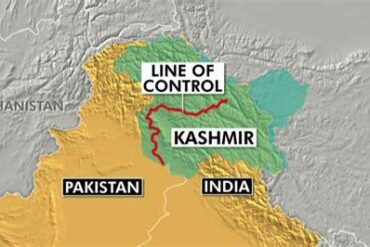
This capability grants Pakistan the means to conduct beyond-visual-range (BVR) combat, something that could shift air superiority dynamics across contested zones, including the volatile Line of Control.
China’s Arms Export Strategy: From Budget-Friendly to Battle-Tested
Historically, China’s defense exports have faced criticism due to reports of defects, limited interoperability, and higher long-term maintenance costs. Countries like Myanmar, Bangladesh, and even Pakistan’s navy have previously reported structural or mechanical failures with Chinese-origin platforms.
However, what sets the recent events apart is the combat-proven context. With actual battlefield use validating some of these weapons’ effectiveness, particularly the J-10C and PL-15, China now holds an important asset: proof of performance.
This real-world use could help China pivot from merely being the budget alternative to a viable strategic supplier. That narrative could attract countries within the Global South that are increasingly skeptical of U.S. geopolitical leverage or wary of Russia’s embroilment in long-standing conflicts.
Geopolitical Implications for Defense Markets
China is already the world’s fourth-largest arms exporter, trailing the U.S., Russia, and France. Yet its clients are primarily in the developing world—countries often unable or unwilling to afford U.S. or European equipment. The new developments could shift procurement patterns in regions like Southeast Asia, Africa, and the Middle East.
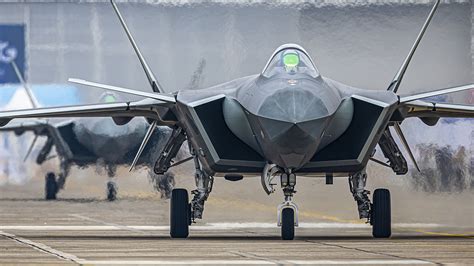
James Char from the S. Rajaratnam School of International Studies noted that the J-10C isn’t even China’s most advanced jet, suggesting that buyers may now be more open to exploring other platforms in China’s growing arsenal. For example, the stealth-capable J-20 or the recently showcased amphibious assault ships and sixth-generation fighter prototypes.
Limitations and Skepticism: A Single Skirmish Doesn’t Win a War
Despite the media and market excitement, many defense analysts urge caution. M. Taylor Fravel of MIT emphasized that while the J-10C might have tactical advantages in certain conditions, it is not comparable to multi-role platforms like the Rafale, which are engineered for diverse mission profiles beyond aerial combat.
Furthermore, previous issues continue to cast a long shadow over Chinese defense exports. Structural cracks in Myanmar’s Chinese aircraft, degraded frigate operations in Pakistan’s navy, and complaints from Bangladesh illustrate that quality assurance and platform longevity remain major concerns.
Moreover, interoperability with non-Chinese platforms is a persistent technical barrier. In regions where military cooperation depends on diverse defense ecosystems—such as the Gulf states or NATO-aligned countries—Chinese systems may still face resistance.
Economic Incentives: Financing, Trade Partnerships, and Hidden Costs
Beijing’s ability to package arms deals with favorable financing is another powerful sales pitch. For many countries, particularly those indebted or underdeveloped, China’s arms come at a lower upfront cost and often include attractive lending terms through state-linked banks or the Belt and Road Initiative.
However, as pointed out by former RAND Corporation researcher Cindy Zheng, these deals often carry hidden costs. Malfunctions, expensive spare parts, and maintenance delays can erode the initial cost savings, especially for countries lacking indigenous repair capabilities.
The Broader Transformation of China’s Military-Industrial Base
President Xi Jinping’s vision to transform the People’s Liberation Army into a modern warfighting force by 2027 has triggered structural reforms. Civil-military integration policies, state-backed defense stock market pushes, and continuous R&D into hypersonics and AI-based warfare systems signal an ecosystem-wide shift.
Milestones like the launch of the Type 075 amphibious assault ships and the development of sixth-generation aircraft underscore China’s ambitions to not just match, but outpace Western capabilities in specific domains.
These ambitions are no longer confined to blueprint promises or state-run media proclamations. The market is reacting, defense exports are climbing, and real-world usage cases—however limited—are shifting global perceptions.
Conclusion: A Cautious Yet Inevitable Shift in Global Arms Dynamics
The Pakistan-India clash may not redefine the future of warfare, but it has undoubtedly served as a watershed moment for Chinese military credibility. Even if the J-10C’s performance is not universally verifiable, its symbolic power is undeniable.
From Taiwan’s cautious reevaluation of regional security to Africa and Asia’s defense procurement strategies, Chinese weapon systems are no longer dismissed outright. With actual combat usage, market momentum, and a clear political strategy backing its defense exports, China is stepping into a new role—not merely as an alternative arms supplier, but as a formidable competitor reshaping the future of global military procurement.
As the world watches closely, the key question is no longer whether Chinese weapons can perform, but how consistently they can do so under the unforgiving lens of sustained military operations and long-term reliability.