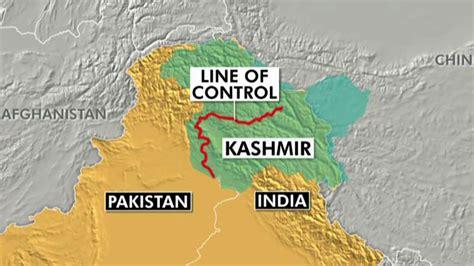
After weeks of rising tension along the volatile India-Pakistan border, the subcontinent plunged into a sharp, intense aerial conflict now dubbed the “100-hour war.” The confrontation, which began on April 22 with a terrorist massacre in Pahalgam, escalated into full-scale air strikes by both nations, culminating in a fierce four-day aerial duel that has left geopolitical analysts and military observers dissecting every detail.
The trigger came when 26 civilians were gunned down by heavily armed militants in Pahalgam, a scenic but politically sensitive region of Kashmir. India, accusing Pakistan-based militants of orchestrating the killings, launched Operation Sindoor in the early hours of May 7, targeting terror infrastructure across the Line of Control (LoC). What followed was not a conventional war, but an air-dominated battle testing not just machines, but the doctrines, networks, and nerve of the region’s two most formidable air forces.
Tactical Evolution and Strategic Surprise
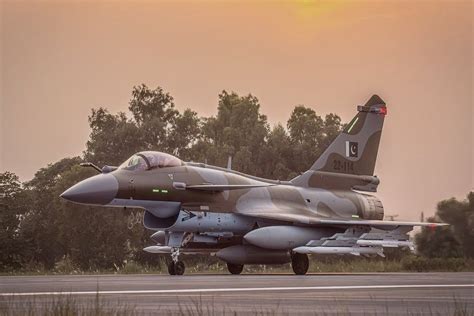
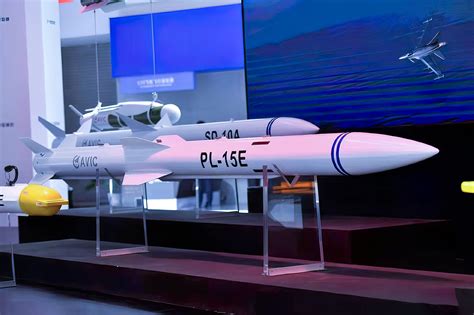
The early stages of the confrontation heavily favored the Pakistan Air Force (PAF). Leveraging the Chinese-supplied PL-15E long-range air-to-air missile and the XS-3 tactical data link, Pakistan demonstrated a level of electronic warfare sophistication previously unseen in subcontinental confrontations. These systems enabled beyond-visual-range (BVR) missile strikes coordinated in near real-time, giving PAF fighters the ability to engage Indian targets without breaching Pakistani airspace.
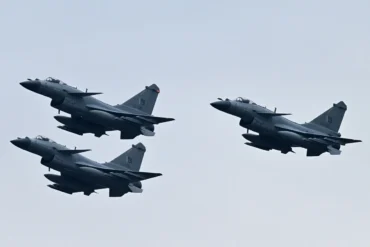
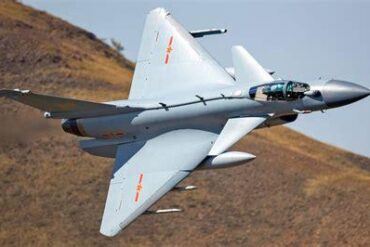
The initial shock to India’s air strategy was significant. India’s Chief of Defense Staff, General Anil Chauhan, admitted on May 31 that the Indian Air Force (IAF) suffered losses and was forced to reconfigure tactics. Although specifics remain undisclosed, experts believe that at least three IAF aircraft were lost to BVR ambushes, initiated from PAF’s J-10C fighters.
Electronic Eyes and Networked Firepower
Central to Pakistan’s edge was the integration of air assets through the XS-3 tactical data link, a Chinese system designed to replicate and, in some respects, surpass NATO’s Link 16. Through this network, airborne early warning and control system (AWACS) aircraft directed battle formations, relayed threat assessments, and facilitated seamless target engagement, all while remaining deep within Pakistan’s protected airspace.
With the PL-15E missile—boasting an estimated range over 300 kilometers—the PAF was able to launch ambush-style engagements. By the time IAF pilots detected missile launches, it was often too late to react, especially in areas where radar coverage and countermeasures were thin. The real-time fusion of data allowed Pakistan to dictate early tempo and engagements.
India’s Counteroffensive and Tactical Rebalancing
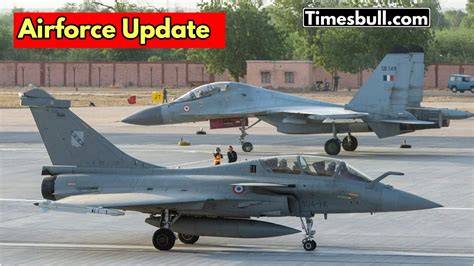
However, the tide turned swiftly. After the initial blow, India adapted, employing a mix of offensive sweeps, decoy formations, and electronic jamming techniques. By May 8, IAF had re-established air corridors and began deep strike missions into Pakistan’s interior air bases, notably hitting Rahim Yar Khan with precision munitions.
General Chauhan confirmed that between May 7–10, India penetrated Pakistan’s layered air defense systems and conducted multiple successful sorties without losing further aircraft. According to Chauhan, “We rectified tactics and then went back on the 7th, 8th, and 10th in large numbers to hit air bases deep inside Pakistan, penetrated all their air defenses with impunity, and carried out precision strikes.”
This reversal of air superiority posed a strategic dilemma for Pakistan. Despite early gains, the attrition of radar stations, EWCS aircraft positions, and infrastructure began mounting. On May 10, Pakistan’s Director General of Military Operations (DGMO) formally requested a ceasefire—a surprising move considering the PAF’s initial success.
Denials, Claims, and the Fog of Aerial War
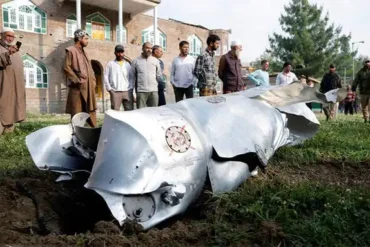
One of the most confounding aspects of the 100-hour war is the absence of concrete evidence. Neither side has released credible wreckage photos of enemy aircraft. India has shown videos of precision strikes on Pakistani installations but stopped short of claiming specific kills. Meanwhile, Islamabad denies any loss of aircraft, even as it acknowledges airbase damage.
IAF’s Air Marshal A.K. Bharti maintained that “losses are a part of combat,” but insisted Indian pilots brought down several PAF fighters. This discrepancy has led analysts to conclude that most of the aerial engagements occurred within respective sovereign airspaces, limiting physical recovery of downed aircraft and adding layers of strategic ambiguity.
Western vs Eastern Doctrine: A Combat Testbed
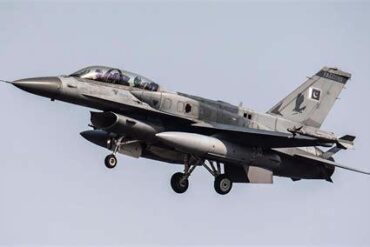
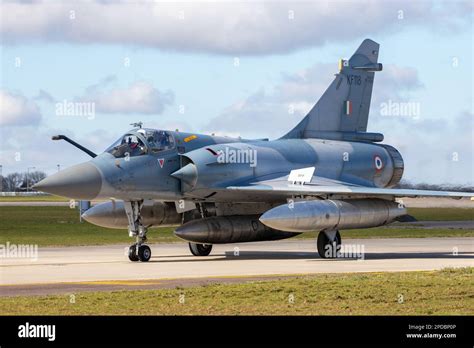
The confrontation also became a case study for comparing Western and Eastern military doctrines and aerospace capabilities. The IAF’s inventory—comprised of Sukhoi-30MKI, MiG-29UPG, Jaguar, Rafale, Mirage 2000, and Tejas—is a blend of Russian, French, and indigenous platforms. Meanwhile, the PAF flew F-16s, JF-17 Thunder, and J-10Cs—with the latter being a recent and capable Chinese import.
The conflict revealed two critical trends:
- The reliance on data-centric warfare, where networked systems and real-time intel trump sheer numbers or platform specs.
- The importance of long-range munitions like the PL-15E, which drastically change the shape of air engagements.
Beyond the Battlefield: The Nuclear Question
Despite the intensity, both sides exercised strategic restraint. Neither General Chauhan nor General Sahir Shamshad Mirza, Pakistan’s Chairman of the Joint Chiefs of Staff Committee (JCSC), hinted at nuclear posturing. Instead, both stressed that nuclear weapons were not considered during the escalation.
General Chauhan articulated a clear doctrine: “There’s a lot of space for conventional operations which has been created, and this will be the new norm.” India’s post-war stance is unequivocal—it will continue to conduct surgical and strategic responses to cross-border terrorism, without being constrained by the nuclear overhang.
Strategic Implications and the Way Forward
The 100-hour war is a turning point in South Asian military history. For India, it underscored the need for more robust BVR capabilities and improved interoperable data networks. For Pakistan, it was a validation of Chinese defense technology and the tactical benefits of a networked air warfare doctrine.
However, for both nations, the conflict also revealed how close they came to wider escalation. The lack of direct civilian targeting, the absence of naval deployments, and the restraint from using ballistic missiles or nuclear rhetoric all suggest a calculated containment of the conflict.
While ceasefire lines have resumed their tense stillness, the lessons of the 100-hour war will shape both air forces’ training, procurement, and strategy for years to come. This was not just a clash of machines but a trial by fire of doctrines, deterrence, and digital warfare—with implications that go far beyond the LoC.