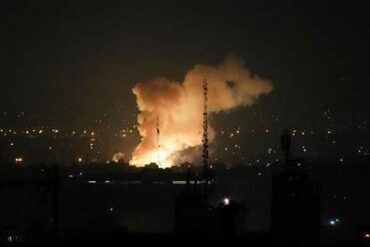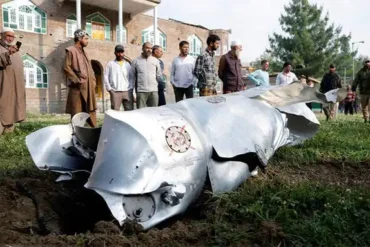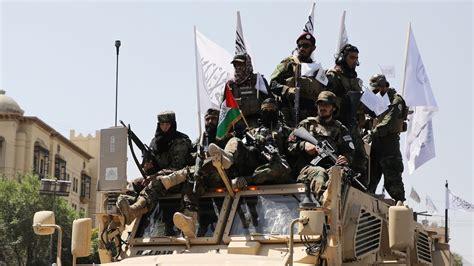
Tensions have escalated dramatically in South Asia following a series of pre-dawn airstrikes by India across Pakistan and Pakistan-administered Kashmir, prompting a swift and defiant response from Islamabad. The specter of another confrontation between the two nuclear-armed neighbors has emerged yet again, this time following the massacre in Kashmir that has ignited widespread outrage and a fierce military exchange.
India’s Air Strikes: Strategic Retaliation or Risky Escalation?
According to official statements from New Delhi, the Indian Air Force (IAF) conducted targeted strikes in the early hours of May 7, claiming it had neutralized high-value militant assets and infrastructure linked to the perpetrators of the recent Kashmir massacre. The strikes reportedly took place across Pakistan-administered Kashmir and deep into Pakistan’s Punjab province, indicating a significant broadening of engagement zones compared to past incidents.
The Indian Ministry of Defence released preliminary details of the operation, emphasizing that all strikes were confined to military objectives and carefully calculated to avoid civilian casualties. The operation was justified as a preemptive measure to prevent further cross-border terrorism, a justification India has employed in previous instances such as the 2016 Surgical Strikes and the 2019 Balakot operation.
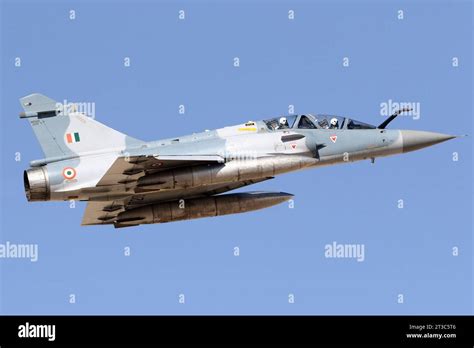
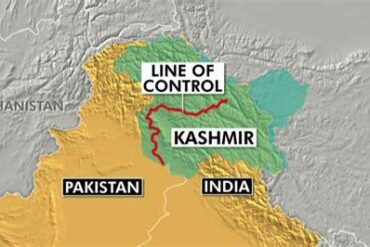
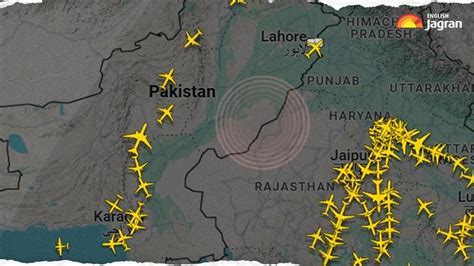
Despite India’s stated intentions, the strikes have drawn condemnation from Pakistan, which has described the incursions as violations of its sovereignty and a blatant escalation. The areas targeted include locations within Muzaffarabad, Kotli, and Bahawalpur, all of which were flagged by Pakistan as being far from the LoC (Line of Control), highlighting the expansive reach of the Indian operation.
Islamabad’s Calculated Response: Rhetoric or Retaliation?
In a televised address, Pakistani Prime Minister Shehbaz Sharif declared that Pakistan would not let these strikes go unanswered. “We will respond at the time and place of our choosing,” he stated, underscoring Pakistan’s intent to act but leaving room for strategic ambiguity.
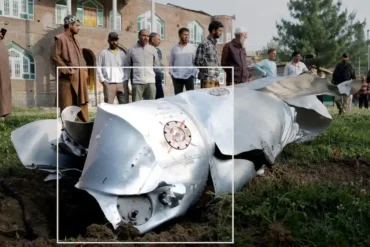
While the government deliberates its next move, several potential response paths have surfaced. One possibility involves claiming a symbolic victory, with Pakistan asserting that it successfully downed five Indian jets, including three Rafale fighters, a claim yet to be independently verified. If true, such losses would mark a significant tactical and psychological blow to India, especially given the Rafale’s reputation as a modern, formidable platform.
According to Milan Vaishnav, Director of the South Asia Program at the Carnegie Endowment for International Peace, this could be a clever play. “Pakistan could claim victory by pointing to the downed assets, even if the circumstances are murky. This would allow Pakistan to claim it has imposed costs on Indian military targets,” he noted.
Pakistan’s Military Options: Proportional Response or Escalation Spiral?
The Pakistan Army, led by General Syed Asim Munir, may be under pressure to strike back with force. Munir, who has been described as significantly more assertive than his predecessor Qamar Javed Bajwa, faces both domestic political pressure and institutional expectations to uphold deterrence credibility.
As outlined by Tanvi Madan of the Brookings Institution, one avenue would be retaliatory strikes against Indian military installations. This approach, labeled as “responding in kind,” gains further traction in light of India’s reported strikes in Punjab, a densely populated civilian area. “Such targeting complicates the strategic calculus for Islamabad,” Madan explained, “but Munir may feel compelled to up the ante to project strength.”
However, Pakistan’s Defense Minister Khawaja Asif offered a slightly more restrained position, stating that Pakistan would only target Indian military facilities, not civilians. This suggests a potential effort to keep the escalation below a critical threshold.
Historical Parallels and the Threshold Dilemma
Analysts have pointed to the eerie resemblance of the current episode to the 2019 Pulwama-Balakot exchange, when similar tit-for-tat actions risked pushing the region into full-scale war. Then, as now, India justified its offensive on the grounds of counterterrorism, while Pakistan positioned its response as defense of sovereignty.
But there are new dynamics in play. The 2024 Kashmir massacre, which triggered the current cycle, has inflamed passions on both sides. Indian domestic pressure for a decisive response has surged, and Pakistan faces a growing crisis of national unity and political instability. In this context, measured responses may not satisfy hawkish factions within either state.
India’s Red Line and Pakistan’s Strategic Restraint
India’s official narrative emphasizes a clear red line: any Pakistani response that exceeds a certain magnitude will be met with overwhelming force. This threat, while ambiguous in scale, serves as a warning against disproportionate retaliation. Islamabad must weigh whether to test this boundary.
“Largely on the basis of what we’ve seen in previous times, these are two rational actors who don’t want a broader war,” said Madan. “Both have something to lose if there is a broader conflict.” The unspoken fear remains — any miscalculation or overreach could trigger an uncontrollable escalation spiral.
Moreover, international stakeholders such as China, the United States, and the United Nations Security Council have urged both nations to de-escalate immediately. Diplomatic backchannel activity has reportedly increased, but so far, neither side appears ready to stand down unilaterally.
Strategic Communications and Perception Warfare
This confrontation is not limited to airstrikes and military maneuvers. It also unfolds across television screens and social media feeds, where both sides seek to shape the international narrative.
India has circulated drone footage and thermal imagery purporting to show precision strikes against terror camps. Pakistan counters with radar data and alleged footage of downed Indian jets. The battle for public opinion — both domestic and global — is nearly as important as battlefield outcomes.
The role of perception is particularly crucial for Pakistan, whose claims of having shot down multiple Indian aircraft could, if proven, shift the tone of regional diplomacy and embolden allies. But exaggerated claims, if later disproven, could also backfire, damaging credibility.
The Path Ahead: De-Escalation or Entrenchment?
Despite the current hostility, both governments are acutely aware of the risks of sustained conflict. Each possesses nuclear capabilities, and a full-blown war would come with catastrophic costs not just for themselves but also for regional stability.
Observers remain hopeful that behind-the-scenes diplomatic engagement may still produce an off-ramp. Historically, U.S. and Chinese intervention, even if informal, has helped prevent crises from boiling over. Whether this pattern holds true again remains to be seen.
For now, Pakistan is treading a narrow path: balancing the domestic imperative to retaliate with the strategic necessity to avoid all-out war. With Indian forces on high alert and Pakistan mobilizing air defense networks, the region holds its breath for what comes next.

The next 72 hours will be critical. Whether this moment spirals into another tragic chapter of South Asian hostility or becomes a catalyst for diplomacy will depend on the restraint, wisdom, and resolve of leadership on both sides of the border.