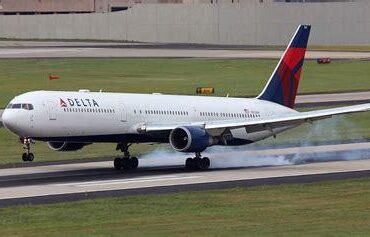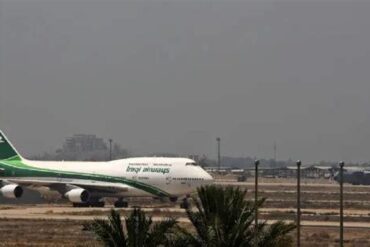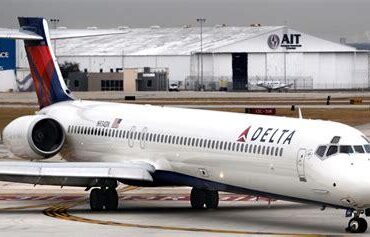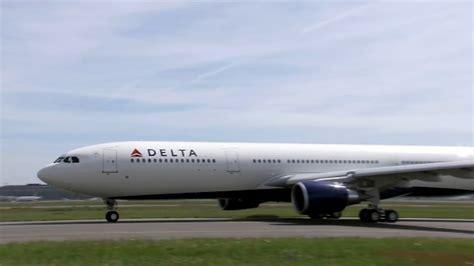
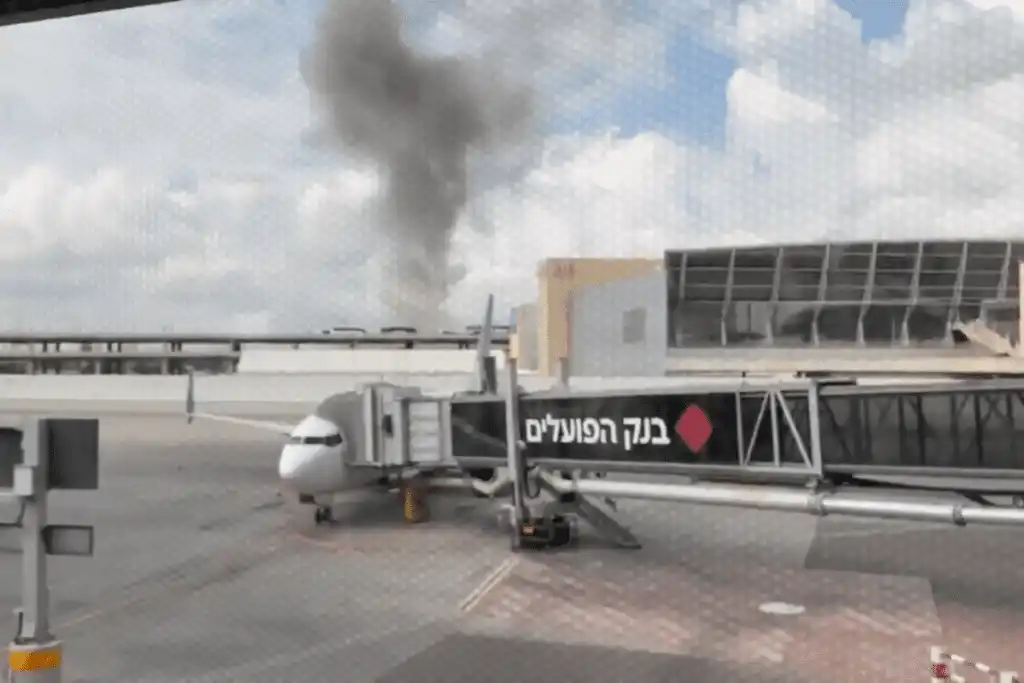
On May 4, 2025, a Delta Air Lines flight from New York’s JFK Airport to Tel Aviv found itself at the center of a harrowing security incident when it narrowly avoided a missile strike during landing at Ben Gurion Airport in Israel. The incoming missile, one of many launched amid a regional conflict, triggered defense systems across the country. However, at least one missile penetrated those defenses and exploded dangerously close to the airport.
According to reports, the Delta pilots captured chilling footage of missiles slicing through the sky. Upon landing, the flight crew, including a flight attendant with a decade of service at the airline, was promptly escorted to a bomb shelter, where they remained for two tense hours. The experience, described by many as traumatizing, left the crew visibly shaken. Delta quickly suspended the route and made arrangements for the entire crew to deadhead back to the United States on the same aircraft.
Flight Attendant Refuses Return Flight Amid Trauma and Fatigue
While most crew members complied with the directive to immediately return, one flight attendant refused, citing mental distress and physical fatigue. He informed Delta’s scheduling department that he was not comfortable flying after such a terrifying experience and instead requested to rest overnight in a hotel. His plea was denied. He was told he would need to cover all related costs — hotel, transportation, and even a return flight to the U.S. — on his own.
Determined to protect his well-being, he went forward with his decision to stay, incurring more than $3,500 in personal expenses. Unlike his colleagues, he also forfeited additional pay for the return journey. Feeling unsupported and penalized for prioritizing his health, the flight attendant subsequently filed complaints with the Federal Aviation Administration (FAA) and the Equal Employment Opportunity Commission (EEOC).
Delta Responds with Suspension, Then Termination
Just three months after the incident, in August 2025, the flight attendant was called into what he assumed would be a meeting regarding his reimbursement. Instead, he was suspended without warning. A few weeks later, Delta terminated his employment. The reasons cited were serious:
- Failure to follow safety protocols
- Lack of professionalism toward leadership
- Jeopardizing crew safety and cohesion
- Non-cooperation during a critical security debrief
The flight attendant vehemently denies these accusations. He argues the company acted in retaliation for his FAA and EEOC complaints. More significantly, he claims his firing was influenced by racial discrimination, a charge that now forms part of the lawsuit he filed against Delta.
Inside the Legal Battle: Policy, Precedent, and Power
The case raises critical questions about airline procedures, employee rights during emergencies, and the consequences of speaking out against corporate decisions. Delta, as a non-union airline, has more unilateral power to discipline employees compared to unionized carriers. This flight attendant, therefore, lacked the collective bargaining protection that might have shielded him from swift punitive action.
Delta’s decision to suspend and fire the employee appears to rest on internal policies mandating strict adherence to post-incident debriefs and operational orders. However, the attendant argues that these policies should not override an employee’s right to personal safety and mental health recovery, especially after enduring a life-threatening event.
Employment law experts note that retaliation lawsuits in the aviation industry can be complex. Companies often invoke security protocols and chain-of-command policies to justify decisions, but that does not exempt them from federal labor protections. Filing a complaint with the FAA is a protected activity under whistleblower laws, and any adverse employment action taken as a result could be deemed unlawful.
The Wider Implications for Airline Employees
This case could set a powerful precedent for how airlines manage crew members exposed to warzone-like conditions. The aviation sector has grappled with increasing geopolitical volatility, with flight paths now often skirting active conflict zones. Yet, there is still little transparency around the mental health support and emergency autonomy afforded to frontline staff.
The flight attendant’s decision to stay behind was arguably based on basic human instincts — seeking safety, rest, and clarity. The lack of support, both financially and procedurally, raises concerns about how much autonomy and compassion airlines grant their workers when safety systems fail.
For employees working outside of union protections, this lawsuit also underscores the risks of speaking out. Filing a grievance or whistleblower complaint can expose workers to retaliation disguised as policy enforcement. Legal experts anticipate Delta will argue that it followed established guidelines, but whether those guidelines respect employee rights remains to be seen.
Is This a Retaliation Case or a Safety Protocol Dispute?
Delta’s official stance frames the firing as a disciplinary action. However, the timing and context suggest a potentially retaliatory motive. The flight attendant’s decision to escalate the issue to the FAA and EEOC occurred shortly before his dismissal, forming a clear timeline of events that his legal team will likely highlight in court.
Moreover, claims of racial bias add another layer of complexity. While not elaborated in public filings yet, this dimension suggests the attendant believes his treatment was not merely procedural, but also discriminatory in nature — a serious charge that, if proven, could have far-reaching consequences for Delta.
The Road Ahead: Legal Uncertainty and Corporate Accountability
As the lawsuit progresses, it will likely draw national attention, especially within labor rights circles and the broader aviation industry. Should the case go to trial, Delta may be compelled to reveal internal communication, risk assessments, and disciplinary procedures that could illuminate how airlines balance safety with staff support.
While it remains to be seen whether the case will go to court, reach a settlement, or be dismissed, it has already ignited important questions: Do flight crews have the right to refuse unsafe or psychologically distressing travel after a crisis? Are airlines doing enough to support crew mental health during emergencies? And can large companies be held accountable for actions that appear punitive following whistleblower complaints?
Final Thoughts: A Case That Could Reshape Airline Crisis Protocols
What began as a flight marred by a ballistic missile attack has evolved into a potential landmark lawsuit about retaliation, discrimination, and corporate ethics. The fired flight attendant’s experience exposes the fragility of protections for airline employees in crisis zones. It also places Delta under scrutiny for how it chooses to handle dissent and distress among its staff.
This lawsuit could redefine how airline personnel are treated in the wake of international incidents. As global tensions continue to affect air routes and risk assessments, the aviation industry may need to rethink its crisis response playbook, especially when human lives — and livelihoods — are on the line.