Rising geopolitical tensions in the Persian Gulf have prompted a sweeping response from the world’s leading airlines, as the aftermath of U.S. military strikes on Iranian nuclear sites sends shockwaves through international aviation. On June 22, 2025, several flagship carriers including Delta Air Lines, American Airlines, United Airlines, Singapore Airlines, Air Canada, Swiss International Air Lines, Emirates, Lufthansa, Japan Airlines, and British Airways initiated large-scale suspensions or reroutings of flights across the Gulf region. These emergency actions underscore the seriousness of a rapidly deteriorating security situation that threatens to upend travel and commerce across a vital global corridor.
Immediate Airline Reactions Following U.S. Strikes on Iran
The U.S. airstrikes, which targeted three major Iranian nuclear facilities, have triggered a series of high-alert military postures in the Middle East. Tehran’s vow of retaliation, including threats against U.S. bases and the potential closure of the Strait of Hormuz, has led aviation authorities and airlines to take immediate precautions.
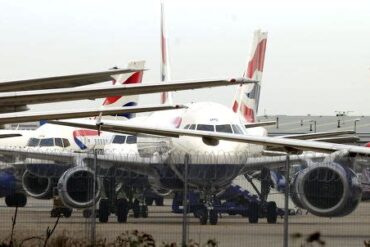
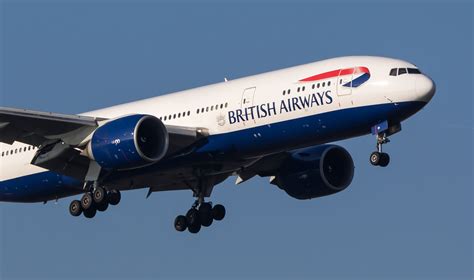
British Airways acted swiftly, suspending flights to Dubai, Doha, and Bahrain, with multiple aircraft rerouted mid-flight. One flight en route to Dubai reversed course over Egypt, returning to London Heathrow, while another diverted to Zurich after entering Saudi Arabian airspace. These reroutes were executed in real-time, reflecting the volatility of the evolving airspace restrictions.
American Airlines and United Airlines also grounded flights to the United Arab Emirates and Qatar, joining a growing list of carriers that are opting out of the airspace over or near Iranian territory. The risk calculus has shifted dramatically, particularly with Iran signaling missile readiness and leveraging cyber and drone capabilities to disrupt regional stability.
Broad International Impact: Asia and North America Realign Routes
Delta Air Lines, Air Canada, and Singapore Airlines have similarly imposed temporary suspensions and extensive rerouting to avoid traversing areas near Iranian or adjacent airspace. This rerouting affects major long-haul connections between North America, Europe, and Asia, complicating network planning and logistics. Flight schedules have been significantly disrupted, with airlines scrambling to rebook passengers on increasingly limited alternative routes.
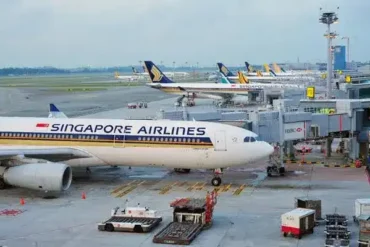
Singapore Airlines, known for its ultra-long-haul services, confirmed that flights which typically fly over Iranian-controlled corridors are now being rerouted through Central Asia and the Caspian region, leading to increased flight times, higher fuel costs, and congested air corridors elsewhere.
Japan Airlines, historically neutral in Gulf conflicts, has taken an equally cautious approach. The carrier is evaluating all transcontinental routes passing through Middle Eastern airspace and has already begun reworking long-haul schedules, citing the need to protect passengers and crew amid escalating tensions.
European Carriers Follow Suit Amid Safety Warnings
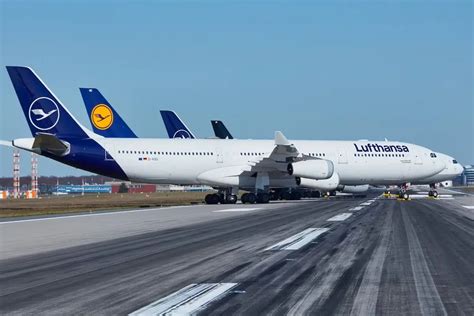
The European response has been coordinated and robust. Lufthansa and Swiss International Air Lines announced the immediate suspension of flights to key Gulf destinations, including Muscat, Dubai, and Doha. These decisions follow advisories from the European Union Aviation Safety Agency (EASA), which is closely monitoring the volatile environment.
Air France–KLM has joined the safety-first movement, redirecting or canceling flights into Qatar and the UAE. Their operations now route via prolonged detours, avoiding any exposure to Iranian radar coverage or missile threat zones. This shift is costly, but safety remains paramount.
Emirates and Regional Operators Brace for Repercussions
Even Emirates, the Dubai-based giant with deep regional ties, has not been immune. The airline issued an operational advisory noting “adjustments to selected routes” and confirmed that some flights would avoid the Strait of Hormuz and Gulf of Oman, two areas now seen as flashpoints. Passengers were warned of possible delays and last-minute cancellations.
The operational challenges are compounded by the complex geopolitical geography of the Gulf. Emirates emphasized that its coordination with UAE civil aviation authorities and international air traffic control agencies is ongoing and essential for maintaining a minimum level of service continuity.
Qatar and Bahrain: Collateral Tensions in a New Frontline
Qatar, home to the largest U.S. military base in the Middle East, has found itself under increased scrutiny. With Doha-based flights heavily curtailed, international travelers face limited access to a hub long considered a strategic transit point. Security officials in Doha confirmed heightened alert levels and enhanced surveillance near airfields and civilian infrastructure.
In Bahrain, which hosts both U.S. and U.K. naval bases, the government has activated emergency protocols, moving 70% of government staff to remote work. This indicates serious anticipation of retaliatory or spillover attacks.
The Strait of Hormuz: A Chokepoint Under Threat
The Strait of Hormuz, through which approximately a third of the world’s maritime oil passes, has now become the epicenter of dual crises—energy security and aerial navigation. Iran has explicitly threatened to close the strait if provoked further, a move that would paralyze both shipping and air travel.
Aerial corridors over the Gulf of Oman and adjacent routes linking Europe and South Asia pass directly over or near this narrow strip. Airlines are responding with wide rerouting, adding hours to some intercontinental journeys. The economic impact will ripple outwards, affecting freight schedules, passenger traffic, and potentially airfare pricing.
ICAO Advisories and Operational Fallout
The International Civil Aviation Organization (ICAO) has issued global advisories calling for immediate avoidance of high-risk zones. Airlines are being directed to monitor local airspace bulletins, NOTAMs (Notice to Air Missions), and military movement warnings.
These measures result in more than just flight cancellations. They mean recalibrated fuel loads, crew rotations, emergency training refreshers, and potentially costly insurance renegotiations. The reverberations will likely influence ticket prices, cargo fees, and airline profitability in Q3 and Q4 2025.
Passengers Face Uncertainty, Airlines Respond
Carriers are trying to balance security with customer service. Many, including Delta, Emirates, and Singapore Airlines, have waived rebooking fees and are offering full refunds or travel vouchers. However, due to the sudden scale of suspensions, rebooking options are tight, particularly for high-demand corridors like New York–Dubai, London–Doha, and Toronto–Abu Dhabi.
Airlines have expanded customer service operations and are deploying digital alerts, app notifications, and call center reinforcements. Travelers are urged to check real-time updates via official airline portals and registered travel agents.
Long-Term Outlook: A Redefined Global Aviation Map?
The synchronized nature of these suspensions suggests that airlines are bracing for a protracted disruption. While diplomatic backchannels between Tehran, Washington, and European capitals remain engaged, there’s little indication of a swift resolution. Should hostilities escalate, airspace over Iran, Iraq, and potentially parts of the Levant may remain classified as “no-fly zones” for an extended period.
The potential reshaping of aviation corridors will alter hub competitiveness, fuel strategies, and crew logistics across the industry. Airlines that previously relied on efficient Gulf crossings must now restructure operations through northern and southern hemispheric detours, increasing both cost and complexity.
Conclusion: A Moment of Reckoning for Global Aviation
The situation in the Persian Gulf is no longer confined to regional politics. It is now a global aviation crisis, dragging the world’s most sophisticated airlines into a web of conflict avoidance, crisis communication, and logistical reinvention. For travelers, it means uncertainty; for airlines, a costly recalibration of their networks; and for the world, a sobering reminder that the skies are never immune to the tensions unfolding on the ground.
The industry now stands at a crossroads where security imperatives clash with commercial pressures, and where geopolitics may very well dictate the shape of global air travel for years to come.